Table of contents
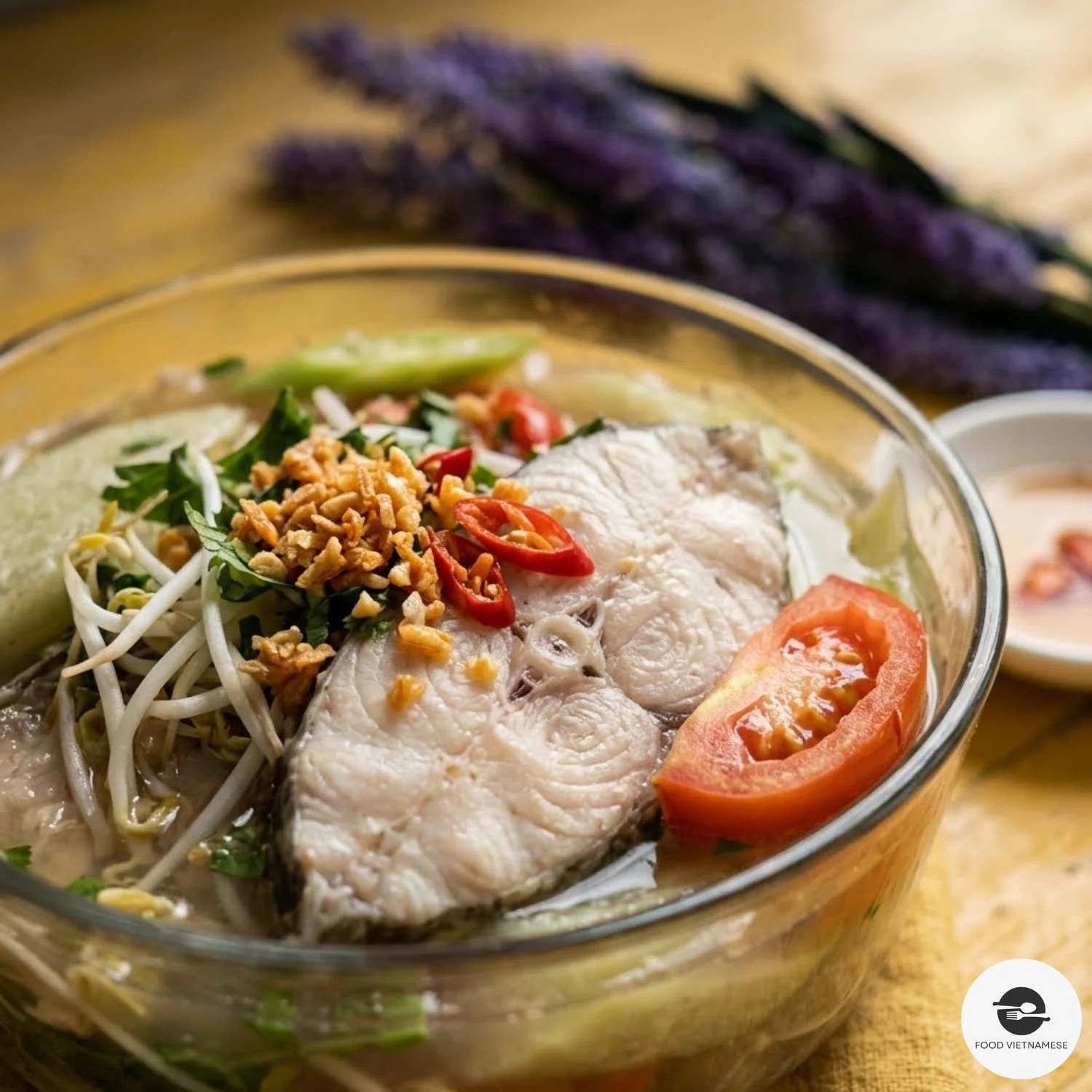
Canh Chua is a Vietnamese sweet and sour soup from the Mekong Delta — a tamarind-based broth carrying tomatoes, pineapple, and a colorful mix of vegetables, simmered with fish or shrimp until the whole bowl hits four notes at once: sour, sweet, salty, and savory. The name translates plainly to “sour soup,” but that undersells how much balance the dish actually demands; too much tamarind and it turns sharp, too much sugar and the tang disappears entirely. This guide covers the real technique behind getting that balance right, the ingredient that’s almost always mistranslated, and which fish actually belongs in a traditional bowl.
The Four Flavors in One Bowl
Canh Chua comes from Southern Vietnam’s Mekong Delta, a region defined by rivers, rice paddies, and an abundance of freshwater fish — and the soup reflects exactly that: it’s built to use whatever the water and the garden provide. What separates it from other Vietnamese soups is the deliberate stacking of four flavors in a single broth. Tamarind carries the sour. Pineapple carries the sweet. Fish sauce carries the salty, savory depth. And chili, added at the diner’s discretion, carries the heat. Get the ratio wrong in any direction and the soup falls flat — too sour tastes like an accident, too sweet loses the whole point of the dish.
Ingredients (Serves 4)
| Ingredient | Amount | Notes |
|---|---|---|
| Fish or shrimp | 400-500g | Catfish or snakehead fish (cá lóc) is traditional; shrimp is the most common alternative. Salmon is a popular modern substitute outside Vietnam |
| Tamarind pulp or paste | 2-3 tbsp paste, or 1 small block fresh pulp | The defining souring agent. Fresh tamarind needs to be soaked in hot water and strained; paste or powder mix is faster and more consistent |
| Pineapple | 1/2 to 1 whole, sliced | Provides the sweet counterpoint to the tamarind’s sourness |
| Tomatoes | 2-3, quartered | Adds body and additional tang to the broth base |
| Okra | 4-5 pods, sliced | Common textural addition; add near the end so it doesn’t overcook and turn slimy |
| Elephant ear stem (bạc hà) | 1-2 stalks, sliced diagonally | A crunchy, spongy taro stalk — see the clarification below, as this is frequently confused with mint |
| Bean sprouts | 1 handful | Added last, just before serving, to keep some crunch |
| Fish sauce, sugar, salt | To taste | Fish sauce for savory depth; sugar to balance the tamarind’s sharpness, not to make the soup sweet on its own |
| Fried garlic, Thai basil, culantro (ngò gai) or rice paddy herb (ngò om) | For garnish | Added fresh at serving — cooking these herbs directly in the hot broth dulls their aroma |
“Bạc Hà” Is Not Mint — A Common Mistranslation
This is worth flagging clearly because it trips up nearly every non-Vietnamese cook the first time they read a recipe. In everyday Vietnamese, bạc hà means peppermint. But in the specific context of Canh Chua and several other Southern Vietnamese soups, bạc hà refers to something else entirely: the stem of the elephant ear plant (a type of taro), also called taro stalk. It’s a crunchy, faintly spongy vegetable that absorbs the broth’s flavor while adding textural contrast — nothing like a mint leaf in taste, smell, or function. Recipes that list “bạc hà” as an ingredient are calling for the taro stalk, not an herb, and substituting actual mint would produce a completely different (and quite strange) result.
How to Balance Sour, Sweet, and Savory
Start the tamarind and sugar together, tasting as you go, before adding the fish sauce — it’s far easier to correct an overly sour or overly sweet broth before the salt is in than after. A useful mental test: the broth should taste distinctly sour first, with the sweetness arriving a half-second later rather than upfront. If the sourness disappears entirely, add more tamarind in small increments rather than dumping in a large amount at once, since it’s difficult to pull sourness back out once it’s overdone.
Add ingredients in order of how long they take to cook: tomatoes and pineapple go in early to soften and release flavor into the broth; the fish or shrimp goes in next and should simmer gently rather than boil hard, which toughens the protein; okra and elephant ear stem go in last, just long enough to warm through and stay crisp; bean sprouts and fresh herbs are added off the heat, right before serving.
Protein Variations
| Variation | Vietnamese Name | Notes |
|---|---|---|
| Fish (catfish or snakehead) | Canh Chua Cá | The most traditional version, using firm freshwater fish native to the Mekong Delta |
| Shrimp | Canh Chua Tôm | Common household substitute; cooks faster and avoids fish-bone concerns |
| Salmon | Canh Chua Cá Hồi | A modern adaptation popular outside Vietnam, where catfish and snakehead are harder to source |
| Vegetarian / tofu | Canh Chua Chay | Tofu replaces the protein; vegetable or mushroom stock replaces fish-based broth |
If You Can’t Find Fresh Tamarind
Fresh tamarind pods deliver the most authentic result, but they require soaking and straining, which not every home cook has time for. Tamarind paste is the most practical substitute and is what most of the recipes above default to. For a full breakdown of tamarind paste alternatives — useful if your local market carries neither fresh tamarind nor paste — see Tamarind Paste Substitute.
Tasting Spoon in Hand
A woman cooking canh chua at a floating market stall near Cần Thơ let me stand close enough to watch her season the pot, and what struck me was how many times she dipped a spoon in to taste before adding anything else — five, maybe six times in the span of a few minutes, each time adjusting by what looked like a pinch rather than a measured spoonful. I asked if she had a ratio she followed. She laughed and said the ratio was in her tongue, not in her hands. Watching her work, that answer made more sense than it should have — nothing about the process looked measured, and yet the bowl she handed me a few minutes later was balanced almost perfectly.
Canh Chua Calories and Nutrition
Calorie counts vary widely depending on the protein used and portion size — a shrimp-based bowl with modest portions sits at one end of the range, while a bowl built around a large fish steak sits well above it.
| Version | Calories | Protein | Carbs | Fat |
|---|---|---|---|---|
| Tamarind soup, lighter portion (The Ravenous Couple) | 148 kcal | 14g | 22g | 1g |
| Shrimp version (Delightful Plate) | 193 kcal | 22g | 24g | 2g |
| Salmon version (Cooking Therapy) | 218 kcal | 26g | 9g | 8g |
| Standard bowl (DelishGlobe) | 309 kcal | 23g | 30g | 12g |
| Fish and shrimp, fuller portion (Diversivore) | 390 kcal | 43g | 45g | 8g |
Values are cross-referenced from multiple recipe sources and vary significantly by protein choice, portion size, and how much sugar is used to balance the tamarind. Sodium tends to run high across all versions due to fish sauce; those managing sodium intake should taste before adding extra.
Frequently Asked Questions
What is Canh Chua?
A Vietnamese sweet and sour soup from the Mekong Delta, built on tamarind broth with tomatoes, pineapple, and vegetables, simmered with fish or shrimp. Balances sour, sweet, salty, and savory. Name translates to “sour soup.”
What gives Canh Chua its sour flavor?
Tamarind is the primary souring agent — fresh pulp, paste, or soup powder mix. Tomatoes add additional tang. Some versions finish with a splash of lime, but tamarind defines the signature sourness.
Is “bạc hà” in Canh Chua the same as mint?
No. In everyday Vietnamese, bạc hà means peppermint, but in Canh Chua it refers to elephant ear stem (taro stalk) — a crunchy vegetable with no relation to mint in flavor or function.
What fish is traditionally used in Canh Chua?
Catfish and snakehead fish (cá lóc) are traditional, chosen for firm texture that holds up to simmering. Shrimp is the most common alternative; salmon is a popular modern substitute outside Vietnam.
How many calories are in a bowl of Canh Chua?
Roughly 150-400 kcal depending on protein and portion size. Lighter shrimp-based bowls run lower; fuller bowls with a large fish steak run higher. Generally lean and nutrient-dense due to high vegetable content.
Sources & References
- Vicky Pham – Vietnamese Sweet and Sour Fish Soup (Canh Chua Cá); Canh Chua Cá Hồi. vickypham.com
- Cooking Therapy – Vietnamese Sweet & Sour Soup (Canh Chua); Modern Canh Chua, nutrition data. cooking-therapy.com
- Delightful Plate – Vietnamese Sour Shrimp Soup (Canh Chua Tôm), nutrition data. delightfulplate.com
- Diversivore – Canh Chua (Vietnamese Sweet and Sour Soup), nutrition data. diversivore.com
- The Ravenous Couple – Canh Chua Vietnamese Sour Tamarind Soup, nutrition data. theravenouscouple.com
- Wok and Kin – Vietnamese Sour Soup (Canh Chua), nutrition data. wokandkin.com
- DelishGlobe – Vietnamese Canh Chua (Sweet and Sour Soup), nutrition data. delishglobe.com
- The Seasoned Wok – Canh Chua Ca Recipe. theseasonedwok.com
- Julee Ho Media – Easiest Vietnamese Sour Soup [Canh Chua] Recipe with Shrimp. juleeho.com

Related articles
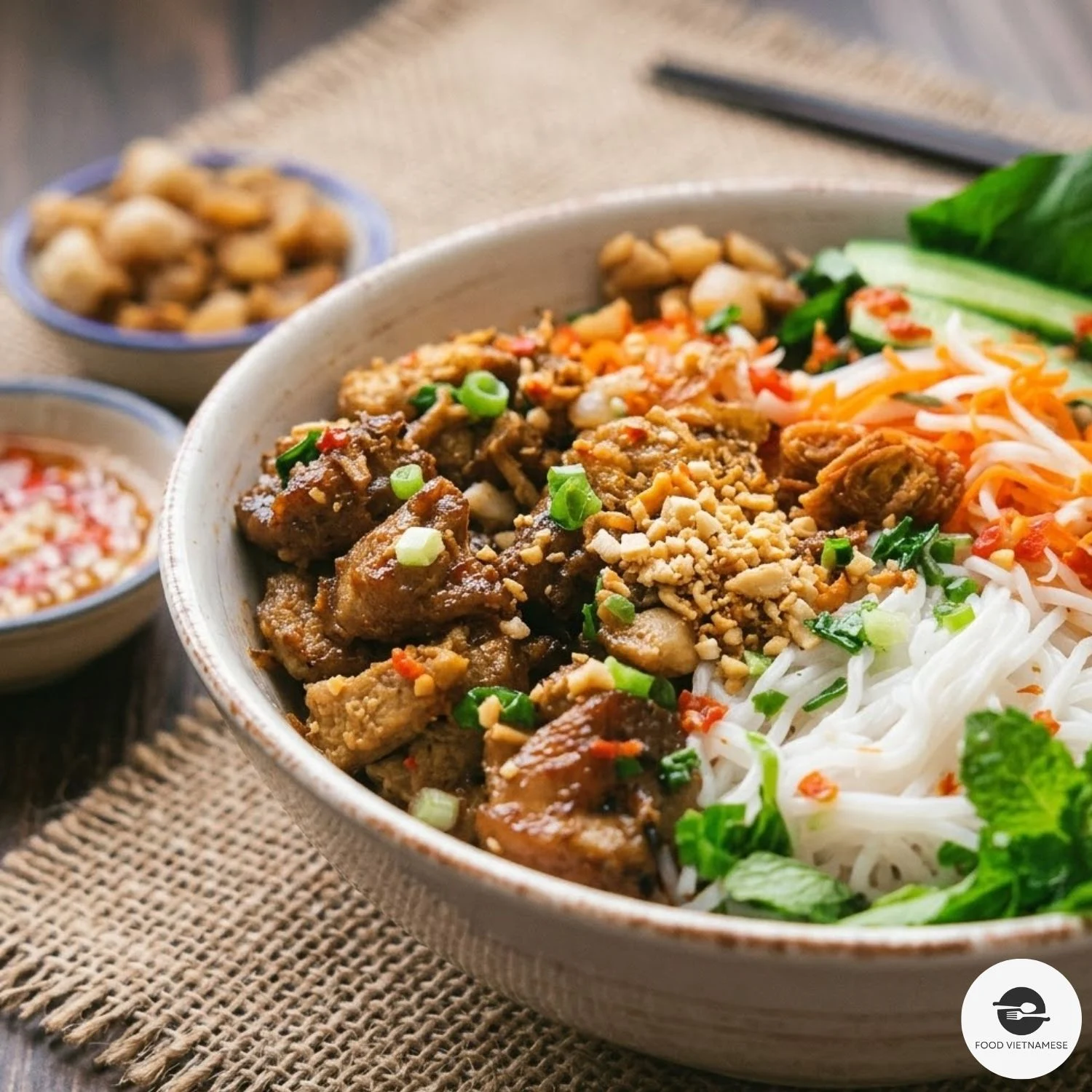
Bun Thit Nuong: Vietnam’s Grilled Pork Noodle Salad, Not a Soup
Bun Thit Nuong is a Vietnamese grilled pork noodle salad — cold rice vermicelli piled with lemongrass-marinated grilled…
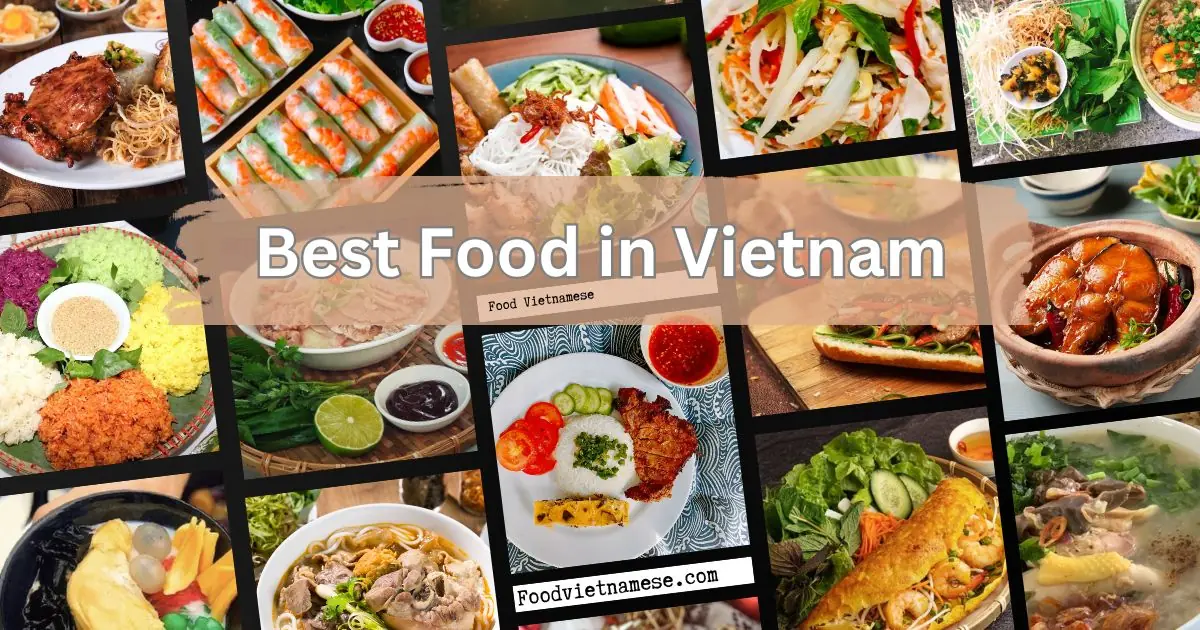
Best Vietnam Food: 15 Must-Try Dishes
Best Vietnam food is defined by one core principle: maximum flavor from the freshest possible ingredients. Vietnamese cuisine balances…
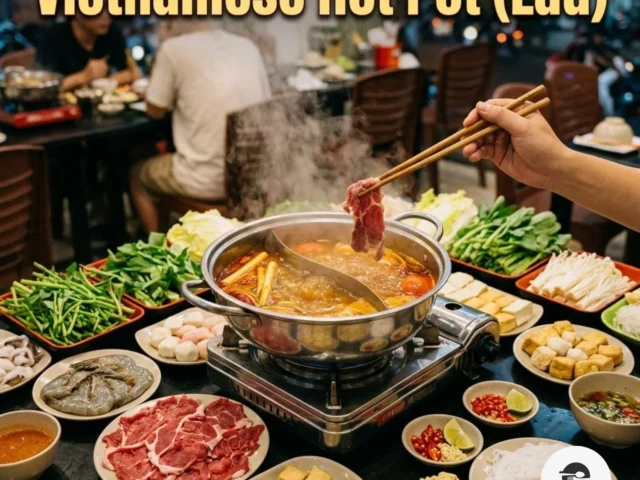
Vietnamese Hot Pot (Lẩu): Types, How to Eat, Dipping Sauces
Vietnamese hot pot (lẩu) is a pot of seasoned broth kept simmering at the table, where diners cook…