Table of contents
- 1. Pho – Vietnam’s Most Famous Food
- 2. Banh Mi – Vietnam Street Food at Its Best
- 3. Fresh Spring Rolls (Goi Cuon) – Lightest Vietnam Food
- 4. Bun Cha – The Dish President Obama Ate in Hanoi
- 5. Bun Bo Hue – Vietnam’s Spiciest Noodle Soup
- 6. Com Tam (Vietnamese Broken Rice) – Saigon’s Soul Food
- 7. Banh Xeo (Vietnamese Sizzling Crepe) – The Crispiest Vietnam Street Food
- 8. Cao Lau – Hoi An’s Most Unique Vietnam Food
- 9. Mi Quang – Central Vietnam’s Bold Noodle Dish
- 10. Vietnamese Egg Coffee – Hanoi’s Most Unusual Drink
- 11. Fried Spring Rolls (Cha Gio / Nem Ran) – A Vietnamese Classic
- 12. Bun Rieu – Vietnamese Crab Noodle Soup
- 13. Banh Cuon (Steamed Rice Rolls) – Hanoi’s Silkiest Breakfast
- 14. Hu Tieu – South Vietnam’s Clear Noodle Soup
- 15. Bo Kho (Vietnamese Beef Stew) – The Heartiest Vietnam Food
- Best Vietnam Food by City
- How to Eat Vietnam Food Like a Local
- Best Vietnam Food: Frequently Asked Questions
Best Vietnam food is defined by one core principle: maximum flavor from the freshest possible ingredients. Vietnamese cuisine balances five fundamental tastes — sweet, sour, salty, bitter, and umami — across every bowl, roll, and plate. From a morning bowl of pho in Hanoi to a plate of broken rice (Com Tam) under a Saigon sidewalk fan, Vietnam food is one of the world’s great culinary traditions, built on fragrant herbs, long-simmered broths, and centuries of North–Central–South regional evolution. In 2025, Vietnam was ranked 4th globally for most attractive cuisine by Condé Nast Traveller, and Asia’s Leading Culinary Destination by the World Culinary Awards.
This guide covers the 15 best Vietnam foods every visitor should try, with notes on what makes each dish distinctive and where to find the best version.
1. Pho – Vietnam’s Most Famous Food

Pho (pronounced “fuh”) is a Vietnamese noodle soup of long-simmered beef or chicken bone broth, flat rice noodles, thinly sliced meat, and a garnish plate of bean sprouts, Thai basil, lime, and chili. It is the single most recognized Vietnam food worldwide — appearing in international dictionaries and covered by CNN, TasteAtlas, and the Michelin Guide. Vietnam celebrates December 12 as National Pho Day (since 2017). Nam Dinh-style pho was recognized as a National Intangible Cultural Heritage in August 2024.
| Feature | Northern Pho (Hanoi / Nam Dinh) | Southern Pho (Saigon) |
|---|---|---|
| Broth | Clear, clean, less sweet, deep savory | Sweeter, slightly darker |
| Garnish | Spring onion, black pepper, soy sauce or chili | Bean sprouts, Thai basil, hoisin sauce, fresh herbs |
| Noodles | Narrower flat rice noodles | Slightly wider, softer noodles |
| Common cuts | Rare beef (tái), tendon (gân), tripe (sách) | Rare beef, brisket, tendon, beef balls |
| Calories | ~450–600 kcal per large bowl | |
Origin: Pho emerged in early 20th-century Nam Dinh province before spreading to Hanoi and, after 1975, to the world via the Vietnamese diaspora. The dish reflects a fusion of Vietnamese, French (pot-au-feu technique), and southern Chinese culinary influences.
Where to eat Pho
- Hanoi: Pho Thin (13 Lo Duc) — famous for stir-fried beef; Pho Bat Dan (49 Bat Dan) — classic queue-up style
- Nam Dinh: Village pho shops along Hang Dong Street — the birthplace of pho
- Ho Chi Minh City: Pho Hoa Pasteur (260C Pasteur, District 3), open since 1960
2. Banh Mi – Vietnam Street Food at Its Best

Banh Mi is a crispy baguette sandwich with a Vietnamese soul. The bread uses a rice flour blend that produces a thinner, crunchier crust than a French baguette. Fillings are entirely Vietnamese: pâté, Vietnamese pork sausage (chả lụa), cold cuts, pickled daikon and carrot (đồ chua), cucumber, cilantro, jalapeño, and house sauce. CNN Travel named Banh Mi one of the Top 25 Best Sandwiches in the World in 2025. The word “banh mi” entered the Oxford English Dictionary in 2011.
| Filling Type | Description | Common Region |
|---|---|---|
| Thap Cam (classic) | Pâté, pork sausage, cold cuts, pickled veg, herbs | Nationwide |
| Grilled meat (thit nuong) | Lemongrass-marinated pork, chicken, or beef | Central & South |
| Egg (trung) | Fried or scrambled egg with pâté | Nationwide (breakfast) |
| Xiu mai | Pork meatballs in tomato sauce | Ho Chi Minh City |
| Chay (vegetarian) | Tofu, mushroom, pickled vegetables | Nationwide |
Where to eat Banh Mi
- Hoi An: Bánh Mì Phượng (3 Phan Chau Trinh) — Anthony Bourdain called it “the best banh mi in the world”
- Ho Chi Minh City: Bánh Mì Huỳnh Hoa (26 Le Thi Rieng, District 1) — legendary for generous fillings
- Hanoi: Bánh Mì 25 (25 Hang Ca) — popular with locals and travelers alike
3. Fresh Spring Rolls (Goi Cuon) – Lightest Vietnam Food

Goi Cuon — called fresh spring rolls or summer rolls internationally — are translucent rice paper rolls filled with poached shrimp, sliced pork belly, rice vermicelli, lettuce, and fresh herbs (Thai basil, chives). No frying, no cooking at the table — assembled fresh and served at room temperature. They are one of Vietnam’s healthiest dishes, served with peanut dipping sauce or sweet fish sauce. Originating in southern Vietnam, Goi Cuon are now among the country’s most globally recognized foods.
Fresh Spring Rolls vs. Fried Spring Rolls
| Feature | Goi Cuon (Fresh Spring Rolls) | Cha Gio / Nem Ran (Fried Spring Rolls) |
|---|---|---|
| English names | Fresh spring rolls, summer rolls, crystal rolls | Fried spring rolls, Vietnamese egg rolls |
| Wrapper | Wet rice paper, translucent | Rice paper or pastry wrapper, fried crispy |
| Cooking method | No cooking — assembled fresh | Deep-fried in oil |
| Calories (est.) | ~80–100 kcal per roll | ~100–150 kcal per roll |
| Dipping sauce | Peanut sauce or nuoc cham | Sweet fish sauce (nuoc cham) |
4. Bun Cha – The Dish President Obama Ate in Hanoi

Bun Cha is a Hanoi specialty of charcoal-grilled pork patties and pork belly slices served alongside a bowl of sweet-sour fish sauce broth with pickled papaya and carrot, and a separate plate of rice vermicelli and fresh herbs. In May 2016, U.S. President Barack Obama ate Bun Cha with chef Anthony Bourdain at a Hanoi street restaurant, broadcast on CNN’s Parts Unknown, bringing global attention to this Vietnam food overnight.
Bun Cha vs. Bun Thit Nuong: Bun Cha (Hanoi) is served with a liquid dipping broth — the grilled pork sits in the sauce. Bun Thit Nuong (southern Vietnam) is a dry noodle bowl with grilled pork placed on top. Same core ingredients, completely different presentations and regional identities.
Where to eat Bun Cha in Hanoi
- Bun Cha Huong Lien (24 Le Van Huu, Hai Ba Trung) — the “Obama Bun Cha” restaurant; the original table is preserved behind glass
- Bun Cha Dac Kim (1 Hang Manh) — family-run since 1965, a Hanoi institution
5. Bun Bo Hue – Vietnam’s Spiciest Noodle Soup

Bun Bo Hue is the signature noodle soup of Hue, Vietnam’s former imperial capital. Its broth is categorically different from pho: built on beef and pork bones with lemongrass and fermented shrimp paste (mắm ruốc), annatto oil for color, and chili — fiery, complex, and deeply aromatic. Served with thick round noodles, pork knuckle (giò heo), crab paste sausage (chả cua), and blood cake. TasteAtlas described it as “a complex soup with a rich flavor and harmonious blend of traditional ingredients” and included it in the world’s 100 best breakfast dishes in 2025.
| Component | Details |
|---|---|
| Broth | Beef + pork bone, lemongrass, shrimp paste (mam ruoc), annatto oil |
| Noodles | Thick round rice vermicelli — wider than pho noodles |
| Protein toppings | Sliced beef, pork knuckle, crab paste sausage, blood cake |
| Fresh garnishes | Shredded banana blossom, bean sprouts, perilla, Vietnamese coriander |
| Calories (est.) | ~479 kcal per bowl, ~18.4g protein |
Flavor note for first-timers: Fermented shrimp paste (mắm ruốc) is the ingredient that defines Bun Bo Hue. It delivers an assertive umami depth unlike anything in pho. Order a small bowl first if you are new to fermented seafood seasonings.
6. Com Tam (Vietnamese Broken Rice) – Saigon’s Soul Food
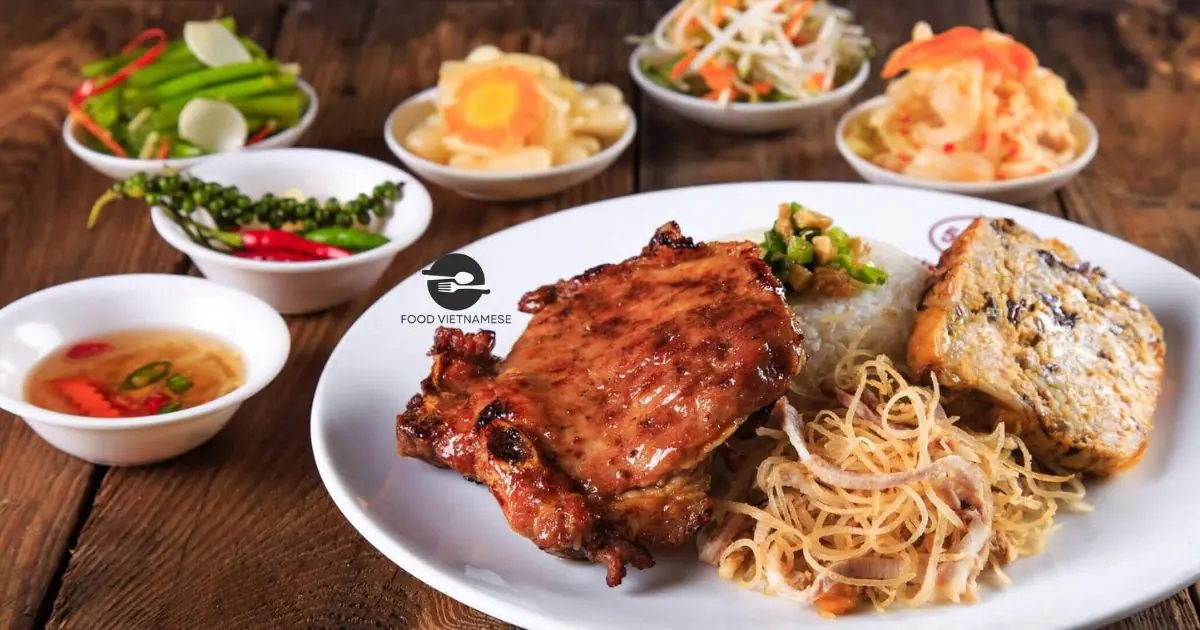
Com Tam (broken rice) is Ho Chi Minh City’s most essential everyday dish — a plate of broken rice grains (smaller, irregular grains that crack during milling, once sold cheaply to laborers) topped with the classic suon-bi-cha trio: a grilled pork chop marinated in the French style, shredded pork skin mixed with toasted rice powder (bì), and a steamed egg meat loaf (chả trứng). Finished with scallion oil and sweet fish sauce. The Michelin Guide 2025 called Com Tam “a dish where every level of society sits and eats together.” TasteAtlas ranked it among the world’s 100 best breakfast dishes in 2025.
Why “broken” rice? Tấm (broken rice) grains were historically a milling byproduct — sold cheaply to Mekong Delta laborers. What began as survival food is now Saigon’s most beloved meal, eaten from breakfast through midnight. The three-component topping reflects cross-cultural fusion: French technique (the grilled chop), Northern Vietnamese tradition (the bì), and Chinese influence (the egg loaf).
Where to eat Com Tam in Ho Chi Minh City
- Com Tam Ba Ghien (84 Dang Van Ngu, Phu Nhuan) — city-wide institution since the 1980s
- Com Tam Thuan Kieu — one of Saigon’s oldest surviving com tam shops
7. Banh Xeo (Vietnamese Sizzling Crepe) – The Crispiest Vietnam Street Food

Banh Xeo — the name means “sizzling cake,” named for the sound the batter makes when it hits the hot pan — is a crispy savory crepe made from rice flour batter with turmeric and coconut milk, filled with shrimp, sliced pork, bean sprouts, and mung beans. Diners break off pieces, wrap them in mustard leaf or lettuce with herbs, and dip in sweet fish sauce. The contrast between the crackling crepe and fresh greens is what makes it one of the most satisfying Vietnam foods to eat.
Banh Xeo Across Three Regions
| Region | Size | Key Characteristics |
|---|---|---|
| North Vietnam | Small (~15cm) | No coconut milk, thinner batter, more delicate |
| Central Vietnam (Hue, Da Nang) | Very small (individual molds) | Extra crispy, eaten whole without wrapping |
| South Vietnam | Large (~30–40cm) | Coconut milk batter, richer filling, eaten wrapped in rice paper |
8. Cao Lau – Hoi An’s Most Unique Vietnam Food

Cao Lau is arguably the most geographically specific Vietnam food — a noodle dish found only in Hoi An. Its thick, chewy noodles are traditionally made using water from the ancient Ba Le well and ash lye from wood burned on Cu Lao Cham island. These hyper-local ingredients give the noodles a distinctive pale-yellow color and firm texture that cannot be replicated elsewhere. Served with char siu pork, crispy pork cracklings (tóp mỡ), raw Tra Que herbs, and almost no broth. The dish reflects Hoi An’s centuries of trade history, with influences from Japanese soba and Chinese char siu visible in every bowl.
What makes Cao Lau unique: Most Vietnamese noodle dishes are defined by their broth. Cao Lau is defined by the near absence of it — only a few spoonfuls of pork cooking liquid bind the bowl together. This makes it unlike any other Vietnam food, and a dish that must be eaten in Hoi An to taste it as intended.
9. Mi Quang – Central Vietnam’s Bold Noodle Dish
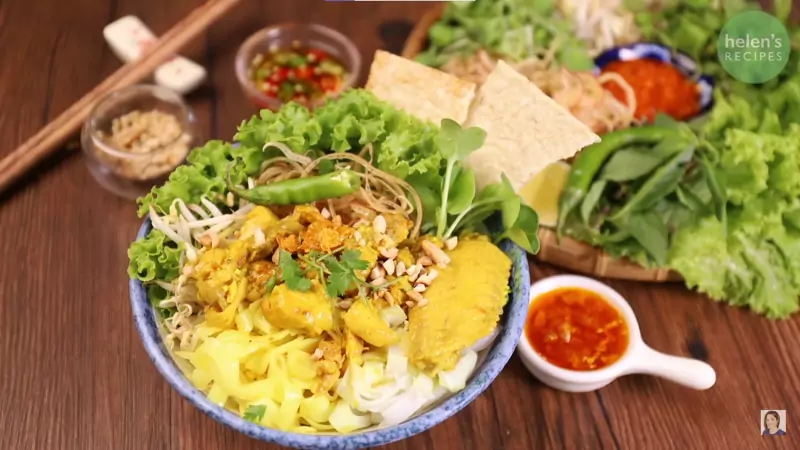
Mi Quang is the signature noodle dish of Quang Nam and Da Nang, made with wide, flat yellow noodles (colored and flavored with turmeric) served in a very small amount of thick, savory “noodle liquid” — not a full soup. Typical toppings include shrimp, sliced pork, quail eggs, peanuts, and sesame rice crackers (bánh tráng nướng) crumbled in for texture. The Michelin Guide 2025 named Mi Quang Da Nang’s signature dish, calling it “a colorful noodle dish with bold flavors.”
Mi Quang vs. Cao Lau vs. Pho
| Feature | Mi Quang | Cao Lau | Pho |
|---|---|---|---|
| Noodle type | Wide, flat, turmeric-yellow | Thick, chewy, pale yellow | Flat, thin, white |
| Liquid / broth | Small amount, thick and savory | Minimal (almost dry) | Generous clear broth |
| Key toppings | Shrimp, pork, peanuts, sesame cracker | Char siu pork, pork crackling | Sliced beef or chicken, herbs |
| Origin | Quang Nam – Da Nang | Hoi An | Nam Dinh – Hanoi |
10. Vietnamese Egg Coffee – Hanoi’s Most Unusual Drink

Vietnamese Egg Coffee (Cà phê trứng) is a Hanoi invention from 1946: strong robusta coffee brewed through a phin drip filter, topped with a thick, velvety foam of whipped egg yolks beaten with condensed milk and sugar until pale and mousse-like. The result tastes like a liquid tiramisu — rich, sweet, and deeply satisfying. Created at Giang Café when fresh milk was scarce during wartime and bartender Nguyen Van Giang substituted whipped egg for milk foam. TasteAtlas included Vietnamese Egg Coffee in its list of the world’s 63 best coffee drinks in 2025.
Where to drink Vietnamese Egg Coffee in Hanoi
- Giang Café (39 Nguyen Huu Huan, Hoan Kiem) — the original inventor’s café, still run by his family since 1946
- Dinh Café (13 Dinh Tien Hoang) — classic Hanoi setting overlooking Hoan Kiem Lake
11. Fried Spring Rolls (Cha Gio / Nem Ran) – A Vietnamese Classic
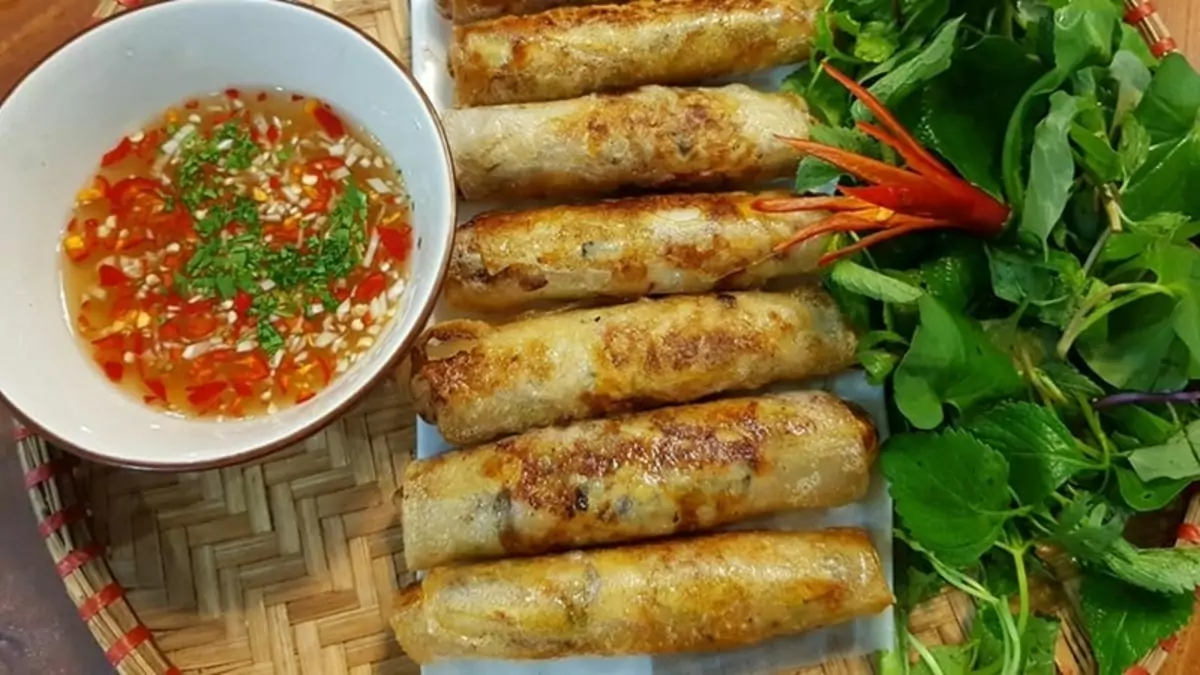
Fried spring rolls — called chả giò in the South and nem rán in the North — are crispy deep-fried rolls filled with ground pork, shrimp, glass noodles, wood ear mushrooms, and grated carrots. The outer wrapper is rice paper or spring roll pastry, fried until deeply golden and shatteringly crisp. One of Vietnam’s most ancient dishes, fried spring rolls appear at ceremonial feasts, Tet celebrations, and everyday dinners across the country. Internationally they are often the first Vietnam food people encounter outside Vietnam.
Name note: Nem rán (North) and chả giò (South) are the same dish with slight regional variations in filling and wrapper. Both translate to “fried spring rolls” in English. They are distinct from gỏi cuốn (fresh, unfried spring rolls) — a common point of confusion for new visitors.
12. Bun Rieu – Vietnamese Crab Noodle Soup

Bun Rieu is a rice vermicelli soup with a tangy, tomato-orange broth built from ground field crab paste. When heated, the crab protein solidifies into fluffy orange-gold curd clusters (riêu) that float on the surface — the visual and flavor signature of the dish. Served with fried tofu, pork blood cake, and a plate of raw vegetables. Fermented shrimp paste (mắm tôm) is offered on the side for those who want extra depth. A quintessential northern Vietnam food, now popular nationwide.
| Component | Details |
|---|---|
| Broth base | Ground field crab paste + tomato + lemongrass |
| Riêu (crab curds) | Crab protein clusters, orange-gold, float on broth surface |
| Key toppings | Fried tofu, pork blood cake, pork offal |
| Optional seasoning | Fermented shrimp paste (mắm tôm) — assertive, traditional |
| Calories (est.) | ~482 kcal per bowl, ~16.5g protein |
13. Banh Cuon (Steamed Rice Rolls) – Hanoi’s Silkiest Breakfast
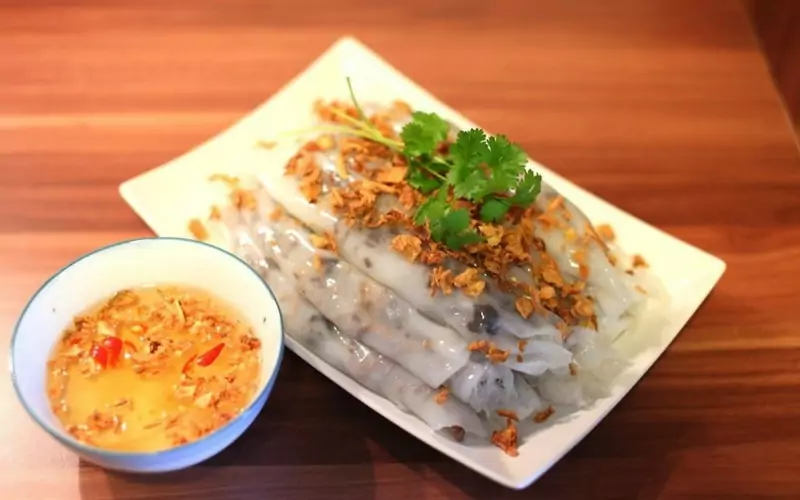
Banh Cuon are paper-thin sheets of steamed rice batter, stretched over a cloth-covered steaming drum, filled with seasoned ground pork and wood ear mushrooms, then folded and served with Vietnamese pork sausage and warm fish sauce. The most refined regional variation — Bánh Cuốn Thanh Trì — is made unfilled, dressed only with fried shallots, and is considered Hanoi’s most delicate street food. The batter sheets are so thin they are nearly translucent; skilled makers peel each sheet off the steaming cloth in under ten seconds.
14. Hu Tieu – South Vietnam’s Clear Noodle Soup

Hu Tieu is the dominant noodle soup of southern Vietnam, rooted in Teochew Chinese and Khmer culinary traditions. The broth is clear and naturally sweet — simmered from pork bones and dried squid without the heavy spicing of pho or bun bo hue — served over rice noodles with shrimp, pork, liver, quail eggs, and bean sprouts. Eaten wet (in broth) or dry (with broth on the side). Three regional styles each have devoted followings:
| Style | Noodle | Broth | Origin |
|---|---|---|---|
| Nam Vang (Phnom Penh-style) | Soft rice noodle | Light, clear, mildly sweet | Phnom Penh → Ho Chi Minh City |
| My Tho-style | Thin, firm, distinctively chewy | Richer, long-simmered pork bone | Tien Giang Province |
| Sa Dec-style | Softer, thinner noodle | Lighter, more delicate | Dong Thap Province |
15. Bo Kho (Vietnamese Beef Stew) – The Heartiest Vietnam Food

Bo Kho is a slow-braised beef stew spiced with lemongrass, ginger, star anise, five-spice powder, and chili — producing a thick amber-orange gravy around tender, gelatinous beef shank or tendon. Carrots add sweetness and color. Eaten with a crusty banh mi for dipping, or ladled over fresh noodles. TasteAtlas ranked Bo Kho 28th in its list of the world’s 100 best breakfast dishes in 2025 with a 4.4/5 rating — the highest score among all Vietnamese dishes on that list.
Best Vietnam Food by City
| City / Region | Must-Try Vietnam Foods |
|---|---|
| Hanoi | Pho Bo, Bun Cha, Banh Cuon, Vietnamese Egg Coffee |
| Nam Dinh | Pho Bo (National Heritage 2024) |
| Hue | Bun Bo Hue, Com Hen (clam rice), Banh Beo, Banh Nam |
| Da Nang | Mi Quang, Bun Mam Nem, Banh Trang Cuon Thit Heo |
| Hoi An | Cao Lau, Banh Mi Phuong, Com Ga Hoi An, Mi Quang |
| Ho Chi Minh City (Saigon) | Com Tam, Banh Xeo, Hu Tieu Nam Vang, Bo Kho, Cha Gio |
| Mekong Delta | Hu Tieu My Tho, Banh Xeo (large southern style), Grilled elephant ear fish |
How to Eat Vietnam Food Like a Local
- Order noodle soups early: Pho, banh cuon, and bun rieu are at their best from 6–9am — broth has been simmering overnight. Many stalls sell out before noon.
- Eat where locals eat: Plastic stools, no signage, and a line of local customers is a stronger quality signal than any tourism award.
- Use the herb plate: The herb garnish is not decoration — it is a core part of the dish. Mix herbs into noodle soups, wrap them in banh xeo, stuff them inside banh mi. The herbs complete the dish.
- Try Vietnamese coffee: Ca Phe Sua Da (iced milk coffee) is made from robusta beans — stronger and more bitter than arabica. Vietnamese Egg Coffee is essential in Hanoi. Drip phin filter is the correct brewing method.
- Fish sauce is not optional: Nuoc cham (fish sauce with lime, sugar, garlic, chili) sits on every table because it makes everything taste complete. Use it.
Best Vietnam Food: Frequently Asked Questions
What is the best Vietnam food?
The most universally acclaimed Vietnam foods are Pho (beef noodle soup), Banh Mi (Vietnamese sandwich), fresh spring rolls (Goi Cuon), Bun Cha (Hanoi grilled pork noodles), Bun Bo Hue (spicy lemongrass beef soup), Com Tam (broken rice), Banh Xeo (Vietnamese sizzling crepe), Cao Lau (Hoi An noodles), Mi Quang, and Vietnamese Egg Coffee. The best picks depend on which region you are visiting.
What should I eat first when visiting Vietnam?
Start with Pho — it is accessible, mild in flavor, and Vietnam’s most iconic dish. Then move to Banh Mi and fresh spring rolls (Goi Cuon). Avoid Bun Bo Hue or dishes with shrimp paste (mam ruoc / mam tom) until you have had a chance to acclimate to Vietnamese fermented flavors.
What is Vietnam’s most famous food?
Pho is Vietnam’s most famous food internationally. Banh Mi ranks second, named a Top 25 Best Sandwich in the World by CNN Travel in 2025. Both are recognized globally and have entries in major English-language dictionaries.
What food is Hanoi known for?
Hanoi is known for Pho Bo (beef pho), Bun Cha (grilled pork noodles — eaten by President Obama with Anthony Bourdain in 2016), Banh Cuon (steamed rice rolls), and Vietnamese Egg Coffee (Ca Phe Trung). Hanoi cuisine tends to be less sweet and more subtly savory than food in southern Vietnam.
What is the difference between Pho and Bun Bo Hue?
Pho has a clear, lightly spiced broth (star anise, cinnamon, ginger) with flat rice noodles and beef or chicken. Bun Bo Hue has a spicy, intensely flavored broth built on lemongrass and fermented shrimp paste, with thick round noodles and pork knuckle. They come from different regions — pho from Nam Dinh and Hanoi, bun bo hue from Hue — and are not interchangeable.
Where can I find the best Vietnam food by city?
Hanoi: Pho, Bun Cha, Banh Cuon, Egg Coffee. Hue: Bun Bo Hue, Com Hen, Banh Beo. Hoi An: Cao Lau, Banh Mi Phuong, Mi Quang. Ho Chi Minh City: Com Tam, Banh Xeo, Hu Tieu, Bo Kho. Each city has distinct local specialties that exist nowhere else in Vietnam.

Related articles
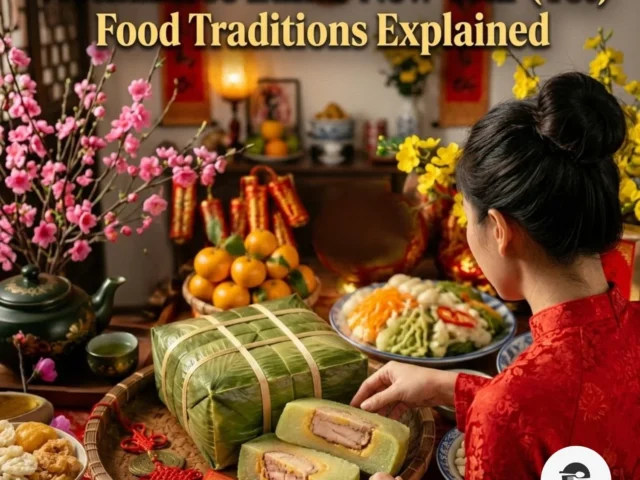
Vietnamese Lunar New Year (Tết) Food Traditions Explained: What Goes on the Table, and Why
Vietnamese Lunar New Year (Tết) food traditions center on sticky rice cakes (bánh chưng in the north, bánh…
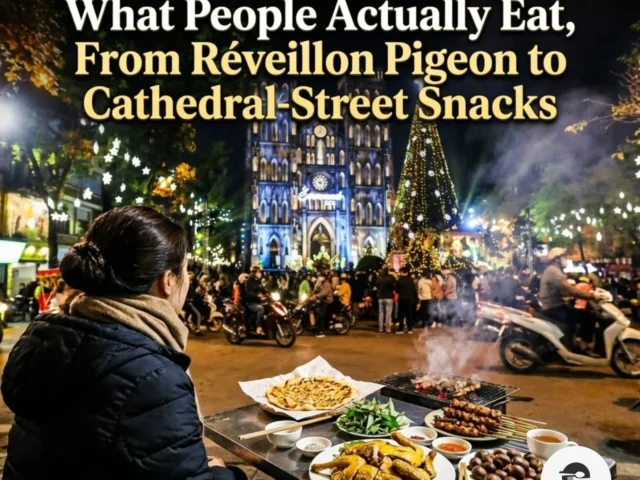
Christmas Eve in Vietnam: What People Actually Eat, From Réveillon Pigeon to Cathedral-Street Snacks
Christmas Eve in Vietnam has no single national dish. What people eat depends on who they are: Catholic…
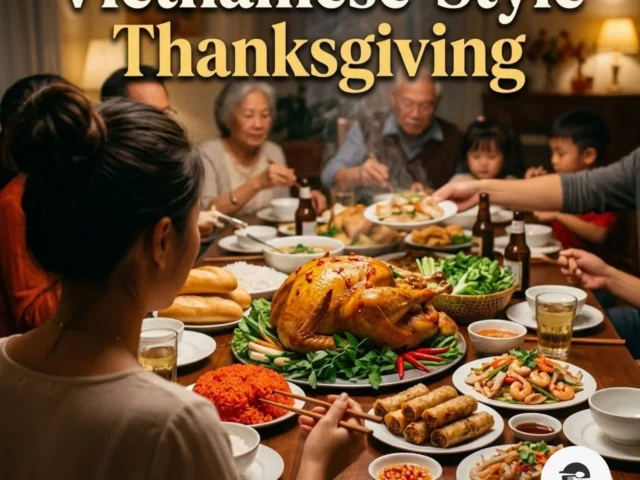
Vietnamese-Style Thanksgiving: How Vietnamese-American Families Fuse the Two Traditions
A Vietnamese-style Thanksgiving keeps the American holiday and builds a Vietnamese menu around it. Vietnamese-American families serve chả…