Table of contents
- Why Christmas Eve Has No Set Menu in Vietnam
- The Réveillon Table: Gà Ta, Bồ Câu, and Gà Hầm Ngũ Quả
- Bánh Khúc Cây: The One Dish That Stays French
- Hà Nội: Street Snacks Around Nhà Thờ Lớn
- Sài Gòn: Sugarcane Juice and Pastries Under the Lights
- Christmas Eve Eating at a Glance
- How to Eat on Christmas Eve as a Visitor
- Frequently Asked Questions
Who celebrates: About seven million Catholics, per Vietnam Discovery; Young people also gather near the cathedrals in Hà Nội and Sài Gòn
Réveillon table: Gà ta, bồ câu, gà hầm ngũ quả, sometimes vịt quay, then bánh khúc cây
Hà Nội street snacks: Nem chua nướng, bánh tráng trộn, bánh rán mặn, miến lươn
Sài Gòn street snacks: Nước mía, trà tắc, pastries near Nhà thờ Đức Bà
Tạ Hiện Street, Hà Nội: Bia cỏ, chân gà, nem rán, chim cút nướng mật ong
Fixed national dish: None
Search for Christmas Eve food in Vietnam and most lists give you a turkey substitute or a generic Western menu. The real picture is three separate tables: the family réveillon, the cathedral-street crowd, and the restaurant night out. Each has its own food. For the holiday that does have a fixed menu, see our guide to Vietnamese Lunar New Year food traditions.
Why Christmas Eve Has No Set Menu in Vietnam
Christmas came to Vietnam through French Catholicism, and Vietnam Discovery puts Christians at 8 to 10 percent of the population, with about seven million Catholics. For those families the night centers on midnight Mass. For everyone else it is a night out, with no dish attached to it.
That is the opposite of Tết, where every dish has a rule. On Christmas Eve, the food follows the household.
The Réveillon Table: Gà Ta, Bồ Câu, and Gà Hầm Ngũ Quả
Réveillon is the late meal after Mass, a French custom. Tuổi Trẻ reports that it began among Vietnamese families with means and has spread over the past decade or so.
The French turkey rarely appears. Gà ta, Vietnamese native chicken, takes its place, and the same report says cooks prefer smaller breeds such as gà kiến over big hybrid birds. Bồ câu is increasingly common, and the owner of 48 Bistro Lê Anh Tú says pigeon orders in réveillon season are quite numerous. Vịt quay, honey-glazed roast duck, is an occasional addition.
The dish that shows the meal has gone local is gà hầm ngũ quả, chicken braised with red dates, longan, mushrooms, wood ear, and lotus seeds. Nothing about it is French.
Tuổi Trẻ calls réveillon a democratic meal, because everyone is asked what they want. That explains why no two households match.
Bánh Khúc Cây: The One Dish That Stays French
The cake is the exception, and it is kept almost unchanged. VnExpress traces bánh khúc cây to the French custom of burning a large log on Christmas Eve to drive off winter darkness. When big fireplaces fell out of use in the 19th century, Parisian bakers made an edible version: a rolled sponge with chocolate buttercream, decorated like bark.
Tuổi Trẻ writes the name as bánh khúc củi, while VnExpress uses bánh khúc cây. Both appear, so search for either. VnExpress adds that the cake spread widely after the Second World War.
Hà Nội: Street Snacks Around Nhà Thờ Lớn
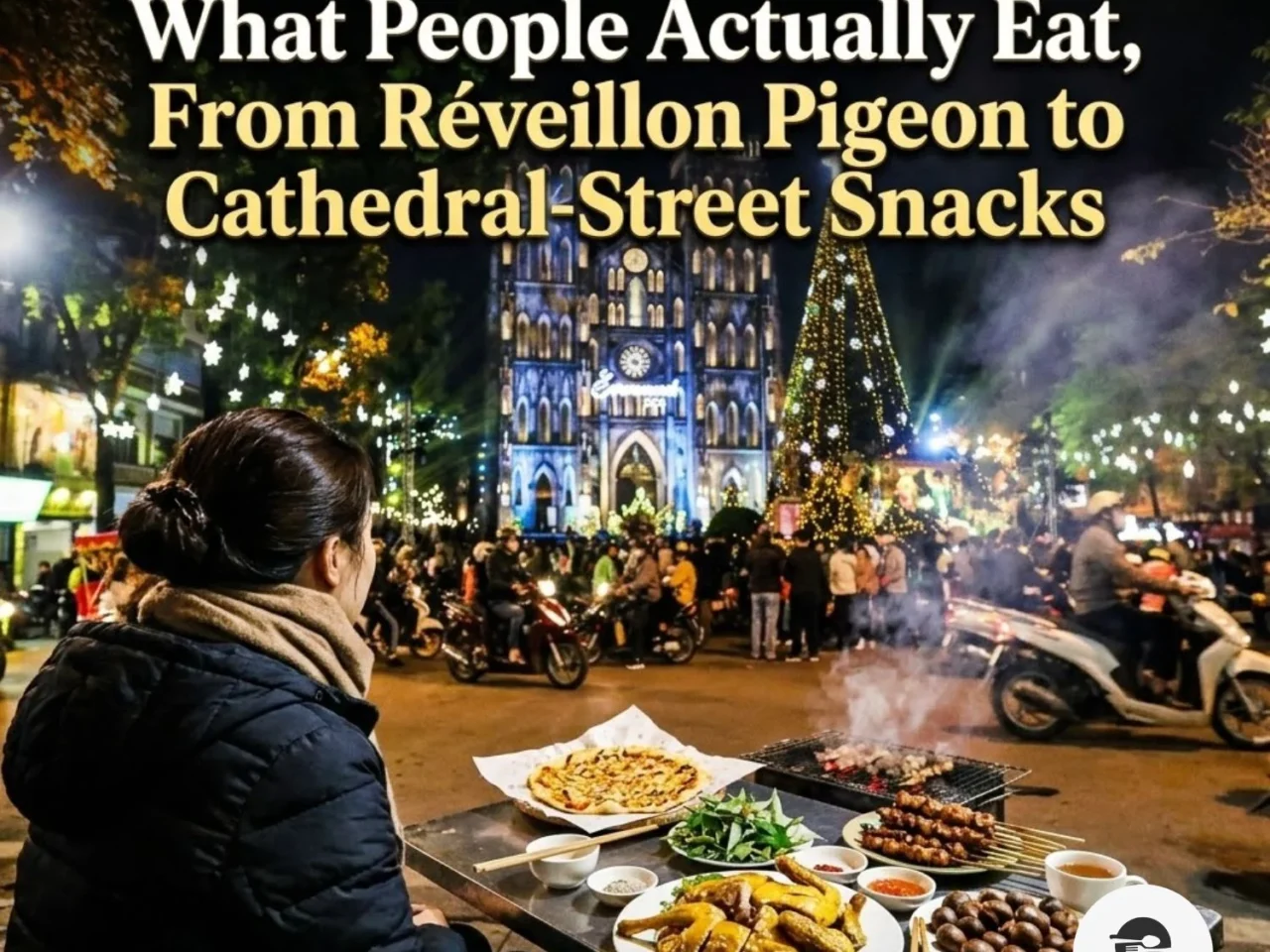
Most people around St. Joseph’s Cathedral on Christmas Eve are not sitting down to réveillon. They are walking, and eating standing up. VietNamNet lists the local food by street.
Near the cathedral it names nem chua nướng, bánh tráng trộn, bánh rán mặn, and miến lươn. On Tạ Hiện Street it lists bia cỏ, chân gà, nem rán, chim cút nướng mật ong, and bún mọc. The Hàng Mã area gets cháo sườn sụn, bún ốc, and bún thang.
The nem rán is the same fried roll that turns up on Tết tables, which is the closest thing to overlap between the two holidays.
Sài Gòn: Sugarcane Juice and Pastries Under the Lights
Ho Chi Minh City’s version centers on Nhà thờ Đức Bà and Tân Định. A Thanh Niên report said the cathedral was lit from 6:45 p.m. to 2 a.m. that season, with peak crowds after 9 p.m.
Vendors stayed open to match. The paper lists nước mía (sugarcane juice) carts, trà tắc (kumquat tea) stands, and pastry shops, open until about one or two in the morning.
Christmas Eve Eating at a Glance
| Who | Where | What they eat |
|---|---|---|
| Catholic and well-off families | Home or bistro, after Mass | Gà ta, bồ câu, gà hầm ngũ quả, bánh khúc cây |
| Hà Nội crowds | Around Nhà Thờ Lớn, Tạ Hiện | Nem chua nướng, bánh tráng trộn, miến lươn, chim cút nướng mật ong |
| Sài Gòn crowds | Around Nhà thờ Đức Bà | Nước mía, trà tắc, pastries |
I got to Nhà Thờ Lớn in Hà Nội around eight on Christmas Eve and spent a long time covering a short block. I bought bánh tráng trộn in a plastic bag and ate it standing next to a shop shutter, with a cup of trà chanh from the next stall. The crowd was mostly teenagers taking photos. Nobody near me was eating anything that looked like Christmas dinner.
Kelly Thuy — field notes, Hà Nội
How to Eat on Christmas Eve as a Visitor
Treat it as a street-snack evening, not a dinner reservation. Vietnam Discovery says cars are kept out of the city center that night, so plan to walk. Eat a proper meal before you go, then graze.
Watch for the usual pitfalls in crowded areas, which our guide to common street food mistakes covers, starting with asking the price first. For typical costs, see what food costs in Vietnam, and for regular meals in each city, the best food in Vietnam.
Frequently Asked Questions
It depends on the household. Catholic and well-off families eat a late réveillon of gà ta, bồ câu, or gà hầm ngũ quả, with bánh khúc cây for dessert. Street crowds near the cathedrals eat snacks such as nem chua nướng and bánh tráng trộn.
No. Unlike Tết, Christmas Eve has no fixed national menu. Families adapt a French-style réveillon with local ingredients, and gà ta usually replaces the turkey.
Réveillon is the late meal after midnight Mass, a French custom. Tuổi Trẻ says it began among Vietnamese families with means and has spread over the past decade or so.
Bánh khúc cây is the French bûche de Noël, a rolled sponge cake with chocolate buttercream made to look like a log. Some Vietnamese writers spell the name bánh khúc củi.
VietNamNet lists nem chua nướng, bánh tráng trộn, bánh rán mặn, and miến lươn near the cathedral, and chim cút nướng mật ong and nem rán on Tạ Hiện Street.

Related articles
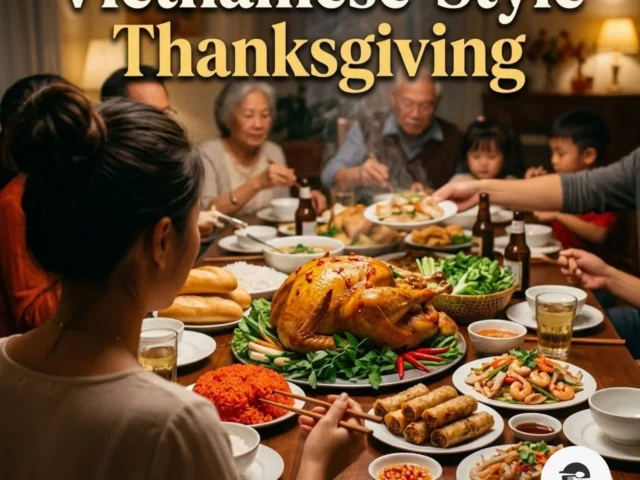
Vietnamese-Style Thanksgiving: How Vietnamese-American Families Fuse the Two Traditions
A Vietnamese-style Thanksgiving keeps the American holiday and builds a Vietnamese menu around it. Vietnamese-American families serve chả…
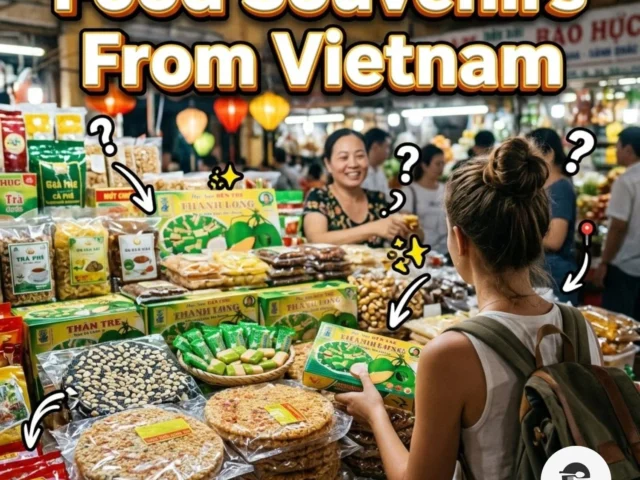
Food Souvenirs From Vietnam: What You Can Bring Home (U.S., UK, Australia Rules)
Food souvenirs from Vietnam that usually travel well are roasted coffee, tea, and sealed packaged snacks. The items…
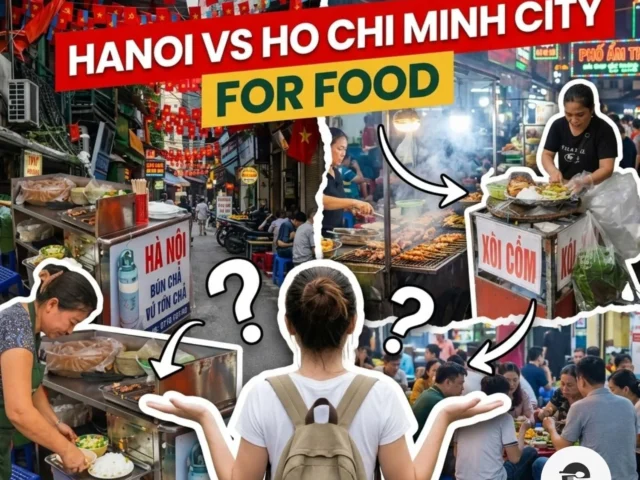
Hanoi vs Ho Chi Minh City for Food: Which City Should You Pick?
Hanoi vs Ho Chi Minh City for food comes down to taste. Pick Hà Nội for clear-broth phở,…