Table of contents
Egg roll wrapper: Thick wheat flour and egg dough
Spring roll wrapper: Thin rice paper (bánh tráng), fresh or fried
Egg roll cooking method: Always deep-fried
Spring roll cooking method: Fresh (unfried) or fried, depending on type
Calories per piece: Egg roll ~200 kcal; fried spring roll ~70–120 kcal; fresh spring roll ~50–70 kcal
These two names get used interchangeably on a lot of takeout menus, which is exactly why the confusion persists — but egg rolls and spring rolls come from different culinary traditions, use different wrappers, and land in very different places on a calorie count. This breaks down what actually separates them and where the numbers diverge most.
What Is an Egg Roll?
The egg roll as most people know it is a Chinese-American invention, not a dish with deep roots in China itself — it developed in American Chinese restaurants in the early-to-mid 20th century. Its defining feature is the wrapper: a thick, chewy dough made from wheat flour and egg, which fries up into a substantial, blistered, golden shell. Inside, the filling is typically shredded cabbage, carrots, and often pork or shrimp, bound together and always served deep-fried, never fresh.
What Is a Spring Roll?
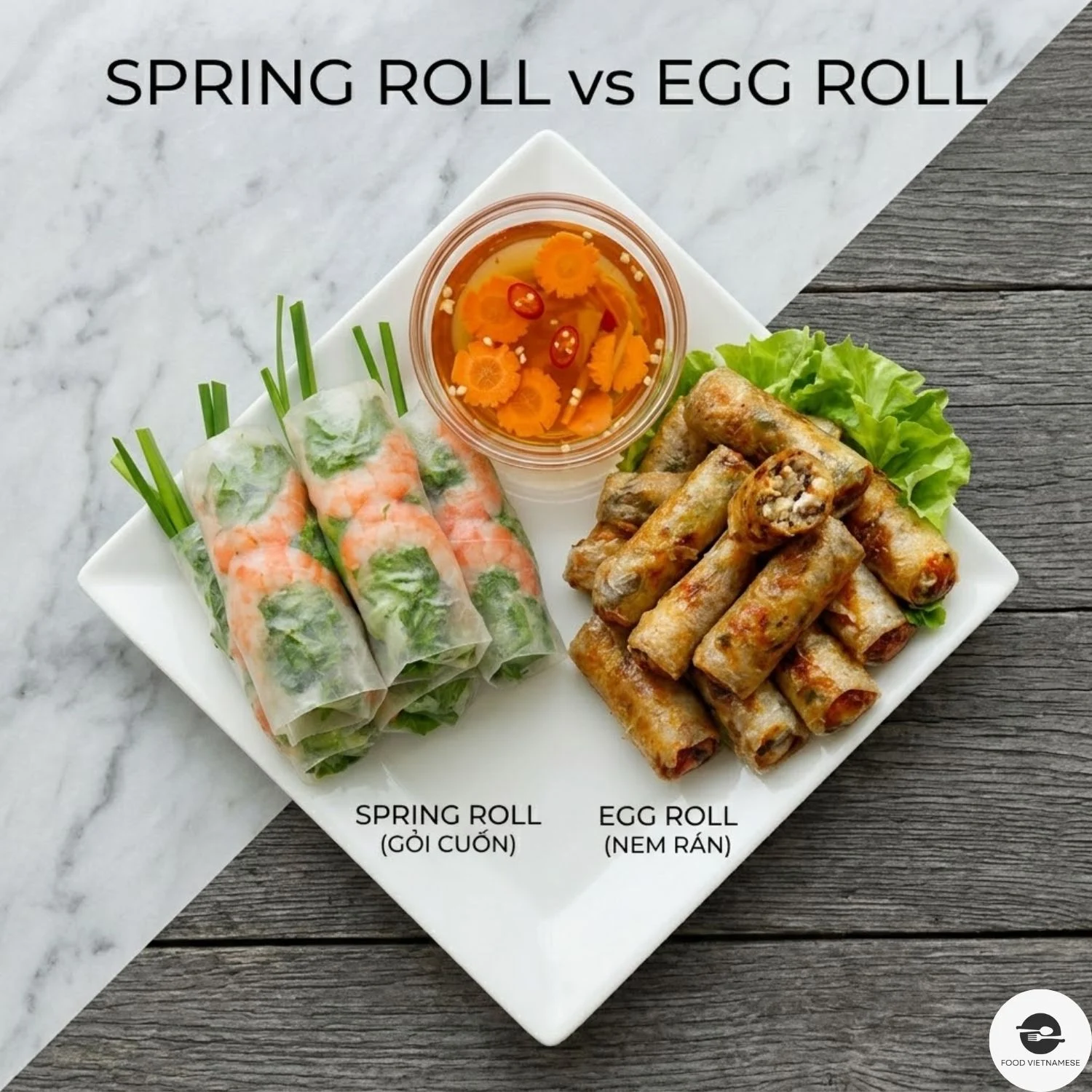
“Spring roll” is a wider umbrella term, and its meaning shifts depending on the cuisine. In Vietnamese cooking specifically, it usually refers to one of two distinct dishes, both built on rice paper (bánh tráng) rather than a wheat wrapper:
Gỏi cuốn (fresh spring roll): Rice paper wrapped, unfried, filled with poached shrimp, pork, rice vermicelli, lettuce, and fresh herbs, served at room temperature with a dipping sauce.
Chả giò (fried spring roll): Rice paper wrapped around ground pork, wood ear mushroom, and vermicelli, then deep-fried — the closest Vietnamese equivalent to what a Western menu might call a “fried spring roll,” covered in more detail in the guide to making chả giò.
Both use rice paper, both are typically thinner and smaller than an egg roll, and neither uses the thick wheat-and-egg dough that defines an egg roll.
Spring Roll vs Egg Roll: Side-by-Side
| Feature | Egg Roll | Fried Spring Roll (Chả Giò) | Fresh Spring Roll (Gỏi Cuốn) |
|---|---|---|---|
| Wrapper | Thick wheat & egg dough | Thin rice paper | Thin rice paper |
| Cooking method | Deep-fried | Deep-fried | Not cooked (fresh) |
| Typical filling | Cabbage, carrot, pork/shrimp | Ground pork, wood ear mushroom, vermicelli | Shrimp, pork, vermicelli, herbs |
| Texture | Thick, blistered, crunchy | Thin, delicate, crispy | Soft, chewy, translucent |
| Origin | Chinese-American | Vietnam | Vietnam |
| Calories (per piece) | ~200 kcal | 70–120 kcal | 50–70 kcal |
Calories Comparison: Why the Gap Is So Large
The calorie difference comes from two compounding factors: wrapper thickness and overall size. An egg roll’s wheat-and-egg dough is noticeably thicker than rice paper, which means it absorbs significantly more oil during frying and contributes more calories on its own before any filling is counted. Egg rolls are also typically larger than a single chả giò, adding filling volume on top of the wrapper difference.
Fresh gỏi cuốn sits at the low end simply because nothing is fried — the calorie count comes almost entirely from the lean protein and vermicelli inside, which is why it’s frequently cited as one of the lightest options in Vietnamese cuisine, at 50 to 70 calories per roll even with a full serving of shrimp and pork.
Which Is Healthier?
By calorie count alone, fresh spring rolls (gỏi cuốn) win clearly, since nothing about them is fried. Between egg rolls and fried spring rolls (chả giò), the thinner rice paper wrapper gives chả giò a real advantage over the thicker wheat wrapper of an egg roll, both in calories and in oil absorption. Neither fried option is “unhealthy” in moderation, but if the goal is the lightest option on the menu, fresh rice paper rolls dipped in nước chấm are the clear choice.
I’ve had visitors point at a plate of chả giò and call it an egg roll more times than I can count, and I understand why — from across a restaurant table, fried and golden looks like fried and golden. But the first bite always gives it away: an egg roll has a thick, doughy bite to the wrapper, while chả giò shatters thin and crisp, almost glassy, because rice paper simply can’t hold the same amount of batter that wheat dough does.
Kelly Thuy — restaurant field notes, Saigon
Frequently Asked Questions
No — they use different wrappers and often different cooking methods. Egg rolls use a thick wheat-and-egg dough and are always deep-fried, while Vietnamese spring rolls use thin rice paper and can be either fresh (gỏi cuốn) or fried (chả giò).
An egg roll typically has more calories, around 200 per piece, compared to 70–120 for a fried Vietnamese spring roll (chả giò) and just 50–70 for a fresh spring roll (gỏi cuốn). The thicker wheat wrapper on an egg roll absorbs more oil during frying.
Yes, by a wide margin — fresh spring rolls aren’t fried at all, so they carry a fraction of the calories and fat of a deep-fried egg roll while still delivering protein from shrimp or pork and fiber from the herbs and vegetables.
Vietnamese spring rolls, both fresh and fried, use rice paper (bánh tráng) — a thin sheet made from rice flour and water — rather than the wheat-and-egg dough used for Chinese-American egg rolls.

Related articles
Com Tam Calories: The Rice Isn’t the Problem, the Toppings Are
Com tam calories range from about 500 to 800 per plate, and almost none of that swing comes…
Goi Cuon Calories: The Roll Is Light — the Peanut Sauce Isn’t
Goi cuon calories run surprisingly low for the roll itself — a standard shrimp-and-pork gỏi cuốn comes in…
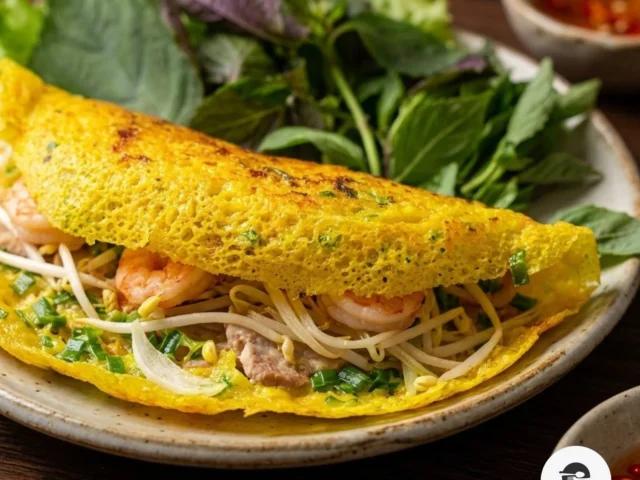
Banh Xeo Calories: One Pancake, Two Very Different Numbers
Banh xeo calories run about 140–155 per 100 grams across most nutrition databases, but the number that actually…