Table of contents
Calories per roll (shrimp and pork): Roughly 50–70 kcal
Protein: Roughly 4–6g per roll, mostly from shrimp and pork
Fat: Roughly 1–2g per roll — nothing here is fried
Carbohydrates: Roughly 8–10g per roll, mostly rice paper and vermicelli
Hoisin-peanut dipping sauce: Roughly 90–150 kcal per 2-tablespoon serving — often more than the roll itself
Biggest calorie driver: Which dipping sauce you use, not the roll’s ingredients
If you’ve searched this while logging a meal, the roll part of the answer is genuinely good news — this is one of the few popular Vietnamese dishes that’s actually low-calorie by nature, not just in theory. Where people get surprised is the sauce sitting next to it. Here’s the actual breakdown.
What’s Inside a Standard Roll
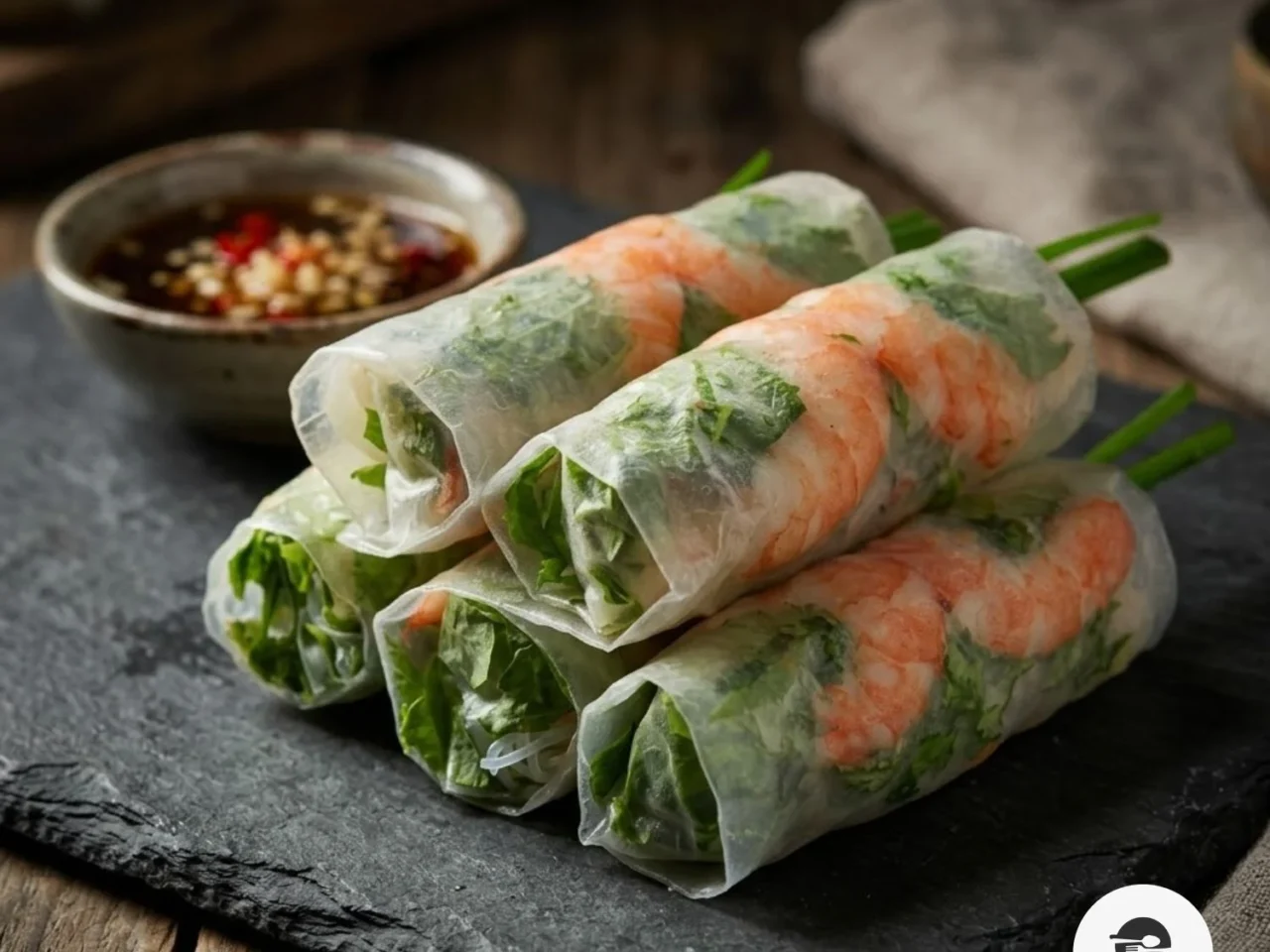
A typical gỏi cuốn — sometimes called Vietnamese fresh spring rolls or summer rolls in English, to distinguish it from the fried version — wraps rice paper around a small amount of rice vermicelli, a few slices of cooked shrimp and pork, lettuce, and fresh herbs like mint and perilla. Nothing in that list is particularly calorie-dense on its own. The rice paper wrapper is close to weightless once it’s soaked and rolled. The vermicelli adds some carbohydrate, and the shrimp and pork contribute the protein, but portions are small — a few slices, not a full serving of meat. That’s the whole explanation for why the roll itself lands so low: there’s genuinely not much in it, and none of it goes anywhere near oil.
Why This Is Different From Fried Spring Rolls
It’s worth separating gỏi cuốn clearly from chả giò (also called nem rán in the north), the crispy fried spring roll that shares a name in English but almost nothing else nutritionally. Chả giò is wrapped, then deep-fried, which means it absorbs oil the same way bánh xèo or bánh khọt does — a single fried roll can easily run 80–100+ calories on its own before any dipping sauce. Gỏi cuốn skips that step entirely. If a recipe or menu description mentions frying, it isn’t gỏi cuốn, and the calorie math for the two dishes shouldn’t be mixed up even though “spring roll” gets used loosely for both in English.
The Dipping Sauce Is Where the Real Calories Are
This is the part most people miss when they log “spring roll” and move on. Gỏi cuốn is traditionally served with one of two dips, and they’re not close in calorie terms. A nước chấm style dip — fish sauce, lime juice, sugar, water, a little garlic and chili — is mostly liquid and adds only a small amount of calories, similar to the dip served with bánh xèo. The other traditional option, a thick hoisin-and-ground-peanut sauce (tương chấm), is a different story: hoisin sauce alone runs about 35 calories per tablespoon, and once ground peanuts are stirred in, a typical 2-tablespoon serving lands somewhere around 90–150 calories. Dip two or three rolls generously into that sauce and you’ve added more calories than the rolls themselves contributed.
Where the Rice Paper and Vermicelli Fit In
Neither of the two starches in a gỏi cuốn adds much on its own. Rice paper is close to calorie-free before it’s soaked, and the amount used to wrap one roll is thin enough that it barely shows up in the total. Rice vermicelli contributes a bit more, but the amount tucked into a single roll is small compared to a full bowl of bún served on its own — think a pinch, not a portion. Between the two, vermicelli is the larger contributor of the pair, but neither comes close to the sauce in terms of impact on the final number.
How Many Calories in a Full Serving
Most orders come as 3–4 rolls, which puts the rolls alone at roughly 150–280 calories before any sauce. Add a fish-sauce-based dip and that total barely moves. Add a generous serving of peanut-hoisin sauce across the same 3–4 rolls, and the meal can climb into the 300–450 calorie range once the sauce is counted in full — which is a meaningfully different number than what most nutrition trackers show if they’re only logging “spring roll” without accounting for what it was dipped in.
Lighter Ways to Order or Make It
If you want the full calorie benefit of what’s actually a light dish, the fish-sauce-based nước chấm is the easy swap — it carries real flavor without the density of a peanut-based sauce. Asking for the peanut sauce on the side rather than pre-drizzled also helps, since it’s easy to use less when you’re controlling the amount yourself. On the roll side, there isn’t much room to cut further; it’s already about as lean as Vietnamese food gets, built more around vegetables and herbs than starch or fat.
I once watched a street vendor in District 4 make gỏi cuốn to order, rolling each one in maybe twenty seconds flat, and the thing that struck me was how little went into each roll — a few shrimp halves, a pinch of vermicelli, mostly herbs filling out the shape. Then she handed me a small cup of peanut sauce thick enough to coat a spoon and stand up on its own. The roll and the sauce told two completely different stories about the same plate.
Kelly Thuy — field notes, Ho Chi Minh City
Frequently Asked Questions
A standard shrimp-and-pork gỏi cuốn runs roughly 50–70 calories per roll before any dipping sauce, since it’s unfried and lightly filled.
Yes, significantly. Gỏi cuốn is unfried, while chả giò (fried spring rolls) absorbs oil during frying and can run 80–100+ calories per piece before any sauce.
Yes. A typical 2-tablespoon serving of hoisin-peanut sauce runs roughly 90–150 calories, which can add more to the meal than the rolls themselves. A fish-sauce-based nước chấm adds far less.
Choose the fish-sauce-based nước chấm over the peanut-hoisin sauce, or ask for the peanut sauce on the side so you control how much goes on each roll.

Related articles
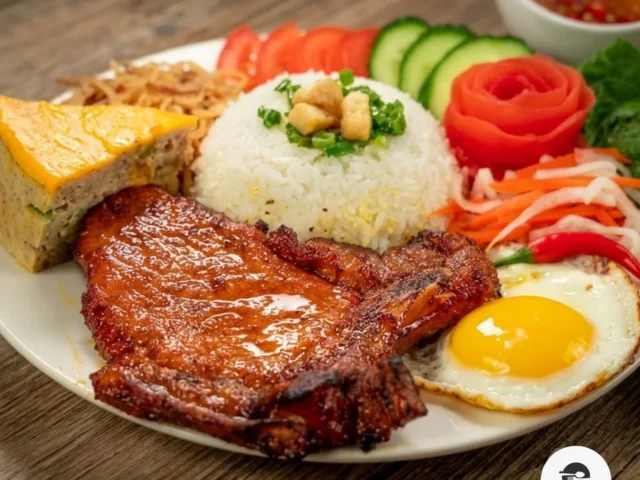
Com Tam Calories: The Rice Isn’t the Problem, the Toppings Are
Com tam calories range from about 500 to 800 per plate, and almost none of that swing comes…
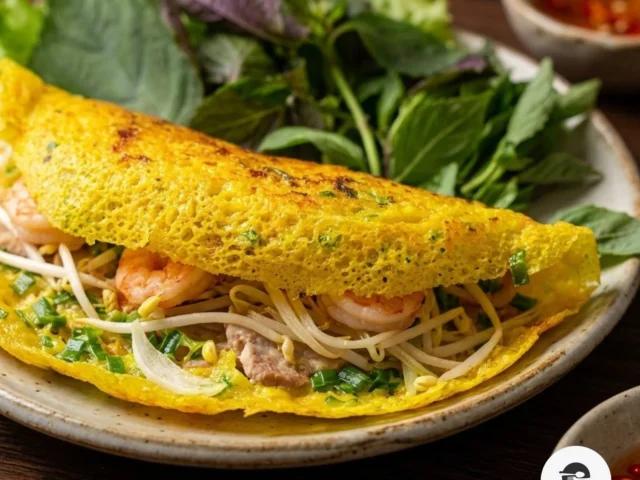
Banh Xeo Calories: One Pancake, Two Very Different Numbers
Banh xeo calories run about 140–155 per 100 grams across most nutrition databases, but the number that actually…
Bun Bo Hue Calories: Why This Bowl Runs Heavier Than Pho
Bun bo hue calories typically fall somewhere between 350 and 550 per bowl, and it’s genuinely hard to…