Table of contents
Calories per bowl: Roughly 350–550 kcal, depending on toppings (some sources report as low as 300, others closer to 500)
Protein: Roughly 25–30g, mostly from beef and pork
Carbohydrates: Roughly 35–45g, mostly from the thick rice noodles
Sodium: Often 1,000mg or more — the mắm ruốc (fermented shrimp paste) base pushes this higher than a typical pho broth
Biggest calorie driver: The broth’s fat content and the amount of pork/beef toppings, not the noodles
If you’ve searched this because you’re trying to log the meal somewhere, the honest answer is that there isn’t one clean number — and any source that gives you one without a range is oversimplifying a dish that genuinely varies bowl to bowl. Here’s what actually drives the calorie count, and why.
Where the Calories Actually Come From
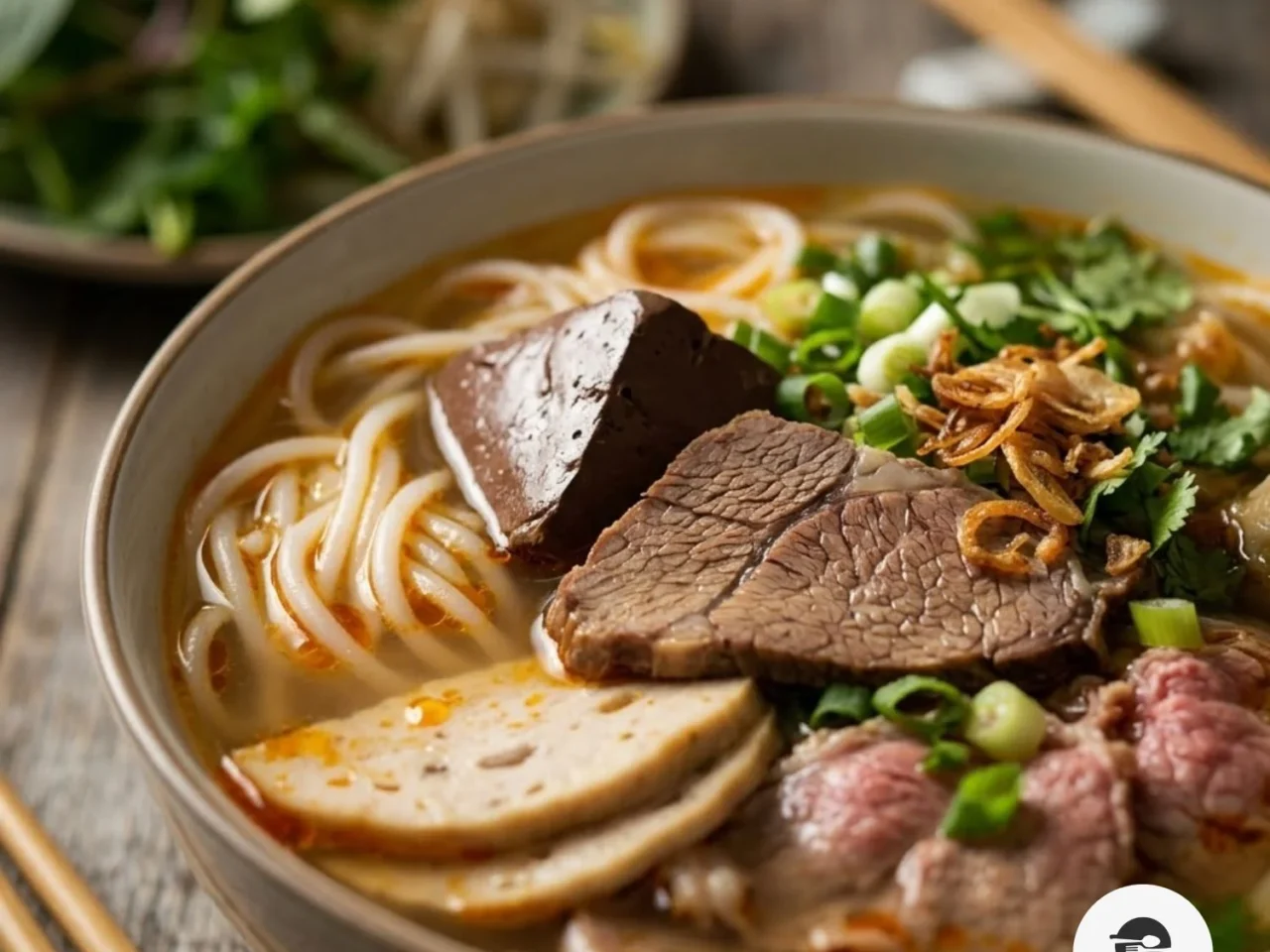
The broth itself is heavier than most people assume. It’s simmered from beef bones and pork hock for hours, which renders out real fat into the liquid — noticeably more than a clear, skimmed pho broth. Chili oil, often stirred in during cooking rather than added at the table, contributes additional fat on top of that. Then come the proteins: beef shank, a cross-section of pork hock (skin, fat, and meat together), sometimes cubes of congealed pig’s blood, and often a few slices of chả lua (Vietnamese pork sausage). Each of those adds meaningfully to the total, which is why “loaded” versions of the dish run so much higher than a simpler bowl.
Why the Calorie Range Is So Wide
Bún bò Huế isn’t one fixed recipe the way a packaged food is — it’s a regional dish that varies by cook, by region, and by how heavily a restaurant tops each bowl. A “tái” (rare beef only) bowl with a modest amount of broth is a genuinely different calorie count than a “đặc biệt” (special, fully loaded) bowl with pork hock, blood cubes, and sausage all included. Portion size varies too: a home-style serving and a large restaurant bowl aren’t the same volume of broth or noodles. That’s the real reason different nutrition sources land anywhere from roughly 300 to 500+ calories — they’re not necessarily wrong, they’re just measuring different bowls.
How It Compares to Pho
Bún bò Huế generally comes in higher than a standard bowl of pho, and the reasons track with everything above: pho’s broth is thinner and less fatty by design, its noodles are flat rather than thick, and its typical toppings (sliced beef, sometimes tendon) are lighter than bún bò Huế’s usual lineup of pork hock and sausage. For the specific numbers on pho, the full calorie and sodium breakdown is worth reading side by side with this one if you’re comparing the two.
The Sodium Is Worth Paying Attention To
Mắm ruốc — the fermented shrimp paste that gives bún bò Huế its distinctive depth — is a concentrated, salty ingredient, and it’s simmered directly into the broth rather than added lightly at the end. Combined with the amount of broth in a full bowl, sodium easily reaches four figures, often over 1,000mg, which is a meaningful share of a full day’s intake in one meal. This isn’t unique to bún bò Huế — most restaurant noodle soups run high in sodium — but the mắm ruốc base tends to push it a bit further than a pho broth built mainly on fish sauce.
Lighter Ways to Order It
Asking for less broth, or for the pork hock and blood cubes left out in favor of just beef, brings the calorie count down meaningfully without changing what the dish fundamentally is. Going easy on the chili oil that’s often ladled on top (beyond what’s already cooked into the broth) trims some fat as well. None of this turns bún bò Huế into a “light” dish — it’s not built to be one — but there’s a real difference between a bowl with everything in it and a simpler one.
I once asked a cook in Huế how many calories were in her bún bò, mostly as a joke, and she genuinely didn’t understand the question the way I’d framed it — not because she didn’t know her own cooking, but because “a bowl” wasn’t a fixed thing to her. Some days there’s more pork hock left over to use up, some days less. That’s stuck with me every time I see a nutrition app confidently list one number for a dish that was never made to be that consistent.
Kelly Thuy — field notes, Huế
Frequently Asked Questions
Roughly 350–550 calories for a typical restaurant bowl, though estimates vary from about 300 to 500+ depending on the source and how heavily the bowl is topped with pork hock, blood cubes, and sausage.
Generally yes. Bún bò Huế’s broth is fattier and its typical toppings (pork hock, sausage, sometimes pig’s blood) are heavier than a standard pho bowl’s beef and thinner broth.
Yes, often over 1,000mg per bowl. The mắm ruốc (fermented shrimp paste) used in the broth is concentrated and salty, which tends to push sodium higher than a typical pho broth.
Order it with less broth, ask for the pork hock or blood cubes left out in favor of just beef, and go easy on any extra chili oil added on top. This lowers the total without changing the core dish.

Related articles
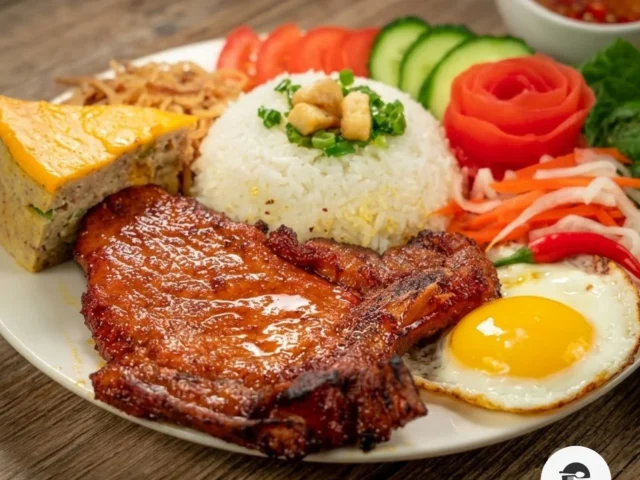
Com Tam Calories: The Rice Isn’t the Problem, the Toppings Are
Com tam calories range from about 500 to 800 per plate, and almost none of that swing comes…
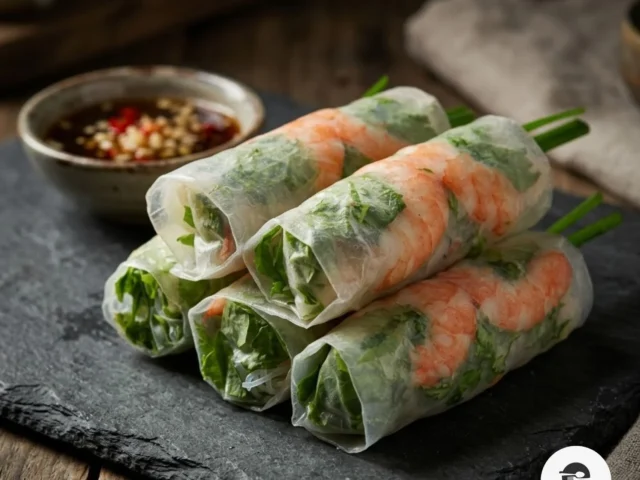
Goi Cuon Calories: The Roll Is Light — the Peanut Sauce Isn’t
Goi cuon calories run surprisingly low for the roll itself — a standard shrimp-and-pork gỏi cuốn comes in…

Banh Xeo Calories: One Pancake, Two Very Different Numbers
Banh xeo calories run about 140–155 per 100 grams across most nutrition databases, but the number that actually…