Table of contents
Calories per 100g: Roughly 140–155 kcal, fairly consistent across sources
Calories per pancake: Small Central-style (~140g): 150–280 kcal; medium-large Southern-style (~200–250g): 300–400 kcal
Protein: Roughly 6–8g per 100g, mostly from shrimp and pork
Fat: Roughly 5–12g per 100g, depending on oil absorption and whether coconut milk is in the batter
Carbohydrates: Roughly 18–20g per 100g, mostly from the rice flour batter
Biggest calorie driver: Frying oil and coconut milk (Southern-style batter), not the shrimp or pork filling
If you’ve searched this to log a meal, the honest answer depends on which bánh xèo you actually ate. Nutrition apps that give you one flat number are usually averaging a small Central-style pancake with a dinner-plate-sized Southern one, which is a bit like averaging a spring roll with a burrito and calling it one dish. Here’s what actually drives the count.
Where the Calories Actually Come From
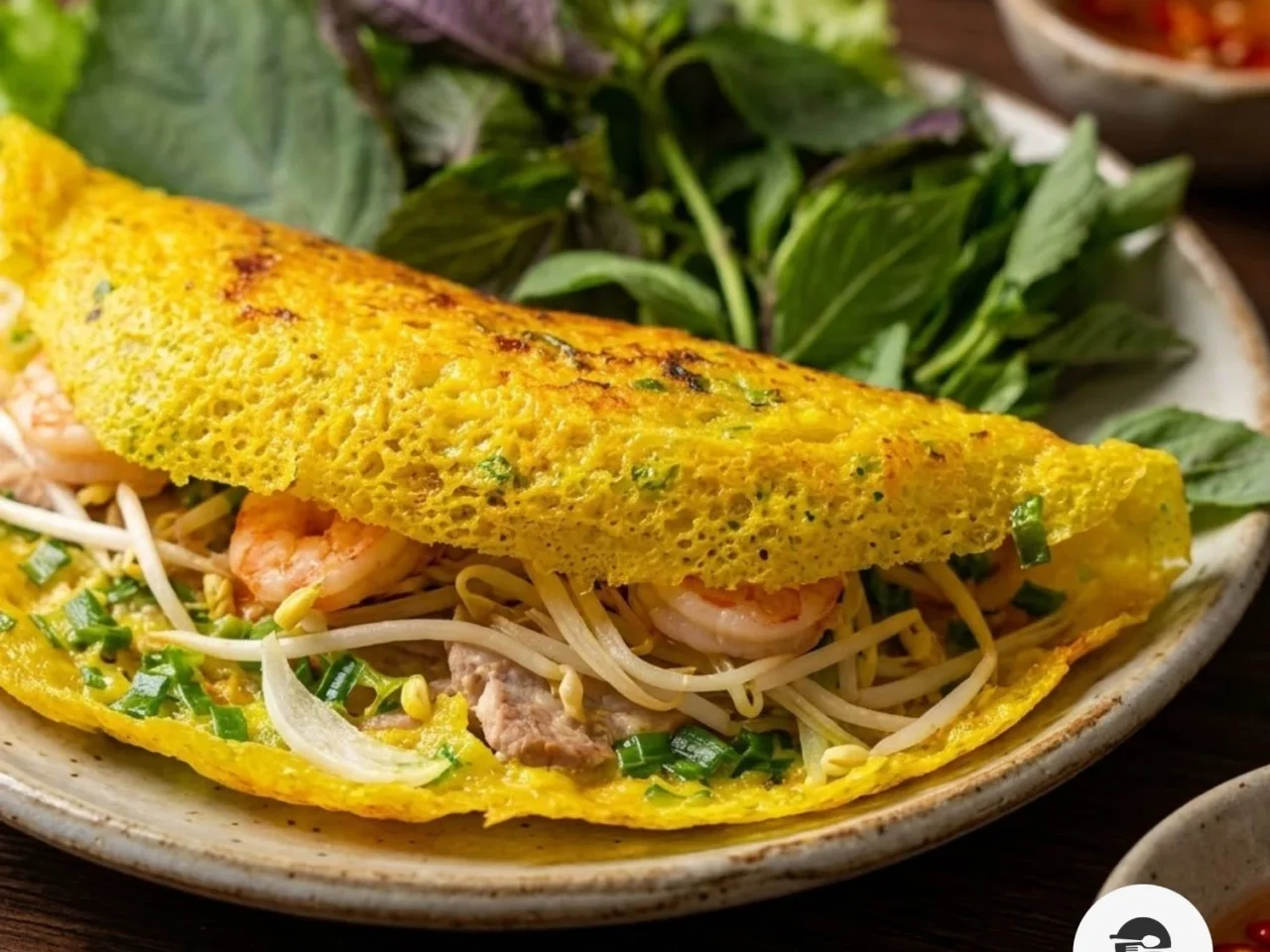
The batter itself — rice flour, a bit of turmeric for color, water or coconut milk — isn’t especially calorie-dense before it hits the pan. What changes everything is the oil. Bánh xèo is fried in a generously oiled pan, and the thin batter spreads out and absorbs a meaningful amount of it as it crisps at the edges. The filling, by contrast, is fairly lean: a few shrimp, a little sliced pork, bean sprouts, sometimes mung beans. None of those are particularly high-calorie on their own. It’s the combination of oil absorption and batter volume, not the filling, that decides where a given pancake lands.
Why Size and Region Change the Number So Much
Central Vietnam and Southern Vietnam make genuinely different pancakes, not just different-sized versions of the same one. In Central Vietnam, bánh xèo is small, around 10–15cm across, made with a plain white rice flour batter and little else — people typically eat two or three to actually feel full. In the South, cooks use a wide pan with no real size limit, and the batter itself is richer: turmeric and coconut milk go in for color and flavor, sometimes with a bit of mung bean flour or leftover rice mixed in for extra crispness. One Southern-style bánh xèo can be a full meal by itself. That difference in both size and batter composition is the main reason calorie estimates for “bánh xèo” vary so widely — sources aren’t disagreeing so much as describing two different dishes with the same name.
| Style | Typical size | Batter | Calories per piece (approx.) |
|---|---|---|---|
| Central Vietnam | 10–15cm, thin | Plain rice flour, no coconut milk | 150–280 kcal (usually eaten 2–3 at a time) |
| Southern Vietnam | Large pan, dinner-plate size | Rice flour, turmeric, coconut milk | 300–400 kcal |
Similar logic applies to bánh khọt, the mini version cooked in a molded pan — much smaller portions, but the oil-per-bite ratio is actually higher because of how the little cups are fried, so it isn’t automatically the lighter option just because each piece looks bite-sized.
What About the Dipping Sauce and the Wrap?
The pancake numbers above don’t include what it’s eaten with, and that matters more for sodium than for calories. Nước chấm, the fish sauce and lime dipping sauce served alongside, is mostly water, fish sauce, sugar, and lime juice — it’s not especially calorie-dense, but it does add sodium and a bit of sugar that doesn’t show up if you’re only counting the pancake itself. If it’s wrapped in rice paper along with lettuce and herbs, which is common in Central Vietnam, that adds a modest amount on top — rice paper itself is fairly low-calorie, but a full wrap with extra herbs and a second dip in sauce is a bigger total than the pancake alone suggests.
What About a Vegetarian Version?
A meat-free bánh xèo — mushrooms, tofu, and extra bean sprouts standing in for the shrimp and pork — usually lands lower, closer to 150–200 calories for a Central-size piece, since the filling itself was never the main calorie source to begin with. The batter and the oil it’s fried in stay exactly the same either way, so a vegetarian Southern-style pancake with coconut milk in the batter can still land in the same 300-plus range as the meat version. Skipping the shrimp and pork helps a little, but it’s not the lever that actually moves the number.
Lighter Ways to Order or Make It
If you’re tracking calories, Central-style bánh xèo is the naturally lighter option — no coconut milk in the batter and a smaller pancake to begin with, even accounting for eating two or three. For the Southern version, asking for a thinner batter pour or less oil in the pan makes a real difference, since oil absorption is the single biggest variable. Loading up on the fresh herbs and lettuce it’s traditionally wrapped in, rather than eating it plain off the plate, also stretches the meal without adding much to the total. None of this turns bánh xèo into a diet food — it’s fried batter, and that’s the point of it — but there’s a real gap between a lean Central-style plate and a loaded Southern one.
I watched a woman in Cần Thơ cook bánh xèo in a pan the size of a truck tire, ladling in oil between every single pancake like it was water. I asked her once how much oil a day’s cooking went through, and she just laughed and said she’d never counted — it wasn’t a number she needed. That pan is the real answer to where the calories come from, far more than anything printed on a nutrition label.
Kelly Thuy — field notes, Cần Thơ
Frequently Asked Questions
It depends heavily on which style. A small Central Vietnamese pancake (10–15cm) runs roughly 150–280 calories, while a full Southern-style pancake made with coconut milk in a large pan typically runs 300–400 calories.
Generally yes. Southern bánh xèo is larger, cooked in a wide pan, and the batter includes coconut milk, all of which add fat and volume that Central Vietnam’s smaller, plain rice-flour version doesn’t have.
Not many. Nước chấm is mostly water, fish sauce, sugar, and lime juice, so it’s low in calories, though it does add sodium and a small amount of sugar that isn’t counted if you’re only logging the pancake itself.
Choose the Central-style version, use less oil in the pan, pour a thinner batter, and wrap it in extra lettuce and herbs to stretch the meal without adding much to the total.

Related articles
Com Tam Calories: The Rice Isn’t the Problem, the Toppings Are
Com tam calories range from about 500 to 800 per plate, and almost none of that swing comes…
Goi Cuon Calories: The Roll Is Light — the Peanut Sauce Isn’t
Goi cuon calories run surprisingly low for the roll itself — a standard shrimp-and-pork gỏi cuốn comes in…
Bun Bo Hue Calories: Why This Bowl Runs Heavier Than Pho
Bun bo hue calories typically fall somewhere between 350 and 550 per bowl, and it’s genuinely hard to…