Table of contents
- What Is Gỏi Cuốn?
- Gỏi Cuốn vs. Chả Giò: Not the Same Dish
- Ingredients for Classic Gỏi Cuốn Tôm Thịt
- How to Make Gỏi Cuốn: Step-by-Step
- The Three Dipping Sauces for Gỏi Cuốn
- Regional Variations and Common Fillings
- Gỏi Cuốn Nutrition: Calories and Macros
- Where Gỏi Cuốn Comes From
- How to Store Gỏi Cuốn
- Frequently Asked Questions
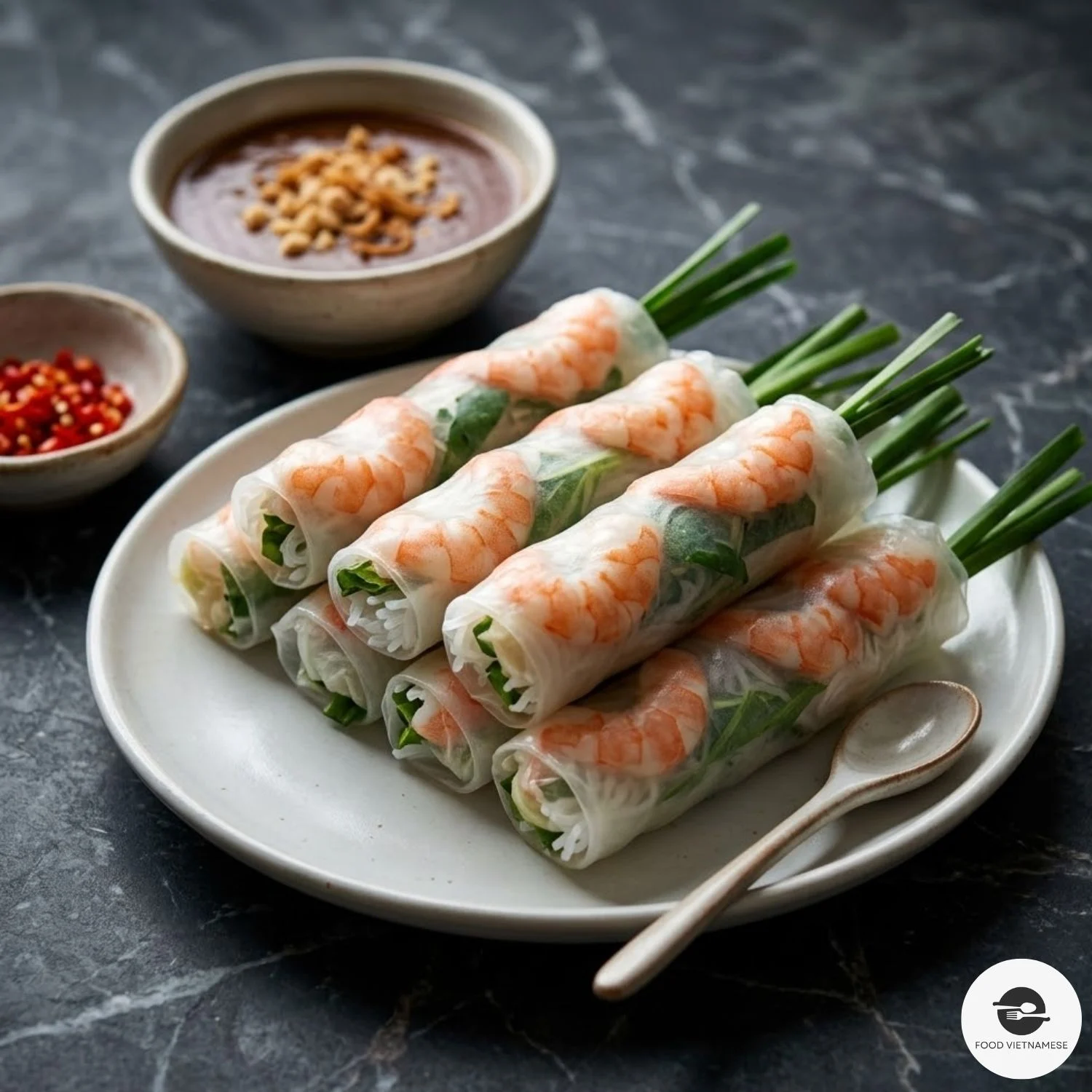
Gỏi Cuốn — sold in Vietnamese-American restaurants as fresh spring rolls or summer rolls — are translucent rice paper rolls filled with boiled shrimp, sliced pork belly, rice vermicelli, fresh lettuce, and herbs, assembled without any cooking and served at room temperature. Each roll contains roughly 75–100 kcal, no frying oil, and a texture that sits somewhere between a salad and a sandwich. They are one of the most internationally recognized dishes in Vietnamese cuisine, appearing on menus from Saigon to San Francisco, and they take less than 40 minutes to make at home.
What Is Gỏi Cuốn?
The name breaks down simply: gỏi means salad or mixed raw ingredients, and cuốn means rolled or wrapped. Together they describe the dish accurately — a fresh, herb-heavy salad sealed inside a soft rice paper cylinder.
The classic southern Vietnamese version, gỏi cuốn tôm thịt (shrimp and pork spring rolls), is what most people outside Vietnam encounter first. But the term covers a range of fillings depending on region and occasion: grilled pork (thịt nướng), steamed crab, grilled fish, tofu, or even a miniature fried spring roll tucked inside the fresh roll. The rice paper wrapper — bánh tráng — is the defining constant. Everything else is variable.
On the name “summer rolls”: The term was coined by Vietnamese-American restaurant owners as a marketing alternative to “spring rolls,” which most American diners associated with the fried version. According to Wikipedia’s entry on Gỏi Cuốn, the name “summer roll” was popularized to distinguish fresh rolls from fried ones and as a seasonal play on the word “spring.” Some restaurants also use “crystal rolls,” “salad rolls,” or “rice paper rolls.” All names refer to the same dish.
Gỏi Cuốn vs. Chả Giò: Not the Same Dish
The most common point of confusion in Vietnamese food is treating fresh spring rolls and fried spring rolls as interchangeable. They share a wrapper material and some filling elements — but they are structurally and nutritionally different dishes.
| Feature | Gỏi Cuốn (Fresh Spring Rolls) | Chả Giò / Nem Rán (Fried Spring Rolls) |
|---|---|---|
| English names | Fresh spring rolls, summer rolls, crystal rolls, salad rolls, rice paper rolls | Fried spring rolls, egg rolls, Vietnamese egg rolls |
| Wrapper | Wet rice paper (bánh tráng), translucent, pliable | Dry rice paper or pastry skin, crisped by frying |
| Preparation | No cooking — assembled fresh at serving time | Deep-fried in oil until golden and crispy |
| Texture | Soft, chewy wrapper; crisp raw vegetables inside | Shatteringly crispy shell; cooked filling inside |
| Calories per roll | ~75–100 kcal | ~100–150 kcal (more with dense fillings) |
| Fat per roll | ~1–3g (from pork and shrimp only) | ~5–10g (includes frying oil absorption) |
| Dipping sauce | Peanut-hoisin sauce or nuoc cham | Nuoc cham (sweet fish sauce dip) |
| Best eaten | Within hours of making; same day | Immediately after frying while still crispy |
| Regional name (Vietnam) | Gỏi cuốn (nationwide) | Chả giò (South), Nem rán (North) |
For a deeper comparison of these two Vietnamese roll styles — including how they differ from Chinese egg rolls and Thai spring rolls — see Spring Roll vs. Egg Roll: Every Difference Explained.
Ingredients for Classic Gỏi Cuốn Tôm Thịt
The standard southern Vietnamese version uses six core components. The proportions below are for 10 rolls.
| Ingredient | Amount (10 rolls) | Purpose / Notes |
|---|---|---|
| Bánh tráng (rice paper) | 10 sheets, 22cm diameter | The wrapper. Round, thin, made from rice flour and water. Dried; softened in warm water before use. |
| Shrimp (tôm) | 200g, medium size | Boiled and halved lengthwise. The pink side faces outward through the wrapper — this is what makes the roll visually striking. |
| Pork belly (thịt ba chỉ luộc) | 200g | Boiled whole, cooled, sliced thin. The fat-to-lean ratio of pork belly provides richness without overpowering the fresh ingredients. |
| Rice vermicelli (bún) | 100g dry weight | Soaked and briefly cooked. Adds bulk and a neutral starchy base. Thin rice vermicelli (not glass noodles). |
| Lettuce (xà lách) | 10 leaves | Butter lettuce or green leaf lettuce. Provides structure and crunch. Torn to fit the roll width. |
| Garlic chives (hẹ) | 1 bunch | Long thin stalks that protrude slightly from one end of the roll — a visual signature of gỏi cuốn tôm thịt. |
| Thai basil (húng quế) | 1 bunch | Added inside the roll for fragrance. Distinct from Italian basil — smaller leaves, anise-like scent. |
| Cucumber (optional) | ½ medium | Julienned. Adds crunch and freshness. More common in Central and Northern Vietnamese versions. |
| Bean sprouts (optional) | A small handful | More common in vegetarian or budget versions. Adds texture. |
On rice paper (bánh tráng): Choose sheets 22cm in diameter for the classic gỏi cuốn size — large enough to roll comfortably but not so wide that the roll becomes unwieldy. The brand matters less than freshness; cracked or yellowed rice paper sheets will tear when wet. See rice paper: calories, nutrition, and how to choose for a full breakdown of rice paper types.
How to Make Gỏi Cuốn: Step-by-Step
Preparing the fillings
Boil the pork belly whole in lightly salted water for 25–30 minutes, skimming foam as it rises. Cool completely before slicing — warm pork tears instead of slicing cleanly. Boil shrimp in the same water for 2–3 minutes until fully pink, then transfer immediately to ice water to stop cooking and preserve the snap. Peel, devein, and butterfly each shrimp lengthwise. Soak rice vermicelli in cold water for 10 minutes, cook in boiling water for 2–3 minutes, then rinse under cold running water and drain.
The rice paper technique
This is where most beginners run into trouble. The key is under-soaking. Fill a wide, shallow plate or bowl with warm (not boiling) water. Dip a rice paper sheet for 5–8 seconds only — it should still feel slightly stiff when you lift it out. Lay it on a flat, clean surface and let it continue softening on its own for another 15–20 seconds while you arrange the filling. Over-soaked rice paper becomes floppy, sticks to everything, and tears easily.
| Problem | Likely Cause | Fix |
|---|---|---|
| Rice paper tears while rolling | Over-soaked, or filling placed too close to the edges | Reduce soaking time to 5–6 seconds; leave 3cm border on each side |
| Rice paper too stiff to roll | Under-soaked, or water too cold | Use warmer water; wait 20 seconds after placing on the board before rolling |
| Rolls stick together | No barrier between finished rolls | Place a small piece of lightly oiled parchment paper between each roll |
| Shrimp not visible through wrapper | Placed pink-side up instead of pink-side down | Place shrimp pink-side down in the lower third of the wrapper first, before adding other ingredients |
| Roll too thick to close | Overfilled | Less is more — thin rolls are easier to dip and eat. Use about 2 tablespoons total filling per roll |
Assembly order
Place the softened rice paper on a flat surface. In the lower third of the wrapper, lay 2–3 shrimp halves pink-side down in a row. Add a lettuce leaf, a small bundle of vermicelli, 2 slices of pork, a few chive stalks (letting them extend slightly beyond one end), and a few Thai basil leaves. Fold the bottom edge up over the filling, fold in both sides, then roll firmly upward to seal. The roll should be tight enough to hold its shape but not so compressed that the wrapper tears.
The Three Dipping Sauces for Gỏi Cuốn
Gỏi Cuốn without dipping sauce is like pho without broth — the sauce is not optional, it is part of the dish. Three sauces cover the full range of Vietnamese regional preferences:
| Sauce | Base Ingredients | Flavor Profile | Region |
|---|---|---|---|
| Tương đậu phộng (Peanut-hoisin sauce) | Hoisin sauce, peanut butter, water, garlic, chili | Thick, rich, mildly sweet, savory. The most internationally familiar version. | Southern Vietnam; most Vietnamese restaurants outside Vietnam |
| Nước chấm / Nước mắm chua ngọt (Nuoc cham) | Fish sauce, lime juice, sugar, water, garlic, chili | Light, acidic, salty-sweet with heat. Cuts through the richness of pork belly. | Nationwide; more common in Central and Northern Vietnam for gỏi cuốn |
| Mắm nêm (Fermented anchovy sauce) | Fermented anchovy paste, pineapple/lemongrass, chili, sugar | Pungent, funky, intensely savory. An acquired taste; very popular in Central Vietnam. | Central Vietnam (Đà Nẵng, Hội An, Huế) |
Peanut sauce recipe (standard ratio)
Combine 3 tablespoons hoisin sauce, 1 tablespoon peanut butter, 2 tablespoons warm water, 1 minced garlic clove, and 1 teaspoon sugar. Warm in a small pan for 1–2 minutes, stirring until smooth. Adjust water for desired thickness. Top with crushed roasted peanuts and sliced chili before serving.
For fish sauce alternatives and substitutions — useful when cooking outside Vietnam — see fish sauce substitute guide.
Regional Variations and Common Fillings
The tôm thịt version is the default, but gỏi cuốn adapts readily to different proteins and dietary preferences. Across Vietnam’s three culinary regions, the filling and sauce combination shifts noticeably:
| Variation | Protein | Notable Difference | Sauce |
|---|---|---|---|
| Gỏi cuốn tôm thịt (classic) | Shrimp + pork belly | The standard. Shrimp placed pink-side out through wrapper. | Peanut-hoisin or nuoc cham |
| Gỏi cuốn thịt nướng | Grilled pork or grilled chicken | Smoky, charred pork replaces boiled — more common in Central Vietnam | Mắm nêm or nuoc cham |
| Gỏi cuốn chay (vegetarian) | Tofu (crispy or soft), mushroom | Mung bean sprouts and shredded carrot often replace pork; no fish sauce in dipping sauce | Soy-based peanut sauce |
| Gỏi cuốn cá hồi (salmon) | Raw or seared salmon | A modern fusion version popular in Vietnamese restaurants overseas; avocado often added | Ponzu or modified nuoc cham |
| Gỏi cuốn nem chiên | Miniature fried spring roll inside | A roll-within-a-roll — a small fried roll tucked alongside the fresh ingredients; popular at family gatherings in southern Vietnam | Peanut-hoisin |
| Northern (Hà Nội) style | Pork + shrimp | More herbs, sometimes cucumber; slightly less bún; served with a thinner fish sauce dip rather than peanut sauce | Nuoc cham |
Gỏi Cuốn Nutrition: Calories and Macros
Gỏi Cuốn is consistently cited as one of the healthiest dishes in Vietnamese cuisine, and the numbers support that reputation — as long as you account for the dipping sauce separately.
| Component | Serving | Calories | Protein | Fat | Carbs |
|---|---|---|---|---|---|
| 1 gỏi cuốn tôm thịt (standard) | ~80g per roll | 75–100 kcal | 5–7g | 1–3g | 10–14g |
| 2 rolls (typical serving) | ~160g | 150–200 kcal | 10–14g | 2–6g | 20–28g |
| Peanut sauce (2 tbsp / 30g) | 30g | 70–90 kcal | 2g | 4–5g | 8–10g |
| Nuoc cham (2 tbsp / 30g) | 30g | 15–25 kcal | 0g | 0g | 4–6g |
| 2 rolls + peanut sauce | Standard restaurant serving | ~220–290 kcal | ~12–16g | ~6–11g | ~28–38g |
Nutritional values are approximate, based on standard recipe proportions. Actual values vary with filling amounts, shrimp size, and pork fat content. Sources: USDA FoodData Central reference data for individual ingredients; SnapCalorie and Calorique aggregate analyses for assembled rolls.
Why gỏi cuốn is considered healthy
Three structural reasons stand out. First, no cooking oil — every calorie comes from the food itself, not frying medium. Second, the ratio of fresh vegetables and herbs to protein and starch is unusually high for a Vietnamese dish that serves as a full meal rather than a garnish. Third, shrimp is a lean, complete protein source: the 4–5 shrimp per roll contribute essentially all the protein with almost no saturated fat.
The caveat is portion context. A restaurant serving of 2 rolls with peanut sauce lands at 220–290 kcal — reasonable. But if rolls are larger (some restaurants use 30cm rice paper), or peanut sauce is poured generously rather than used for dipping, the calorie count climbs faster than the “healthy” reputation suggests.
For a comparison of rice paper types and their calorie contribution to this dish, see rice paper calories and nutrition.
Where Gỏi Cuốn Comes From
Gỏi cuốn originated in southern Vietnam, likely in the Mekong Delta region, where rice paper (bánh tráng) has been produced for centuries and where the abundance of fresh herbs, river shrimp, and pork shaped the local cuisine. The dish spread northward through Vietnamese restaurants and migration, picking up regional variations along the way.
Outside Vietnam, gỏi cuốn arrived in the United States with Vietnamese refugees and immigrants after 1975, becoming one of the first Vietnamese dishes to gain wide acceptance in American restaurants — partly because the absence of unfamiliar fermented seasonings made it approachable, and partly because the fresh, light quality appealed to 1990s health-food trends. The name “summer rolls” appears to have emerged in Vietnamese-American communities in California in the late 1980s or early 1990s, though an exact first use is undocumented.
Gỏi cuốn in Cambodia: A version of fresh rice paper rolls called nime chao (meaning “raw rice paper”) exists in Cambodia, made using a different technique in the Siem Reap and Battambang areas. The Vietnamese and Cambodian versions share the rice paper wrapper but use different fillings and sauces — reflecting the broader shared culinary history of the Mekong Delta region.
How to Store Gỏi Cuốn
Fresh rolls are best eaten within 2 hours of assembly at room temperature. After that:
- Refrigerator: Up to 1 day. Wrap each roll individually in a piece of damp parchment paper, then store in an airtight container. The rice paper stiffens when chilled — let rolls sit at room temperature for 10–15 minutes before serving.
- Freezer: Not recommended. The rice paper becomes brittle, and the vegetables lose their texture entirely when thawed.
- Meal prep strategy: Prepare all components — cooked protein, noodles, washed herbs — and store them separately in the fridge. Assemble rolls just before eating. This keeps everything fresh for 2–3 days.
Frequently Asked Questions
What are Vietnamese spring rolls (Goi Cuon)?
Gỏi Cuốn are translucent rice paper rolls filled with boiled shrimp, sliced pork belly, rice vermicelli, fresh lettuce, and herbs. They are assembled fresh without cooking and served with peanut sauce or nuoc cham. Each roll contains approximately 75–100 kcal. Also called fresh spring rolls, summer rolls, or crystal rolls.
What is the difference between spring rolls and summer rolls?
No difference in the dish itself — both names refer to Vietnamese Gỏi Cuốn. “Summer rolls” was coined by Vietnamese-American restaurants to distinguish fresh, unfried rolls from fried spring rolls. The recipe is the same.
How many calories are in Vietnamese spring rolls?
One standard gỏi cuốn tôm thịt contains approximately 75–100 kcal. Two rolls with peanut sauce — a typical restaurant serving — totals roughly 220–290 kcal. Using nuoc cham instead of peanut sauce reduces the total by 50–70 kcal.
What is the dipping sauce for Vietnamese spring rolls?
Three sauces are traditional: (1) tương đậu phộng (peanut-hoisin sauce) — the most common internationally; (2) nước chấm (nuoc cham) — fish sauce, lime, sugar, garlic, chili; (3) mắm nêm — fermented anchovy sauce, common in Central Vietnam. Most restaurants offer peanut sauce or nuoc cham.
What is the difference between Goi Cuon and Cha Gio?
Gỏi Cuốn are fresh, uncooked rolls in wet rice paper — soft, light, ~75–100 kcal per roll. Chả Giò (Nem Rán) are fried in oil until crispy — ~100–150 kcal per roll with more fat. Same wrapper material, completely different dishes.
How long do Vietnamese spring rolls keep in the fridge?
Up to 1 day, wrapped individually in damp parchment paper in an airtight container. The rice paper stiffens when cold — allow 10–15 minutes at room temperature before eating. Do not freeze. For best results, prep the fillings separately and roll just before serving.

Related articles
Banh Xeo Recipe (Vietnamese Crispy Pancake)
Prepare time: 10 min Cook: 2 hr 30 min Ready in: 2 hr 40 min Bánh xèo is…
Bun Bo Hue Recipe (Vietnamese Spicy Beef Noodle Soup)
Prepare time: 10 min Cook: 2 hr 30 min Ready in: 2 hr 40 min Bun bo Hue,…
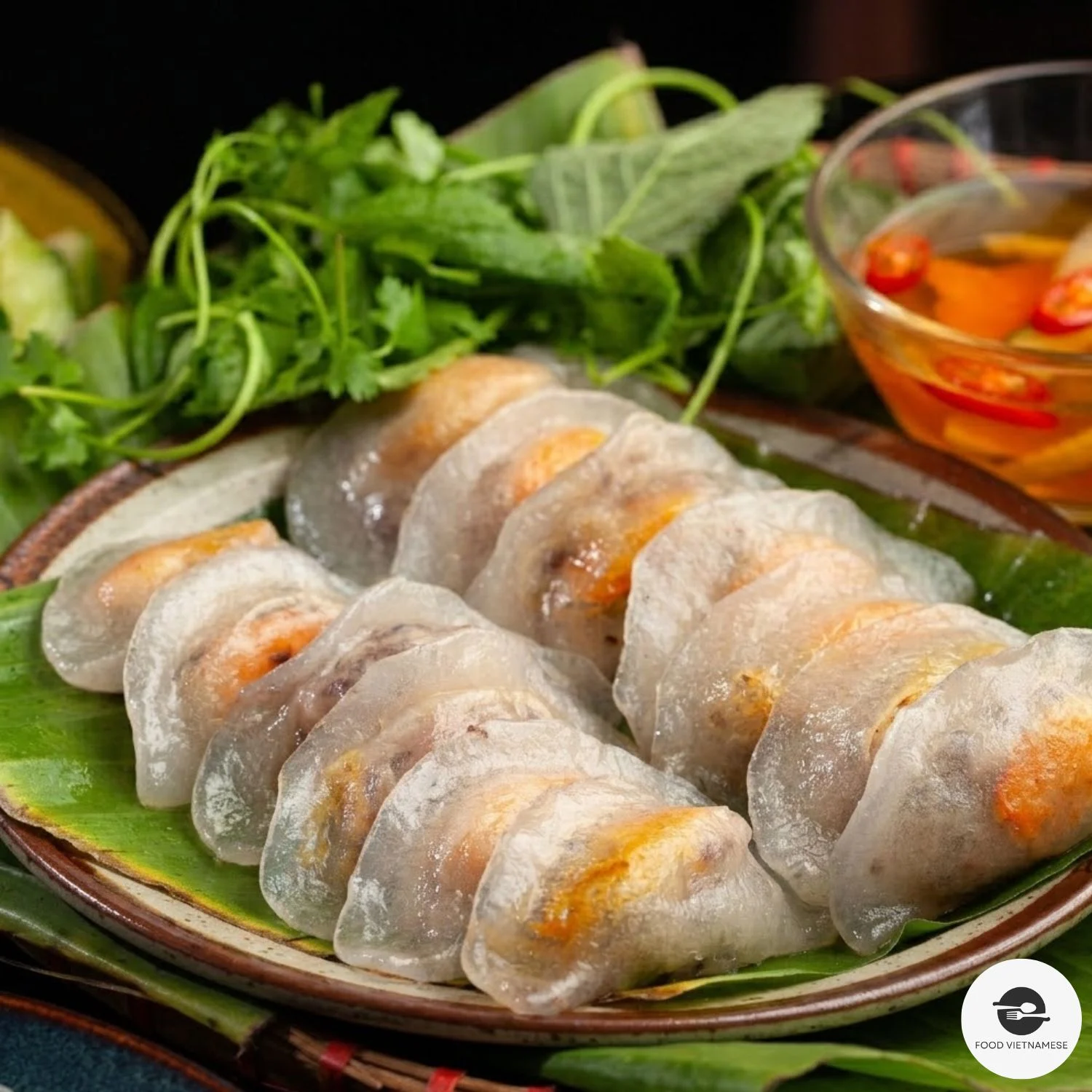
Banh Bot Loc Recipe: The Secret to Chewy, Translucent Tapioca Dumplings
Banh Bot Loc is a Vietnamese tapioca dumpling from Hue — a chewy, glass-clear tapioca starch dough wrapped…