Table of contents
- Bánh Chưng and Bánh Tét: The Two Sticky Rice Cakes
- Thịt Kho Hột Vịt and Canh Khổ Qua: The Southern Pair
- The Northern Table: Giò Chả, Thịt Đông, Dưa Hành, Canh Măng
- Dishes Found Across the Country
- Tết Menu by Region at a Glance
- Mâm Ngũ Quả: The Same Fruit, Opposite Rules
- Tết Food Taboos and Guest Etiquette
- Frequently Asked Questions
When: Between late January and 20 February, depending on the lunar calendar
North: Bánh chưng, giò chả, thịt đông, dưa hành, canh măng
South: Bánh tét, thịt kho hột vịt, canh khổ qua, củ kiệu
Nationwide: Xôi gấc, nem rán (chả giò), mứt Tết
Altar: Mâm ngũ quả, the five-fruit tray, which differs by region
Cooking time: Bánh chưng boils for many hours; sources give anywhere from 6 to 12
Tết is the one holiday where the menu is fixed by tradition more than by appetite. Families cook a few days ahead, and many dishes are chosen because their names sound like a wish. This guide explains what each dish is, where it belongs, and which rules apply to guests. If you are planning a trip around the holiday, our guide to the best time to visit Vietnam for food lovers covers the closures to expect.
Bánh Chưng and Bánh Tét: The Two Sticky Rice Cakes
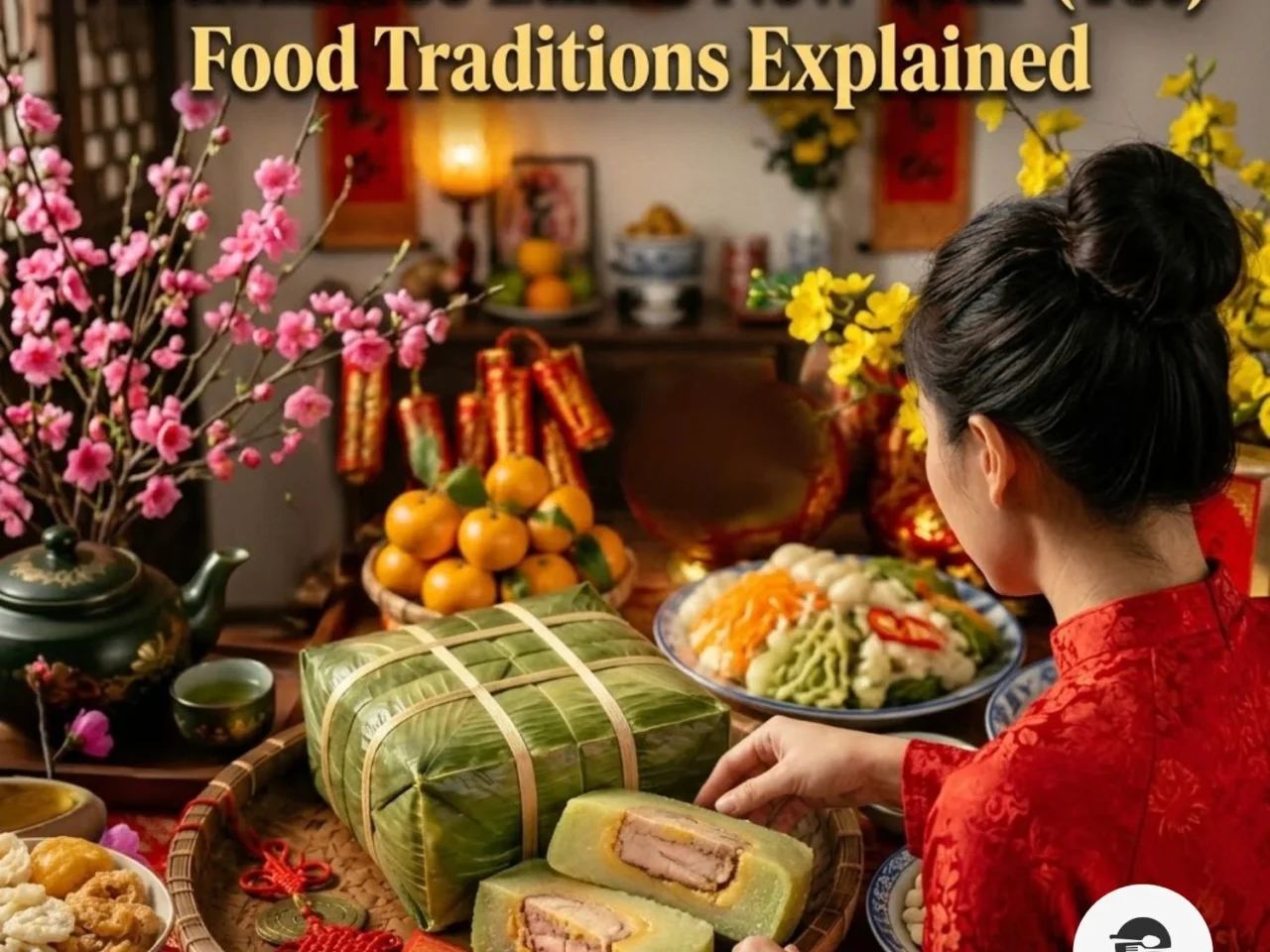
Both cakes are glutinous rice around a filling of mung beans and pork, wrapped in leaves and boiled. Bánh chưng is square and wrapped in lá dong leaves, tied with strips of giang bamboo. It is the northern cake. Bánh tét is a cylinder, and Wikipedia’s Tết entry describes it as more popular in the south.
The shape is the story. In the Lang Liêu legend, a prince offers a square cake for the earth and a round one, bánh giầy, for the sky, and wins the throne. The sources I checked disagree on boiling time, from 6–8 hours to 10–12, so treat any single number as a household habit. Our bánh chưng recipe covers the wrapping, and bánh chưng Bờ Đậu is a craft-village version from Thái Nguyên.
Thịt Kho Hột Vịt and Canh Khổ Qua: The Southern Pair
Thịt kho hột vịt is pork belly braised with duck eggs, traditionally in coconut water. Thanh Niên reads the round eggs as abundance and many descendants, and notes that the pot gets better the longer it stews. It is served with rice and pickles.
Canh khổ qua is bitter melon stuffed with ground pork, served in broth. The name “khổ qua” sounds like a wish that hardships pass, which is why a bitter soup sits on a festive table. Both dishes are southern; Vietnamtourism.com lists the pork and eggs as southern and central.
The Northern Table: Giò Chả, Thịt Đông, Dưa Hành, Canh Măng
Giò chả is steamed pork sausage wrapped in banana leaf. Thịt đông is jellied pork, set into blocks with mushrooms and carrots, and it suits the cold northern weather. Canh măng is a soup of dried bamboo shoots and pork bones that takes hours to prepare.
Dưa hành, pickled onions, cuts through the richness of all of it. The south has its own pickle, củ kiệu, which the same source calls milder.
Dishes Found Across the Country
Xôi gấc is sticky rice colored red with gấc fruit, and red stands for luck. Nem rán, called chả giò in the south, are golden fried rolls that read as wealth. Mứt Tết is a tray of candied coconut, ginger, lotus seeds, and carrot, offered to visitors with tea. Our guide to Vietnamese cuisine explains the regional split behind these differences.
Tết Menu by Region at a Glance
| Item | North | South |
|---|---|---|
| Rice cake | Bánh chưng (square) | Bánh tét (cylinder) |
| Signature pork | Thịt đông (jellied), giò chả | Thịt kho hột vịt (braised with duck eggs) |
| Soup | Canh măng (dried bamboo shoots) | Canh khổ qua (stuffed bitter melon) |
| Pickle | Dưa hành | Củ kiệu |
| Fruit tray | Banana bunch at the base, pomelo | Mãng cầu, dừa, đu đủ, xoài, sung |
I left central Vietnam out of this table on purpose. The sources I checked did not agree on a single central Tết menu, and a shaky column is worse than a missing one.
Mâm Ngũ Quả: The Same Fruit, Opposite Rules
The five-fruit tray sits on the altar as an offering, not a snack. The two regions build it in opposite ways.
According to Thanh Niên, northern families put a banana bunch at the bottom to hold up the other fruit, as a protective hand. Southerners avoid bananas, because “chuối” sounds like “chúi”, to tip forward. Their tray uses mãng cầu, dừa, đu đủ, xoài, and sung, whose names read as “cầu vừa đủ xài”: pray for just enough to spend.
That is the most useful fact for a visitor: a banana that is a centerpiece in Hà Nội can be avoided in Cần Thơ.
Three days before Tết in Cần Thơ, a neighbor’s pot of thịt kho hột vịt had been on the stove since early morning. By evening the coconut-water sauce had reduced to a dark glaze and the eggs had gone brown right through. She said it would be reheated and eaten for several days, and that it tasted better each time.
Kelly Thuy — field notes, Cần Thơ
Tết Food Taboos and Guest Etiquette
Vietnam Discovery says squid, duck, and shrimp are discouraged, because squid ink is black, duck is seen as foolish, and shrimp swim backward. Vietnamtourism.com places the squid and duck taboo in the north and the shrimp taboo in some southern regions. The southern signature dish uses duck eggs, so the taboo is about duck meat, not the egg.
Sweeping is discouraged for the first three days, on the belief that it sweeps luck out of the house. Vietnamtourism.com also says bitter or sour foods are avoided on New Year’s Day itself, which sits oddly with canh khổ qua. Sources disagree on timing, so follow your host.
The same source advises not refusing the first offer of food or drink, since declining can read as rejecting good luck. For table manners beyond Tết, see our Vietnamese food etiquette guide.
Frequently Asked Questions
Bánh chưng or bánh tét, braised pork, pickles, giò chả, xôi gấc, fried spring rolls, and candied fruit. The north adds thịt đông and canh măng, and the south adds thịt kho hột vịt and canh khổ qua.
In the Lang Liêu legend, the square cake stands for the earth, and the round bánh giầy stands for the sky. The prince who offered them won the throne.
Both are glutinous rice with mung beans and pork, boiled in leaves. Bánh chưng is square and more popular in the north, while bánh tét is a cylinder and more popular in the south.
Thịt kho hột vịt, pork belly braised with duck eggs in coconut water, stands for abundance and family. Canh khổ qua is eaten because the name sounds like a wish that hardships pass.
Squid, duck, and shrimp are discouraged in some regions because of what they suggest: black ink, foolishness, and swimming backward. Some sources also say bitter or sour foods are avoided on New Year’s Day.

Related articles
Best Vietnam Food: 15 Must-Try Dishes
Best Vietnam food is defined by one core principle: maximum flavor from the freshest possible ingredients. Vietnamese cuisine balances…
Christmas Eve in Vietnam: What People Actually Eat, From Réveillon Pigeon to Cathedral-Street Snacks
Christmas Eve in Vietnam has no single national dish. What people eat depends on who they are: Catholic…
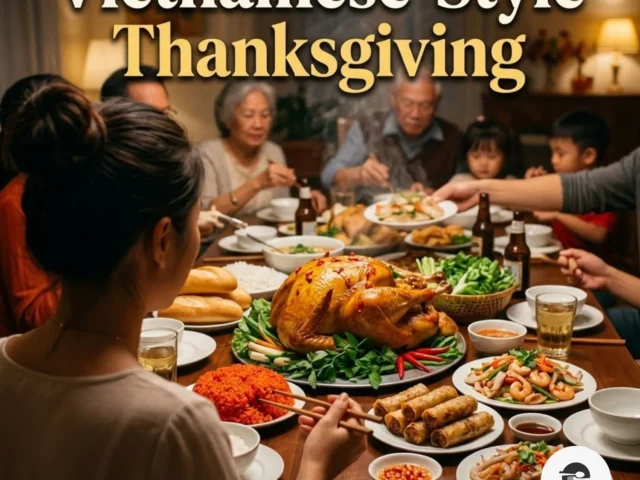
Vietnamese-Style Thanksgiving: How Vietnamese-American Families Fuse the Two Traditions
A Vietnamese-style Thanksgiving keeps the American holiday and builds a Vietnamese menu around it. Vietnamese-American families serve chả…