
Table of contents
When friends from abroad ask me, “What is Vietnamese cuisine?”, they often expect a simple answer like “It’s Phở” or “It’s Banh Mi.” But Vietnamese food is much more than just noodle soup or a baguette sandwich.
At its core, Vietnamese cuisine is the art of balance. It is a sophisticated combination of fresh ingredients, intense flavors, and contrasting textures. Unlike some heavy, oil-based cuisines, Vietnamese food relies on light broths, fresh herbs, and the masterful use of fish sauce (Nước Mắm).
In this guide, I will take you beyond the basics. We will explore the philosophy, the regional differences, and the must-try dishes that make this cuisine one of the healthiest and most delicious in the world.
The Philosophy: The Yin and Yang on Your Plate
To truly understand what Vietnamese cuisine is, you must understand the concept of Yin and Yang (Âm – Dương). This isn’t just spiritual; it’s culinary science.
Vietnamese cooks instinctively balance elements to ensure a dish is neither too “hot” (Yang) nor too “cold” (Yin) for the body.
Example: Duck meat is considered “cold.” Therefore, it is always served with ginger fish sauce (ginger is “hot”) to balance the energy.
Example: Balut (fertilized duck egg) is “cold,” so it is eaten with laksa leaves (Rau Răm) and spicy chili.
This philosophy extends to the Five Elements (Ngũ Hành) corresponding to five flavors:
Sour (Wood)
Bitter (Fire)
Sweet (Earth)
Spicy (Metal)
Salty (Water)
A truly great Vietnamese dish, like a bowl of Bun Cha or Pho, often hits all these notes simultaneously.
The 3 Pillars of Flavor: North, Central, and South
“What is Vietnamese cuisine?” varies depending on where you are standing. Vietnam is long and narrow, creating distinct climate zones that influence the food.
1. Northern Cuisine: Salty, Subtle, and Pure
Profile: The North (Hanoi) values purity and subtlety. They use fewer spices than other regions but focus on the natural sweetness of ingredients (bone broth, fresh meat).
Key Dish: Phở Bắc (Northern Pho). The broth is clear, savory, and smells of charred onion and ginger, without the heavy sweetness or abundance of herbs found in the South.
Vibe: Traditional, strict, and elegant.
2. Central Cuisine: Spicy, Complex, and Refined
Profile: The Central region (Hue, Da Nang) is famous for its “Royal Cuisine.” The flavors are bolder, spicier, and often saltier. The presentation is intricate, reflecting its imperial history.
Key Dish: Bún Bò Huế. A spicy beef noodle soup with lemongrass and fermented shrimp paste (Mắm Ruốc).
Vibe: Intense, colorful, and fiery.
3. Southern Cuisine: Sweet, Bold, and Diverse
Profile: The South (Ho Chi Minh City/Saigon) is a melting pot. The soil is fertile, and sugar or coconut milk is used liberally. Portions are generous, and the flavors are strong.
Key Dish: Cơm Tấm (Broken Rice) or Bánh Xèo (Sizzling Pancake). The dipping sauce here is often sweeter and diluted with coconut water or vinegar.
Vibe: Rustic, open, and rich.
The Indispensable Ingredients

If you want to cook Vietnamese food, or simply understand the menu, look for these key components:
Fish Sauce (Nước Mắm): The soul of the cuisine. It provides the Umami flavor. It is used in cooking and as a base for dipping sauces (Nước Chấm).
Fresh Herbs (Rau Thơm): Vietnamese tables always have a basket of herbs. Cilantro, Thai basil, mint, perilla, and sawtooth coriander are not garnishes—they are essential vegetables.
Rice (Gạo): Rice is life. It appears as steamed rice, rice noodles (Bun, Pho), rice paper (Banh Trang), and rice flour (for pancakes).
The “Nuoc Cham” Litmus Test
As a reviewer for FoodVietnamese.com, I have a personal rule when visiting a new restaurant: Judge the place by its Nước Chấm (Dipping Sauce).
You can tell a lot about a chef by their fish sauce mix.
Is it balanced? It should be the perfect harmony of lemon (sour), sugar (sweet), chili (spicy), and fish sauce (salty).
Is it fresh? The garlic and chili should be floating on top, not sinking to the bottom (a sign of good technique).
If a restaurant serves a lazy, overly salty, or flat dipping sauce, the main dish will rarely be good. But if the sauce makes your mouth water just by smelling it, you are in for a treat. “What is Vietnamese cuisine?” — frankly, it is the art of making the perfect dipping sauce.
Must-Try Dishes for Beginners (Beyond Pho)
If you are new to this cuisine, here is a quick checklist to get started:
1. Bánh Mì (Vietnamese Sandwich)

What is it: A crispy, airy French baguette filled with pate, mayonnaise, cold cuts (or grilled meat), pickled daikon/carrots, cucumber, cilantro, and chili.
Flavor: Crunchy, savory, creamy, and fresh.
Price: Very cheap ($1 – $2 USD).
Best for: A quick lunch or breakfast on the go.
2. Bún Chả (Grilled Pork with Vermicelli)

What is it: Grilled pork patties and pork belly served in a warm, sweet-savory dipping sauce with papaya pickles, alongside fresh rice vermicelli and herbs. Famous for being the dish Obama ate in Hanoi.
Flavor: Smoky, sweet, and herbaceous.
Price: Affordable ($2 – $4 USD).
Best for: Lunch.
3. Gỏi Cuốn (Fresh Summer Rolls)

What is it: Rice paper rolls filled with shrimp, pork, herbs, and vermicelli. Dipped in peanut sauce or sweet fish sauce.
Flavor: Clean, chewy, and refreshing.
Price: Cheap ($0.50 per roll).
Best for: Appetizer or a healthy, low-carb meal.
Conclusion
So, what is Vietnamese cuisine? It is a celebration of fresh ingredients, a masterclass in balance, and a reflection of the country’s diverse culture. Whether you are eating a $1 Banh Mi on a plastic stool by the roadside or dining in a high-end restaurant in Saigon, the core values remain the same: freshness, lightness, and flavor harmony.
If you haven’t tried it yet, start with a bowl of Pho, add some herbs, squeeze the lime, and enjoy the journey.

Related articles
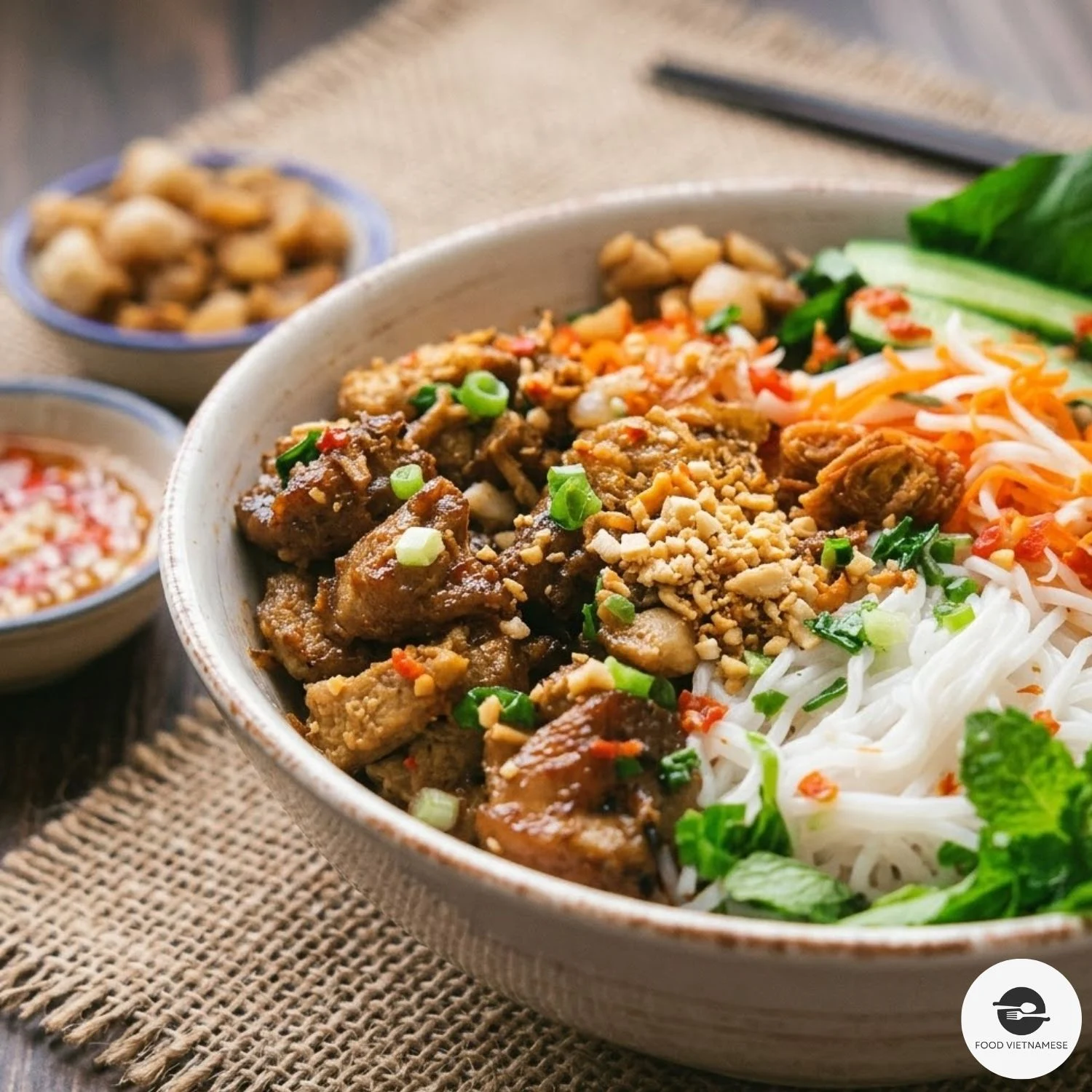
Bun Thit Nuong: Vietnam’s Grilled Pork Noodle Salad, Not a Soup
Bun Thit Nuong is a Vietnamese grilled pork noodle salad — cold rice vermicelli piled with lemongrass-marinated grilled…
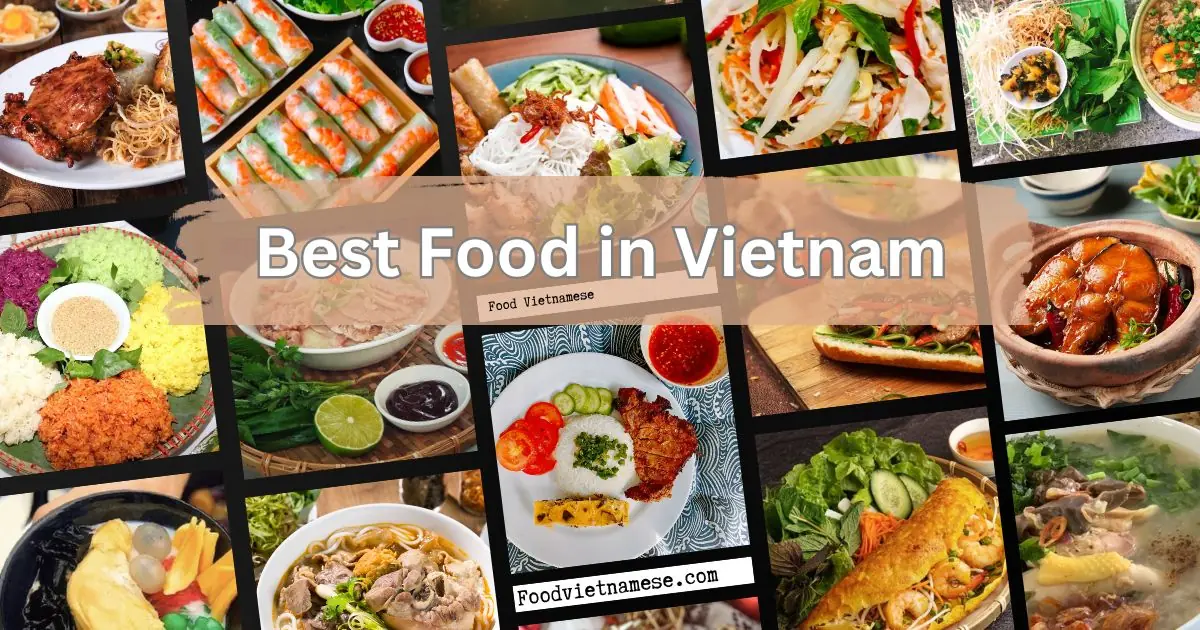
Best Vietnam Food: 15 Must-Try Dishes
Best Vietnam food is defined by one core principle: maximum flavor from the freshest possible ingredients. Vietnamese cuisine balances…
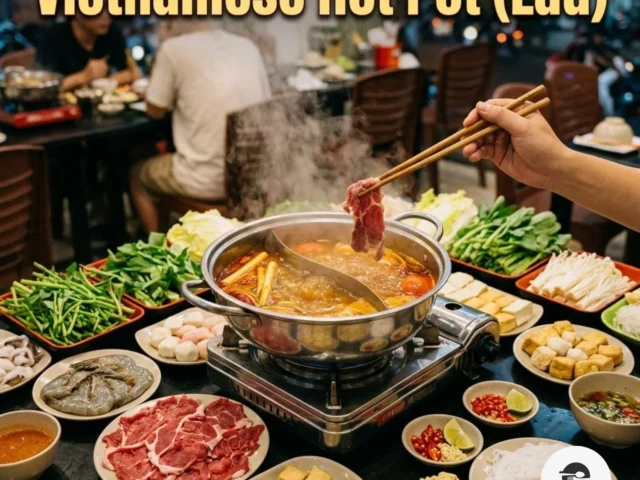
Vietnamese Hot Pot (Lẩu): Types, How to Eat, Dipping Sauces
Vietnamese hot pot (lẩu) is a pot of seasoned broth kept simmering at the table, where diners cook…