
Table of contents
- What Makes Vietnamese Street Food Different
- The Essential Dishes – What to Try First
- Vietnamese Street Food by Region
- Best Streets and Areas to Eat Street Food
- Price Guide – What Street Food Costs
- Is Vietnamese Street Food Safe?
- Practical Tips for Eating Street Food in Vietnam
- Vietnamese Street Food Beyond the Obvious
- Frequently Asked Questions
- The Bigger Picture
What Makes Vietnamese Street Food Different
Most street food cultures exist alongside formal restaurants. In Vietnam, the sidewalk stall is often the restaurant – and frequently the better one. A vendor who has made only bun cha for 30 years will almost always produce a better version than a restaurant that makes 40 dishes. This hyper-specialisation is one reason Vietnamese street food reaches a level of refinement that surprises most visitors.
Three structural features define how Vietnamese street food works:
- Single-dish focus. The best stalls do one thing. The woman on Hang Dieu Street in Hanoi sells only bun cha. The cart near Ben Thanh Market in Saigon makes only banh mi. Ordering the “wrong” item at a single-dish stall often means being told it’s not available – because it genuinely isn’t.
- Time of day matters. Pho is a morning dish. Bun cha runs at lunch. Many stalls close by 2pm having sold everything. Showing up at 3pm and wondering where the food is a common first-timer mistake.
- Price signals quality inversely. A stall with plastic stools, no English menu, and a queue of Vietnamese office workers is almost always better than the one with a laminated menu and a tourist-facing sign out front.
The Essential Dishes – What to Try First
Phở – The National Dish

Rice noodles in bone broth simmered 8–12 hours, served with thin slices of beef (or chicken), fresh herbs, lime and chilli. Pho is widely considered Vietnam’s national dish and the most popular food in Vietnam internationally. The broth is the thing: a good pho broth takes most of the day to make and is complex in a way that is difficult to explain until you taste one that has been done properly.
Northern-style pho usually has a cleaner, more savoury broth. Southern versions around Ho Chi Minh City tend to include more herbs, bean sprouts and slightly sweeter flavours.
Current price: 40,000–80,000 VND (~$1.60–$3.20) at street stalls. When: Breakfast and early morning – many pho stalls close by 10am.
Bánh Mì – The Vietnamese Sandwich

A French baguette adapted over generations into something entirely Vietnamese: the bread is airier and crispier than a French baguette, and the fillings – pâté, Vietnamese pork roll (cha lua), pickled daikon and carrot, coriander, chilli, mayonnaise – create a flavour combination that has no real equivalent elsewhere. Banh Mi ranks second among Vietnam’s most famous foods internationally and was named one of the Top 25 Best Sandwiches in the World by CNN Travel in 2025.
In Ho Chi Minh City, sandwiches often feel bigger and richer. Hoi An is famous for versions packed with homemade pâté, grilled pork and spicy chilli sauce. Hanoi’s banh mi tends to use less filling but better bread.
Current price: 20,000–50,000 VND (~$0.80–$2). Available at almost any hour.
Bún Chả – Hanoi’s Most Famous Lunch

Charcoal-grilled pork belly and pork patties served alongside a bowl of fish sauce dipping broth, fresh rice vermicelli noodles and a mountain of herbs. The smoky smell of bun cha grills drifting through Hanoi streets at midday is one of the city’s most distinctive sensory signatures. This is the dish Anthony Bourdain ate with President Obama in 2016 – an association that made it internationally famous but that locals would argue it didn’t need.
Current price: 40,000–80,000 VND (~$1.60–$3.25). When: Lunch only – stalls typically run from 11am to 2pm, then close.
Gỏi Cuốn – Fresh Spring Rolls

Shrimp, pork, vermicelli, lettuce and herbs wrapped tightly in translucent rice paper, served cold with a peanut-hoisin dipping sauce. Unlike the fried spring roll (chả giò), goi cuon is fresh, light and visually distinctive – you can see the shrimp through the rice paper wrapper. One of the safer dishes for travellers with sensitive stomachs, since there is no raw meat and the vegetables are typically well-washed.
Current price: 20,000–40,000 VND per portion (~$0.80–$1.60).
Bánh Xèo – Sizzling Rice Pancake

A crispy rice-flour crepe with turmeric in the batter, filled with shrimp, pork belly, bean sprouts and sometimes mung beans, folded in half and eaten by wrapping pieces in lettuce with herbs and dipping in nuoc cham (fish sauce). The name translates to “sizzling pancake,” referring to the sound made when rice batter hits a hot pan. This dish is especially common in southern Vietnam, with regional variations found across the country. The central Vietnamese version (Hue and Da Nang) is smaller and crispier; the southern version is large, thin and served with an extensive herb plate.
Current price: 30,000–70,000 VND (~$1.20–$2.80).
Cơm Tấm – Broken Rice (Saigon’s Daily Staple)

A hearty Saigon classic made from “broken” rice grains – once considered poor man’s food, now a beloved staple. Served with grilled pork chop (suon nuong), shredded pork skin (bi), a steamed pork and egg meatloaf (cha trung), cucumber, pickled vegetables and fish sauce. The broken rice grains absorb the flavours of the accompanying dishes differently from regular rice, creating a texture that is specific to this dish. Com tam is eaten from early morning to late night in Ho Chi Minh City.
Current price: 40,000–70,000 VND (~$1.60–$2.80).
Bún Bò Huế – The Spicy One from Central Vietnam

A beef noodle soup from Hue that is everything pho is not: rich, spicy and aromatic with lemongrass and chilli, representing Hue’s imperial culinary past. The broth is deeper and more complex than pho, with shrimp paste adding a fermented umami note. Typical toppings include beef shank, brisket, pork knuckle and occasionally cubes of pork blood, with fresh herbs, banana blossom and lime served on the side. Not recommended as the first dish for travellers with sensitive palates – the shrimp paste can be confronting if you haven’t had time to acclimatise to Vietnamese fermented flavours.
Current price: 40,000–80,000 VND (~$1.60–$3.20).
Hủ Tiếu – The South’s Answer to Pho

Hu Tieu is the dominant noodle soup of southern Vietnam, rooted in Teochew Chinese and Khmer culinary traditions. The broth is clear and naturally sweet – simmered from pork bones and dried squid without the heavy spicing of pho or bun bo hue – served over rice noodles with shrimp, pork, liver, quail eggs and bean sprouts. Eaten wet (in broth) or dry (with broth on the side). Less internationally known than pho but arguably more complex in its protein combinations.
Current price: 40,000–80,000 VND (~$1.60–$3.20).
Vietnamese Street Food by Region
Vietnam is 1,650km long from north to south. The food changes meaningfully every few hundred kilometres. Eating the same dishes in Hanoi and Ho Chi Minh City will produce noticeably different experiences.
| Region | Flavour profile | Dishes to prioritise |
|---|---|---|
| North (Hanoi) | Clean, restrained, savoury. Less sweetness. Fewer herbs at the table. Focus on purity of broth. | Phở Bò, Bún Chả, Bánh Cuốn (steamed rice rolls), Bún Đậu Mắm Tôm (vermicelli with fried tofu and shrimp paste), Chả Cá (turmeric fish with dill), Cà Phê Trứng (egg coffee) |
| Central (Hue, Da Nang, Hoi An) | Bold and spicy. Imperial court traditions in Hue produce intricate small dishes. Central Vietnam uses more chilli than north or south. | Bún Bò Huế, Bánh Xèo (smaller, crispier version), Bánh Bèo (steamed rice cakes), Cao Lầu (Hoi An – wheat noodles, pork, croutons, unique to Hoi An water), Mì Quảng (turmeric noodles with shrimp and pork) |
| South (Ho Chi Minh City, Mekong Delta) | Sweeter, more herbs, more coconut milk, stronger Chinese and Khmer influence. Larger portions. More sugar added across most dishes. | Cơm Tấm, Hủ Tiếu, Bánh Mì (larger, richer), Gỏi Cuốn, Bò Kho (beef stew), Bánh Xèo (larger, thinner), Chè (sweet dessert soups) |
Best Streets and Areas to Eat Street Food
Hanoi
- Old Quarter (Hoan Kiem district) – The highest concentration of street food stalls in the city. Hang Dieu, Hang Manh and Ta Hien streets are particularly well-known. Busy from 6am to midnight.
- Lo Duc Street (Hai Ba Trung) – A quieter, local-focused corridor with long-established individual stalls. Less tourist traffic than the Old Quarter.
- Dong Xuan Market area – Morning market food culture. Best before 9am.
- A queue of Vietnamese workers is the single best food safety indicator in Hanoi. High turnover means ingredients are constantly being used and replenished. Avoid tourist-facing stalls with laminated menus and empty plastic stools.
Ho Chi Minh City (Saigon)
- District 1 (Ben Thanh area) – Tourist-accessible with plenty of quality stalls, though prices trend higher than local neighbourhoods.
- District 3 and District 10 – Where locals eat. More authentic pricing and less English-language signage.
- Bui Vien Street – Primarily a backpacker area; food quality is inconsistent. Better for late-night eating than for serious food exploration.
- Binh Tay Market, Cholon (District 5) – The heart of Saigon’s Chinese-Vietnamese food culture. Excellent hu tieu and dim sum in the morning.
Hoi An
- Hoi An is arguably the most food-dense small city in Vietnam relative to its size. The Ancient Town area is concentrated with good stalls. Cao lau and mi Quang dominate the scene, along with seafood-based dishes.
- White Rose dumplings (banh vac) and Hoi An-style banh mi (Banh Mi Phuong is the most cited address internationally) are the dishes most specific to this city.
Price Guide – What Street Food Costs
Prices in VND with USD equivalent at approximately 26,000 VND = $1 (check the live rate on the day). Prices at tourist-facing stalls in Old Quarter Hanoi or District 1 Saigon may run 20–40% higher than local neighbourhood prices for the same dish.
| Dish | VND (street stall) | USD approx. |
|---|---|---|
| Phở (pho) | 40,000–80,000 | $1.60–$3.20 |
| Bánh Mì (banh mi) | 20,000–50,000 | $0.80–$2.00 |
| Bún Chả (bun cha) | 40,000–80,000 | $1.60–$3.25 |
| Cơm Tấm (com tam) | 40,000–70,000 | $1.60–$2.80 |
| Gỏi Cuốn – 2 rolls (goi cuon) | 20,000–40,000 | $0.80–$1.60 |
| Bánh Xèo (banh xeo) | 30,000–70,000 | $1.20–$2.80 |
| Bún Bò Huế (bun bo hue) | 40,000–80,000 | $1.60–$3.20 |
| Hủ Tiếu (hu tieu) | 40,000–80,000 | $1.60–$3.20 |
| Cà Phê Sữa Đá (iced coffee) | 20,000–45,000 | $0.80–$1.80 |
| Nước Mía (fresh sugarcane juice) | 10,000–20,000 | $0.40–$0.80 |
| Full meal + drink (street stall) | Under 100,000 | Under $4 |
Street stalls commonly price meals at 25,000–70,000 VND ($1–3). Casual local restaurants run 70,000–150,000 VND ($3–6) per dish, and mid-range dining 150,000–350,000 VND ($6–14).
Is Vietnamese Street Food Safe?
Most visitors to Vietnam will eat street food daily without consequence, while a small percentage will get sick regardless of where they eat. The reality is more nuanced than blanket warnings suggest.
The practical approach that works:
- Follow the locals. A stall with a queue of Vietnamese workers at noon is almost always safe. High turnover means nothing sits out.
- Hot food is safe food. Dishes served piping hot directly from the pot or grill carry the lowest risk. Pre-cooked items sitting at room temperature for an unknown period carry more.
- Watch the setup. Are they wiping surfaces between orders? Using tongs rather than bare hands for cooked food? Look for stalls that wash in three basins (soap, rinse, sanitise) or use disposable items.
- Water and ice. Drink bottled or filtered water. Ice at established restaurants and stalls in major cities is generally made from filtered water and is safe. Ice from unknown vendors in rural areas carries more risk.
- Raw shellfish. Fresh raw shellfish (oysters, clams) carries the highest risk of any common street food item. Grilled or steamed shellfish at busy coastal stalls is significantly safer.
| City / Area | Street food safety level | Notes |
|---|---|---|
| Hanoi, Ho Chi Minh City | High | Strong street food cultures, high turnover, regular food safety inspections. |
| Hoi An, Da Nang | High | Heavy tourist throughput; stalls well-practised in hygiene standards. |
| Mekong Delta, Central Highlands | Moderate | More rustic setups, less refrigeration in some areas. Stick to hot cooked dishes. |
| Coastal areas (seafood) | High for cooked; moderate for raw | Choose busy restaurants where the day’s catch turns over quickly. |
Practical Tips for Eating Street Food in Vietnam
- Eat breakfast early. The best street food hours in Vietnam are 6am–9am (breakfast) and 11am–1pm (lunch). Many stalls close by early afternoon having sold out.
- Carry small bills. Most street vendors don’t carry large amounts of change. 10,000–50,000 VND notes are most useful.
- Point and order. English is not required at most local stalls. Point at what the person next to you is eating, hold up fingers for quantity, sit down. It works.
- Don’t skip the condiments. Vietnamese table condiments (nuoc cham, chilli sauce, vinegar, raw garlic) are part of the flavour, not optional extras. Taste before adding.
- Iced tea is often free. Many Vietnamese stalls serve free or very cheap tra da (iced green tea) alongside your meal. It’s the correct pairing for most street dishes.
- Morning markets for the freshest produce. Visiting a wet market (cho) at 6–7am before the stalls get going is a good way to understand where the ingredients come from before you eat them.
Vietnamese Street Food Beyond the Obvious
Pho and banh mi are the entry points – but Vietnam’s street food catalogue runs far deeper. A few dishes worth seeking out once the basics are covered:
| Dish | What it is | Where to find it |
|---|---|---|
| Bánh Cuốn | Steamed rice rolls filled with minced pork and wood-ear mushroom, served with fried shallots and nuoc cham | Hanoi specialty – morning markets and Old Quarter stalls |
| Cà Phê Trứng | Egg coffee: robusta espresso topped with a whipped egg yolk and condensed milk foam | Hanoi (originated here) – Giang Cafe, Dinh Cafe |
| Cao Lầu | Thick wheat noodles with char siu pork, bean sprouts and rice croutons in a small amount of broth. Unique to Hoi An – traditionally made with water from a specific local well | Hoi An only |
| Mì Quảng | Wide turmeric noodles with shrimp, pork, quail eggs and a small amount of broth, topped with rice crackers and peanuts | Da Nang and Quang Nam province |
| Bún Đậu Mắm Tôm | Fresh rice vermicelli with fried tofu, fried pork and meats, dipped in fermented shrimp paste (mam tom) | Hanoi street food classic |
| Chè | Sweet dessert soups and drinks: coconut milk, coloured jellies, red beans, lotus seeds, taro. Dozens of varieties. | Everywhere, especially south Vietnam |
| Bò Kho | Slow-braised beef stew with lemongrass, star anise, five-spice, chilli and carrot. Eaten with a crusty banh mi for dipping or over fresh noodles. TasteAtlas ranked it 28th in its 100 best breakfast dishes globally in 2025. | South Vietnam, especially Ho Chi Minh City |
Frequently Asked Questions
What is Vietnamese street food?
Food sold from sidewalk stalls, market corridors and mobile carts – the primary daily eating culture of Vietnam. Vendors typically specialise in one or two dishes. Most meals cost 20,000–80,000 VND ($0.80–$3.20). Iconic dishes include pho, banh mi, bun cha, goi cuon, banh xeo and com tam.
What is the most popular Vietnamese street food?
Pho is the most internationally recognised. Banh mi is the most frequently eaten domestically, available from dawn to midnight across every region and price point. Both are found on virtually every street in the country.
Is Vietnamese street food safe?
For most travellers in major cities, yes. Choose stalls with high local foot traffic, eat food that is hot and freshly cooked, drink bottled or filtered water. The presence of a queue of Vietnamese workers at lunchtime is the best indicator of a safe, quality stall.
How much does Vietnamese street food cost?
A full street food meal with a drink typically runs under 100,000 VND (under $4 USD) per person. Individual dishes range from 20,000–80,000 VND ($0.80–$3.20) depending on the dish and location.
What is the difference between Hanoi and Saigon street food?
Hanoi food: cleaner broths, less sweetness, fewer herbs, more restrained. Saigon food: sweeter, more herbs on the table, heavier Chinese and Khmer influence, larger portions. The same dish (pho, banh mi) tastes noticeably different in the two cities.
What should a first-time visitor eat first?
Start with pho (mild, accessible, iconic), banh mi (cheap, quick, universally available) and goi cuon (fresh spring rolls – low-risk for sensitive stomachs). Explore bun cha or com tam once comfortable. Delay dishes with shrimp paste or strong fermented flavours until after a few days of acclimatisation.
What are the best streets for street food in Hanoi?
Old Quarter (Hang Dieu, Hang Manh, Ta Hien streets), Lo Duc Street in Hai Ba Trung, and the area around Dong Xuan Market. Morning market stalls are busiest before 9am; lunch stalls run 11am–2pm.
The Bigger Picture
Vietnam’s street food isn’t a single cuisine – it’s 54 ethnic groups and 3,000km of coast and mountain that have been exchanging ingredients and techniques for centuries. The French left behind the baguette that became banh mi. Chinese migration brought noodle-making traditions that became pho. The Cham people of central Vietnam contributed spice combinations that still define Hue cooking.
What holds it together is not a single flavour profile but a shared philosophy: fresh ingredients, prepared to order, eaten immediately. The bowl of pho at 7am in Hanoi – clear broth, precise noodles, beef that turns from pink to cooked in the moment it hits the soup – is the same philosophy expressed in a different register as the banh mi assembled from a street cart at midnight in Saigon. Fast, specific, unrepeatable. That is Vietnamese street food.

Related articles
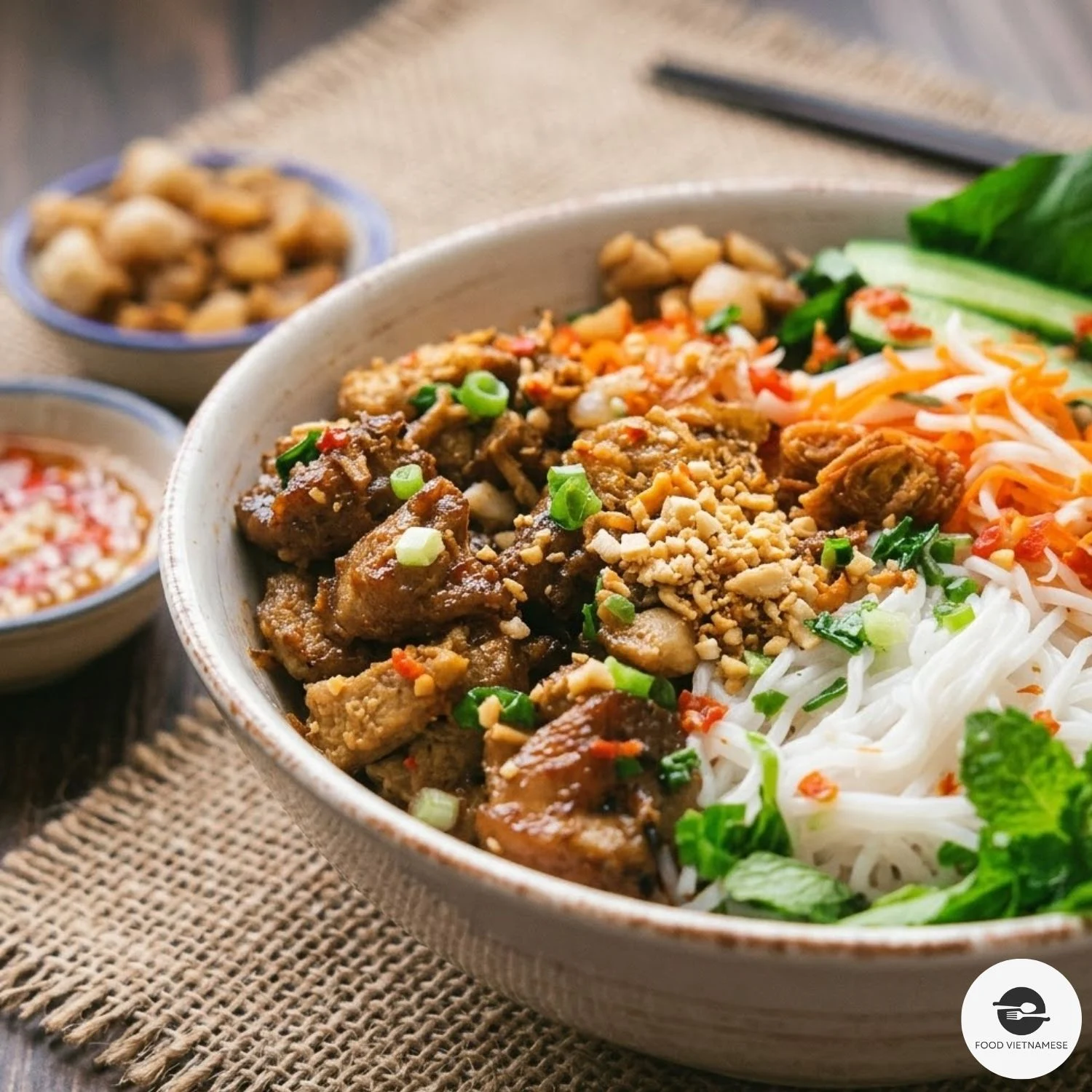
Bun Thit Nuong: Vietnam’s Grilled Pork Noodle Salad, Not a Soup
Bun Thit Nuong is a Vietnamese grilled pork noodle salad — cold rice vermicelli piled with lemongrass-marinated grilled…
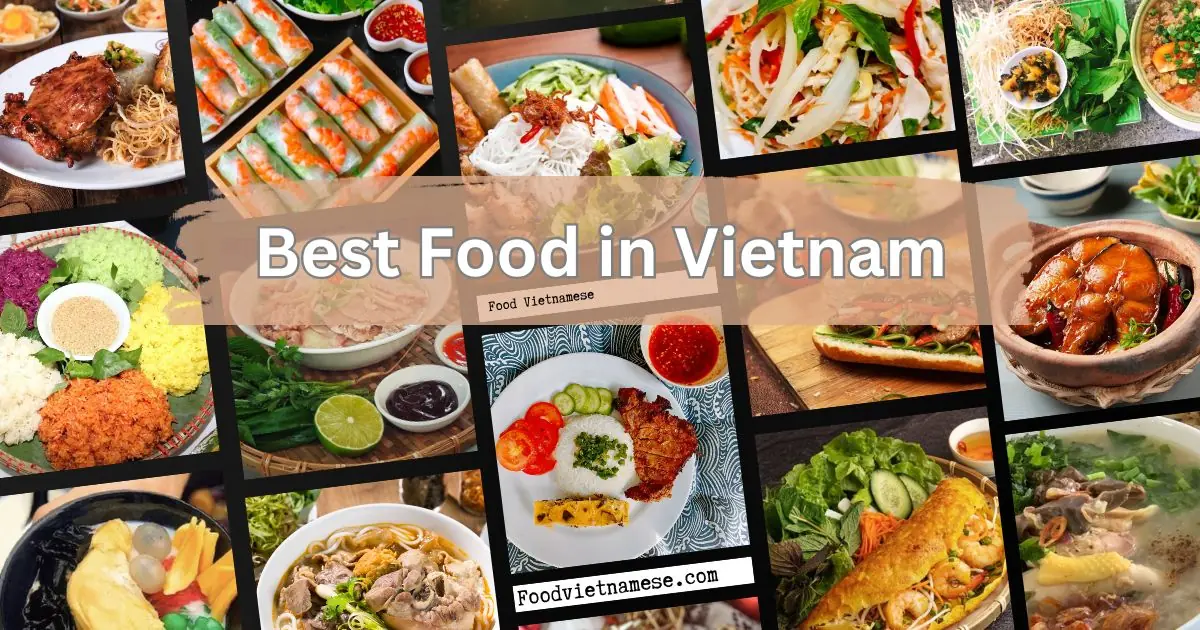
Best Vietnam Food: 15 Must-Try Dishes
Best Vietnam food is defined by one core principle: maximum flavor from the freshest possible ingredients. Vietnamese cuisine balances…
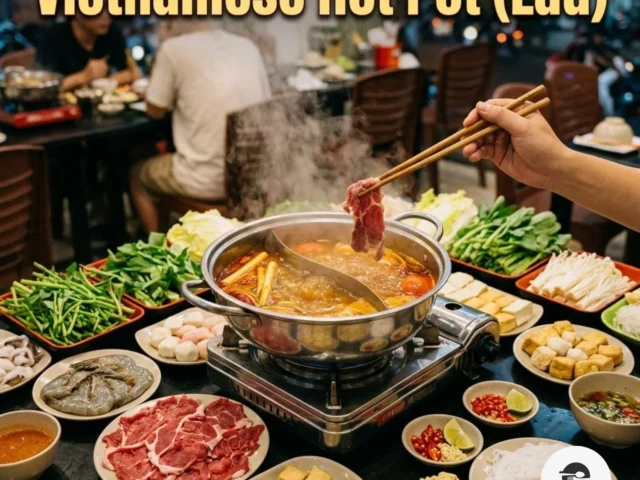
Vietnamese Hot Pot (Lẩu): Types, How to Eat, Dipping Sauces
Vietnamese hot pot (lẩu) is a pot of seasoned broth kept simmering at the table, where diners cook…