Table of contents
Xôi mặn, or savory sticky rice, is one of the iconic dishes in Vietnamese street food. Not just a quick breakfast for locals, this dish attracts tourists with its harmonious blend of chewy, aromatic glutinous rice and diverse savory toppings. I’ve tried various versions of xôi mặn in Hanoi and Ho Chi Minh City, and I must admit its appeal lies in its simplicity yet depth of flavor. This dish isn’t always “outstandingly delicious” for everyone, but it has high comfort food value, especially when you’re looking for something warm and familiar. In this article, we’ll explore from origins to how to enjoy it, helping you decide if xôi mặn is worth trying.
What is Xôi Mặn?
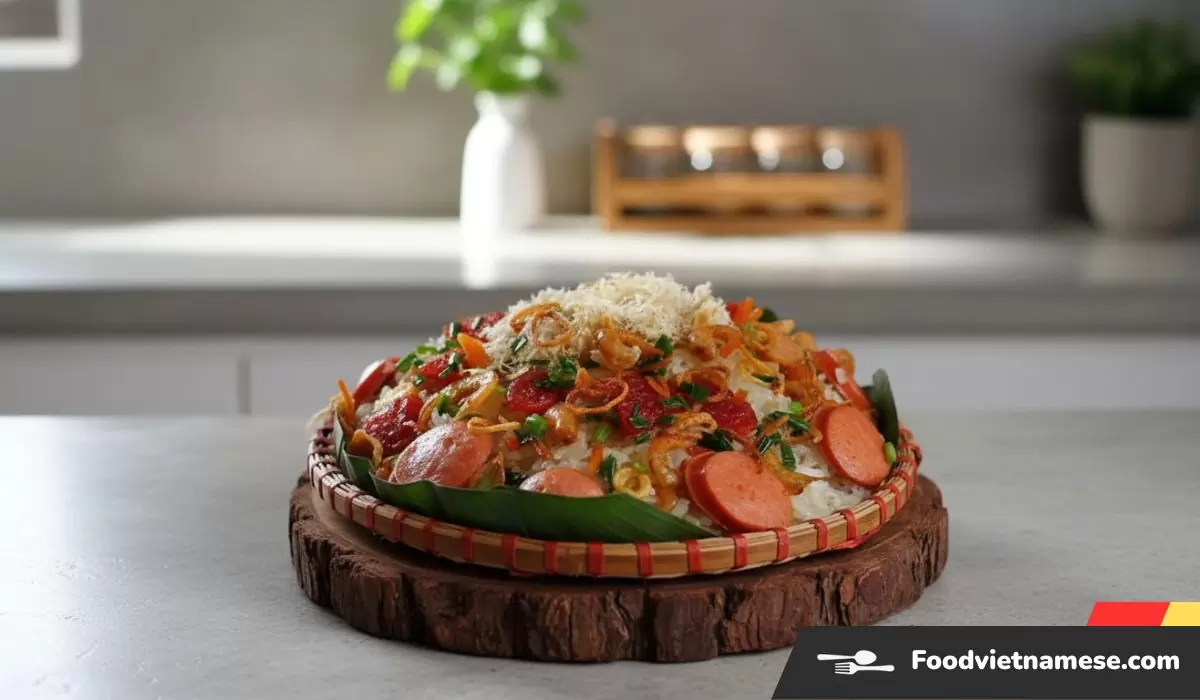
Xôi mặn is a dish of steamed glutinous rice topped with savory elements to create a balanced taste. Unlike sweet xôi often used in festivals, this savory version focuses on umami – salty and rich flavors. The glutinous rice is selected from high-quality types, like nếp cái hoa vàng from the North, to ensure chewiness and natural aroma. Common toppings include sliced Chinese sausage (lạp xưởng), pork pâté, dried shrimp, pork floss (ruốc), boiled quail eggs, crispy fried shallots, and sometimes shredded chicken. Each topping adds a layer of texture: crunch from shallots, chewiness from sausage, creaminess from pâté.
This dish is often wrapped in banana leaves or newspaper, easy to carry, suitable for busy lifestyles. According to traditional culinary sources, xôi mặn emerged from Vietnam’s agricultural era, when glutinous rice was a staple and savory toppings helped with preservation. It’s not just daily food but also reflects sharing culture, commonly seen at street vendor carts.
History and Origins of Xôi Mặn
Xôi has a long history in Vietnam, at least from the 10th century, when glutinous rice was widely cultivated in the Red River Delta. Initially, xôi was used in Tet and festivals, symbolizing abundance. The savory version gradually formed in the South during the 19th-20th centuries, influenced by Chinese cuisine with sausage and pâté. According to culinary documents like those from Vietnam Airlines, xôi mặn became popular street food after wars, when people needed cheap, nutritious meals. In the North, xôi mặn is simpler with pork floss and shallots; the South adds pâté and eggs for extra richness. Today, it holds an important position, even recognized by Michelin at spots like Xôi Bát.
Ingredients and Preparation Method

The main ingredients for xôi mặn are easy to find at Vietnamese markets or Asian supermarkets. Glutinous rice needs to be soaked for at least 6 hours to expand evenly, then steamed using a bamboo steamer or Instant Pot for convenience. Toppings are prepared separately: sausage sautéed with garlic and onions for aroma, homemade pâté from ground pork liver, crispy fried shallots. A basic recipe is as follows:
- 200g glutinous rice, soaked overnight.
- Steam for 25 minutes with pandan leaves and coconut milk to enhance aroma.
- Toppings: 50g Chinese sausage, 30g pâté, 20g pork floss, 2 quail eggs, fried shallots.
Homemade method is simple: Steam the rice until chewy, quickly sauté toppings, then sprinkle on top. Preparation time is about 45 minutes if using a pressure cooker. Note: Don’t steam too long to avoid mushy rice. For a vegan version, replace sausage with fried tofu and mushroom-based pâté.
Flavor and Review: Is It Delicious?
The flavor of xôi mặn is a blend of light sweetness from the rice and bold saltiness from the toppings. On the first bite, you feel the chewiness of the rice, followed by the creamy richness from pâté spreading out, crunch from fried shallots, and chewiness from sausage. I once tried it at a Hanoi street corner: The rice was fragrant with pandan, but the toppings were a bit too salty if eaten in large amounts. It’s not always “outstandingly delicious” – if you’re not used to East Asian saltiness, it might feel heavy. However, for Vietnamese palates, it’s an 8/10: Comforting, filling, and diverse in textures. Drawback is sometimes the toppings are oily, not suitable for daily eating. Overall, it’s delicious in a comfort food way, especially on cool mornings.
Where to Try It?

If visiting Vietnam, try xôi mặn in major cities. In Hanoi, Xôi Yến (35B Nguyễn Hữu Huân) is a famous spot with abundant toppings, open from early morning. This place has been around for decades, serving hundreds of portions daily. In Ho Chi Minh City, Xôi Bát (alley on Hoàng Hoa Thám, Bình Thạnh district) is a more upscale option, recognized by Michelin Bib Gourmand in 2024 for fresh ingredients and refined presentation. Another spot is Xôi Chè Bùi Thị Xuân, specializing in affordable xôi mặn with lively street vibes. For tourists, markets like Bến Thành (Ho Chi Minh City) or Đồng Xuân (Hanoi) have vendor carts selling fresh xôi mặn. Tip: Choose crowded spots to ensure fresh toppings.
Suitable for Whom?
Xôi mặn suits most people, especially street food enthusiasts wanting to explore local flavors. Western tourists can try it if accustomed to Asian saltiness, but avoid if on a gluten-free diet (glutinous rice contains natural gluten). Ideal for busy folks needing a quick breakfast or families wanting a filling meal. Not recommended for strict vegetarians unless opting for vegan versions, and be cautious with shrimp allergies. Overall, it’s approachable and safe for first-timers.
How Much Does It Cost?
Xôi mặn is very affordable, ranging from 20,000 – 50,000 VND (about 0.8 – 2 USD) depending on the spot and toppings. At Hanoi street vendors, a basic portion is only 25,000 VND; upscale places like Xôi Bát can go up to 40,000 VND with special toppings. Compared to phở (50,000 VND), xôi mặn is cheaper but equally filling. Prices rise slightly in tourist areas, but still under 3 USD.
Flavor – Price – Quality Comparison Table
To help you choose the right version, here’s a comparison table based on experiences and reviews from reliable sources:
| Version | Flavor | Price (VND) | Quality | Suggested Location |
|---|---|---|---|---|
| Northern Xôi Mặn | Light sweetness from rice, moderate saltiness from pork floss and shallots, less fatty. | 20,000 – 30,000 | Fresh, simple, natural toppings. | Xôi Yến, Hanoi |
| Southern Xôi Mặn | Creamy from pâté, chewy from sausage, added quail eggs. | 30,000 – 50,000 | Upscale, diverse toppings, clean. | Xôi Bát, Ho Chi Minh City |
| Street Food Xôi Mặn | Bold, crunchy, sometimes oily. | 15,000 – 25,000 | Varies by vendor. | Bến Thành Market |
| Vegan Xôi Mặn | Lighter, replaced toppings with tofu and mushrooms. | 25,000 – 40,000 | Fresh, healthy, lower calories. | Vegetarian spots in Hanoi |
This table shows the South is often pricier but richer in flavors, while the North maintains tradition.
Author’s Perspective
As a reviewer for FoodVietnamese.com, I once tried xôi mặn at a Hanoi street corner during a drizzly morning – the warmth spread from the chewy rice, but the fatty pâté made me eat only half a portion. Compared to sweet xôi, the savory version is more practical for daily meals, though not always a “wow” factor. I recommend trying it with iced tea to balance the flavors.
Conclusion
Savory sticky rice (xôi mặn) is a testament to the vitality of Vietnamese cuisine – simple, tasty, and accessible. Though not a “must-try” like phở, it’s worthwhile for those wanting authentic street food. Try it at local spots to fully experience the flavors, and share your experiences!

Related articles
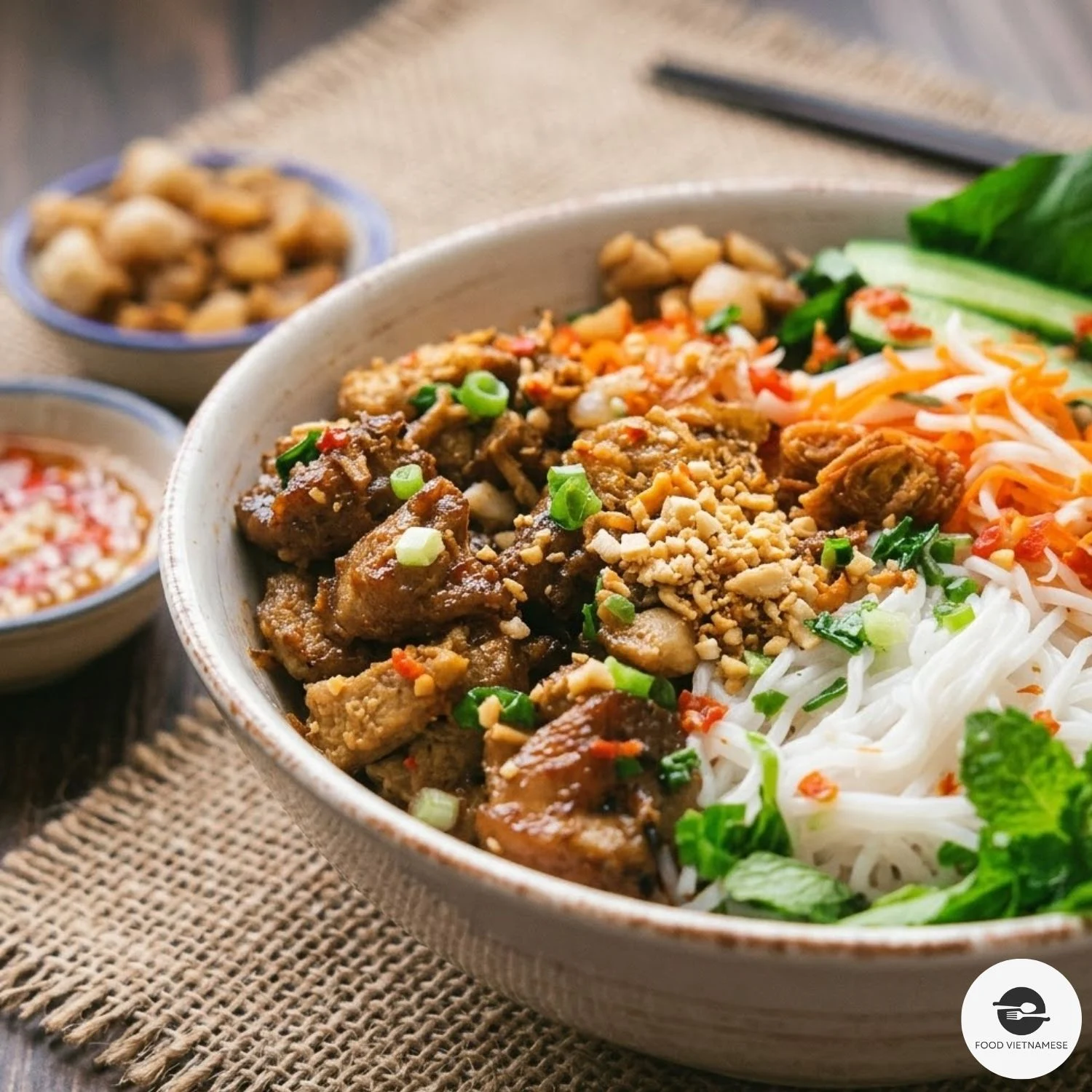
Bun Thit Nuong: Vietnam’s Grilled Pork Noodle Salad, Not a Soup
Bun Thit Nuong is a Vietnamese grilled pork noodle salad — cold rice vermicelli piled with lemongrass-marinated grilled…
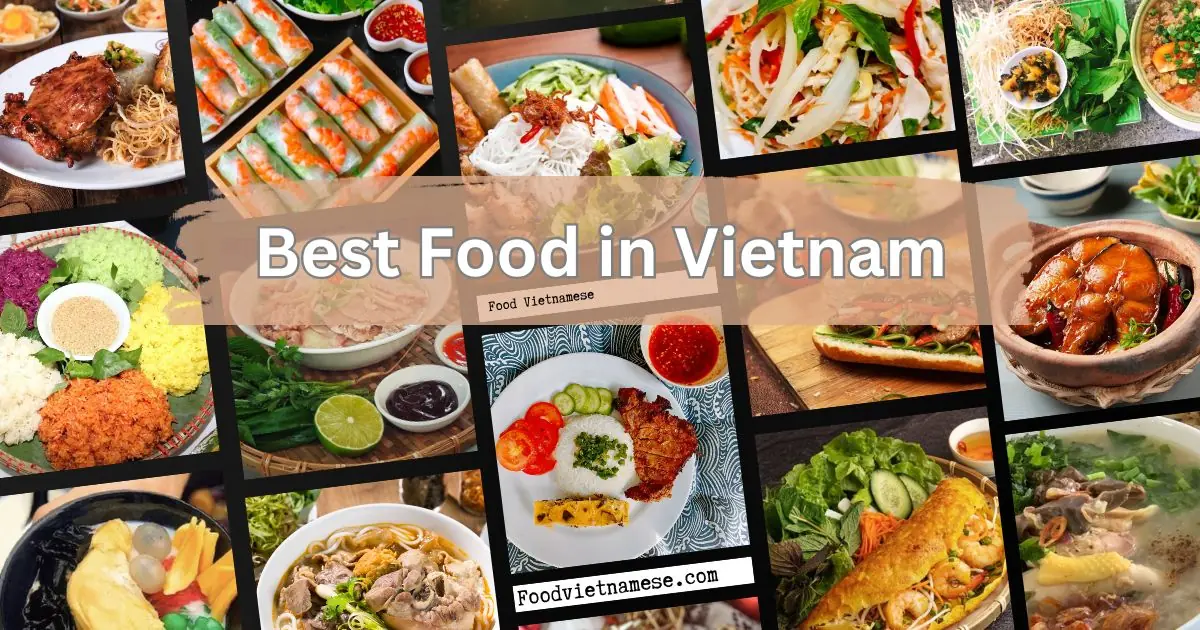
Best Vietnam Food: 15 Must-Try Dishes
Best Vietnam food is defined by one core principle: maximum flavor from the freshest possible ingredients. Vietnamese cuisine balances…
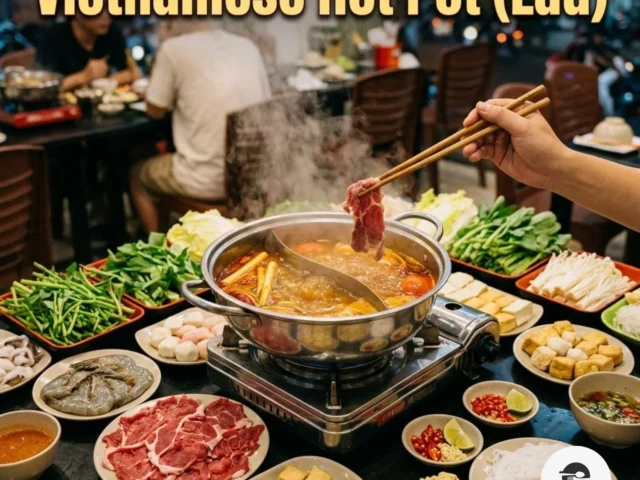
Vietnamese Hot Pot (Lẩu): Types, How to Eat, Dipping Sauces
Vietnamese hot pot (lẩu) is a pot of seasoned broth kept simmering at the table, where diners cook…