Table of contents
- The One Rule That Holds Everywhere: Elders Go First
- Chopsticks Carry Real Meaning, Not Just Table Manners
- The Flipped-Chopstick Trick Most Guides Skip
- Street Food Plays by a Looser Rulebook
- Toasting Is a Group Activity, Not a Personal Choice
- Asking for the Bill — It Won’t Come to You
- Frequently Asked Questions
Before eating: Wait for the eldest person at the table to start, especially at a family or formal meal
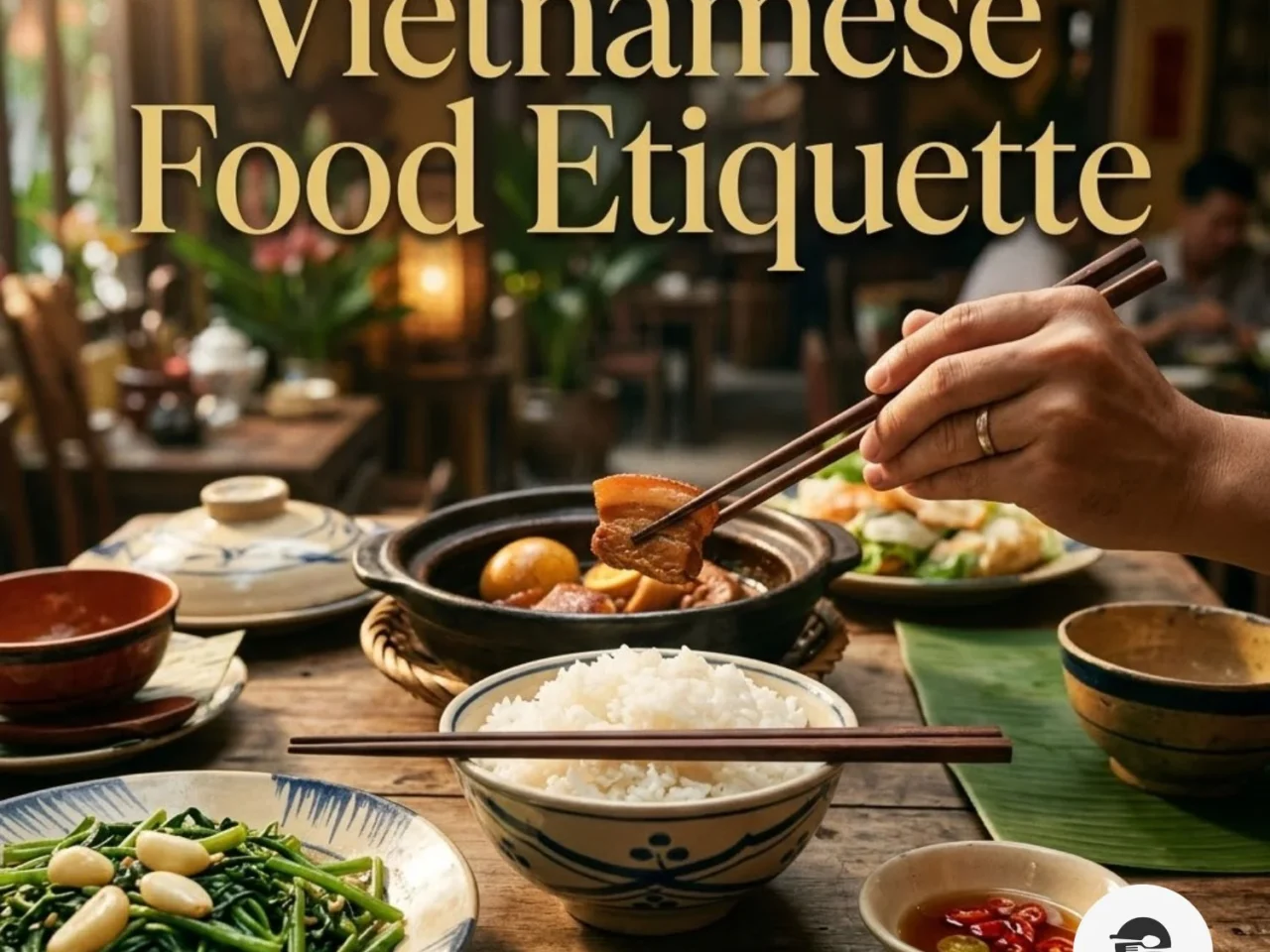
Chopstick taboo: Never stick chopsticks upright in a rice bowl — it mirrors incense at a funeral altar
Serving others: If no serving spoon is provided, flip your chopsticks and use the clean, wide end to pick food for someone else
Street food is looser: Sharing a table with strangers is normal, tipping isn’t expected, and you pay at the end rather than upfront
Toasting: “Một, hai, ba, dzô!” (one, two, three, cheers!) is a group countdown — everyone drinks together on “dzô”
Asking for the bill: It won’t arrive automatically — say “Tính tiền” or signal the server directly
Most etiquette guides treat every meal in Vietnam the same way, as if a family dinner and a bowl of bún chả on a plastic stool follow identical rules. They don’t — and the split matters more once you’ve read what Vietnamese cuisine actually covers. Here’s what holds across every setting, and where the expectations genuinely split.
The One Rule That Holds Everywhere: Elders Go First
At a family table or any formal meal, the eldest person present eats first, or at minimum gives a verbal signal — “mời cả nhà ăn cơm” (an invitation for everyone to eat) — before anyone picks up their chopsticks. Younger guests typically wait a beat even after that invitation, letting elders take the first bite. This is the most consistently enforced rule in Vietnamese dining and the one visitors get flagged for skipping most often, since it applies at nearly every sit-down meal regardless of region.
Chopsticks Carry Real Meaning, Not Just Table Manners
A few chopstick rules matter more than they look. Never leave chopsticks standing upright in a bowl of rice — it visually echoes incense sticks placed in a bowl at a funeral altar, and doing it at a meal reads as a genuine bad omen, not just clumsy manners. Passing food directly from your chopsticks to someone else’s chopsticks is avoided for a similar reason — it mirrors a funeral rite involving the transfer of bones. Pointing chopsticks at another person, tapping them against your bowl, or stabbing food with them instead of picking it up all read as impolite, though none carry the same weight as the upright-in-rice mistake. Getting this one rule right covers most of what a visitor actually needs to know — the same care shows up in dish-specific guides like how to eat phở properly, where chopstick and spoon handling matter just as much as the broth itself.
The Flipped-Chopstick Trick Most Guides Skip
This is the part most etiquette lists leave out entirely. When a shared dish has no serving spoon — common at home-style meals — Vietnamese diners routinely serve each other by flipping their own chopsticks around and using the clean, wide end to place food into someone else’s bowl. It’s called gắp, and it’s a genuine gesture of care, often done for elders, guests, or children without being asked. The end that touched your mouth never touches the shared dish; only the reversed, unused end does. If you’re offered food this way, accepting it graciously matters more than worrying about the mechanics — refusing outright can read as rejecting the gesture itself, not just the food.
Street Food Plays by a Looser Rulebook
A sidewalk stall serving bún chả or a bowl of noodles doesn’t run on the same formality as a family table, and treating it that way just slows things down. Sharing a low plastic stool table with total strangers is completely normal — there’s no need to wait for an invitation or an empty table. Herb plates and condiments like nước chấm are self-serve and functional, not decorative, so tasting the dish first before adding fresh herbs, lime, or chili lets you judge how much it actually needs. Payment happens at the end, not upfront, and you’ll need to ask for the bill directly — “Tính tiền” — since it almost never arrives on its own. Tipping isn’t a built-in expectation at this level of dining, though rounding up or leaving small change for good service is always appreciated.
Toasting Is a Group Activity, Not a Personal Choice
If a meal turns into nhậu — the broader Vietnamese social ritual of eating, drinking, and talking together — toasting stops being optional. The standard toast is a countdown: someone calls “Một!” (one), the table responds “Hai!” (two), then “Ba!” (three), and everyone drinks together on “Dzô!” (cheers). It’s meant to be loud and communal, not a quiet clink of glasses. When pouring drinks, filling someone else’s glass before your own is the polite order, and using both hands to pour for an elder is a small but noticed gesture of respect. Non-drinkers aren’t excluded — joining the toast with tea, soda, or juice in hand is completely accepted.
| Setting | Formal / family meal | Street food / sidewalk stall |
|---|---|---|
| Starting to eat | Wait for the eldest to begin | No wait required |
| Sharing a table | Seating often reflects hierarchy | Sharing with strangers is normal |
| Serving food | Flip chopsticks to serve others (gắp) | Self-serve herb plates and condiments |
| Payment | Host often settles the bill | Ask for the bill; pay at the end |
| Tipping | Not traditionally expected | Not expected; rounding up is fine |
Asking for the Bill — It Won’t Come to You
Unlike a Western sit-down restaurant, a Vietnamese server generally won’t bring a check and wait. You signal that you’re finished and ask directly: “Tính tiền” (casual), or “Cho tôi tính tiền” for a slightly more polite version. Most street stalls and casual rice-and-noodle spots are cash-only, so having small notes on hand avoids the awkward wait for change. Sit-down restaurants increasingly take cards, but it’s worth confirming with “Có chấp nhận thẻ không?” before you order if that matters to you. If you’re mapping out where to put this etiquette into practice, a broader guide to what to eat in Vietnam is a useful next stop.
I once watched a group of visiting exchange students at a bún đậu stall try to wait politely for a menu and a bill the way they would back home, growing visibly confused when neither came. The vendor finally just laughed, pointed at the food, and said “ăn đi, tính sau” — eat now, we’ll settle up later. That’s more or less the entire philosophy of street food etiquette in one sentence.
Kelly Thuy — field notes, Hanoi
Frequently Asked Questions
Yes — it’s one of the most important taboos to avoid. Standing chopsticks upright in rice resembles incense placed in a bowl at a funeral altar, so it’s read as inviting bad luck rather than simple clumsiness.
At a family or formal meal, yes. The eldest person present typically eats first or gives a verbal invitation for everyone to begin before others pick up their chopsticks. This custom is more relaxed at casual street food stalls.
Flip your chopsticks around and use the clean, wide end to place food into someone else’s bowl — a custom called gắp. It’s a common gesture of care toward elders, guests, and children at home-style meals.
No, tipping isn’t a traditional expectation at Vietnamese restaurants or street stalls. Rounding up the bill or leaving small change for good service is appreciated but optional, though it’s becoming slightly more common at upscale restaurants.

Related articles
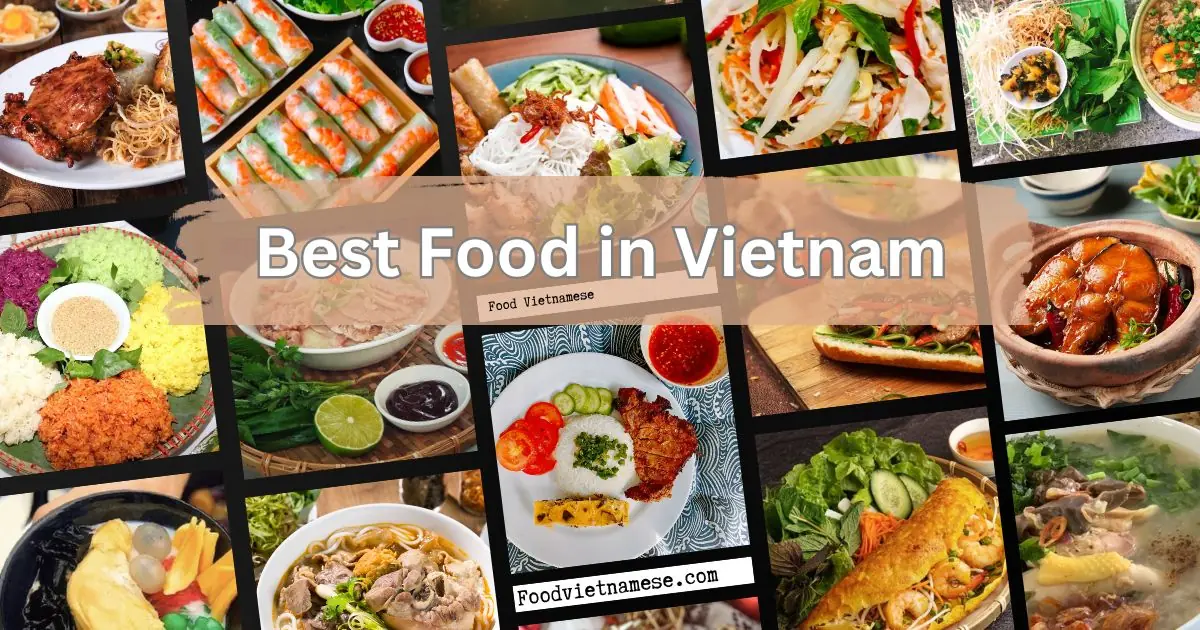
Best Vietnam Food: 15 Must-Try Dishes
Best Vietnam food is defined by one core principle: maximum flavor from the freshest possible ingredients. Vietnamese cuisine balances…
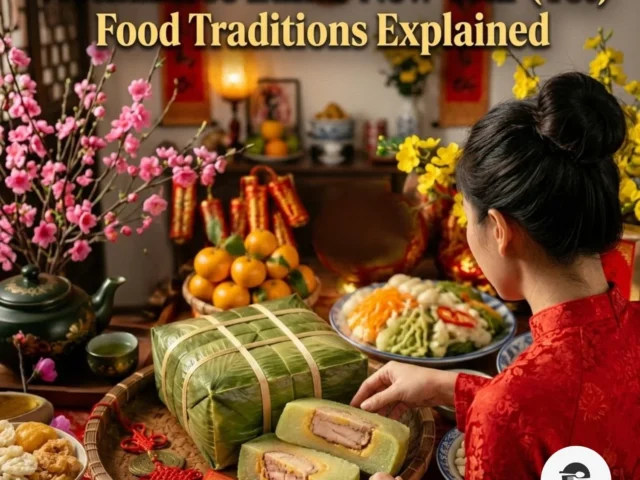
Vietnamese Lunar New Year (Tết) Food Traditions Explained: What Goes on the Table, and Why
Vietnamese Lunar New Year (Tết) food traditions center on sticky rice cakes (bánh chưng in the north, bánh…
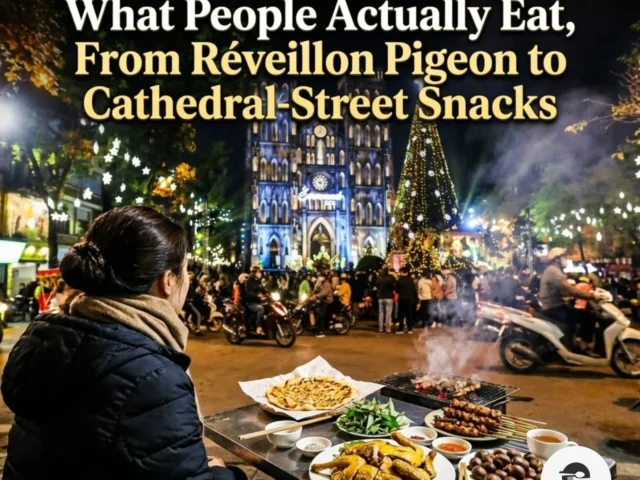
Christmas Eve in Vietnam: What People Actually Eat, From Réveillon Pigeon to Cathedral-Street Snacks
Christmas Eve in Vietnam has no single national dish. What people eat depends on who they are: Catholic…