
Table of contents
- Weather Windows by Region: Where Two Guides Agree
- Autumn in Hà Nội: Cốm and Chả Rươi
- Mekong Delta Flood Season: Cá Linh and Bông Điên Điển
- Summer Fruit Months: Lychee, Durian, Mangosteen, Mango
- Tết Food: Bánh Chưng in the North, Bánh Tét in the South
- Where the Best Food and the Worst Weather Collide
- Frequently Asked Questions
Safest weather, all regions: March and April (Vietnamtourism.com)
Autumn, north: Cốm from the 7th to 10th lunar month; rươi (sandworm) in the 9th and 10th
Flood season, Mekong Delta: Water rises from July to November in An Giang; cá linh peaks around the 10th lunar month
Summer fruit: Lychee May–July, durian May–August, mangosteen May–August, rambutan May–October
Tết: Falls between late January and 20 February, with bánh chưng in the north and bánh tét in the south
Storm risk: Central Vietnam (Huế, Đà Nẵng, Hội An), September to November
Most guides to the best time to visit Vietnam rank months by weather and treat food as an afterthought. Food travelers have a different problem: the standout seasonal dishes live in specific regions and short windows. Pick the food first, then confirm the weather allows it.
Weather Windows by Region: Where Two Guides Agree
Vietnam’s climate splits three ways, and two travel guides give slightly different ranges. This table shows Vietnamtourism.com and the Rough Guides side by side.
| Region | Best months (Vietnamtourism.com) | Best months (Rough Guides) | Wet or storm months |
|---|---|---|---|
| North (Hà Nội) | March–May, September–November | October–April | June–August; May–September |
| Central (Huế, Đà Nẵng, Hội An) | February–April, August–October | February–May | Storms September–November; late May–November |
| South (Sài Gòn, Mekong Delta) | December–April | December–April | May–November (both) |
The overlaps are useful. March and April work in all three regions, and Vietnamtourism.com calls them the best balance nationwide. In the north, October and November sit inside both guides’ ranges. Central Vietnam is the outlier: both guides mark autumn as storm season.
Autumn in Hà Nội: Cốm and Chả Rươi
Cốm is young glutinous rice pounded into soft green flakes, and Kenh14 puts its season between the seventh and tenth lunar months, roughly August to November. The best-known source is Làng Vòng, a village in western Hà Nội near Cầu Giấy.
Vendors wrap it in lotus leaf over an inner layer of lá ráy, tied with straw. It is eaten by hand, with ripe banana, or alongside persimmon as “hồng cốm”. Cooked versions include chả cốm, xôi cốm, bánh cốm, chè cốm, and cốm xào.
The same weeks bring rươi, the northern sandworm. According to Tuổi Trẻ, the main harvest falls in the ninth and tenth lunar months, with Tứ Kỳ in Hải Dương the most famous source. Our guide to chả rươi from Hải Dương covers the omelet.
Mid-Autumn Festival (Tết Trung Thu) lands on the 15th day of the eighth lunar month, which is between 7 September and 8 October on the Gregorian calendar, according to Wikipedia.
Mekong Delta Flood Season: Cá Linh and Bông Điên Điển
In An Giang, floodwater arrives in July and recedes by November, Nhân Dân reports. The fish that defines the season is cá linh, a small river fish that spends about three months in the floodwater before heading back to the river.
Tuổi Trẻ dates the first fish to the eighth or early ninth lunar month and the peak to around the tenth. Young fish are the prized ones.
The classic order is lẩu cá linh bông điên điển, a hot pot cooked with the yellow điên điển flower. Other forms are cá linh kho, mắm cá linh, and canh chua made with the fish. The best-known provinces are An Giang and Đồng Tháp.
This is also the Mekong’s wet season. Rough Guides notes that the rain often arrives in short bursts rather than all day.
Summer Fruit Months: Lychee, Durian, Mangosteen, Mango
Summer is the weakest season for weather in the north and south, and the strongest for fruit. These windows come from the Vietnamtourism.com fruit guide. Treat them as windows, not dates, since orchards and years vary.
| Fruit | Season | Main growing area |
|---|---|---|
| Mango (xoài) | March–June | Mekong Delta, including Cao Lãnh |
| Lychee (vải) | May–July, peak June | Hải Dương, Bắc Giang, Lạng Sơn |
| Durian (sầu riêng) | May–August, peak June | Tiền Giang, Bến Tre |
| Mangosteen (măng cụt) | May–August | Mekong Delta, southern highlands |
| Rambutan (chôm chôm) | May–October | Mekong Delta |
| Persimmon (hồng) | September–December | Đà Lạt, central highlands |
Tết Food: Bánh Chưng in the North, Bánh Tét in the South
Tết falls between late January and 20 February, per Wikipedia. Two sticky rice cakes anchor the table: square bánh chưng, more popular in the north, and cylindrical bánh tét, more popular in the south. Our bánh chưng recipe covers the wrapping.
For a food trip, Tết is a mixed choice. The dishes are at their most traditional, but expect many family-run stalls to close for several days while owners travel home.
Where the Best Food and the Worst Weather Collide
September to November is the crunch. The north has good weather plus cốm and rươi. The Mekong has the flood-season food but steady rain. Central Vietnam has storms in both guides.
The good news is that the central specialties are not harvest-bound. Mì Quảng and cao lầu are everyday dishes, so skipping the storm months costs little. My pick for a single autumn trip is Hà Nội first, then the Mekong, and leaving the coast for spring.
March and April are the alternative: the best weather everywhere, plus mango in the south, but no headline seasonal specialty. Once a month is chosen, the best food in Vietnam guide lists what to order in each city.
In Long Xuyên I ate lẩu cá linh bông điên điển at a riverside stall while light rain came and went twice. The broth was sour, the small fish came whole, and the yellow flowers went in last, still bright. A bowl of rice noodles came alongside, and the stall had no menu.
Kelly Thuy — field notes, Long Xuyên
Frequently Asked Questions
No single month covers everything. March and April give the safest weather nationwide, October suits northern autumn food like cốm and rươi, and the Mekong flood season, from July to November in An Giang, suits cá linh.
Cốm season runs from the seventh to the tenth lunar month, roughly August to November. Làng Vòng is the best-known source.
Mango runs March to June, lychee May to July with a June peak, durian May to August, mangosteen May to August, and rambutan May to October.
Yes. Everyday dishes like phở, mì Quảng, and cao lầu are available in every month. The seasonal specialties, such as cốm, rươi, and cá linh, are tied to short windows.
No month is bad for food, but Central Vietnam’s storm season, September to November, can disrupt travel. Many family-run stalls also close for several days around Tết.

Related articles
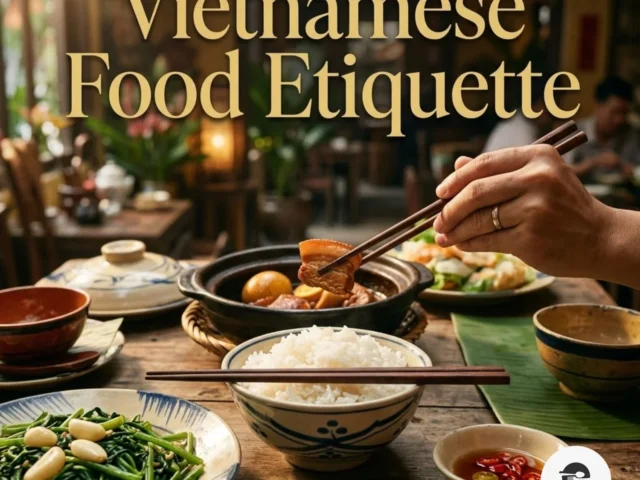
Vietnamese Food Etiquette: What Changes at a Street Stall
Vietnamese food etiquette gets taught as one fixed rulebook — wait for elders, don’t stick your chopsticks upright…
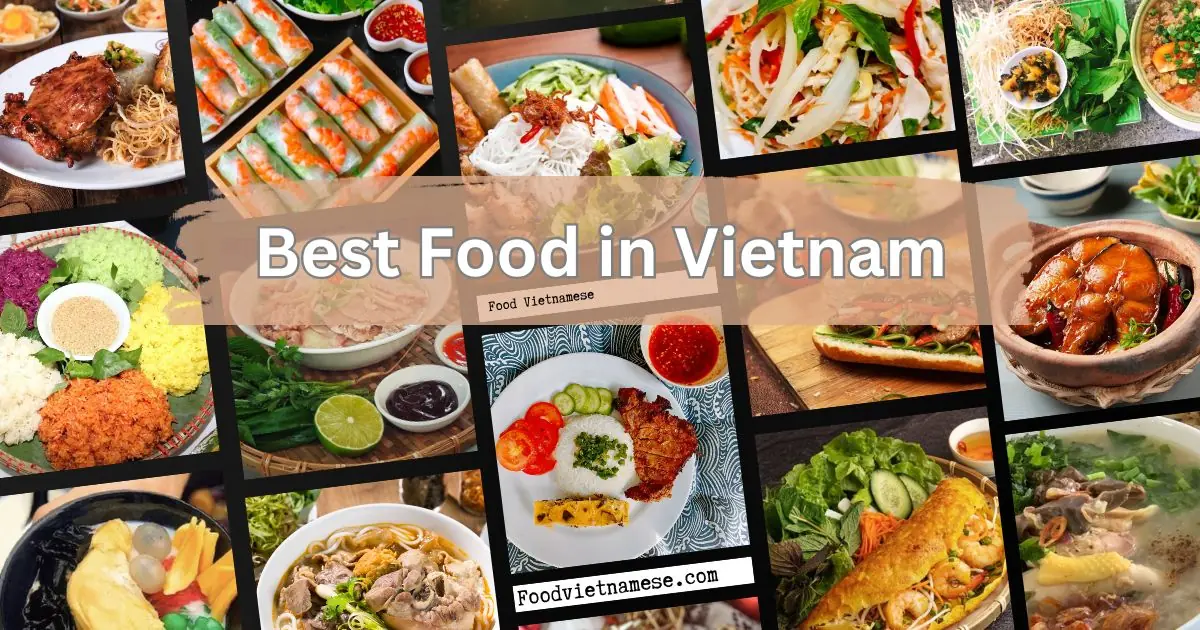
Best Vietnam Food: 15 Must-Try Dishes
Best Vietnam food is defined by one core principle: maximum flavor from the freshest possible ingredients. Vietnamese cuisine balances…
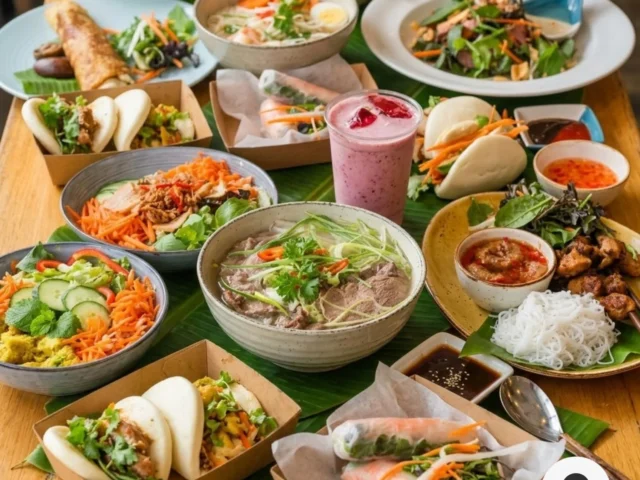
Best Vietnamese Food in Houston: What Little Saigon Actually Orders
Houston has one of the largest Vietnamese communities in the United States, and most of its best food…