Table of contents
- The Legend of Lang Lieu
- Ingredients (Makes 2 Cakes, 12x12cm / 4.5×4.5in)
- Day One: Soaking and Marinating
- Wrapping: With or Without a Mold
- Boiling: 8-10 Hours, No Shortcuts
- Why Banh Chung Sometimes Turns Hard (Lại Gạo)
- Cooling, Pressing, and Cutting
- Banh Chung vs. Banh Tet: North vs. South
- A Regional Take Worth Knowing
- Storage and Reheating
- Twelve Hours, One Pot
- Banh Chung Calories and Nutrition
- Frequently Asked Questions
- Sources & References
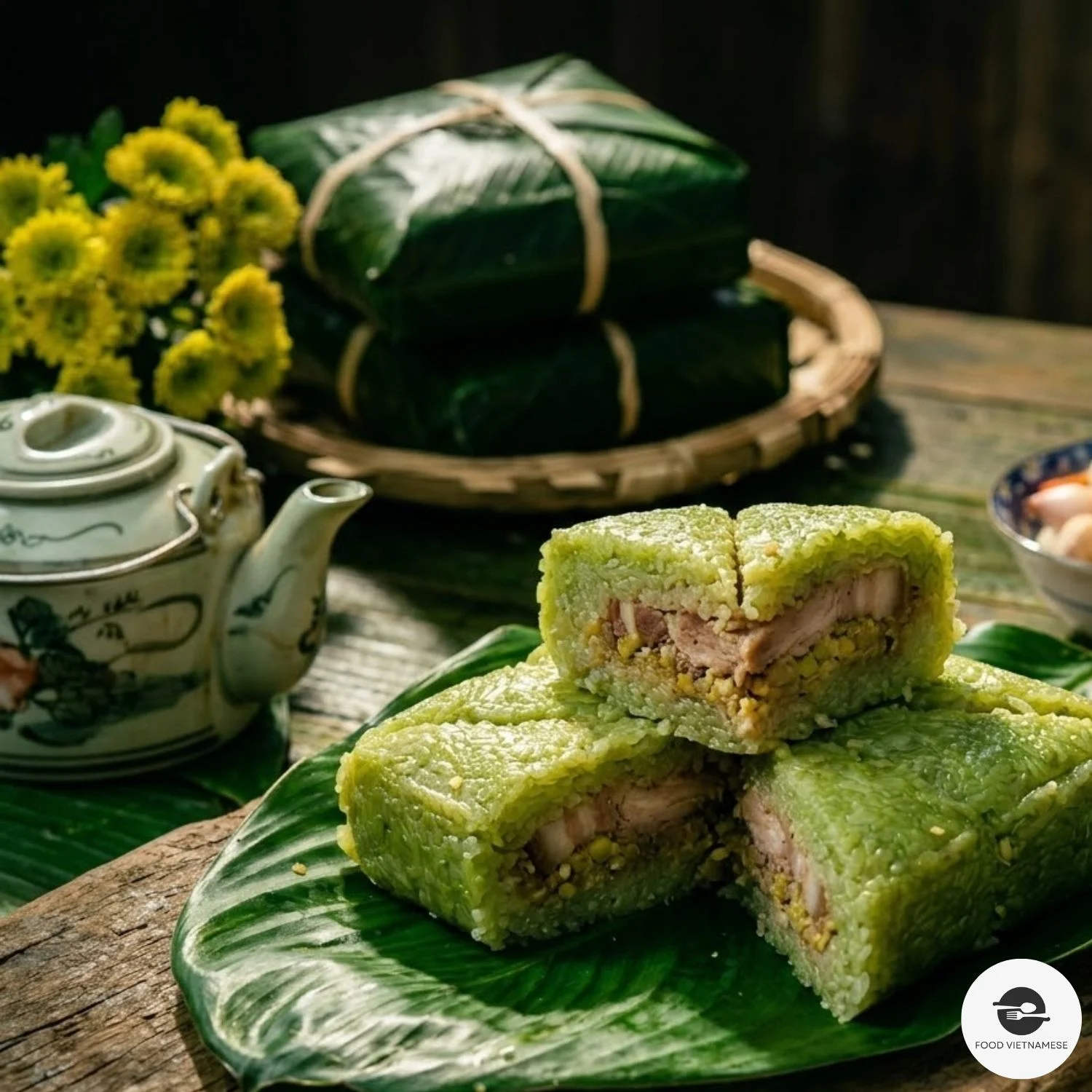
Banh Chung is a square Vietnamese sticky rice cake — glutinous rice, mung bean paste, and marinated pork belly wrapped tightly in dong leaves and boiled for 8 to 10 hours until the rice turns dense, faintly green, and sticky enough to hold its shape when sliced. It’s the one dish no Vietnamese household skips at Tet, the Lunar New Year, and it carries a legend nearly every Vietnamese child grows up hearing. This guide walks through the full process — ingredients, wrapping with or without a mold, boiling time, and the most common reason the rice turns out tough instead of tender — plus the nutrition breakdown per slice, since a whole cake is far more food than most people realize.
The Legend of Lang Lieu
According to Vietnamese legend, the sixth Hùng King held a contest among his eighteen sons to choose his successor: whoever brought the most meaningful dish to honor their ancestors would inherit the throne. While his brothers scoured the land for rare delicacies, the youngest prince, Lang Liêu — poor and living simply — dreamed of a humble solution. He shaped glutinous rice, mung beans, and pork into two cakes: a square one wrapped in leaves, representing the Earth, and a round one, representing the Sky, reflecting the old folk belief expressed in the saying “trời tròn, đất vuông” — the sky is round, the earth is square. The king chose Lang Liêu’s offering over all the costly ones his brothers presented, and bánh chưng has anchored the Vietnamese Tet table ever since.
Ingredients (Makes 2 Cakes, 12x12cm / 4.5×4.5in)
| Ingredient | Amount | Notes |
|---|---|---|
| Glutinous rice (nếp) | 1kg (about 4.5 cups) | Use a good-quality sticky rice variety; rinse until water runs clear, then soak overnight (6-8 hours minimum) with 1 tbsp salt mixed in |
| Mung beans, peeled and split | 300-400g | Soak overnight separately from the rice, also with a pinch of salt |
| Pork belly | 400-500g | Sliced into pieces with a good ratio of fat to lean — the fat renders during the long boil and keeps the filling moist |
| Dong leaves (lá dong) | 16-20 leaves | Traditional wrapper; gives the rice its characteristic green tint. Banana leaves are the standard substitute outside Vietnam |
| Bamboo string or kitchen twine (lạt giang) | 8-10 lengths per cake | Soaked in water beforehand to soften if using dried bamboo strips |
| Salt, pepper, fish sauce, shallots | To taste | Used to season the pork and the mung bean paste — avoid adding fish sauce directly to raw pork meant for long storage, as it can speed up spoilage |
Day One: Soaking and Marinating
Banh Chung is a two-day project by design, and trying to compress it into a single afternoon is the most common reason first-timers end up with undercooked rice or a cake that falls apart. Rinse the glutinous rice until the water runs clear, then soak it overnight in salted water — at least 6 hours, ideally 8. Soak the mung beans separately, also overnight, with a small amount of salt. Slice the pork belly and marinate it in the refrigerator overnight with salt, pepper, a little fish sauce, and minced shallots; letting it sit overnight rather than seasoning it right before wrapping makes a noticeable difference in how deeply the flavor penetrates during the boil.
The next morning, drain both the rice and the beans thoroughly and let them air-dry briefly on a flat tray before assembling — excess water at this stage waterlogs the filling and contributes to uneven cooking.
Wrapping: With or Without a Mold
A square mold — traditionally about 12x12cm, though home cooks outside Vietnam often improvise with a taped cardboard box around 4×4 inches — makes wrapping dramatically easier and produces more even, professional-looking cakes. Without one, it’s entirely possible to shape banh chung by hand, but the first few attempts tend to come out lopsided; most first-time cooks are better off using a mold and switching to freehand wrapping once they’re comfortable with the layering.
| Step | What to Do |
|---|---|
| 1 | Line the mold with leaves, dark side facing up (toward the rice) for the best green color, folding the edges at right angles |
| 2 | Spoon in a layer of glutinous rice, pressing it evenly into the corners and up the sides |
| 3 | Add a layer of mung bean paste, then the marinated pork pieces, then another layer of mung bean paste on top of the pork |
| 4 | Cover with a final layer of rice, making sure it reaches every edge and corner completely |
| 5 | Fold the leaves over the top like wrapping a present, then carefully lift the whole parcel out of the mold |
| 6 | Tie tightly with bamboo string or kitchen twine, criss-crossing in a grid pattern so the cake holds its shape under pressure but isn’t crushed |
Two things that make or break the wrap: the rice must fully reach every corner of the mold — gaps mean uneven cooking and a lopsided cake — and the tie needs to be snug but not so tight that it prevents the rice from expanding slightly as it cooks. A cake wrapped too loosely lets boiling water seep in and turns mushy; one wrapped too tightly can split.
Boiling: 8-10 Hours, No Shortcuts
Place the wrapped cakes in a large stockpot and cover completely with water — they need to stay fully submerged for the entire cooking time, so weigh them down with a heavy plate or steamer basket if they float. Bring to a boil, then reduce to a steady, moderate simmer; the fire should be even and continuous rather than aggressive, since a hard rolling boil cooks the outside faster than the center and risks splitting the leaves. As water evaporates over the many hours of cooking, top it up with more boiling water to keep the cakes covered — letting the water level drop exposes part of the cake to air and produces uneven texture.
Eight hours is the minimum for a fully cooked, evenly textured cake; many cooks boil for 10-12 hours for the best result, especially for larger cakes. This long cooking time is what allows the rice starch to fully gelatinize into that dense, cohesive texture — cutting it short is the single most common cause of the tough, undercooked patches described below.
Why Banh Chung Sometimes Turns Hard (Lại Gạo)
Vietnamese cooks call it lại gạo — rice that turns hard, dry, or grainy again after cooking, instead of staying dense and sticky. This is a form of starch retrogradation: the same process that makes leftover rice harden in the fridge, just concentrated inside a tightly wrapped cake. Three things cause it most often. First, insufficient boiling time — the starch never fully gelatinizes, so the texture reverts as the cake cools. Second, a wrapping that’s too loose, which lets water seep in unevenly and disrupts how the rice cooks. Third, using rice that’s old or lower in the amylopectin content that gives good glutinous rice its stickiness.
The fix is mostly prevention rather than repair: boil for the full 8-10 hours minimum, wrap tightly enough that the rice stays compact against the leaves, and use fresh, good-quality glutinous rice rather than rice that’s been sitting in storage for a long time.
Cooling, Pressing, and Cutting
Once the cakes come out of the pot, plunge them into a bowl of cold water for 15-20 minutes — this stops the cooking and rinses off any sticky residue on the leaves. Wipe them dry, then set them on a tray in a well-ventilated spot, place a second tray on top, and weigh it down with something heavy for several hours or overnight. This pressing step drains excess moisture and firms the cake into a shape that holds together cleanly when sliced; skip it and the cake tends to stay slightly soft and harder to cut neatly.
There’s a specific traditional technique for cutting the cake once it’s set: rather than reaching for a knife, many Vietnamese families use the same bamboo string that tied the cake shut, looping it around and pulling through to slice the cake into even wedges. One cake is typically divided into eight triangular pieces or nine square pieces this way — a small ritual that’s as much a part of the Tet tradition as the cooking itself.
Banh Chung vs. Banh Tet: North vs. South
Banh Chung and Banh Tet share nearly the same filling — glutinous rice, mung bean, pork belly, wrapped in leaves and boiled for hours — but the shape marks a real regional divide across Vietnam.
| Feature | Banh Chung | Banh Tet |
|---|---|---|
| Shape | Square, flat | Cylindrical, log-shaped |
| Region | Northern Vietnam | Central and Southern Vietnam |
| Wrapping technique | Folded flat with a mold or by hand into right angles | Rolled around the filling like a long tube |
| Filling | Glutinous rice, mung bean, pork belly | Same core filling; some Southern versions add a sweet banana version with no pork |
| Symbolism | Represents the Earth (paired with round bánh giầy representing the Sky) | Less tied to the original Lang Liêu legend; developed as the Southern regional form |
A third, less common variant, bánh ú, is wrapped into a small cone or pyramid shape and typically eaten in smaller portions rather than as a Tet centerpiece.
A Regional Take Worth Knowing
The recipe above is the standard, nationwide version of banh chung. For a look at how one specific craft village has built its reputation on the dish — sourcing rice and dong leaves from particular regions and boiling with mountain spring water — see Banh Chung Bo Dau, the Thai Nguyen village known specifically for this specialty.
Storage and Reheating
- Room temperature: 2-3 days at most, less in warm or humid weather
- Refrigerator: Several days to about a week, wrapped or in an airtight container
- Freezer: Several months. Thaw in the refrigerator, then boil for 1-2 hours before eating to fully restore the texture
- Reheating leftover slices: Pan-fry until golden and slightly crispy on both sides — a popular way to eat banh chung after the first few days, and arguably as common as eating it freshly boiled
Twelve Hours, One Pot
A family in the outskirts of Hanoi let me sit in on their Tet wrapping session, and what struck me wasn’t the wrapping itself but how little anyone talked about timing the boil — the grandmother running the pot simply kept feeding wood into the fire under a giant cauldron from early morning until well past dark, checking the water level every so often without ever glancing at a clock. When I asked how she knew when it was done, she said she’d stopped needing to check years ago — “ngửi mùi lá là biết,” she said, you can tell by the smell of the leaves. I couldn’t tell the difference myself, but she pulled the first cake out within twenty minutes of saying that, and it was, unmistakably, done.
Banh Chung Calories and Nutrition
A whole cake is a lot more food than it looks — which is exactly why banh chung is always eaten in small sliced portions rather than as a single serving.
| Serving | Calories | Protein | Carbs | Fat |
|---|---|---|---|---|
| 1 piece (~150g, 1/8-1/9 of a cake) | 300-350 kcal | 12-15g | ~55g | 4-12g |
| Whole cake (~750g filling, excluding leaves) | ~2,400-2,500 kcal | ~54-80g | ~270-370g | ~25-81g |
Per-piece values are cross-referenced from CarePlusVN, Nutribit, and MyNetDiary nutrition data; ranges reflect differences in pork fat content and portion size across recipes. Sodium is notably high across all versions due to the salt used in both the rice and the pork marinade.
Frequently Asked Questions
What is Banh Chung?
A square Vietnamese sticky rice cake made from glutinous rice, mung bean, and pork belly, wrapped in dong leaves and boiled 8-10 hours. Essential to Tet, and legend ties it to Prince Lang Liêu, who created it to represent the Earth.
How long do you boil Banh Chung?
At least 8 hours, with many cooks boiling 10-12 hours for the best texture. The cakes must stay fully submerged the whole time, with more boiling water added as it evaporates.
Why does Banh Chung sometimes turn hard or tough after cooking?
Called lại gạo — a form of starch retrogradation. Caused by insufficient boiling time, loose wrapping that lets water in unevenly, or older rice with lower stickiness. Prevented by boiling the full 8-10 hours and wrapping tightly.
What is the difference between Banh Chung and Banh Tet?
Banh Chung is square, from Northern Vietnam. Banh Tet is cylindrical, from Central and Southern Vietnam. Nearly identical filling, different shape and wrapping technique.
How long does Banh Chung last, and how should it be stored?
2-3 days at room temperature, up to a week refrigerated, several months frozen. Thaw frozen cakes in the fridge and boil 1-2 hours before eating. Leftovers can be pan-fried.
How many calories are in a piece of Banh Chung?
About 300-350 kcal per 150g piece (1/8-1/9 of a whole cake), with 12-15g protein. A whole cake totals roughly 2,400-2,500 kcal, which is why it’s eaten in slices, not whole.
Sources & References
- Wikipedia – Bánh chưng. en.wikipedia.org/wiki/B%C3%A1nh_ch%C6%B0ng
- Delightful Plate – Vietnamese Square Sticky Rice Cake (Banh Chung). delightfulplate.com
- The Kitchn – Recipe: Banh Chung (Vietnamese Rice Cakes for the Lunar New Year). thekitchn.com
- Vicky Pham – Vietnamese Savory Square Cake for Lunar New Year (Bánh Chưng). vickypham.com
- Helen’s Recipes – Banh Chung – Vietnamese Square Sticky Rice Cake. helenrecipes.com
- Fifteen.net – Bánh Chưng Recipe (Vietnamese Square Sticky Rice Cake), nutrition data. fifteen.net
- Takes Two Eggs – Banh Chung (Vietnamese Sticky Rice Cake), nutrition data. takestwoeggs.com
- CarePlusVN – How Many Calories Are in Food on Tet Holiday?. careplusvn.com
- Nutribit – Bánh Chưng Nutrition Facts. nutribit.app

Related articles

Is Vietnamese Food Halal? What the Cham Community Knows
Is Vietnamese food halal? Not by default — pork shows up across the cuisine, from bánh mì pate…
Best Vietnam Food: 15 Must-Try Dishes
Best Vietnam food is defined by one core principle: maximum flavor from the freshest possible ingredients. Vietnamese cuisine balances…
Vietnamese Food vs Chinese Food: What Actually Sets Them Apart
Vietnamese food vs Chinese food comes down to a few consistent differences once you look past why people…