Table of contents
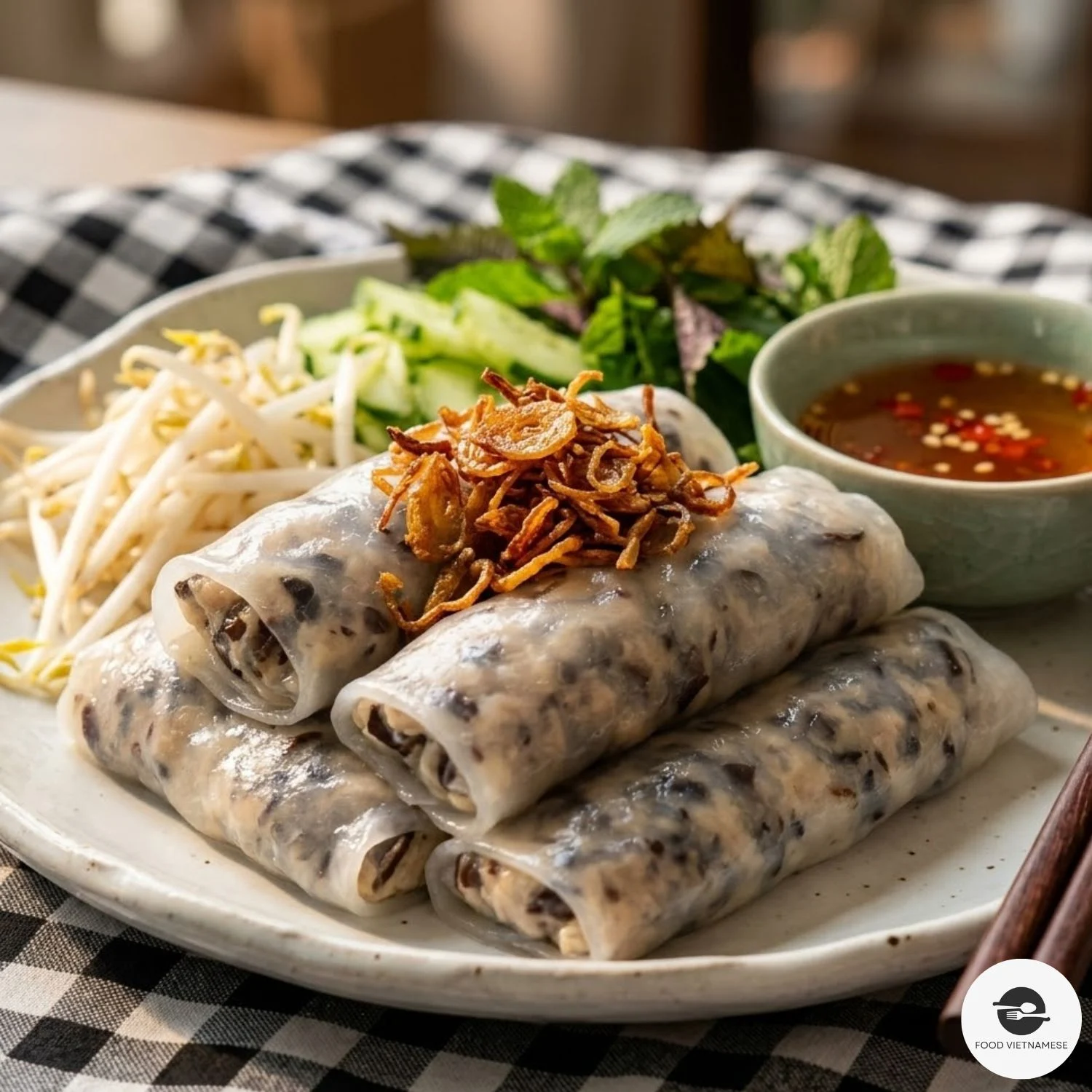
Bánh cuốn is a Vietnamese breakfast dish made from a paper-thin sheet of fermented rice batter, steamed until nearly translucent and rolled around ground pork, wood ear mushroom, and shallots, then served with chả lụa, cucumber, bean sprouts, and fish sauce. If you’re searching “banh cuon near me,” timing matters as much as location — this is a morning dish at heart, and plenty of places that make it well stop serving by early afternoon. The tool below searches Google Maps for Vietnamese restaurants near you.
Quick Facts
- Literal meaning: “cuốn” means roll or wrap
- Origin: Northern Vietnam, traditionally a breakfast dish
- Wrapper: paper-thin fermented rice batter, steamed on cloth stretched over boiling water
- Classic filling: ground pork, wood ear mushroom, minced shallots
- Served with: chả lụa (Vietnamese pork sausage), sliced cucumber, bean sprouts, fried shallots, sweetened fish sauce
- Regional variant: bánh cuốn Thanh Trì, served plain with no filling at all
Find Bánh Cuốn Near You
Enter your city or zip code to see Vietnamese restaurants serving bánh cuốn on the map below.
The Technique Behind the Thinness
Watching someone make bánh cuốn well is closer to watching a craft than watching someone cook. A vendor near Hàng Gà market had a pot of water at a rolling boil with cloth stretched drum-tight across the top, and she’d ladle a thin layer of batter across it, drop the lid for maybe fifteen seconds, then peel the sheet off with a flat bamboo stick in one motion so smooth it looked scripted. No tears, no folds, just one continuous translucent sheet lifted straight onto the plate before the filling went on and the whole thing got rolled shut. That speed and precision is basically the entire skill of the dish — the batter itself is simple, fermented rice flour thinned with water, but getting a sheet that thin off a steamer without shredding it takes real practice.
That fermentation is doing more work than people assume too. It’s what gives the wrapper a faint tang and a slightly springy chew instead of the flat blandness you’d get from unfermented rice batter, and it’s part of why bánh cuốn doesn’t taste like a plain rice pancake even though the ingredient list is short.
Bánh Cuốn vs. Bánh Cuốn Thanh Trì
Most bánh cuốn served outside Vietnam comes filled — ground pork, wood ear mushroom, minced shallots, rolled up inside the rice sheet. Bánh cuốn Thanh Trì, named for a district south of Hanoi, skips the filling entirely and serves the plain steamed sheets on their own, cut into strips, topped with fried shallots and a drizzle of fat, alongside a separate plate of chả lụa. It’s a more minimalist version that lets the rice sheet itself carry the dish, and it’s worth trying if you find a restaurant that offers it specifically — it’s a different eating experience, not just a smaller portion of the filled version.
Bánh Cuốn vs. Bánh Ướt: Don’t Mix Them Up
These two get confused constantly, and menus don’t always make the distinction clear. Bánh cuốn is specifically the filled, rolled version described above. Bánh ướt (“wet cake”) uses a similar steamed rice sheet but is typically served flat or loosely folded, unfilled, alongside grilled pork or nem nướng rather than rolled around a filling itself. If a restaurant near you only has one on the menu, it’s worth asking which version you’re actually getting before you order.
Where People Actually Find It
Bánh cuốn is more of a specialty than a default menu item, so your options depend heavily on what’s nearby:
- Dedicated bánh cuốn shops — the most reliable source when a city has one, usually open mornings only
- Vietnamese restaurants with a breakfast or brunch menu — worth checking hours before heading over
- Vietnamese bakeries and delis — some carry it as a grab-and-go item alongside bánh mì
Diaspora hubs with larger Vietnamese food scenes tend to have the most reliable options. Our guides to Vietnamese food in San Jose, Orange County, and San Francisco are a good starting point if a dedicated bánh cuốn shop doesn’t turn up nearby.
What It Costs
Pricing tends to run lower than heartier Vietnamese dishes like phở or cơm tấm, since it’s a lighter, breakfast-oriented plate rather than a full meal built around meat. Expect it closer to a light breakfast price point, with chả lụa or extra toppings adding a bit on top.
Calories and Nutrition
A standard plate of bánh cuốn with filling and the usual sides runs around 590 calories with roughly 25.7g of protein — heartier than the dish’s light appearance suggests, mostly thanks to the ground pork filling and chả lụa on the side. A plain Thanh Trì-style order without filling or sausage will land noticeably lighter than that.
If You’re Ordering at a Vietnamese-Run Restaurant
A short phrase helps at smaller, family-run spots: “Cho tôi một đĩa bánh cuốn, có chả” — “One plate of bánh cuốn for me, with chả lụa.” If you specifically want the unfilled Thanh Trì style, ask for “bánh cuốn Thanh Trì” by name, since not every menu lists it separately from the filled version.
Frequently Asked Questions
What’s the difference between bánh cuốn and bánh ướt?
Bánh cuốn is filled with ground pork and mushroom and rolled up; bánh ướt is a similar steamed rice sheet but usually served flat or unfilled, alongside grilled meat rather than wrapped around a filling.
Is bánh cuốn gluten-free?
The rice batter wrapper is naturally gluten-free. Fillings and dipping sauce can vary by kitchen, so it’s worth confirming directly if you’re strict about it.
What time of day is bánh cuốn usually served?
Traditionally breakfast, and plenty of dedicated shops still only serve it in the morning before closing early afternoon. Vietnamese restaurants with an all-day menu are more likely to have it available later.
How many calories are in a plate of bánh cuốn?
A standard filled plate with chả lụa runs around 590 calories with about 25.7g of protein. An unfilled Thanh Trì-style order is noticeably lighter.
Bánh cuốn rewards showing up earlier in the day more than most Vietnamese dishes do, which is part of why it’s less visible on general restaurant menus than phở or bánh mì. Between the map above and knowing to check morning hours first, you’re in a better position to actually find a real plate than most people searching blind.

Related articles
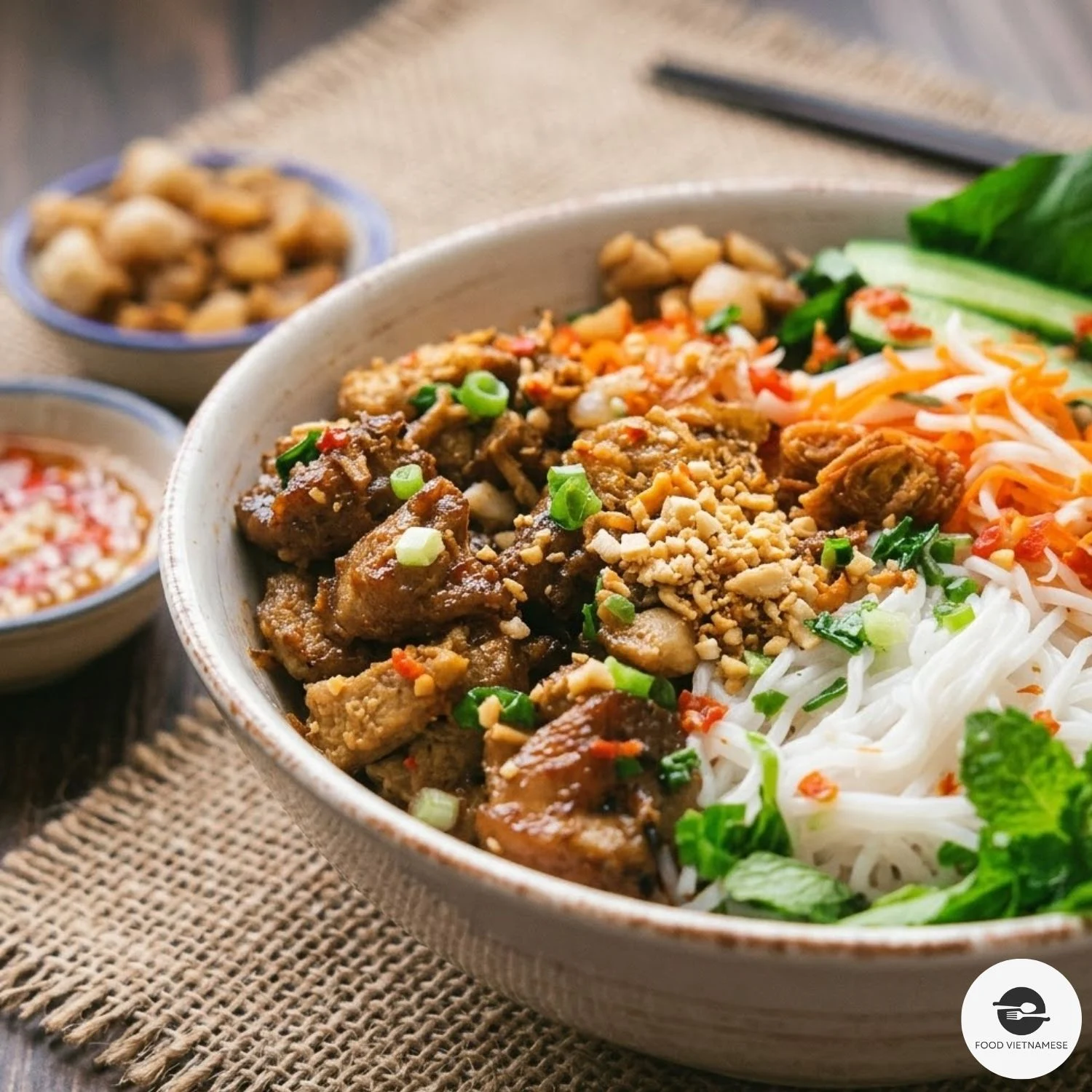
Bun Thit Nuong: Vietnam’s Grilled Pork Noodle Salad, Not a Soup
Bun Thit Nuong is a Vietnamese grilled pork noodle salad — cold rice vermicelli piled with lemongrass-marinated grilled…
Best Vietnam Food: 15 Must-Try Dishes
Best Vietnam food is defined by one core principle: maximum flavor from the freshest possible ingredients. Vietnamese cuisine balances…
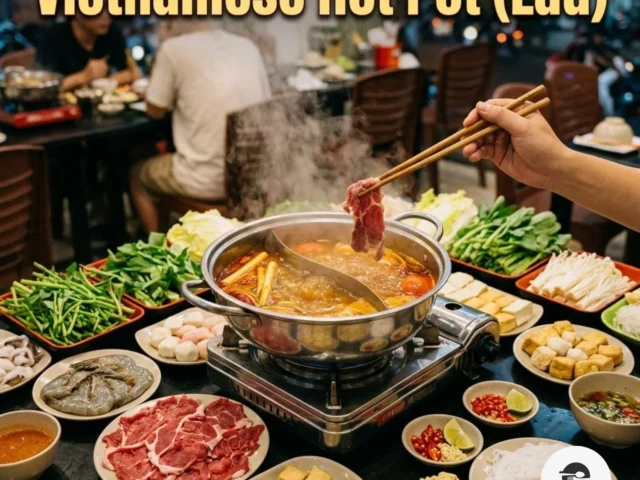
Vietnamese Hot Pot (Lẩu): Types, How to Eat, Dipping Sauces
Vietnamese hot pot (lẩu) is a pot of seasoned broth kept simmering at the table, where diners cook…