Table of contents
- What “Rieu” Actually Refers To
- What Goes Into a Bowl of Bun Rieu
- Bun Rieu vs. Canh Bun: Easy to Confuse, Distinct in the Bowl
- How the Dish Changed Moving South
- Bun Rieu Variations
- How Bun Rieu Is Eaten
- Bun Rieu Calories and Nutrition
- Watching the Curd Form
- Where to Eat Bun Rieu
- A Related Dish From the Same Crab Broth Tradition
- Frequently Asked Questions
- Sources & References
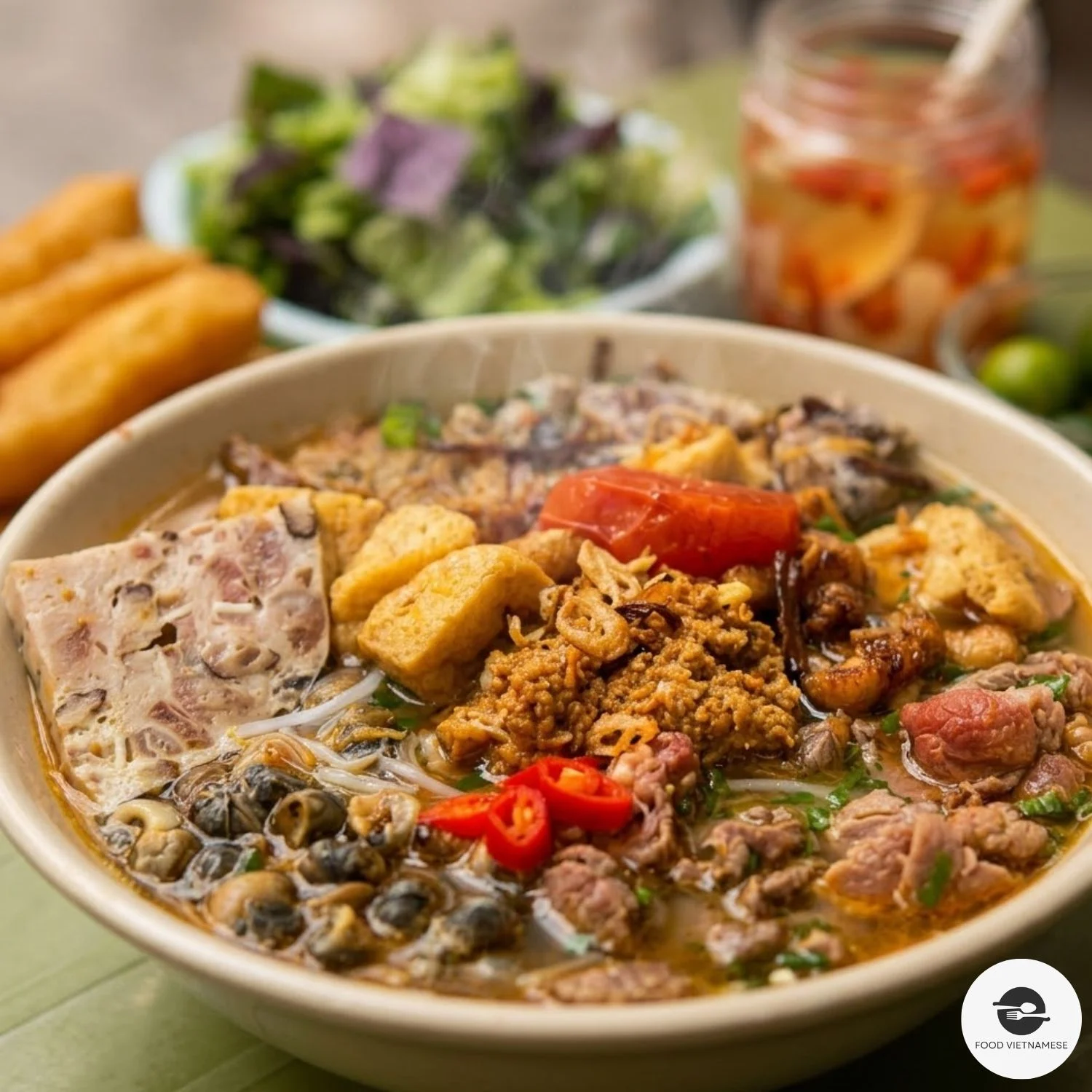
Bun Rieu is a Vietnamese crab noodle soup defined by a tangy, tomato-red broth and rieu — a light, foam-like crab curd made by pounding fresh rice-paddy crab (cua đồng) into a paste, then simmering it until the protein rises and coagulates into soft clumps. That curd, not a long-simmered bone stock, is what gives the soup its body and its name. Thin rice vermicelli, fried tofu, tomato wedges, and a spoonful of shrimp paste round out the bowl, finished with a generous plate of fresh herbs. It began in the Red River Delta of Northern Vietnam and now appears, in some form, on nearly every street corner in the country.
What “Rieu” Actually Refers To
The name is a compound of two plain words: bun is rice vermicelli, and rieu is the crab curd itself — not the crab, not the broth, but specifically the pale, foamy clumps that form when crab protein cooks and rises to the surface. Getting that curd right is the technical heart of the dish. Cooks pound whole rice-paddy crabs, shell included, into a rough paste, mix in egg, then strain the mixture through a sieve into the cooking pot. As the strained liquid heats, the crab protein coagulates and floats upward in soft, delicate curds rather than sinking or breaking apart — done correctly, the rieu holds together in a way that looks almost like a savory soufflé floating on the broth’s surface.
This is also why rice-paddy crab specifically matters. Cua dong — small freshwater field crabs harvested from rice paddies — carry a more concentrated, aromatic flavor than sea crab, and their protein behaves differently when pounded and strained, producing the characteristic light curd. Substituting sea crab changes both the flavor and the texture of the rieu noticeably.
What Goes Into a Bowl of Bun Rieu
| Component | Description | Role |
|---|---|---|
| Rieu (crab curd) | Pounded rice-paddy crab strained and simmered until it forms soft, floating curds, often bound with egg | The dish’s defining element — both a topping and the flavor base of the broth |
| Tomato broth | Tomatoes simmered into the crab-infused liquid, giving the broth its reddish color and tang | Distinguishes Bun Rieu from clear-broth noodle soups; the tomato is not optional garnish but a structural ingredient |
| Shrimp paste (mắm tôm) | Added in small amounts to the broth or offered on the side | Deepens the umami profile; quantity varies significantly by region and personal taste |
| Rice vermicelli (bún) | Thin rice noodles, thinner than those used in Canh Bun | The base — chosen deliberately thin so it doesn’t compete with the curd’s delicate texture |
| Fried tofu | Cubed and fried until golden | Standard across nearly every regional version |
| Blood cake (huyết) and pork | Congealed pork or duck blood, sliced; sometimes ground pork mixed into the rieu itself | Common addition, more prevalent in fuller, restaurant-style bowls |
| Fresh herbs | Perilla, mint, banana blossom, water spinach depending on region | Blanched briefly in the hot broth at the table rather than served raw and cold |
Bun Rieu vs. Canh Bun: Easy to Confuse, Distinct in the Bowl
Both dishes feature crab and rice noodles, and the names sound close enough that visitors often assume they’re the same soup ordered under two names. They aren’t.
| Feature | Bun Rieu | Canh Bun |
|---|---|---|
| Broth base | Tomato and crab curd — thicker, reddish | Pork bone stock with shrimp or crab — clear, light |
| Noodle | Thin rice vermicelli | Thicker, wider rice noodles |
| Signature element | Floating crab curd (rieu) | Clear broth with straightforward crab or shrimp flavor |
| Color | Reddish-orange from tomato | Pale, clear |
| Flavor profile | Tangy, slightly thick, umami-forward | Light, clean, less acidic |
How the Dish Changed Moving South
The Red River Delta version — the dish’s original form — stays comparatively restrained: crab paste, tomato, fried tofu, small cubes of fried pork fat, and shrimp paste, with little else competing for attention. As Bun Rieu traveled south with generations of migration, it picked up more layers. Southern bowls commonly add a pork rib broth alongside the crab liquid, dried shrimp for extra sweetness, and a broader spread of fresh vegetables — bean sprouts and water spinach among them — reflecting both the South’s year-round produce abundance and its general preference for richer, more heavily garnished bowls.
The core identity — tomato broth, floating crab curd, thin vermicelli — survives the trip intact. What changes is how much gets added around it.
Bun Rieu Variations
| Variation | Vietnamese Name | Notes |
|---|---|---|
| Crab | Bún riêu cua | The standard, most widely eaten version |
| Crab and fish | Bún riêu cá | Minced crab combined with fish for a fuller protein profile |
| Crab and snail | Bún riêu ốc | Adds river snails alongside the crab curd; more common in certain northern and central regions |
How Bun Rieu Is Eaten
The herb plate that arrives alongside the bowl is meant to go into the broth, not sit beside it. Vendors typically serve fresh herbs and shredded banana blossom raw and cold specifically so diners can submerge them briefly in the hot broth at the table — enough to wilt and half-cook the greens without losing their crunch entirely. A squeeze of lime or kumquat sharpens the tomato tang, chili adds heat, and an extra spoonful of shrimp paste deepens the umami for anyone who wants it stronger than what the kitchen already added.
Bun Rieu Calories and Nutrition
| Nutrient | Per Bowl |
|---|---|
| Calories | 482 kcal |
| Protein | 16.5g |
Bun Rieu sits on the lighter end of Vietnam’s noodle soup spectrum. Because the broth is built on tomato and crab curd rather than a long-simmered bone stock, it carries less fat by default than dishes like Bun Bo Hue — though fried tofu, pork fat cubes, and any added blood cake bring the total up depending on how loaded the bowl is. The crab itself is a lean, high-quality protein source, and the tomato base contributes vitamin C and lycopene that heavier broths generally don’t offer.
Watching the Curd Form
I asked a vendor near Cầu Giấy market why she kept the pot at such a gentle simmer instead of a rolling boil, and she pointed at the surface without answering right away — a thin skin of pale curd had just started forming, drifting rather than clumping. “Sôi mạnh là nó vỡ hết,” she said: boil it hard and the curd falls apart. She skimmed it off in one motion once it had fully risen, transferred it whole into a bowl, and went straight back to stirring the next batch. It looked less like cooking a soup and more like coaxing something delicate into existing without breaking it — which, watching her hands, is probably the more accurate way to describe what rieu actually is.
Where to Eat Bun Rieu
Bun Rieu is a breakfast and mid-morning staple across Vietnam, sold from market stalls, sidewalk carts, and dedicated shops rather than concentrated in a handful of famous addresses the way some regional dishes are. Markets — particularly older, established ones in Hanoi’s Old Quarter and in Ho Chi Minh City’s District 5 and District 10 — are generally the most reliable places to find a well-made bowl, since high turnover keeps the crab curd fresh through the morning rush.
Frequently Asked Questions
What is Bun Rieu?
A Vietnamese crab noodle soup with a tangy tomato broth and rieu — a light crab curd made from pounded rice-paddy crab. Served with thin vermicelli, fried tofu, and fresh herbs. Originated in Northern Vietnam’s Red River Delta.
What does “rieu” actually mean?
Rieu is the light, foam-like crab curd that forms when pounded rice-paddy crab is simmered and its protein rises to the surface. It’s skimmed off and served on top; the crab-infused liquid becomes the broth base.
What is the difference between Bun Rieu and Canh Bun?
Bun Rieu has a thick, reddish tomato-crab broth with thin noodles. Canh Bun has a clear, light pork-bone broth with shrimp or crab, served with thicker noodles. Similar core ingredient, different broth and noodle type.
How does Northern Bun Rieu differ from Southern Bun Rieu?
Northern Bun Rieu is simpler — crab paste, tomato, fried tofu, pork fat, shrimp paste. Southern versions add pork rib broth, dried shrimp, and more vegetables like bean sprouts and water spinach, reflecting the South’s richer culinary style.
How many calories are in a bowl of Bun Rieu?
Approximately 482 kcal with 16.5g protein per bowl — relatively light compared to bone-broth-heavy noodle soups, since the base is tomato and crab curd rather than long-simmered stock.
Sources & References
- Wikipedia – Bún riêu. en.wikipedia.org/wiki/B%C3%BAn_ri%C3%AAu
- i Tour Vietnam – Bun Rieu – Vietnamese Crab Noodle Soup. itourvn.com
- Authentic Food Quest – Bun Rieu Recipe: How to Make Vietnamese Crab Noodle Soup. authenticfoodquest.com
- Vietrice Kitchen – Bún Riêu: The Exquisite Vietnamese Crab Noodle Soup. vietricekitchen.com
- Hungry Huy – Bún Riêu Recipe (Vietnamese Crab, Pork & Tomato Noodle Soup). hungryhuy.com

Related articles
Bun Thit Nuong: Vietnam’s Grilled Pork Noodle Salad, Not a Soup
Bun Thit Nuong is a Vietnamese grilled pork noodle salad — cold rice vermicelli piled with lemongrass-marinated grilled…
Best Vietnam Food: 15 Must-Try Dishes
Best Vietnam food is defined by one core principle: maximum flavor from the freshest possible ingredients. Vietnamese cuisine balances…
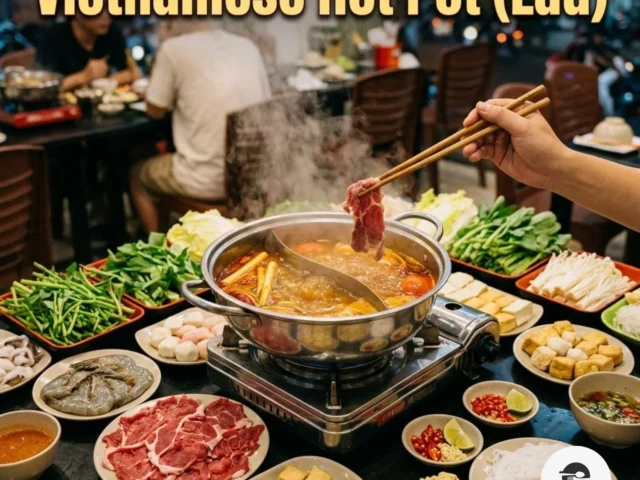
Vietnamese Hot Pot (Lẩu): Types, How to Eat, Dipping Sauces
Vietnamese hot pot (lẩu) is a pot of seasoned broth kept simmering at the table, where diners cook…