Table of contents
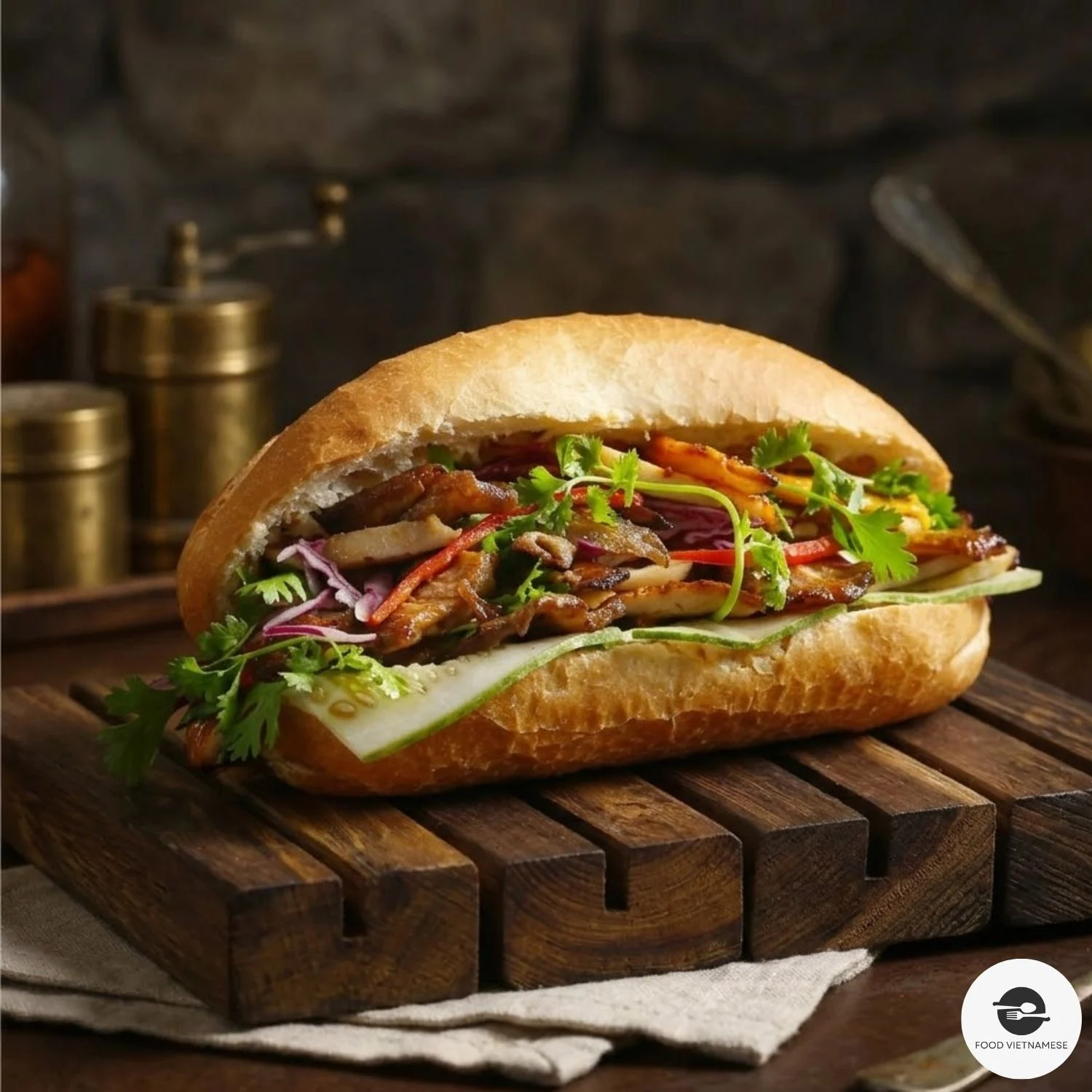
Bánh mì is the Vietnamese sandwich built on a short, thin-crusted baguette split open and packed with pâté, cold cuts or grilled meat, pickled carrot and daikon, cucumber, cilantro, and chili — a French loaf reworked with Vietnamese ingredients into something distinct enough that Oxford added the word “banh mi” to its dictionary in 2011. If you’re trying to find one that’s actually made right instead of a soggy deli approximation, the tool below searches Google Maps for Vietnamese sandwich shops near you.
Quick Facts
- Origin: Southern Vietnam, developed from the French baguette during the colonial period, taking its modern sandwich form by the 1950s
- Bread: a short baguette made with a rice flour blend — thinner, crispier crust and airier crumb than a French baguette
- Classic fillings: pork pâté, cold cuts or chả lụa (Vietnamese pork sausage), pickled carrot and daikon, cucumber, cilantro, chili, mayonnaise
- Common variations: bánh mì thịt (cold cuts), bánh mì xíu mại (meatballs), bánh mì gà (chicken), bánh mì chay (vegetarian/tofu)
- Recognition: “banh mi” was added to the Oxford English Dictionary in 2011
Find Bánh Mì Near You
Enter your city or zip code to see Vietnamese sandwich shops on the map below.
What Actually Makes a Bánh Mì “Real”
A vendor near Bến Thành market once corrected me before I’d even finished ordering — I’d asked for “một ổ bánh mì thịt” and she cut in with “pâté nhiều không, hay ít thôi?” (lots of pâté, or just a little?), like the amount was something I should already have an opinion on. That’s the detail a lot of sandwiches outside Vietnam skip entirely: pâté isn’t a garnish here, it’s load-bearing, spread thick enough to actually taste before anything else does. The bread mattered just as much — she tapped the crust with a knuckle before bagging it, checking for that thin, almost paper-crisp shell that shatters rather than chews. Bite into a good one and the outside cracks audibly; bite into a bad one and it just folds.
That crust is the real giveaway, and it’s also the hardest thing to fake. Vietnamese bánh mì bread uses a rice flour blend alongside wheat flour, which is why it bakes up thinner and lighter than a French baguette — more air, less chew, a crust that stays crisp for hours instead of going tough. A shop using a standard French or Italian baguette instead will still taste fine, but it won’t have that particular shatter.
Where People Actually Find It
Bánh mì shows up in more places than most Vietnamese dishes, which is both good and bad news — good because your odds of finding one are high, bad because quality swings wildly by source:
- Dedicated bánh mì shops and delis — the most reliable source, especially ones that also sell the bread loose (a sign they bake or source it seriously)
- Vietnamese bakeries — often the same counter selling bánh da lợn and other cakes will have a sandwich station
- Food trucks and carts — common in cities with a strong lunch-crowd food truck scene
- Asian grocery store delis — worth checking if dedicated shops are scarce nearby
If you’re in Los Angeles or New York City, skip the general search — we’ve already done the legwork. Our Los Angeles bánh mì guide and NYC bánh mì guide point to specific shops worth the trip. Everywhere else, the locator above is the faster route.
How to Order Without Overthinking It
Most shops build around a short list of core fillings, and knowing the names ahead of time makes ordering a lot faster:
- Bánh mì thịt — the classic cold-cut version, usually a mix of pâté, sliced pork, and chả lụa
- Bánh mì xíu mại — pork meatballs in a light tomato sauce, messier but worth it
- Bánh mì gà — grilled or shredded chicken, a lighter option
- Bánh mì chay — vegetarian, usually tofu or mock meat with the same pickles and herbs
“Cay” means spicy — ask for extra chili if you want more heat, or “không cay” if you’d rather skip it. Most shops will also ask if you want the herbs and pickles on or off; unless you have a specific reason to skip them, leaving them on is where most of the sandwich’s actual flavor balance comes from.
What It Costs
Pricing varies more for bánh mì than for most Vietnamese dishes, since it ranges from a quick grab-and-go lunch to a more elevated sandwich-shop version with premium fillings. Expect it to land somewhere between a fast-food combo and a deli sandwich at a sit-down shop, with food trucks and no-frills counters usually running cheaper than sandwich shops with seating and a fuller menu.
Calories and Nutrition
Calorie counts vary a lot by filling and bread size, which makes a single number misleading — a plain bánh mì thịt runs lighter than one loaded with extra pâté and mayo, and xíu mại or grilled meat versions add more on top of that. We’ve broken down the calorie and macro differences by filling type in our dedicated bánh mì calories guide, which is the more useful reference if you’re tracking intake closely.
If You’re Ordering at a Vietnamese-Run Shop
Staff at smaller, family-run bánh mì shops often speak Vietnamese as a first language, and knowing a couple of words tends to speed things along and get a more accurate order. A simple line works well: “Cho tôi một ổ bánh mì thịt, đầy đủ” — “One bánh mì thịt for me, with everything.” “Đầy đủ” signals you want the full standard fillings rather than a stripped-down version, which is useful shorthand if the menu isn’t posted in English.
Frequently Asked Questions
What’s the difference between bánh mì and a regular sandwich?
Mainly the bread and the flavor balance. The rice-flour baguette is lighter and crispier than standard bread, and the filling leans on pâté, pickled vegetables, and fresh herbs rather than the mayo-and-lettuce formula of a Western deli sandwich.
Is bánh mì spicy?
Not by default — most shops build it mild and let you add chili slices or sauce yourself. Say “cay” if you want it spicy from the start, or “không cay” to keep it off entirely.
Is there a vegetarian bánh mì?
Yes — bánh mì chay, usually built with tofu or a mock meat, still gets the pickled carrot, daikon, cucumber, and herbs that give the sandwich its flavor. Most shops that make a lot of sandwiches will have it, even if it’s not always on a printed menu.
How many calories are in a bánh mì?
It depends heavily on the filling — see our bánh mì calories guide for a breakdown by type, since a plain version and a fully loaded one can differ by a wide margin.
Bánh mì is common enough now that almost every mid-sized city has at least one option, which is exactly why quality varies so much — plenty of places sell a version of it without getting the bread or the pâté ratio right. Between the map above and knowing what a properly built one should sound like when you bite into it, you’re in a better position to find a real one than most people ordering blind.

Related articles
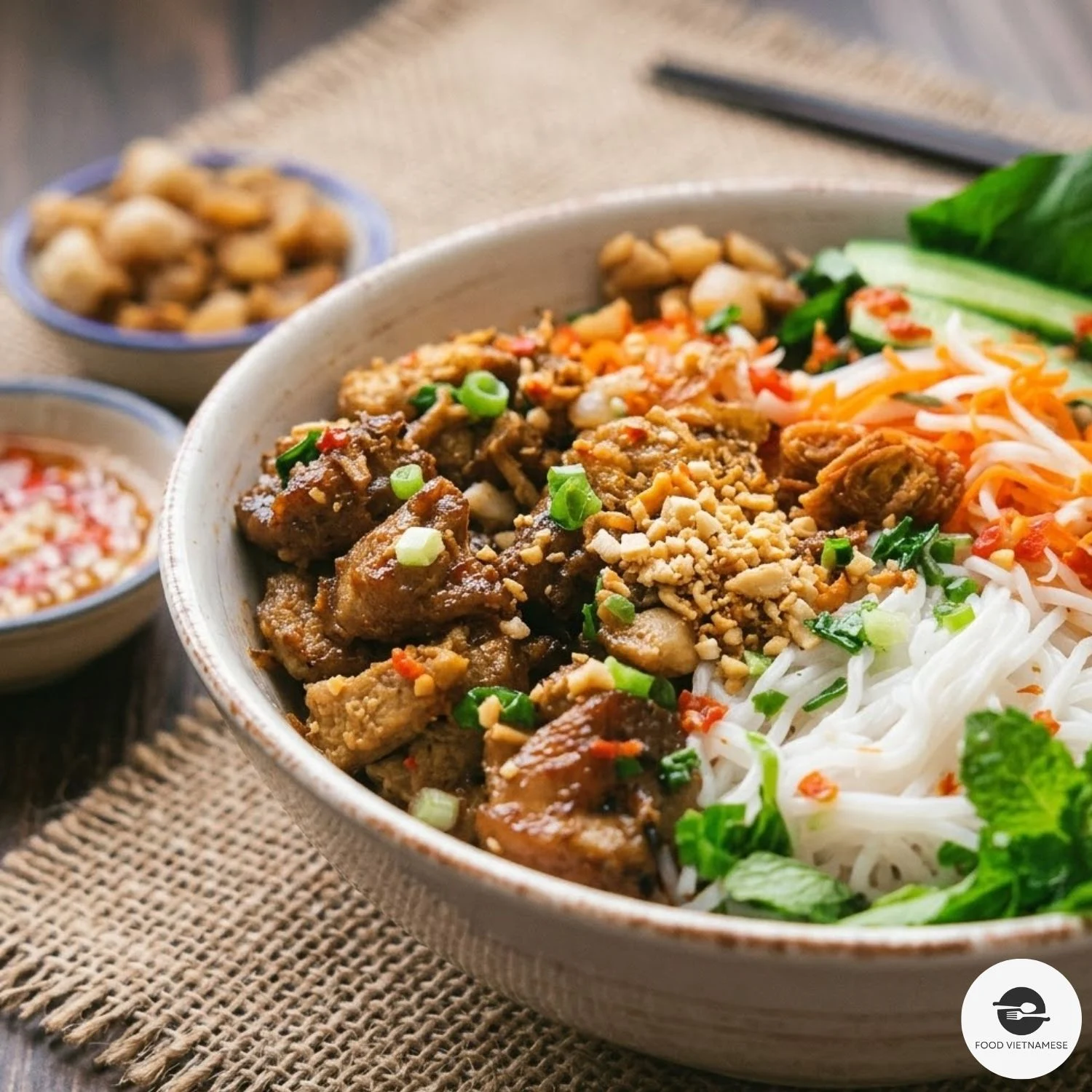
Bun Thit Nuong: Vietnam’s Grilled Pork Noodle Salad, Not a Soup
Bun Thit Nuong is a Vietnamese grilled pork noodle salad — cold rice vermicelli piled with lemongrass-marinated grilled…
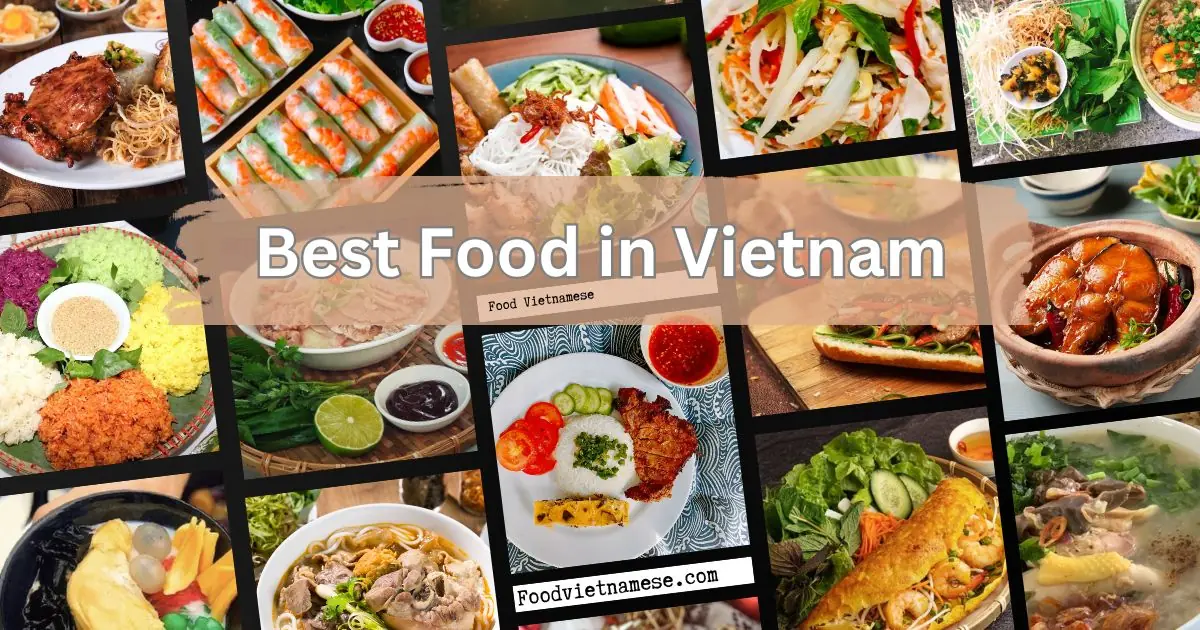
Best Vietnam Food: 15 Must-Try Dishes
Best Vietnam food is defined by one core principle: maximum flavor from the freshest possible ingredients. Vietnamese cuisine balances…
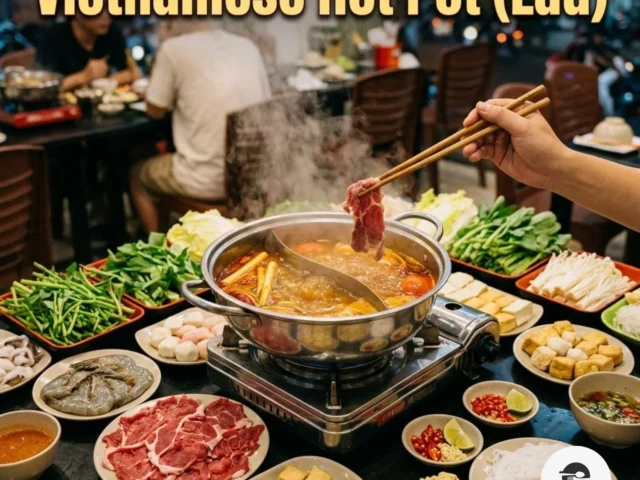
Vietnamese Hot Pot (Lẩu): Types, How to Eat, Dipping Sauces
Vietnamese hot pot (lẩu) is a pot of seasoned broth kept simmering at the table, where diners cook…