Table of contents
Bún bò Huế is a spicy Vietnamese beef and pork noodle soup from the old imperial capital of Huế, built on a broth of lemongrass, fermented shrimp paste, and chili oil, served over thick round rice vermicelli with pork knuckle, cubes of congealed blood, and sliced beef. It’s a different animal from phở — hotter, funkier, and heavier — so if you’re hunting for a bowl that actually delivers that, the tool below searches Google Maps for Vietnamese restaurants near you.
Quick Facts
- Origin: Huế, central Vietnam, dating to the late 1500s–early 1600s under the Nguyễn lords
- Broth: beef bone stock built with lemongrass, mắm ruốc (fermented shrimp paste), and chili oil
- Noodles: thick, round rice vermicelli — chewier and sturdier than phở’s flat noodles
- Common toppings: sliced beef, pork knuckle, chả cua or chả lụa (Vietnamese ham), cubes of coagulated pork or beef blood
- Flavor profile: spicy, salty, and savory, with lemongrass and shrimp paste doing most of the work
- Spice level: genuinely hot by default at most places, usually adjustable on request
Find Bún Bò Huế Near You
Enter your city or zip code to see Vietnamese restaurants that serve it on the map below.
Why It’s Not Just “Spicy Phở”
The bowl arrived before I’d even sat down all the way — an older vendor near Đông Ba market set it down with a quick “Ăn cay được không?” (can you handle spicy?) before I’d said a word. That’s usually the first sign you’ve found a real bún bò Huế stall rather than a version toned down for outsiders: the broth comes a deep rust-red from chili oil and annatto, and the smell hits lemongrass and fermented shrimp paste before anything else reaches you. The noodles underneath are thicker and rounder than phở’s flat ribbons, with enough chew that you’re not fishing for them by the last few bites.
Huế was Vietnam’s imperial capital for over a century, and a lot of its food carries that court-kitchen precision even in dishes sold from a plastic stool on the sidewalk. Bún bò Huế is one of the clearest examples — it’s built from humble ingredients (beef bones, lemongrass, fermented shrimp paste) but assembled with a level of layering that most quick soups don’t bother with.
Where People Actually Find It
Bún bò Huế shows up in a few different kinds of places, and it’s worth knowing which ones to check:
- Dedicated bún bò Huế restaurants — the most reliable option when a city has a large enough Vietnamese community to support one
- General Vietnamese restaurants and phở houses — many phở restaurants keep bún bò Huế on the menu as a spicier second option
- Huế-specialty restaurants — these usually serve it alongside other Huế dishes like bánh bèo or bánh khoái
- Food courts inside larger Asian grocery stores — worth checking if sit-down restaurants come up short
Your odds improve a lot in cities with sizable Vietnamese-American populations. Our guides to Vietnamese food in San Jose, Orange County, and San Francisco point to specific restaurants worth checking, and if a phở house near you is the closest option, our Seattle and DC phở guide covers spots that typically carry bún bò Huế too.
How Spicy Should You Actually Expect It?
Genuinely spicy, more often than not — this isn’t a dish where the heat is optional garnish sitting on the side. The chili oil is usually cooked into the broth itself rather than added at the table, which means you can’t simply skip it the way you can with sriracha on phở. If you’re heat-sensitive, it’s worth asking for it “ít cay” (mild) or “không cay” (no spice) when ordering, or requesting the chili oil on the side rather than mixed in. Most places serving a proper bowl will accommodate this without much fuss, even if it means the broth loses some of its signature color.
Bún Bò Huế vs. Phở
They’re both beef noodle soups from Vietnam, and that’s roughly where the similarity ends. Phở’s broth is clear and lightly sweet, built on charred ginger and warm spices like star anise and cinnamon; bún bò Huế’s is cloudy, red-orange, and driven by lemongrass and fermented shrimp paste instead. The noodles differ too — phở uses flat rice noodles, bún bò Huế uses round ones closer to spaghetti in shape. If you’ve only had phở, expect something considerably heavier and spicier, not a variation on the same theme. We break the nutritional side of that comparison down further in our phở calories guide.
What It Costs
Pricing tracks close to a bowl of phở at most Vietnamese restaurants — it’s a full meal, not a side dish, and priced accordingly. Expect it to run a little higher than a plain phở if pork knuckle or extra toppings are involved, since those cuts cost more than the beef slices phở typically uses. Exact prices vary by city and restaurant, so treat this as a rough expectation rather than a fixed number.
Calories and What’s in a Bowl
Calorie counts for bún bò Huế swing more than most soups because the toppings vary so much — a bowl loaded with pork knuckle and extra beef runs considerably heavier than a lighter version with just sliced beef and blood cake. Cross-referencing several nutrition sources against our own recipe breakdown, a full bowl typically lands somewhere between 300 and 480 calories, with protein in the 18–28g range depending on how much meat is included. It’s a substantial meal on its own — heavier than phở, closer to a hearty stew than a light soup.
On gluten: the noodles themselves are rice-based and naturally gluten-free, and the core broth ingredients (lemongrass, shrimp paste, chili) don’t typically contain wheat. That said, recipes and cross-contact practices vary by kitchen, so it’s worth confirming directly if you’re avoiding gluten strictly.
If You’re Ordering at a Vietnamese-Run Restaurant
Staff at smaller, family-run Vietnamese restaurants often appreciate being asked in Vietnamese, even just a phrase or two. A simple line works well: “Cho tôi một tô bún bò Huế, ít cay” — “One bowl of bún bò Huế for me, mild spice, please.” Swap “ít cay” for “cay nhiều” if you actually want it hotter than default, which at a lot of places is a genuine option, not just a formality.
Frequently Asked Questions
How many calories are in a bowl of bún bò Huế?
Typically 300–480 calories, depending mostly on how much beef, pork knuckle, and blood cake are included. It runs heavier than a standard bowl of phở.
Is bún bò Huế spicier than phở?
Yes, by default. Phở’s heat is optional and added at the table with sriracha or chili slices; bún bò Huế’s chili oil is typically cooked directly into the broth.
Is bún bò Huế gluten-free?
Usually — the noodles are rice-based and the core broth ingredients don’t contain wheat. Confirm with the restaurant directly if you need to be strict about it, since recipes vary.
What’s actually different between bún bò Huế and phở?
The broth base, mainly: phở is clear and built on charred ginger and warm spices, while bún bò Huế is cloudy, spicier, and driven by lemongrass and fermented shrimp paste. The noodles are shaped differently too — round versus flat.
Bún bò Huế doesn’t get the international name recognition phở has, which usually means the restaurants that bother making it well are doing it for people who actually know the difference, not for a broader audience that might not order it again. Between the map above and knowing what a genuine bowl should smell and taste like walking in, you’re better positioned to find one than most people searching for it blind.

Related articles
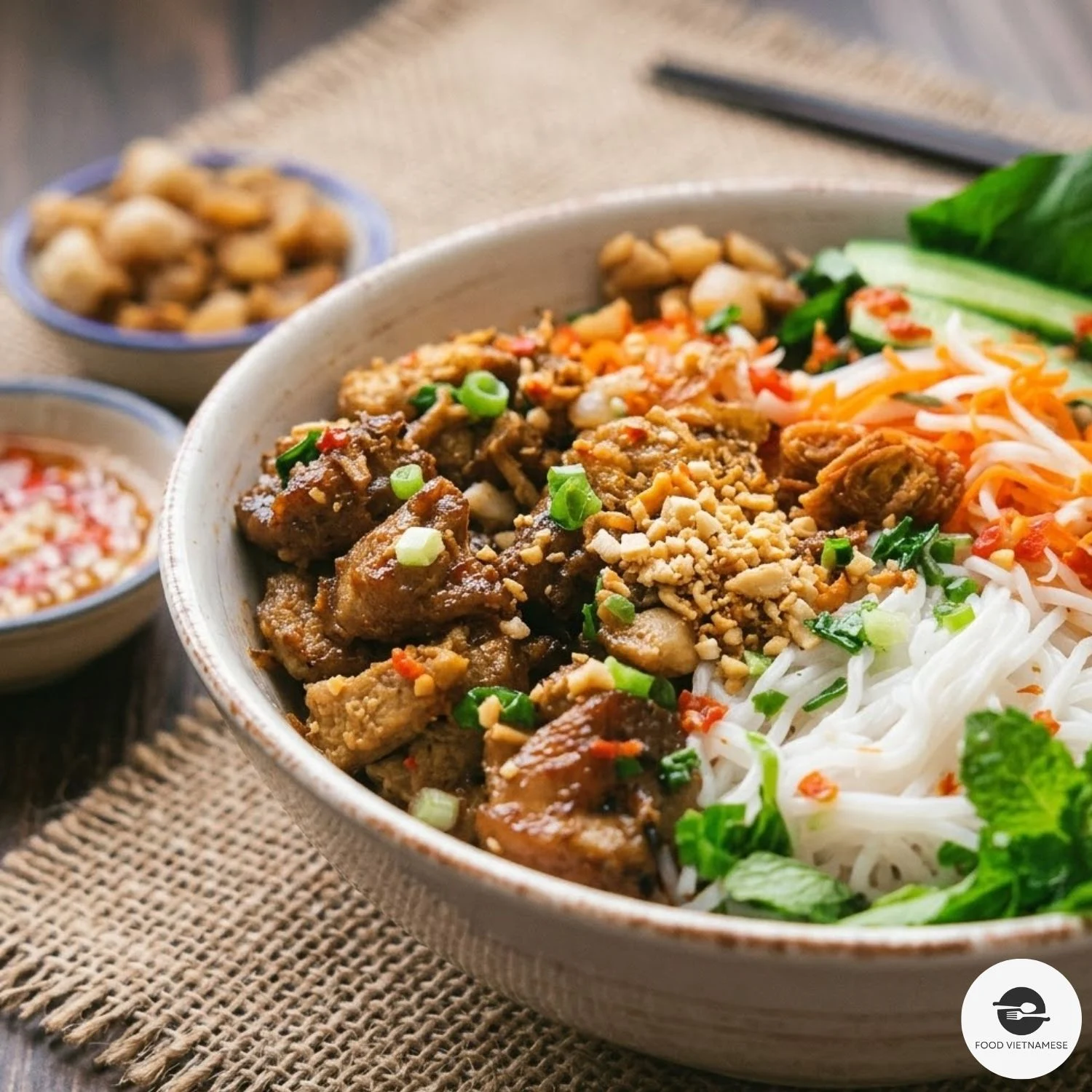
Bun Thit Nuong: Vietnam’s Grilled Pork Noodle Salad, Not a Soup
Bun Thit Nuong is a Vietnamese grilled pork noodle salad — cold rice vermicelli piled with lemongrass-marinated grilled…
Best Vietnam Food: 15 Must-Try Dishes
Best Vietnam food is defined by one core principle: maximum flavor from the freshest possible ingredients. Vietnamese cuisine balances…
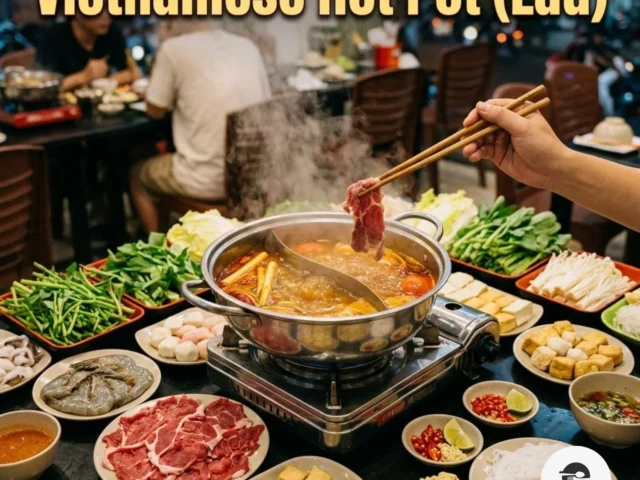
Vietnamese Hot Pot (Lẩu): Types, How to Eat, Dipping Sauces
Vietnamese hot pot (lẩu) is a pot of seasoned broth kept simmering at the table, where diners cook…