
Table of contents
Vietnamese name: Cà phê trứng
Origin: Hanoi, 1946, created by Nguyen Van Giang
Core ingredients: Egg yolk, sugar, sweetened condensed milk, strong robusta coffee
Texture: Thick, custard-like foam over coffee, eaten as much as drunk
Served: Hot (kept warm in a bowl of hot water) or cold (spoonable, ice-cream-like)
Taste comparison: Closer to tiramisu or zabaglione than “eggy”
Egg coffee shows up on a lot of Hanoi travel lists now, usually next to a photo that doesn’t explain much — and it’s become enough of a fixture that no overview of Vietnamese cuisine really skips it anymore. Here’s what it actually is, where it came from, what it tastes like, and how to make a reasonably faithful version without a trip to the Old Quarter.
What Is Egg Coffee (Cà Phê Trứng)?
Hot or iced Vietnamese coffee, topped with egg yolk, sugar, and condensed milk whisked until pale and thick — visually not far off cappuccino foam, but denser and richer. Nobody stirs it in right away. You eat it with a spoon, working down through the sweet layer into the strong, bitter coffee underneath, so the first bite and the last taste noticeably different.
Why a Bartender Started Putting Egg in Coffee
Nguyen Van Giang was a bartender at the Sofitel Legend Metropole in 1946, right as the First Indochina War was starting and fresh milk — needed for the café au lait guests expected — got hard to find. He whisked egg yolks with sugar into a stable foam and used that instead.
It worked better than it had any right to against Vietnam’s strong, dark robusta coffee. Giang later opened his own place, Café Giảng, in the Old Quarter; his family still runs it. His daughter opened a second shop, Café Đinh, overlooking Hoàn Kiếm Lake. Most Hanoi cafés serve some version of egg coffee today, but those two are where it started.
Does It Actually Taste Like Eggs?
No. That’s the question almost everyone asks before trying it, and the answer is the same reason a good custard or meringue doesn’t taste eggy — whisking yolk with sugar changes the flavor entirely. Most people land on tiramisu, or eggnog, or a very rich custard. The coffee underneath stays strong and slightly bitter, so it never quite tips into dessert.
Hot or Cold: Not the Same Drink
Hot egg coffee arrives in a small cup set inside a bowl of hot water — the foam on top is thick enough that the drink would cool fast otherwise. Cold egg coffee is a different experience entirely, spooned like soft ice cream rather than sipped. It’s also the version most first-timers and visitors reach for, since the cold mutes some of the richness.
How to Make Egg Coffee at Home
Four ingredients: egg yolks, sugar, sweetened condensed milk, and strong Vietnamese coffee, traditionally brewed through a phin filter.
Whisk the egg yolks with sugar by hand or with a mixer for several minutes, until the mixture turns pale and thick and roughly doubles in volume. This step matters more than anything else here — it’s what makes the foam hold.
Whisk in sweetened condensed milk gradually, until glossy and stable enough to hold its shape when you lift the whisk, similar to a soft-peak meringue.
Brew strong coffee separately, and pour it into a small cup — about half to two-thirds full is enough.
Spoon the foam over the top instead of stirring it in, and let it float. Serve as is for the cold version, or set the cup in a bowl of hot water for hot.
One thing worth knowing: the traditional method uses raw egg yolk, since the coffee’s heat doesn’t cook it. Pasteurized eggs, sold specifically for raw-egg recipes, cut that risk without changing how it tastes or feels.
I watched someone make this properly for the first time in a narrow Old Quarter café, and what stuck with me wasn’t the whisking itself — it was how long they kept going after I was sure the foam was done. Rush it, and the whole thing just sinks into the coffee within a minute. There’s a reason the good places take longer than you’d expect.
Kelly Thuy — field notes, Hanoi
Frequently Asked Questions
Whisked egg yolk, sugar, and sweetened condensed milk, spooned as a foam over strong Vietnamese robusta coffee.
No. Whisking the yolk with sugar changes the flavor to something closer to custard or tiramisu, and the strong coffee underneath balances the sweetness.
Nguyen Van Giang, a bartender at the Sofitel Legend Metropole in Hanoi, in 1946 — he whisked egg yolk with sugar as a milk substitute during a wartime shortage, then opened Café Giảng, which his family still runs.
It carries the same general risk as any raw-egg preparation. Pasteurized eggs, made for raw-egg recipes, lower that risk without changing the taste or texture.
Café Giảng and Café Đinh, both tied to the drink’s origin, are the two historically significant spots. It’s now a regular fixture on lists of the best food to try in Vietnam, and most Hanoi cafés serve their own version.

Related articles

Vietnamese Hot Pot (Lẩu): Types, How to Eat, Dipping Sauces
Vietnamese hot pot (lẩu) is a pot of seasoned broth kept simmering at the table, where diners cook…
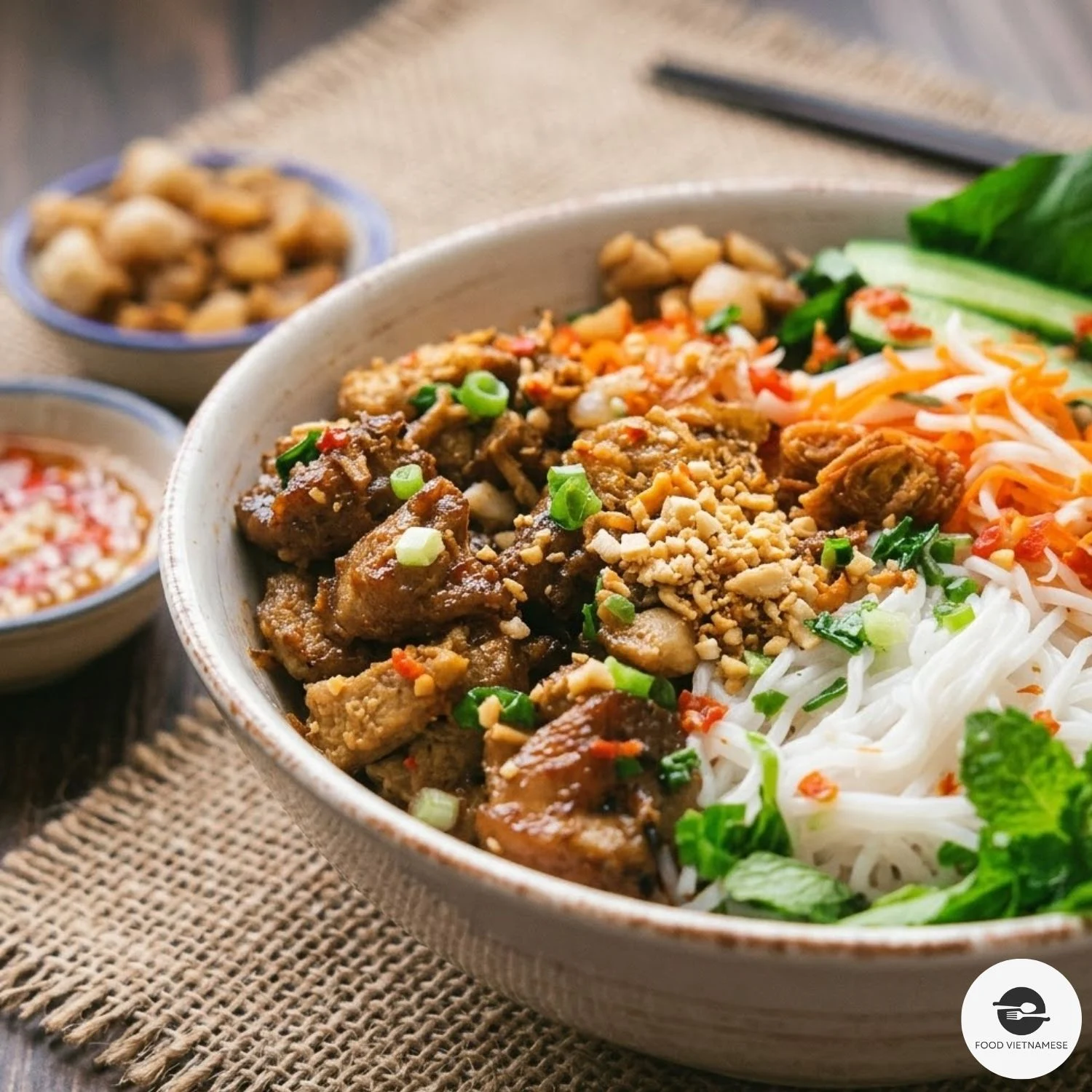
Bun Thit Nuong: Vietnam’s Grilled Pork Noodle Salad, Not a Soup
Bun Thit Nuong is a Vietnamese grilled pork noodle salad — cold rice vermicelli piled with lemongrass-marinated grilled…

Is Vietnamese Food Spicy? Only If You Ask It to Be
Is Vietnamese food spicy? Not by default — most of the country’s best-known dishes, from phở to bánh…