
Table of contents
- Quick Comparison
- Dexas Acacia End Grain Reversible Butcher Block
- HOMESTEAD End Grain Acacia Wood
- BABILONIA Walnut Wood Cutting Board
- Ironwood Gourmet Board Chefs Charleston
- Yes4All Durable Teak Cutting Board
- SHUMARU XL End Grain Cutting Board
- All-Clad End-Grain Acacia Wood Cutting Board
- Teakhaus Thick End Grain Butcher Block
- Bevel & Bond Maple End-Grain Cutting Board
- Larch Wood Canada End Grain Large
- What Actually Matters When You’re Choosing an End Grain Cutting Board
- Frequently Asked Questions
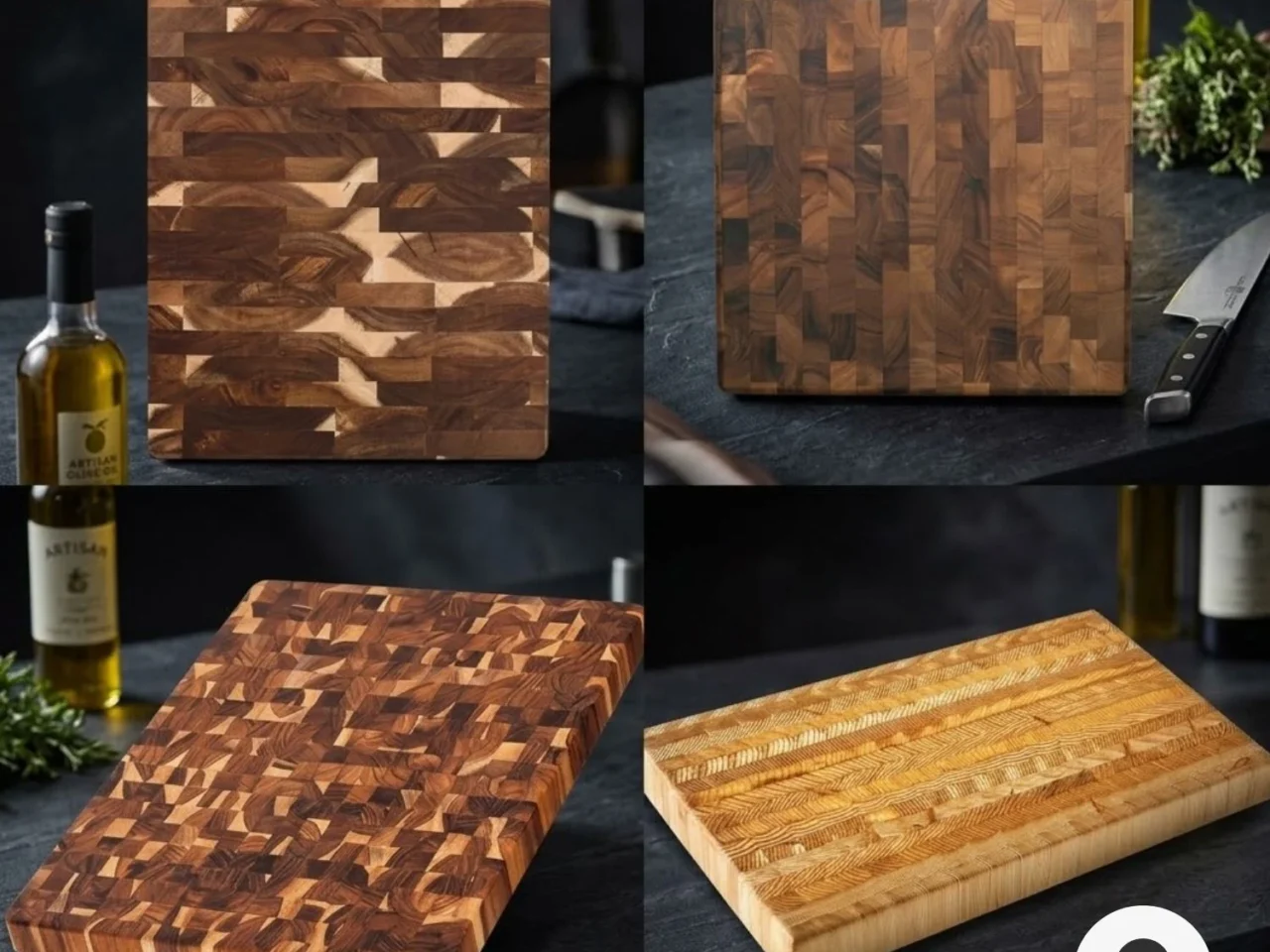
My chef’s knives are the one kitchen expense I don’t skimp on, which is exactly why the cutting board underneath them matters more than most people think. A soft, knife-friendly surface is the difference between an edge that lasts months between sharpenings and one that dulls in a week — and after years of prepping everything from garlic and lemongrass to whole chickens on flimsy plastic boards, switching to end grain wood changed how much I actually enjoy being at the counter.
I’ve spent the past few months rotating ten different end grain boards through my own kitchen — some for daily vegetable prep, a couple for heavier bone-in cuts, one that’s really more of a serving centerpiece than a workhorse. They range from $36.98 up to $275, in acacia, walnut, teak, suar, maple, and a Canadian larch I’d never worked with before. A few surprised me in ways their listings didn’t mention; a couple developed problems I only found out about after living with them for a few weeks. Here’s what actually held up.
This post contains affiliate links. If you buy through one, foodvietnamese.com earns a small commission at no extra cost to you.
Quick Comparison
| Cutting Board | Best For | Wood | Key Feature | Price |
|---|---|---|---|---|
| Dexas Acacia Reversible | Best Compact | Acacia | No juice groove — full flat surface on both sides | $36.98 |
| HOMESTEAD End Grain Acacia | Best for Big Roasts | Acacia | 23″ x 18″ — swallows a whole prime rib | $41.99 |
| BABILONIA Walnut | Best Budget Walnut | Walnut | Light enough to lift one-handed, oil included | $43.99 |
| Ironwood Gourmet Charleston | Best Established Brand | Acacia | Square shape doubles as a charcuterie board | $56.80 |
| Yes4All Teak | Best Mid-Range Teak | Teak | Naturally moisture-resistant, arrives pre-oiled | $66.94 |
| SHUMARU XL | Best Oversized Workspace | Suar | 260 sq in of groove-free flat space, 11 lbs | $89.95 |
| All-Clad End-Grain Acacia | Best Highest-Rated | Acacia | Lifetime warranty from a cookware name you know | $99.99 |
| Teakhaus Thick Butcher Block | Best Overall | Teak | FSC-certified, 1.5″ thick, genuinely heirloom-grade | $128.00 |
| Bevel & Bond Maple | Best Made in USA | Maple | Extra-thick 1.75″ construction, 5-year warranty | $129.99 |
| Larch Wood Canada | Best Splurge | Larch | Handcrafted in Nova Scotia, softer on Japanese blades | $275.00 |
Dexas Acacia End Grain Reversible Butcher Block
Price: $36.98

This is the board I reach for when I only need to slice a couple of shallots or break down a bunch of herbs — 16″ x 12″ is small enough to store in a cabinet but still has real end grain construction underneath. What I like most is that neither side has a juice groove cut into it, so the whole surface is usable instead of losing an inch of workspace to a channel I rarely need. It’s noticeably lighter than the bigger boards on this list, which is a plus for one-handed lifting but also means it scratches a little more easily than I expected; a light coat of oil every couple of weeks keeps that in check. Mine arrived in fairly minimal packaging, and I’ve seen a few other buyers mention corner dings from rough handling in transit, so I’d unbox it carefully and inspect before you put it into daily rotation.
For $36.98 with recessed finger grips built into both faces, it’s an easy board to recommend if your kitchen is on the smaller side or you just want a second board dedicated to produce.
Check Price on Amazon →HOMESTEAD End Grain Acacia Wood
Price: $41.99

At 23″ x 18″, this is the board I pull out when I’m breaking down a whole chicken or need room to lay out ingredients for a big batch of chả giò filling without things sliding off the edge. The deep juice groove genuinely earns its keep here — it’s caught more chicken and beef runoff than I expected. Acacia is a thirstier wood than teak, though, and I noticed it drying out faster between oilings than my other boards; skip the maintenance for a couple of weeks and you can feel it start to feel a little rough underhand. It’s also worth knowing going in that acacia end grain boards in this price range aren’t immune to cracking — it’s common enough in the reviews that sellers in this category, including this one, tend to handle replacements quickly when it happens, which was true in my own experience with a hairline crack near one corner after about six weeks.
Still, for under $42 and this much usable surface, it’s hard to beat for anyone who regularly cooks for a crowd or wants one board that can double as a serving platter for charcuterie.
Check Price on Amazon →BABILONIA Walnut Wood Cutting Board
Price: $43.99

Walnut is a softer, darker wood than acacia or teak, and it shows in how gently it treats a blade — my knives genuinely felt like they were staying sharper longer after I switched to this one for everyday chopping. It’s also the lightest board of its size on this list, light enough to lift out of the cabinet and back with one hand, which matters more than I expected once it became my daily driver. It ships with a small bottle of finishing oil, a nice touch that most budget boards skip. The tradeoff with walnut is that it’s a little more prone to visible knife marks than harder woods like teak — nothing that affects function, but if you want a board that still looks brand new after a year of use, this isn’t quite it.
For $43.99, it’s the best-looking board on this list for the price, and a genuinely good entry point if you’ve never used end grain walnut before.
Check Price on Amazon →Ironwood Gourmet Board Chefs Charleston
Price: $56.80

Ironwood Gourmet has been making acacia boards long enough that this one has thousands of reviews behind it, which gave me more confidence going in than most of the newer brands on this list. The 14″ square shape is genuinely versatile — it moves from cutting board to charcuterie spread without looking out of place on the table. The one issue I ran into, and one that shows up regularly in other owners’ experience too, is a visible glue seam between two of the wood blocks right out of the box; mine wasn’t structural, just cosmetic, and a light hand-sanding smoothed it out in about ten minutes. The rubber foot pads are also thinner than I’d like, so it’s worth adding your own non-slip pad underneath if your counter is at all uneven.
At $56.80, it’s the safest “known brand” pick here if you want the reassurance of a company that’s been doing this a long time, even if the finishing isn’t quite as polished as the pricier options.
Check Price on Amazon →Yes4All Durable Teak Cutting Board
Price: $66.94

Teak’s natural oil content makes it more moisture- and stain-resistant than acacia or walnut without any extra work on my part, and this board arrived pre-oiled and ready to use, which saved me the usual first-week seasoning routine. It has held its flatness well over daily use — no warping, even stored on its edge between meals. The one thing that caught me off guard was a noticeable smoky, slightly charred smell straight out of the packaging; it faded within the first couple of washes and hasn’t come back, but it’s worth knowing about so it doesn’t alarm you. The surface also wasn’t perfectly sanded out of the box — a few rough patches near the juice groove that a quick pass with fine sandpaper fixed for good.
At $66.94 for a genuinely heavy, 1.5″-thick teak board, it’s the best value on this list if you want teak’s low-maintenance reputation without paying premium-brand prices.
Check Price on Amazon →SHUMARU XL End Grain Cutting Board
Price: $89.95

This is a genuine workhorse — 20″ x 13″ x 1.6″ thick and 11 lbs, made from suar wood rather than the acacia or teak most boards on this list use. The flat, groove-free design means every square inch is usable, which I appreciated when rolling out dough or laying out a full pizza build. It comes with rubber feet, and on my counter it’s stayed put through heavy chopping, though I’ve seen a handful of other owners mention a slight wobble on uneven surfaces even with the feet attached — worth checking your board sits flush before you commit to a permanent spot for it. Fresh out of the box it also needed several rounds of washing to fully clear the sawdust smell from milling, more than the “3-5 washes” the brand suggests in my experience.
For $89.95, it’s the board I’d point anyone toward if counter space isn’t a concern and you want maximum flat working area in one piece.
Check Price on Amazon →All-Clad End-Grain Acacia Wood Cutting Board
Price: $99.99

I didn’t expect a cookware brand best known for stainless pans to make one of the better cutting boards I tried, but the build quality here is genuinely solid — 19″ x 14″ x 1.5″, backed by All-Clad’s limited lifetime warranty, with a deep juice groove that’s kept my counter dry through some fairly juicy roasts. The integrated handles make it easy to carry to the sink one-handed despite the weight. My only real complaint is the plastic slide-style feet on the bottom, which don’t grip as confidently as the rubber bumper feet on some of the other boards here — I ended up swapping mine for a set of adhesive door-stop bumpers, which solved it completely and took about five minutes.
At $99.99 with a 4.9-star average (albeit from a smaller pool of reviewers than some of the bigger sellers on this list), it’s a strong pick if brand trust and a real warranty matter to you as much as the wood itself.
Check Price on Amazon →Teakhaus Thick End Grain Butcher Block
Price: $128.00

This has become my go-to board for anything that matters — it’s FSC-certified teak, 20″ x 15″ x 1.5″ thick, and heavy enough that it simply doesn’t move on the counter no matter how aggressively I’m chopping. Teak’s tight grain has made it the most forgiving surface here on my knife edges, and after months of near-daily use it still looks close to new. The one lesson I learned the hard way with wood boards this dense: if you let water sit underneath after washing, or skip drying it upright, moisture can work its way in and eventually cause splitting — it happened to a board I owned years before this one, and it’s a documented risk with any thick end grain board, teak included, if you get lazy with the drying routine. Keep it propped up to air dry and oil it monthly, and that risk basically disappears.
At $128.00, this is the board I’d tell a serious home cook to just buy once — it’s substantial, well-made, and priced fairly for what a lifetime piece like this usually costs.
Check Price on Amazon →Bevel & Bond Maple End-Grain Cutting Board
Price: $129.99

Hard maple is what most culinary schools and professional kitchens actually train on, and this board — handcrafted in the US at a full 1.75″ thick — makes the case for why. It’s the densest, most knife-forgiving surface I tested; months in, I still can’t find a knife mark on it. It’s also the heaviest board I regularly lift, at 10 lbs, which is worth flagging if counter-to-sink trips aren’t easy for you or anyone else in your household. Maple is less forgiving of neglect than teak, too — mine needed more frequent oiling than I expected in a drier stretch of weather, and I’ve seen a couple of owners report warping or splitting on boards that skipped that step even briefly.
At $129.99 with a 5-year warranty and genuinely responsive customer service when I reached out with a question, it’s the pick for anyone who wants the “professional kitchen” wood specifically, not just a nice-looking board.
Check Price on Amazon →Larch Wood Canada End Grain Large
Price: $275.00

This is the splurge pick, and I want to be honest about it rather than just sell you on the price tag. Larch — also called tamarack — is a wood I hadn’t cut on before this, handcrafted in Nova Scotia from locally sourced logs, and it’s noticeably softer than teak or maple, which made it the gentlest board here on my most delicate Japanese knives. The grain pattern is genuinely striking, more dramatic than anything else on this list. But at $275, I expected flawless finishing, and what I got was good rather than perfect — a couple of blocks on my board weren’t sanded quite as smooth as the rest, and that inconsistency shows up often enough in other buyers’ experience that I don’t think mine was a fluke. It also needs more frequent conditioning than teak or acacia; the wood drinks oil fast.
If you specifically want the softest surface for premium Japanese knives and don’t mind paying for handcrafted, small-batch construction, it delivers. If you just want the most durable, lowest-maintenance board on this list, the Teakhaus or the Bevel & Bond will serve you better for roughly half the price.
Check Price on Amazon →What Actually Matters When You’re Choosing an End Grain Cutting Board
Wood species changes more than the look. Teak and acacia are on the harder, more weather-resistant end and forgive the occasional missed oiling. Walnut and maple are softer and gentler on blade edges but need more consistent maintenance. Larch, which I’d never worked with before this roundup, sits somewhere in between — soft enough to baby a good knife, but thirstier than teak.
Thickness affects both stability and price. Anything under 1.25″ will eventually show its age faster under heavy daily chopping. The 1.5″–1.75″ boards on this list were the ones that never budged or flexed under pressure, even without rubber feet doing much of the work.
Measure your sink before you measure your counter. A board that looks reasonable in photos can be genuinely awkward to wash if it’s wider than your sink basin — the HOMESTEAD and SHUMARU boards both needed to be washed in sections rather than submerged, which is normal for wood boards anyway, but easier with a sink that accommodates the size.
A juice groove is a real tradeoff, not just a nice-to-have. It keeps liquid off your counter during heavier cuts of meat, but it also eats into your usable flat surface and is one more crevice to dry thoroughly. If most of what you cut is vegetables and herbs, a grooveless board like the Dexas gives you more usable space for the same footprint.
Every end grain board needs the same basic care, regardless of price. Hand wash only, dry standing on edge rather than flat, and oil on a schedule — weekly for the first month on a new board, then monthly after that. Skipping this is the single biggest cause of the cracking and warping complaints that show up across every brand on this list, expensive or not.
Frequently Asked Questions
What’s the actual difference between end grain and edge grain cutting boards?
End grain boards are built so the wood fibers point straight up at the blade, like the end of a log — that’s what lets a knife edge slip between the fibers instead of cutting across them, which is why end grain boards are so much gentler on knives and tend to “self-heal” small cuts over time. Edge grain boards have the fibers running horizontally, which is more durable against heavy impact but noticeably harder on blade edges over the long run.
Is acacia or teak better for a cutting board?
Both are good choices, and the difference is smaller than the marketing suggests. Teak has naturally higher oil content, so it resists moisture and staining with less maintenance and tends to be more forgiving if you’re inconsistent about oiling. Acacia is typically a little more budget-friendly and has more dramatic grain variation, but in my experience it dries out and needs re-oiling somewhat faster than teak.
Why did my end grain cutting board crack or warp?
In almost every case I looked into — including on my own boards — it comes down to moisture imbalance: water getting trapped on one side while the other dries out, usually from being left flat on a wet counter or washed and set down without drying first. Standing the board on its edge to air dry and keeping up with regular oiling prevents nearly all of this, even on boards that arrive with an occasional factory defect.
Are end grain cutting boards dishwasher safe?
No — every board on this list, regardless of price, is hand wash only. The heat and prolonged water exposure in a dishwasher will warp and eventually crack solid wood, no matter how well-built the board is.
How big of a cutting board do I actually need?
For daily vegetable prep and smaller cuts, anything in the 16″–17″ range is comfortable without eating your whole counter. If you regularly cook for a crowd, break down whole chickens, or want one board that doubles as a serving platter, sizing up to 20″+ is worth the extra counter real estate — just measure your sink first if you plan to wash it whole.
Do I need to season a new end grain cutting board before using it?
Some, like the Yes4All teak board, arrive pre-oiled and ready to go. Others benefit from an initial round of conditioning — several light coats of food-grade mineral oil over the first few days lets the wood absorb what it needs before it goes into regular use, and it’s the single best thing you can do to prevent early cracking.
Ten boards, five wood types, and a $238 spread between the cheapest and the most expensive — and honestly, the board I reach for most on an average weeknight is still the $128 Teakhaus, not the $275 one. If you’re just starting to build a wood cutting board collection, start with one mid-range pick, learn its maintenance rhythm, and let that decide whether you’re ready to invest further.

Related articles

10 Cleaver Knives That Actually Hold Up to Daily Chopping
If you’ve only ever cooked with a Western chef’s knife, a Chinese-style cleaver looks like overkill — a…

Best Rice Cookers for Jasmine and Sticky Rice, Based on Reviews
Rice cookers get marketed like they’re all the same machine in a different shell. They’re not — not…