Table of contents
- What Is Ca Bong Song Tra?
- Sand Goby — Not Every Goby in the River Makes the Cut
- Season and Traditional Fishing Methods
- The Braising Technique — Why It Falls Apart So Easily
- Full Ingredient List
- Flavour and Texture Profile
- How to Eat It
- Where to Buy Tra River Goby
- Price Reference
- Nutritional Value
- Frequently Asked Questions
“When I go, I miss my homeland, I miss the Tra River goby fish braised with pepper.” That single folk verse is perhaps the most efficient introduction any rustic Vietnamese dish could ask for — no flavour description needed, just the name and the ache of missing it. For Quang Ngai natives living away from home, this finger-sized fish carries the weight of an entire province’s memory, enough to earn a place alongside three other local specialties in a well-known saying: “Xuan Pho sugarcane bird, Thu Xa mirror candy, Tra River goby, Mo Duc malt sugar.”
What Is Ca Bong Song Tra?
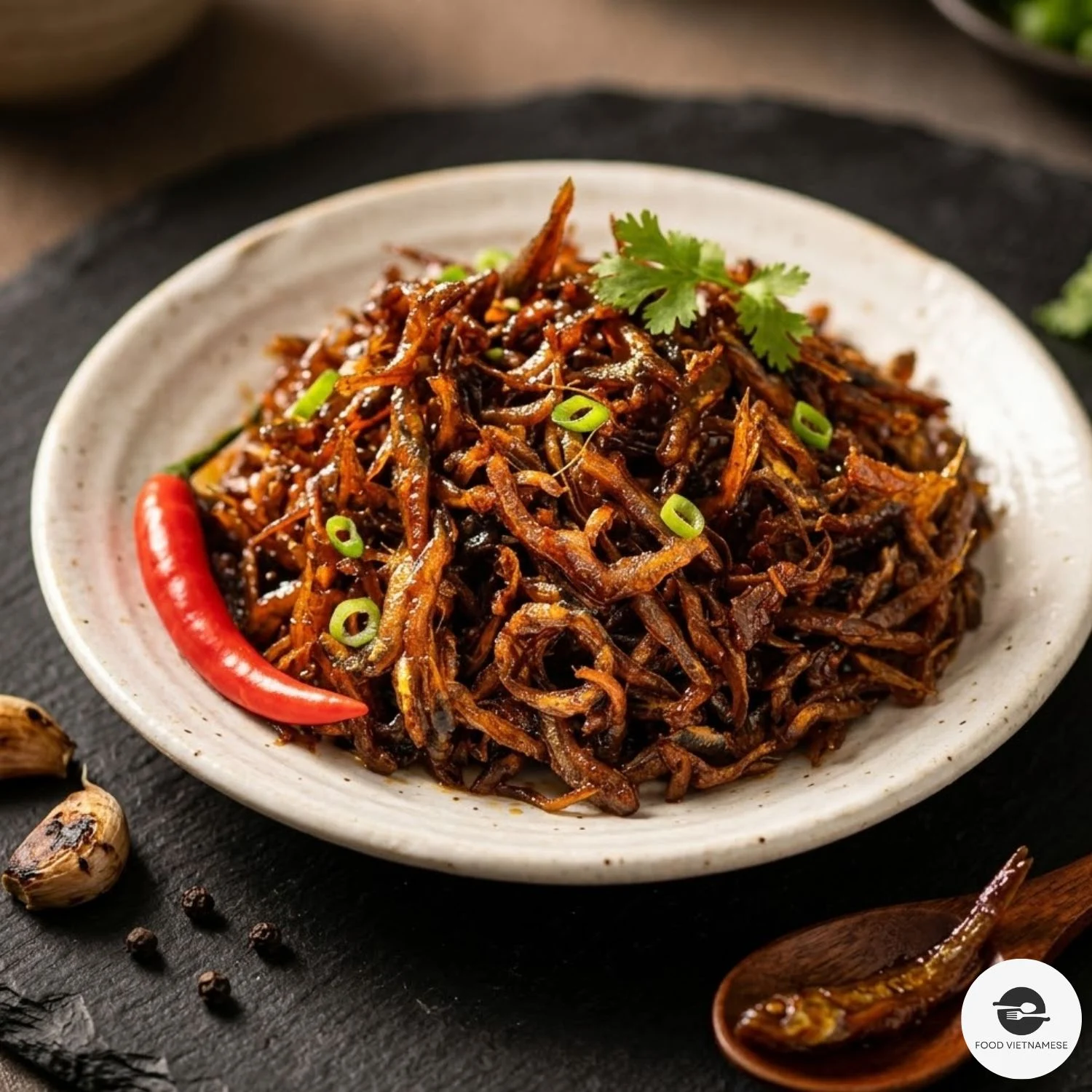
Ca bong song tra refers to the pepper-braised goby dish made from fish caught in the Tra Khuc River — Quang Ngai’s largest waterway and considered the province’s “mother river,” originating in the Truong Son mountain range and running roughly 39km to the East Sea. The dish is woven so deeply into local life that it’s become one of the most recognisable culinary symbols of the Nui An-Song Tra region.
| Quick Facts | Details |
|---|---|
| Vietnamese name | Cá bống sông Trà |
| English name | Ca Bong Song Tra – Quang Ngai’s Pepper-Braised Tra River Goby |
| Region | South Central Coast (Duyên hải Nam Trung Bộ) – Quang Ngai province |
| Main ingredient | Sand goby from the Tra Khuc River, pepper, chili, shallots, fish sauce, sugar |
| Traditional cookware | Clay pot, simmered on low heat for over an hour |
| Peak season | Third to fifth lunar month (fish at their fattest, most roe) |
| Served with | Hot steamed rice or rice porridge |
| Cultural significance | Featured in Quang Ngai folk poetry and oral sayings |
Sand Goby — Not Every Goby in the River Makes the Cut
The lower reaches of the Tra Khuc River host several goby species, but they don’t all braise equally well. Local residents distinguish carefully: grouper goby (also called coal goby) tends to snap at bubbles near the water’s surface, has a large body but little meat, and isn’t considered tasty. Catfish-head goby has an oversized head. Sharp-nosed goby has tough, chewy flesh that doesn’t braise particularly well either.
Only sand goby — round-bodied, small as the tip of a chopstick, pale to golden yellow — is what actually built the reputation of Tra River goby as a genuine specialty. This species thrives in stretches of riverbed with more sand and less silt, an environment that supports the clean plankton it naturally feeds on, giving its flesh a firmness and fragrance the other goby species simply don’t match.
I – Kelly Thuy – once stood watching a fisherman near Tinh Son commune early one morning, his net just hauled up, the catch still flapping. He pointed to the smallest fish, their bodies glinting gold in the early light: “These are all sand goby, miss — these are the ones worth braising. Anything dark purple, that’s coal goby, leave it be, the meat goes mushy.” That quick sorting, done almost without looking, said more about a lifetime spent on this river than any technical explanation could.
Season and Traditional Fishing Methods
From around the first to the eighth lunar month each year, schools of goby swim upstream from the river mouth, marking the main fishing season for people living along the Tra Khuc. The window when the fish reach peak fattiness and roe content, though, narrows to roughly the third through fifth lunar months — spring into early summer, when the riverbed carries more sand and less silt.
Fishermen catch goby two main ways: using nets weighted down with large snail and clam shells attached to sink them to the riverbed, or setting bamboo tube traps for the fish to swim into on their own. Both methods are traditional techniques passed down through generations of river-dwelling families.
The Braising Technique — Why It Falls Apart So Easily
The method sounds simple enough on paper: place the fish in a clay pot, season with chili, shallots and pepper, add just enough water to barely cover, and simmer on low heat for over an hour until the sauce thickens. In practice, though, get the technique wrong and the fish falls apart — the single most common mistake among people attempting this dish for the first time.
The trick lies in keeping the heat genuinely low and avoiding stirring throughout the process — gently shaking the clay pot instead, so the sauce coats evenly without breaking the fish’s already small, soft body. Serious Quang Ngai cooks also insist on specific local ingredients: Ky Tan fish sauce, An Thoi white sugar, Ly Son garlic and wild forest pepper — believed to be what pushes the finished dish to genuinely authentic Quang-style flavour.
Full Ingredient List
| Ingredient | Role |
|---|---|
| Fresh sand goby | Main ingredient — ideally just-caught, pale yellow, still lively |
| Good-quality fish sauce | Primary seasoning, providing deep savouriness — local fish sauce preferred |
| Sugar | Balances the saltiness, produces the characteristic amber-brown colour over long braising |
| Pepper | The dish’s defining seasoning — provides the signature heat and aroma |
| Chili, shallots | Add fragrance and adjustable heat |
| Garlic | Some recipes add minced garlic for extra fragrance |
Flavour and Texture Profile
| Layer | Description | Source |
|---|---|---|
| Firm yet tender | The fish holds its shape whole even after long braising, never mushy | Fresh sand goby braised correctly over low heat |
| Distinctive peppery heat | A warming spiciness that hits as soon as the pot lid comes off | Pepper as the dominant, non-negotiable seasoning |
| Balanced savoury depth | The thickened sauce coats each fish evenly without turning harsh | Fish sauce and sugar braised to balance |
| Rich amber fragrance | A visually striking reddish-brown sauce with the deep aroma of a long braise | Over an hour of low, slow simmering |
| Deeply moreish with rice | The intensity makes people eat noticeably more rice than usual — the most commonly cited trait | The combined salty-spicy-sweet balance of the finished braise |
How to Eat It
Pepper-braised goby is best eaten with hot steamed rice or rice porridge, particularly on cold, rainy days — precisely when Quang Ngai locals say the dish is at its most “rice-devouring.” The fish is typically eaten whole, piece by piece, with the thickened sauce spooned over rice to make the most of its intensity. Many Quang Ngai families keep a jar braised and ready to give as a gift whenever relatives travel far from home or visitors arrive from out of town.
Where to Buy Tra River Goby
In Quang Ngai
- Markets along the Tra Khuc River, concentrated around Tinh Son commune and areas near Quang Ngai City — where fresh sand goby can be bought directly from fishermen.
- Several producers braising according to traditional family recipes also sell pre-jarred versions locally.
Buying to take further afield or online
Jarred pepper-braised goby from Quang Ngai brands is widely available at specialty shops in Da Nang, Ho Chi Minh City, and shipped nationwide through Vietnamese e-commerce platforms — the most common way for people outside the region to try it or bring it home as a gift.
Price Reference
Current reference prices, varying by season and brand.
| Format | Approximate price | Notes |
|---|---|---|
| Fresh goby at local markets | ~150,000–250,000 VND/kg | Prices rise outside peak season |
| Jarred pepper-braised goby (branded) | ~100,000–180,000 VND per 300–500g jar | Standard specialty-market pricing |
Nutritional Value
Estimated based on the fish and general preparation method — no independently published nutritional analysis exists specifically for pepper-braised Tra River goby.
| Nutrient | Estimated value / 100g braised fish |
|---|---|
| Energy | ~150–190 kcal |
| Protein | ~18–22g |
| Total fat | ~5–9g |
| Sodium | Relatively high due to the concentrated fish sauce braise — note for those monitoring salt intake |
| From fish | High-quality protein, calcium, phosphorus |
In traditional Vietnamese medicine, goby is believed to aid digestion and general vitality — this reflects folk belief passed down through generations, not a claim verified by modern clinical research.
Frequently Asked Questions
What is ca bong song tra?
A Quang Ngai specialty of sand goby from the Tra Khuc River, braised in a clay pot with pepper, chili, shallots and fish sauce over low heat until the sauce turns amber. Served with rice or rice porridge.
How is sand goby different from other goby species?
Sand goby is small, round-bodied, pale yellow, with firm flesh ideal for braising. Grouper/coal goby is larger with less meat; catfish-head and sharp-nosed goby have tougher, less desirable flesh.
When is the best season?
Fished from the first to eighth lunar month, but fattest and best quality from the third to fifth lunar month.
Why does it fall apart so easily when braised?
The fish is small and soft-fleshed — high heat or excessive stirring breaks it apart. Low heat and minimal stirring, just gently shaking the pot, is essential.
Where to buy it?
Markets along the Tra Khuc River (Tinh Son commune) for fresh fish; specialty shops in Quang Ngai, Da Nang, Ho Chi Minh City, or Vietnamese e-commerce platforms for jarred versions.
The Tra River gives Quang Ngai more than just its goby — legends and homesick songs trace its entire length from the Truong Son mountains to the sea. But few images capture the province’s identity as simply and durably as a clay pot of pepper-braised goby, the first dish any homesick Quang Ngai native tends to name. That same pride in a dish tied to one specific river and one specific patch of land shows up just north of Quang Ngai too, in Quang Nam’s cassava noodle soup — another specialty born from scarcity and shaped entirely by local hands.

Related articles
Banh Khot: Vung Tau’s Crispy-Edged Answer to Banh Xeo
Banh Khot is a Vietnamese mini savory pancake from the coastal city of Vung Tau — a rice…
Cao Lau: The Hoi An Noodle Dish That Cannot Be Made Anywhere Else
Cao Lau is a noodle dish found exclusively in Hoi An, Central Vietnam — thick, chewy rice noodles…
Ga Nuong Song Cau – Where Ordering Chicken Means Pointing at One in the Yard
Ga nuong Song Cau is a specialty of Song Cau town, Phu Yen province: free-range chicken (ideally young,…