Table of contents
- What Is Pho San?
- From Wartime Substitute to Sought-After Specialty
- Why the Flour Gets Soaked for Three Days and Three Nights
- Ingredients by Serving Style
- How the Snakehead Fish Version Is Made
- Flavour and Texture Profile
- A Dish That Happens to Be Gluten-Free
- Where to Find Authentic Pho San Que Son
- Price Reference
- Nutritional Value
- Frequently Asked Questions
Hear the name “pho san” and most people picture an ordinary bowl of pho with a swapped-out noodle. Set an actual dried sheet of pho san on the table, though, and the more common reaction is a question: is this really pho, or some kind of net-shaped rice cracker?
I – Kelly Thuy – held a dried sheet of pho san for the first time in Thuan An hamlet, and a light bend produced an audible crack — nothing like the feel of a bundle of dried rice noodles. An elderly woman stacking freshly dried sheets into a bamboo basket gave me a short answer when I asked why the noodle wasn’t pulled into long strands like ordinary pho: “Cassava dough won’t stretch into strands the way rice dough does. You have to sift it into a net, or it won’t hold its shape. Once your hands know it, it’s easy — but a beginner can waste a whole afternoon sifting and end up with nothing usable.” That plain explanation said more about the dish’s shape than any technical write-up could — ivory-white, thin, round, woven like a miniature fishing net. The real answer sits in the raw material itself: cassava flour sifted through a mesh mould, sun-dried, and once soaked in water it turns into a springy, distinctly chewy noodle unlike anything else on Vietnam’s culinary map.
What Is Pho San?
Pho san is woven into daily life in Que Son district, Quang Nam province, particularly Dong Phu town, home to the traditional pho san-making craft village. What makes this dish a genuine curiosity on Vietnam’s food map comes down to the name itself: “pho” almost always implies rice-flour noodles, but pho san breaks that assumption entirely by using cassava root flour as its defining ingredient.
In Que Son, pho san is prepared two main ways: pho san tron (mixed cold with pork, peanuts and herbs, no cooking required) and pho san nuoc (served hot in broth with turmeric-braised snakehead fish or mackerel scad). Both preserve the same rustic simplicity of a dish that emerged from genuine food scarcity.
| Quick Facts | Details |
|---|---|
| Vietnamese name | Phở sắn Quế Sơn |
| English name | Pho San Que Son – Vietnam’s Cassava Noodle Soup from Quang Nam |
| Region | South Central Coast (Duyên hải Nam Trung Bộ) – Que Son district, Quang Nam province |
| Noodle base | 100% cassava flour — no rice flour used |
| Signature shape | Round, thin, net/mesh-patterned sheet — unlike any other Vietnamese noodle |
| Origin village | Thuan An hamlet, Dong Phu town, Que Son district |
| Two serving styles | Pho san tron / Pho san nuoc (with snakehead fish or mackerel scad) |
| Recognition | Provincial traditional craft village status; OCOP-certified products |
From Wartime Substitute to Sought-After Specialty
According to elderly residents in Dong Phu, the pho san craft took shape during the difficult years of wartime, when rice was scarce and cassava root became the primary food source for many poor farming households across rural Quang Nam. The craft began forming and developing in the early years of the 1960s, but due to the war and various historical disruptions, it gradually declined.
Over the past 20-plus years, pho san-making in Thuan An hamlet has been revived and grown once again. In 2009, the Quang Nam People’s Committee officially recognised Dong Phu cassava noodle village as a traditional craft village of the province — a significant milestone opening new development opportunities for a handicraft once at genuine risk of disappearing. At its peak, Thuan An hamlet alone had as many as 55 households involved in pho san production; today only a handful remain, mostly elderly residents keeping the craft alive.
Cassava for pho san is typically grown on the sandy soil along the Thu Bon River — barren land unsuited to many other crops, but well-matched to the hardy nature of the cassava plant.
Why the Flour Gets Soaked for Three Days and Three Nights
This is the single most important technical step in the entire process, and the food-safety question most newcomers to pho san ask first. Because cassava contains small amounts of cyanide-producing toxins, workers must peel the cassava thoroughly before pressing it into flour. The flour is then soaked in water for three full days and nights to completely eliminate the toxins, while helping to retain the fibre and nutrients the cassava naturally contains.
After this detoxification soak, the cassava flour is cooked and stirred to a specific dough consistency, then pressed through a mould that produces the noodle’s distinctive mesh pattern. One worker sifts the dough into sheets while another uses bamboo tools coated in non-stick oil to shape the pho san before it’s laid out to dry in the sun.
The process of making pho san is genuinely labour-intensive, running through many stages — slicing, grinding into flour, removing acidity, soaking, and cooking, followed by thorough stirring to reach the right elasticity before pressing into noodle sheets — considerably more involved than making standard rice-based bun or pho noodles.
Ingredients by Serving Style
| Component | Pho san tron | Pho san nuoc |
|---|---|---|
| Pho san noodles | Soaked ~10 minutes to soften | Soaked ~10 minutes, drained before adding broth |
| Main protein | Thinly sliced boiled pork, shrimp | Sliced snakehead fish or mackerel scad |
| Signature seasoning | — | Pounded fresh turmeric, shallot chives (removes fishiness, adds fragrance) |
| Herbs/toppings | Fresh herbs, crushed roasted peanuts | Fresh herbs, roasted peanuts |
| Sauce/broth | Sweet-sour fish sauce dressing | Braising liquid from turmeric-shallot chive fish |
How the Snakehead Fish Version Is Made
Snakehead fish is cleaned and thinly sliced, marinated with seasoning and pounded fresh turmeric for about 30 minutes — the turmeric both colours the dish and helps neutralise the fish’s natural odour. The fish is then braised with a generous amount of shallot chives for fragrance, simmered until seasoned through, then combined with boiling water and adjusted to taste once it returns to a boil.
While the broth simmers, dried pho san is broken into bite-sized pieces and soaked in water for about 10 minutes, then drained. The softened noodles go into a bowl with fresh herbs, hot fish broth ladled over, and a scattering of crushed roasted peanuts. Some households swap in rice-field eel, tuna or mackerel depending on the season and what’s available.
Flavour and Texture Profile
| Layer | Description | Source |
|---|---|---|
| Distinctively springy chew | A texture unlike any other Vietnamese noodle — chewy but not soft or mushy like rice vermicelli | Cassava flour’s unique properties once rehydrated |
| Mild natural sweetness | A very light natural sweetness from the cassava itself, never overpowering other ingredients | Pure cassava flour |
| Turmeric and shallot chive fragrance | A distinctive Central Vietnamese aroma that effectively cuts through fishiness | Fresh turmeric and shallot chives in pho san nuoc |
| Nutty richness | A crunchy, savoury accent scattered on top, balancing the noodle’s softness | Crushed roasted peanuts |
| Quick to absorb seasoning | The mesh structure allows the noodle to soak up sauce or broth exceptionally well | Pho san’s signature net-like shape |
The bowl of snakehead fish pho san nuoc I ate at a small shop near Dong Phu market didn’t resemble any pho I’d had before. The first bite was strange — the noodle chewier than expected, almost springy — but by the third bite it had won me over completely. The turmeric-braised fish broth carried a strong shallot chive fragrance, with none of the fishiness I’d braced for. The noodle’s own faint sweetness never competed with the broth; it simply held back and let the turmeric and shallot chives take the lead.
A Dish That Happens to Be Gluten-Free
Because it’s made entirely from cassava flour, pho san is naturally gluten-free — suited to anyone avoiding gluten or following a lower-refined-carb diet. Cassava noodles are naturally gluten-free, fibre-rich, and have a chewy, smooth texture that absorbs flavours wonderfully. Traditional processing also retains a meaningful amount of fibre, which has made pho san of interest to some health-conscious eaters — even though the dish was originally born from scarcity, not designed with modern dietary trends in mind.
Where to Find Authentic Pho San Que Son
In Quang Nam
- Thuan An hamlet, Dong Phu town, Que Son district — the source itself, still home to a handful of households continuing the traditional craft, where dried pho san can be purchased directly.
- Specialty shops throughout Quang Nam and Da Nang commonly stock packaged pho san from local OCOP-certified brands.
Outside Quang Nam
A small number of restaurants specialising in Quang-style dishes in major cities, including Ho Chi Minh City, have begun adding pho san to their menus as a rare specialty — drawing both domestic diners and international visitors curious about the noodle’s unusual shape. Notably, some chefs have reinterpreted the dish with a clear, pho-bo-style broth simmered overnight and topped with thinly sliced roast pork — a modern take distinct from the traditional rustic snakehead fish version.
Price Reference
Current reference prices, varying by brand and purchase format.
| Format | Approximate price | Notes |
|---|---|---|
| Direct from Thuan An hamlet | ~30,000–50,000 VND/kg (dried) | Base price, unbranded/unpackaged |
| OCOP-certified packaged brands | ~40,000–70,000 VND per 400g pack | Quality-inspected, suited for gifting |
| Restaurant serving | ~30,000–60,000 VND per bowl | Varies by topping — fish, shrimp or pork |
Nutritional Value
Estimated based on the general properties of pure cassava starch — no independently published nutritional analysis exists specifically for pho san Que Son.
| Nutrient | Estimated value / 100g dried noodle |
|---|---|
| Energy | ~330–350 kcal |
| Carbohydrates | ~80–85g (predominantly cassava starch) |
| Fibre | Present, retained in meaningful amounts through traditional processing |
| Gluten | None — naturally suited to gluten-free diets |
| Protein | Low (under 2g) — most protein comes from the accompanying toppings |
Frequently Asked Questions
What is pho san Que Son?
A Dong Phu, Que Son, Quang Nam specialty: “pho” made 100% from cassava flour, pressed into a round net shape. Eaten mixed (tron, with pork and peanuts) or in broth (nuoc, with turmeric-braised snakehead fish or mackerel scad).
Is pho san safe to eat?
Safe when made following the traditional process — thorough peeling and soaking the flour for three days and three nights to fully remove the natural cyanide-producing compounds in fresh cassava, before cooking and pressing into noodles.
Why is it shaped like a round net?
Cassava flour’s unique properties allow it to be sifted through a mesh mould and sun-dried into a round sheet — an entirely different structure from the long flat strands of rice-based pho or bun.
How is pho san tron different from pho san nuoc?
Tron: soaked soft, mixed with pork/shrimp/peanuts/herbs, no cooking needed. Nuoc: served in broth from snakehead fish or mackerel scad braised with turmeric and shallot chives.
Where to buy it?
Thuan An hamlet, Dong Phu town, Que Son is the source. OCOP-packaged versions are sold at specialty shops in Quang Nam, Da Nang, and select Quang-style restaurants in Ho Chi Minh City.
International visitors seeing a dried sheet of pho san for the first time often ask the same question: why does “pho” look like a flat, holed square instead of familiar long strands? The answer sits entirely in Thuan An’s own history — a hamlet that once had 55 households in the trade at its peak, now down to a handful of elderly artisans keeping it alive. A dish born to stave off hunger has become something visitors travel out of their way to photograph and taste — the same instinct for turning humble local ingredients into something memorable found in Da Nang’s two-skin pork rice paper rolls, from the province immediately north of Quang Nam.

Related articles
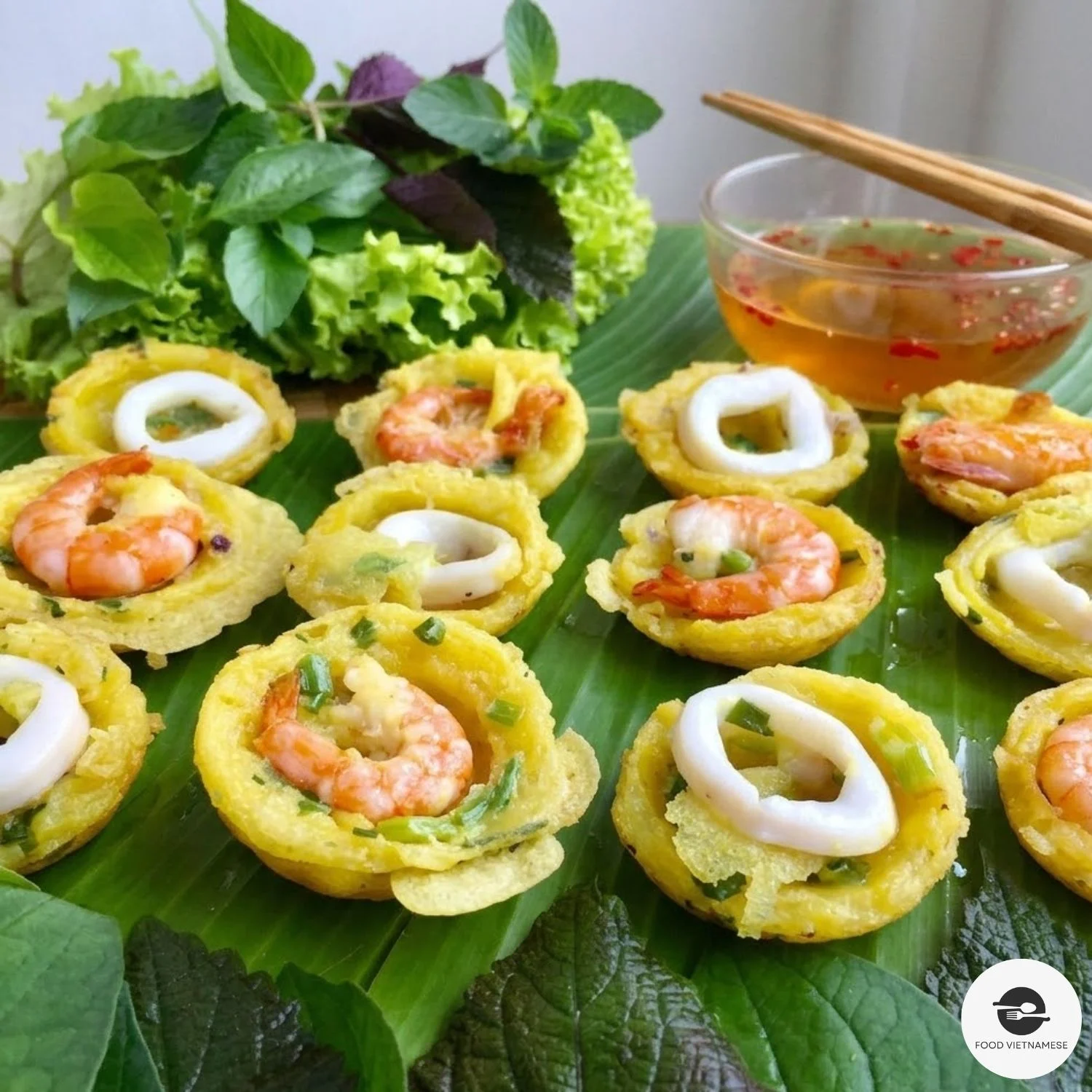
Banh Khot: Vung Tau’s Crispy-Edged Answer to Banh Xeo
Banh Khot is a Vietnamese mini savory pancake from the coastal city of Vung Tau — a rice…
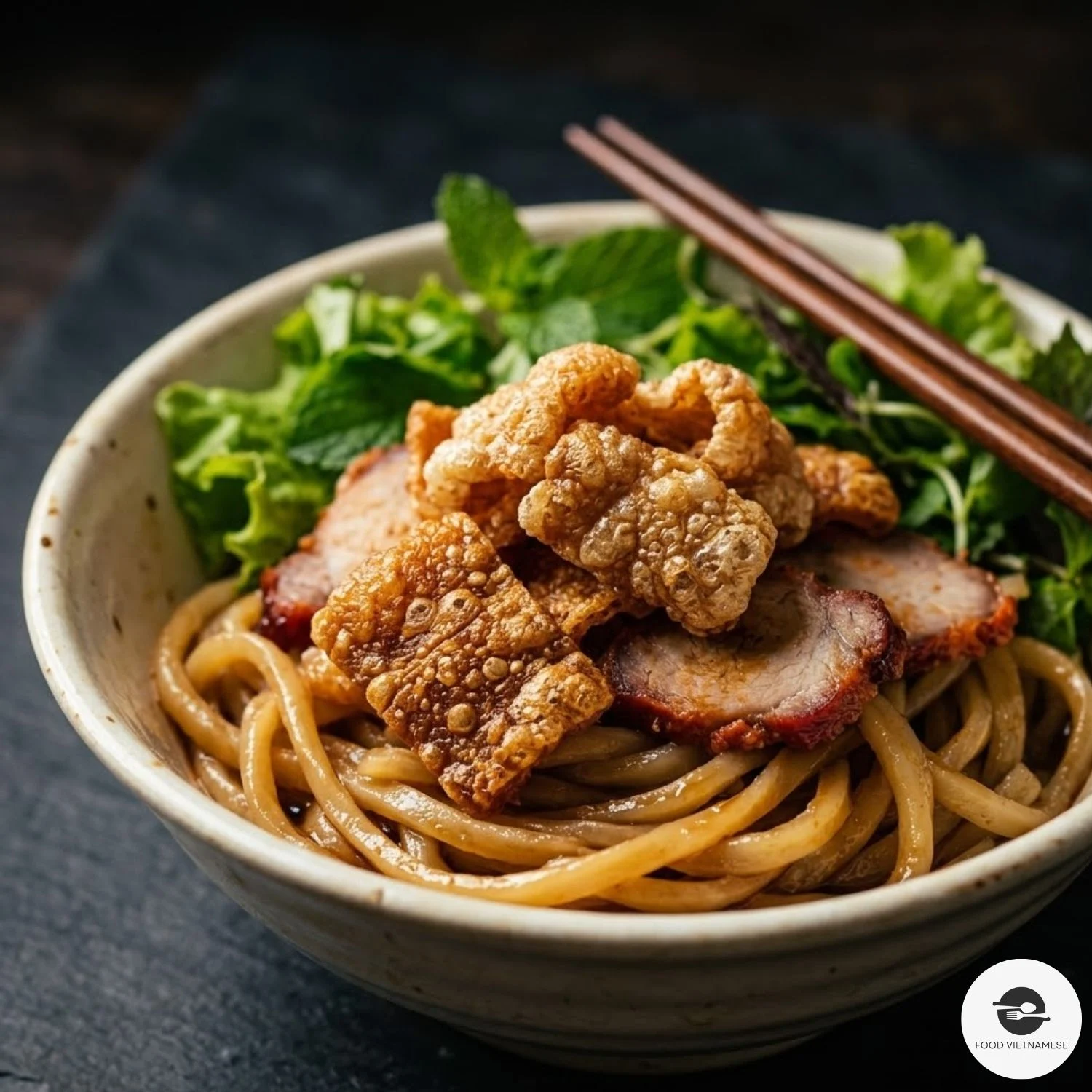
Cao Lau: The Hoi An Noodle Dish That Cannot Be Made Anywhere Else
Cao Lau is a noodle dish found exclusively in Hoi An, Central Vietnam — thick, chewy rice noodles…
Ga Nuong Song Cau – Where Ordering Chicken Means Pointing at One in the Yard
Ga nuong Song Cau is a specialty of Song Cau town, Phu Yen province: free-range chicken (ideally young,…