Table of contents
- What Is Thit Luoc Khue Trung?
- Khue Trung and Its Local Context
- “Two-Skin” Pork — The Technique That Decides Everything
- Two Wrappers in One Roll — A Technique Few Places Replicate
- Mam Nem – The Irreplaceable Dipping Sauce
- Full Ingredient List
- How It’s Made
- Flavour and Texture Profile
- How to Eat It the Da Nang Way
- Where to Eat It in Da Nang
- Price Reference
- Nutritional Value
- Frequently Asked Questions
- Conclusion
I – Kelly Thuy – arrived at Quan Mau on Do Thuc Tinh Street on a blazing midday, steam still rising off the pot of boiled pork. The shop owner sliced piece after piece with an even hand, each slice showing two thin edges of skin, pale pink lean meat, and clear fat in between. I asked why not just use ordinary belly pork for convenience. She laughed: “Belly pork has too much fat — it gets heavy fast. It has to be exactly two-skin, or the balance is off.” My first roll — chewy rice paper outside, soft noodle sheet inside cradling the meat and herbs — dipped deep into a bowl of mam nem, sharp with fermented anchovy — and I understood immediately why a dish this simple in concept still demands getting one specific centimetre of the pork exactly right.
— Kelly Thuy
What Is Thit Luoc Khue Trung?
Thit luoc Khue Trung, better known by its umbrella name banh trang cuon thit heo (“pork rice paper roll”), is one of Da Nang’s most frequently cited specialties alongside mi Quang and the city’s seafood. Despite its simple preparation, it demands skill and expertise to create a truly appealing and enticing dish. What gives the Khue Trung version its specific identity isn’t complexity — the concept is essentially boiled pork rolled in rice paper — but precision in selecting the right cut of meat.
| Quick Facts | Details |
|---|---|
| Vietnamese name | Thịt luộc Khuê Trung / Bánh tráng cuốn thịt heo |
| English name | Banh Trang Cuon Thit Heo Khue Trung – Da Nang’s Two-Skin Pork Rice Paper Rolls |
| Region | South Central Coast (Duyên hải Nam Trung Bộ) – Da Nang city |
| Pork cut | “Two-skin” pork — thin skin layers on both ends, balanced lean meat and fat |
| Signature wrapping technique | Both chewy rice paper and soft rice noodle sheet used together |
| Required dipping sauce | Mam nem with garlic, chili and pineapple — no substitute accepted |
| Signature address | Quan Mau — 35/80 Do Thuc Tinh Street, Khue Trung ward, Cam Le district |
Khue Trung and Its Local Context
Khue Trung is a ward within Cam Le district, Da Nang — administratively part of Hai Chau district until September 2005. The area sits along the Cam Le River, historically sustained by agriculture and small-scale trade, and is also known for the traditional banh kho me (roasted sesame cake) craft of Cam Le village. Within this local food landscape, the boiled pork rice paper roll has become one of the specialties most closely tied to the Khue Trung name, drawing generations of local diners and visitors alike.
Some accounts trace the broader style of pork rice paper rolls to the neighbouring Dai Loc area of Quang Nam province, also known for a similar dish. Even so, Khue Trung remains the neighbourhood most firmly associated with Da Nang’s own signature version, particularly through the long-established Quan Mau brand.
“Two-Skin” Pork — The Technique That Decides Everything
If there’s one factor that matters most in this dish, it’s choosing the right cut: the most challenging and appealing aspect is ensuring that each slice of pork has two layers of skin at each end, which is the secret of slicing “two-skin” pork and makes this specialty so enticing.
Select pigs weighing 55kg and 60kg to achieve mouthwatering pork. Many Da Nang shops specifically source pigs within this weight range to ensure the correct proportion of lean meat, fat and skin before boiling. The layer of skin must reach a moderate softness, the fat layer clear and never greasy, delivering a light richness alongside the distinctive sweetness of fresh pork when eaten.
The slicing technique itself takes practice: each piece must be thin enough to roll smoothly with the vegetables and wrapper without clumping, yet thick enough to preserve the clear three-layer structure of skin, lean meat and fat in every single slice.
Two Wrappers in One Roll — A Technique Few Places Replicate
One technical detail rarely mentioned but responsible for a genuinely distinctive texture: this dish uses two different wrappers at once, rather than rice paper alone as in most other regions.
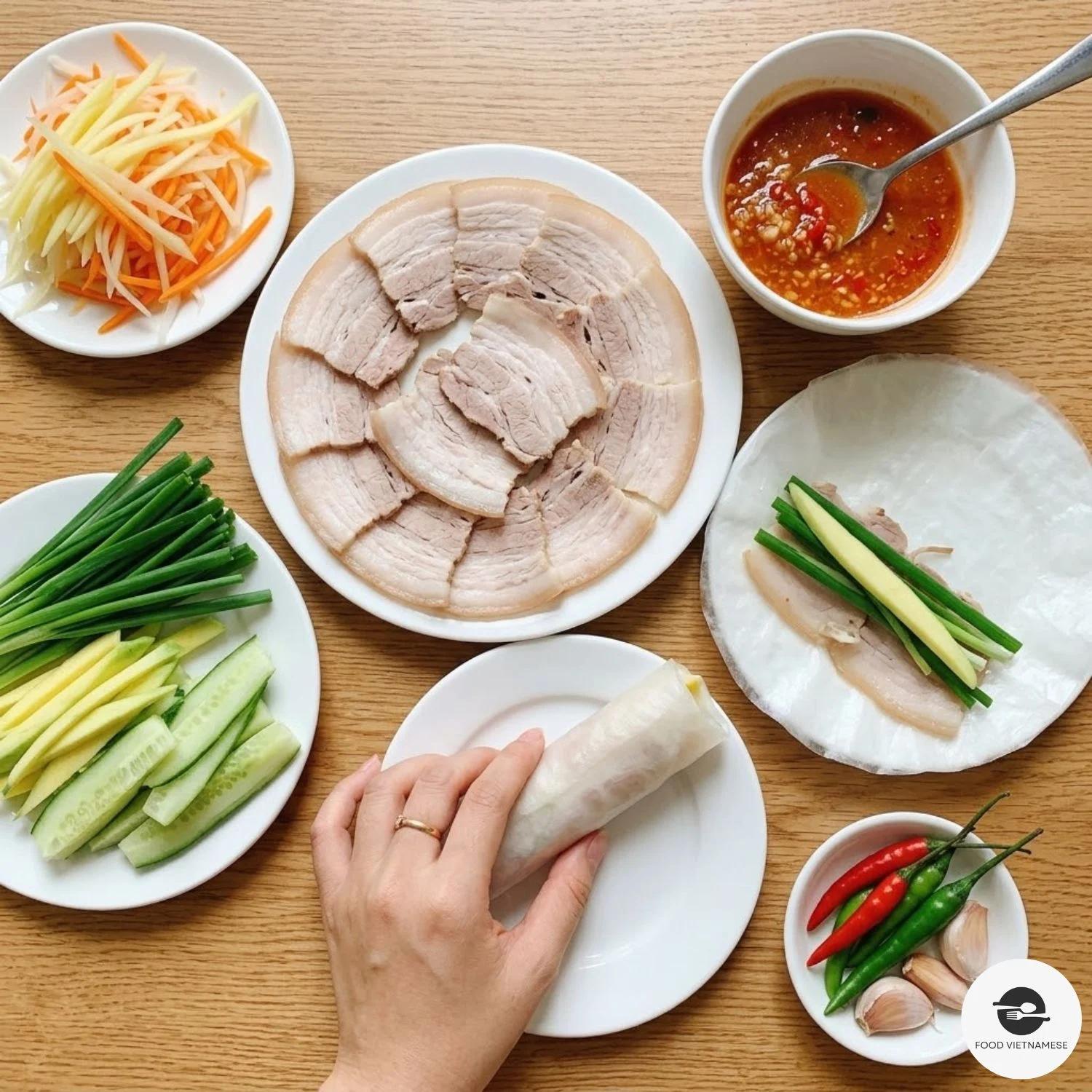
Bánh tráng cuốn thịt heo uses a combination of tough rice paper to keep the roll firm and soft rice noodle sheets to make the dish even more appealing. The chewy outer rice paper holds the roll together securely for eating by hand, while the soft inner layer of rice noodle sheet sits in direct contact with the pork and vegetables, adding a melt-in-the-mouth softness. Before adding any meat or vegetables, a layer of rice flour noodles is peeled off and placed on top of the rice paper — the two layers should stick together before rolling. The combination produces a texture that’s structurally firm on the outside and softly yielding within — something a single wrapper alone cannot achieve.
Mam Nem – The Irreplaceable Dipping Sauce
Mam nem is arguably the dish’s second soul, right after the pork itself. “Mắm nêm” is made from fermented fish, filtered to obtain the liquid, and mixed with minced chili, garlic, and finely chopped pineapple, creating a spicy, rich dipping sauce with a slightly sour and sweet taste. A Quang Nam delicacy, mam nem is a fermented fish sauce used as a dipping sauce when nuoc mam just won’t do — made of fermented anchovies, sugar, Thai chili pepper, garlic, and crushed pineapple, mam nem is an irreplaceable companion to banh trang cuon thit heo.
Multiple sources agree: swap mam nem for standard sweet-sour fish sauce, and the dish loses its defining character entirely. The richness of two-skin pork demands a dipping sauce with enough intensity to counterbalance it — and mam nem’s deep saltiness and fermented anchovy aroma is the only thing that reliably delivers that.
The owner at Quan Mau told me while mixing a fresh batch: “Good mam nem has to be filtered properly — no leftover bits of fish. Garlic and chili should be hand-minced, not machine-blended, and the pineapple has to be just enough to lift the aroma without covering up the mam nem itself.” That family recipe for the sauce, she made clear, is exactly what brings regulars back — not the pork alone.
— Kelly Thuy, field notes, Khue Trung, Da Nang
Full Ingredient List
| Ingredient | Role |
|---|---|
| Two-skin pork | Main ingredient — two thin skin layers with balanced lean meat and fat, ideally from a 55–60kg pig |
| Chewy rice paper | Outer wrapper layer, keeps the roll firm for eating by hand |
| Soft rice noodle sheet | Inner layer in direct contact with pork and vegetables, adds softness |
| Lettuce, Thai basil | Base greens, fresh and aromatic |
| Fish mint (diep ca) | Distinctive mild sourness, balancing the pork’s richness |
| Sliced green banana and star fruit | Mild astringency and clean tartness, refreshing the palate between rolls |
| Cucumber | Crisp, cooling freshness |
| Mam nem with garlic, chili and pineapple | The dish’s defining dipping sauce — no substitute accepted |
How It’s Made
Step 1 – Select and prepare the pork
Choose the two-skin cut from a pig of appropriate weight (typically 55–60kg) to ensure the correct ratio of skin, lean meat and fat. Rinse thoroughly before boiling.
Step 2 – Boil until just tender
Boil over medium heat until just cooked through — not so long that the meat dries out, not so short that the skin stays tough. Correctly boiled pork shows clear, translucent fat and evenly softened skin.
Step 3 – Slice thin and even
Let the pork cool slightly, then slice thin and even, making sure each piece carries the full skin-lean-fat structure.
Step 4 – Mix the mam nem
Filter the fermented anchovy mam nem thoroughly, then mix in minced garlic, chili and finely chopped pineapple, balancing salty, sour, sweet and spicy.
Step 5 – Roll and eat
Lay out rice paper, place a rice noodle sheet on top so the two stick together. Arrange pork and vegetables, roll tightly. Dip generously in mam nem before eating.
Flavour and Texture Profile
| Layer | Description | Source |
|---|---|---|
| Chewy outside, soft inside | The most distinctive texture — firm rice paper holding shape, soft noodle sheet cradling the filling | Two wrappers used together |
| Balanced richness | Clear, light fat that doesn’t feel heavy, thanks to the correctly proportioned cut | Properly boiled two-skin pork |
| Natural sweetness of the pork | No complex marinade — the sweetness comes entirely from meat quality | Pork boiled just until tender, never overcooked |
| Crisp, fresh vegetables | Multiple layers of crunch, mild sourness and light astringency | Lettuce, fish mint, green banana, star fruit, cucumber |
| Deep, spicy mam nem | The counterbalancing element to all the richness, delivering the dish’s Central Vietnamese signature intensity | Mam nem with garlic, chili and pineapple |
How to Eat It the Da Nang Way
- Roll it yourself at the table — most shops serve the components separately so you can build each roll to taste
- Don’t be shy with the mam nem — dipping the whole roll generously is the correct way to eat it, not a light touch at the tip
- Use the full range of vegetables — each one plays a specific role; skipping any of them throws off the intended balance
- Eat the pork while still warm — it’s at its best slightly warm, losing some of its softness once fully cooled
- Notice both wrappers in a single bite — this is what sets the experience apart from pork rolls elsewhere in Vietnam
Where to Eat It in Da Nang
In Da Nang
- Quan Mau — 35 and 80 Do Thuc Tinh Street, Khue Trung ward, Cam Le district. This is the address most closely and consistently tied to the “thit luoc Khue Trung” name, and the shop most locals and visitors seek out first.
- Other shops around Cam Le and central Da Nang also serve reliably good versions, but Quan Mau remains the reference point for the Khue Trung style specifically.
Price Reference
Current reference prices, subject to shop and portion size.
| Order type | Approximate price | Notes |
|---|---|---|
| Standard serving (1 person) | ~40,000–70,000 VND | Full set: pork, vegetables, rice paper, mam nem |
| Large/extra pork serving | ~80,000–120,000 VND | Suitable for sharing between 2–3 people |
Nutritional Value
Estimated based on primary ingredients. No independently verified nutritional analysis of thit luoc Khue Trung has been published.
| Nutrient | Estimated value / standard serving |
|---|---|
| Energy | ~400–500 kcal |
| Protein | ~25–32g (from pork) |
| Total fat | ~18–25g (from the skin and fat of the two-skin cut) |
| Carbohydrates | ~30–40g (from rice paper and rice noodle sheets) |
| From fresh vegetables | Additional fibre and vitamins, aiding digestion |
Frequently Asked Questions
What is thit luoc Khue Trung?
A Da Nang specialty: two-skin pork boiled until tender, rolled in both rice paper and rice noodle sheets with fresh vegetables, dipped in mam nem. Tied to the Khue Trung neighbourhood in Cam Le district — most famously Quan Mau.
What is “two-skin” pork?
A cut with two thin layers of skin on both ends, with balanced lean meat and fat in between — delivering three textures in a single slice: soft skin, sweet lean meat, clear rich fat.
Why use both rice paper and rice noodle sheets?
Chewy rice paper holds the roll firm; the soft rice noodle sheet inside cradles the pork and vegetables. Together they create a texture no single wrapper can produce alone.
Why is mam nem required?
Mam nem’s deep saltiness, sourness and heat is intense enough to balance the richness of two-skin pork — something regular fish sauce is too mild to achieve.
Where’s the best place to eat it?
Quan Mau, 35/80 Do Thuc Tinh Street, Khue Trung, Cam Le district — the address most closely associated with the dish’s name and history.
Conclusion
Thit luoc Khue Trung doesn’t need rare ingredients or an elaborate recipe — just pork, rice paper, fresh vegetables and mam nem. What gives it a distinct identity comes down to precision: exactly the right two-skin cut, exactly the right combination of two wrappers, exactly the right family recipe for the mam nem. Those three seemingly small details are what keep Da Nang locals naming Khue Trung specifically whenever this dish comes up.
If you find yourself in Da Nang, head to Do Thuc Tinh Street, order a full serving, roll it your own way, and dip generously into the mam nem. That’s the fullest way to experience one of the city’s most understated but memorable specialties — the same devotion to rice-paper wrapping technique found in Thanh Hoa’s grilled shrimp cake, or the same precision with local Central Vietnamese ingredients found in Ha Tinh’s peanut candy.

Related articles
Banh Khot: Vung Tau’s Crispy-Edged Answer to Banh Xeo
Banh Khot is a Vietnamese mini savory pancake from the coastal city of Vung Tau — a rice…
Cao Lau: The Hoi An Noodle Dish That Cannot Be Made Anywhere Else
Cao Lau is a noodle dish found exclusively in Hoi An, Central Vietnam — thick, chewy rice noodles…
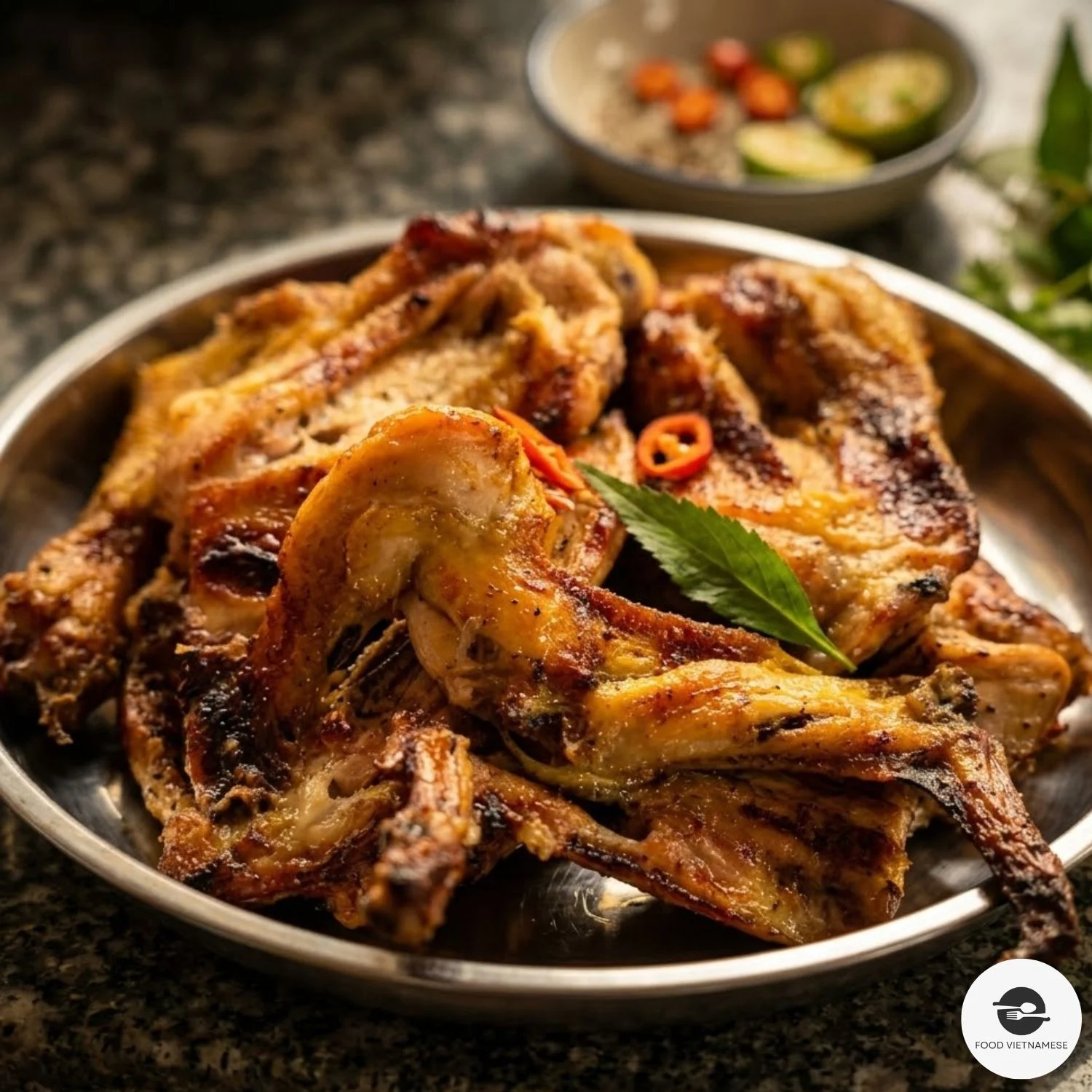
Ga Nuong Song Cau – Where Ordering Chicken Means Pointing at One in the Yard
Ga nuong Song Cau is a specialty of Song Cau town, Phu Yen province: free-range chicken (ideally young,…