Table of contents
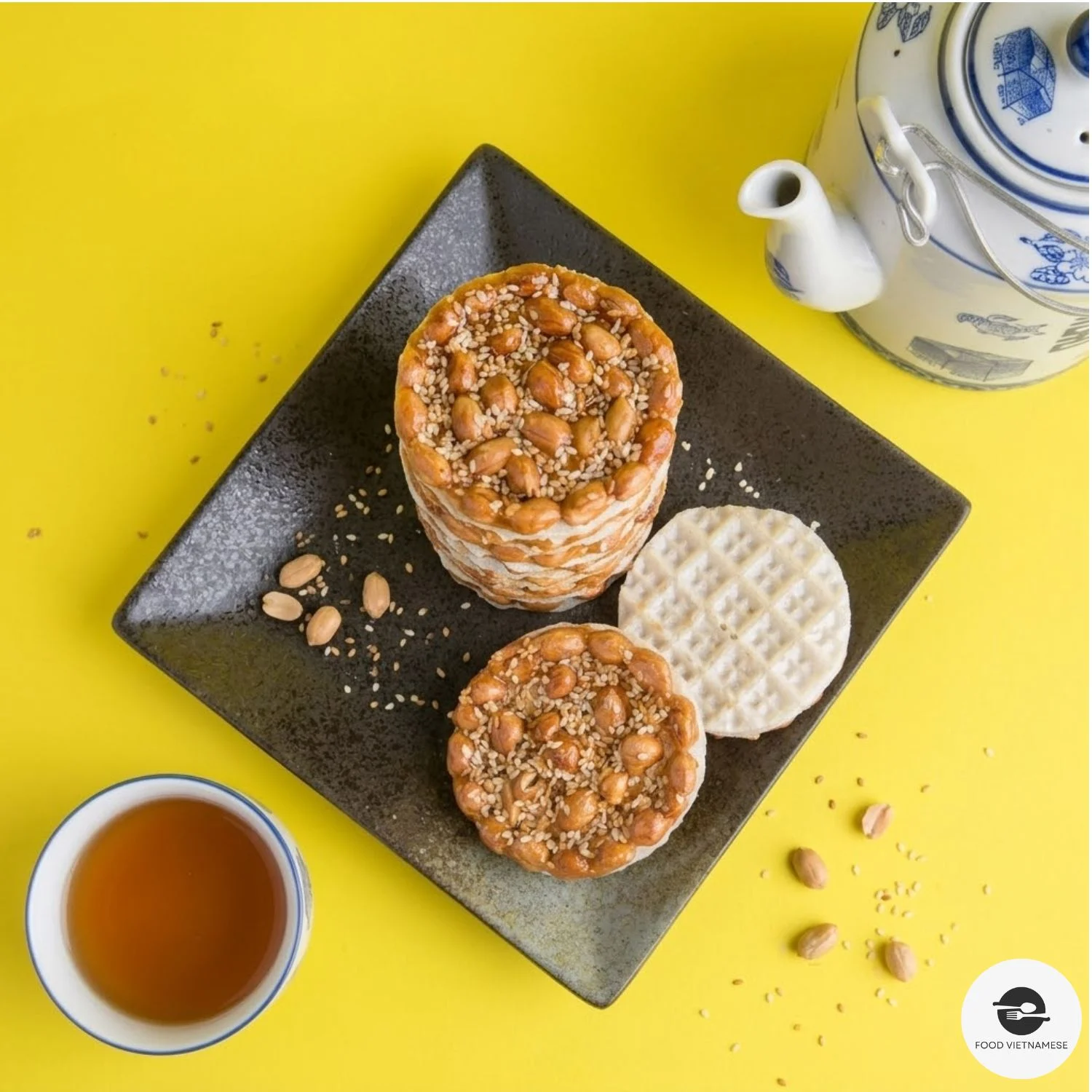
I – Kelly Thuy – arrived in Huong Son on a late-autumn afternoon, stopping at a small workshop near An Hoa Thinh, close to where the founder of cu do once lived. A pot of molasses bubbled over a wood fire. The candy maker dipped chopsticks into it, dropped a bead into a bowl of cold water, watched it closely, then nodded — ready. He poured in the roasted peanuts, stirring fast, before scooping the mixture onto a waiting sheet of rice paper. My first bite cracked through the toasted rice paper, gave way to the chewy pull of molasses, then finished with a slow warmth from the ginger. One sip of hot green tea alongside it, and I understood exactly why Ha Tinh people call this the correct way to welcome a guest.
— Kelly Thuy
What Is Keo Cu Do?
Keo cu do is woven into the culinary identity of Ha Tinh — a North Central Coast province bordering Nghe An. Unlike the plain peanut candy found in many other parts of Vietnam, cu do has one unmistakable identifying feature: two sheets of toasted sesame rice paper sandwiching the peanut-molasses filling inside.
| Quick Facts | Details |
|---|---|
| Vietnamese name | Kẹo cu đơ |
| English name | Keo Cu Do Ha Tinh – Vietnamese Peanut and Molasses Candy in Rice Paper |
| Region | North Central Coast (Bắc Trung Bộ) – Ha Tinh province, originating in Huong Son district |
| Main ingredients | Roasted peanuts, sugarcane molasses, malt syrup, fresh ginger, sesame rice paper |
| Name origin | From “cu Hai,” a nickname, later shifted through the French “Deux” |
| Approximate origin date | Around 1953, Huong Son district, Ha Tinh |
| Traditional pairing | Hot green tea — the standard hospitality gesture in Ha Tinh |
| Where to buy authentic | Ha Tinh City, Huong Son district (An Hoa Thinh area) |
The Story Behind the Name “Cu Do”
Few Vietnamese dishes have a naming story documented as carefully and consistently as keo cu do. Cultural and historical records from Ha Tinh tie the candy directly to Dinh Vy, in Tien Thinh hamlet, former Son Thinh commune (now part of An Hoa Thinh commune), Huong Son district.
Around 1953, alongside trading betel leaves and areca nuts, Dinh Vy — also known as Cu Hai — regularly mixed peanuts with lime peel and poured the mixture into a pot of boiling sugarcane molasses to make candy. Once cooked, he poured it into ceramic bowls to cool, then scooped it out with a spoon to sell. He was the first person in Huong Son district to cook this type of candy, and people began gathering to buy and eat it on the spot. The finished candy was carried to local markets — Goi, Pho, Rap — and sold to residents.
As for how the name emerged: because he sold it for two đồng per bowl or per hand-sized piece, people took to calling him by the familiar nickname “Hai” for easy reference. At the time, a French garrison was stationed near the old Son Thinh commune boundary, and soldiers occasionally stopped by Mr Hai’s stall to buy candy and drink tea. The Vietnamese word “Hai” (meaning “two”) was rendered into French as “Deux” — one account holds that French soldiers mispronounced the name this way when referring to “Mr Hai’s” candy; another suggests local intellectuals during the Tây học (Western-learning) movement of the era deliberately adopted the French term to sound more modern and educated. Over time, “cu Hai” shifted in pronunciation to “cu Do” (cu đơ) — the name that has stuck ever since.
Multiple versions of the Mr Hai origin story circulate across different sources, and some details have likely drifted over decades of retelling. The core facts — Dinh Vy, Huong Son district, and the year 1953 — are consistently confirmed across independent Vietnamese cultural and historical records, including named family descendants interviewed by Vietnamese press.
The Molasses Technique – Where Quality Is Decided
Making a batch of properly crisp, chewy cu do is more demanding than it looks. Experienced makers insist on yellow cane molasses and small but sweet groundnuts still in their shells, without mould or hollow kernels.
The molasses should be carefully boiled, then sliced ginger and roasted peanuts are stirred in. The cook has to ensure the peanuts don’t sink to the bottom of the pot, or they’ll burn. Once the fragrance rises from the pot, the candy maker uses chopsticks to drop a little molasses into cold water — if the drop maintains its round shape, that means the cu do is finished cooking. This cold-water doneness test mirrors the classic sugar-stage tests used in Western confectionery.
Working quickly while the mixture is still hot, the maker scoops it onto one sheet of sesame rice paper, spreads it evenly, then presses a second sheet on top while the molasses is still warm enough to bond the layers together.
In Huong Son, candy makers are locally called “thợ kết mật” — molasses-binding craftsmen. One told me: “The molasses has to be golden, not overcooked into dark syrup. The peanuts need to be small, still wrapped in their inner skin, naturally sweet — never hollow. Cooking the molasses is the hardest part. Overheat it slightly and the candy turns rock hard. Undercook it and it never sets.” That single explanation clarifies why this candy, simple as its ingredient list looks, still demands years of practised skill.
— Kelly Thuy, field notes, Huong Son, Ha Tinh
Full Ingredient List
| Ingredient | Role |
|---|---|
| Peanuts | Main ingredient — small, firm, naturally sweet kernels, ideally still in their inner skin |
| Sugarcane molasses | The primary binding agent — golden-coloured molasses preferred, avoiding overcooked dark syrup |
| Malt syrup | Adds chewiness and a clean sweetness that balances the deeper flavour of molasses |
| Fresh ginger | Thinly sliced — provides the distinctive warm heat that defines cu do |
| Sesame rice paper | Two thin toasted sheets sandwiching the filling — the source of crunch and sesame fragrance |
How It’s Made
Step 1 – Roast the peanuts
Roast peanuts evenly until golden, keeping the inner skin intact to preserve natural sweetness and crunch.
Step 2 – Cook the molasses
Boil the molasses carefully over medium heat, timing it precisely to avoid burning or undercooking. Test doneness with the cold-water drop method — a round, intact drop signals readiness.
Step 3 – Combine the filling
Stir sliced ginger and roasted peanuts into the boiling molasses quickly, keeping the peanuts moving so they don’t sink and scorch.
Step 4 – Press between rice paper
Working fast while the mixture is hot, spread it onto one sheet of sesame rice paper, then press a second sheet on top while the molasses is still warm enough to bond the layers.
Step 5 – Cool and cut
Let the candy cool naturally until firm, then cut into rectangular or square pieces of eating size.
Flavour and Texture Profile
| Layer | Description | Source |
|---|---|---|
| Crisp outer shell | The toasted sesame rice paper shatters cleanly with the first bite | Properly toasted sesame rice paper |
| Chewy middle | The molasses holds a satisfying pull, clinging to the peanuts without being sticky-hard | Correctly cooked sugarcane molasses |
| Buttery peanut richness | A natural nuttiness, with individual peanuts still crunching through the chew | Roasted peanuts with inner skin intact |
| Deep molasses sweetness | A rounder, more complex sweetness than refined sugar candy | Pure golden sugarcane molasses |
| Warm ginger finish | A slow-building heat that lingers after swallowing — especially pleasant in cold weather | Thinly sliced fresh ginger |
| Sesame fragrance | A toasted, nutty aroma from the sesame seeds on the rice paper | Sesame-topped rice paper |
How to Eat It the Ha Tinh Way
- Pair with hot green tea — the inseparable traditional combination; the tea’s mild bitterness balances the candy’s deep sweetness
- Break into smaller pieces — cu do is firm and chewy, so breaking off manageable bites is easier than trying to bite through a whole piece
- Chew slowly — the molasses takes real effort to work through, which is exactly why no one can eat too much of it in one sitting
- Give it as a gift — this is the most common souvenir brought home from, or offered to guests arriving in, Ha Tinh
- Store somewhere dry — humidity softens the rice paper and ruins the crunch
Where to Buy Authentic Cu Do
In Ha Tinh
- Huong Son district (An Hoa Thinh area) — the birthplace of cu do, home to several family-run workshops still operating near where Dinh Vy’s original home once stood.
- Ha Tinh City — numerous specialty shops sell pre-packaged cu do, well-suited for gifts.
- Along National Highway 1A through Ha Tinh — roadside rest stops selling regional specialties commonly stock cu do for travellers passing through.
Buying online or to take further afield
Cu do is now widely available through online marketplaces and specialty shops across Vietnam. Choose vendors with clear provenance and sealed packaging to preserve the rice paper’s crispness during transport.
Price Reference
Current reference prices, subject to producer and point of sale.
| Context | Approximate price | Notes |
|---|---|---|
| Direct from Huong Son workshops | ~40,000–60,000 VND/kg | Base price, usually sold by piece or by weight |
| Gift-packaged in Ha Tinh | ~60,000–100,000 VND/box | Attractive packaging, suited for gifting |
| Online or specialty shops nationwide | ~80,000–150,000 VND/box | Higher due to shipping and packaging costs |
Nutritional Value
Estimated based on primary ingredients. No independently verified nutritional analysis of keo cu do has been published.
| Nutrient | Estimated value / 1 piece (~30–40g) |
|---|---|
| Energy | ~130–170 kcal |
| Carbohydrates | ~18–24g (mainly from molasses and malt syrup) |
| Total fat | ~6–9g (from peanuts) |
| Protein | ~3–5g (from peanuts) |
| From peanuts | Unsaturated fat, vitamin E, magnesium |
| Sugar | Relatively high due to molasses content — note for those monitoring blood sugar |
Frequently Asked Questions
What is keo cu do?
A Ha Tinh specialty of roasted peanuts bound in sugarcane molasses, malt syrup and fresh ginger, pressed between two sheets of sesame rice paper. Served with hot green tea. Tied to Dinh Vy of Huong Son district, around 1953.
Why is it called “cu do”?
From the nickname “cu Hai,” given because the candy sold for two đồng. “Hai” was rendered into French as “Deux” during the colonial era, gradually shifting in pronunciation to “cu Do.”
How is it different from regular peanut candy?
Ordinary peanut candy has no rice paper layer. Cu do uses molasses instead of white sugar, adds fresh ginger, and sandwiches the filling between two sheets of toasted sesame rice paper for its signature crunch.
How do makers test if the molasses is ready?
Drop a bit into cold water — if it holds a round shape without dissolving, it’s reached the correct consistency for mixing with peanuts.
Where to buy authentic cu do?
Huong Son district (An Hoa Thinh area) is the birthplace. Ha Tinh City and rest stops along National Highway 1A also sell it widely.
Conclusion
Few Vietnamese specialties have a naming story documented this precisely — tied to a real person, a specific year, a specific village. What began as a poor farmer’s improvisation, unable to afford a proper wedding feast, became a symbol of hospitality for an entire province, carrying with it a small piece of Vietnamese-French linguistic history that’s arguably as interesting as the candy itself.
If you find yourself in Ha Tinh, don’t just buy cu do to take home. Sit down at a roadside tea stall, order a pot of hot green tea, break off a still-crisp piece, and let someone tell you the story of Mr Hai. That’s the fullest way to understand why this candy matters so much to the people of Nghe-Tinh — the same devotion to humble local ingredients found in Nghe An’s eel soup or Thanh Hoa’s grilled shrimp cake, two other specialties from this same stretch of the North Central Coast.

Related articles
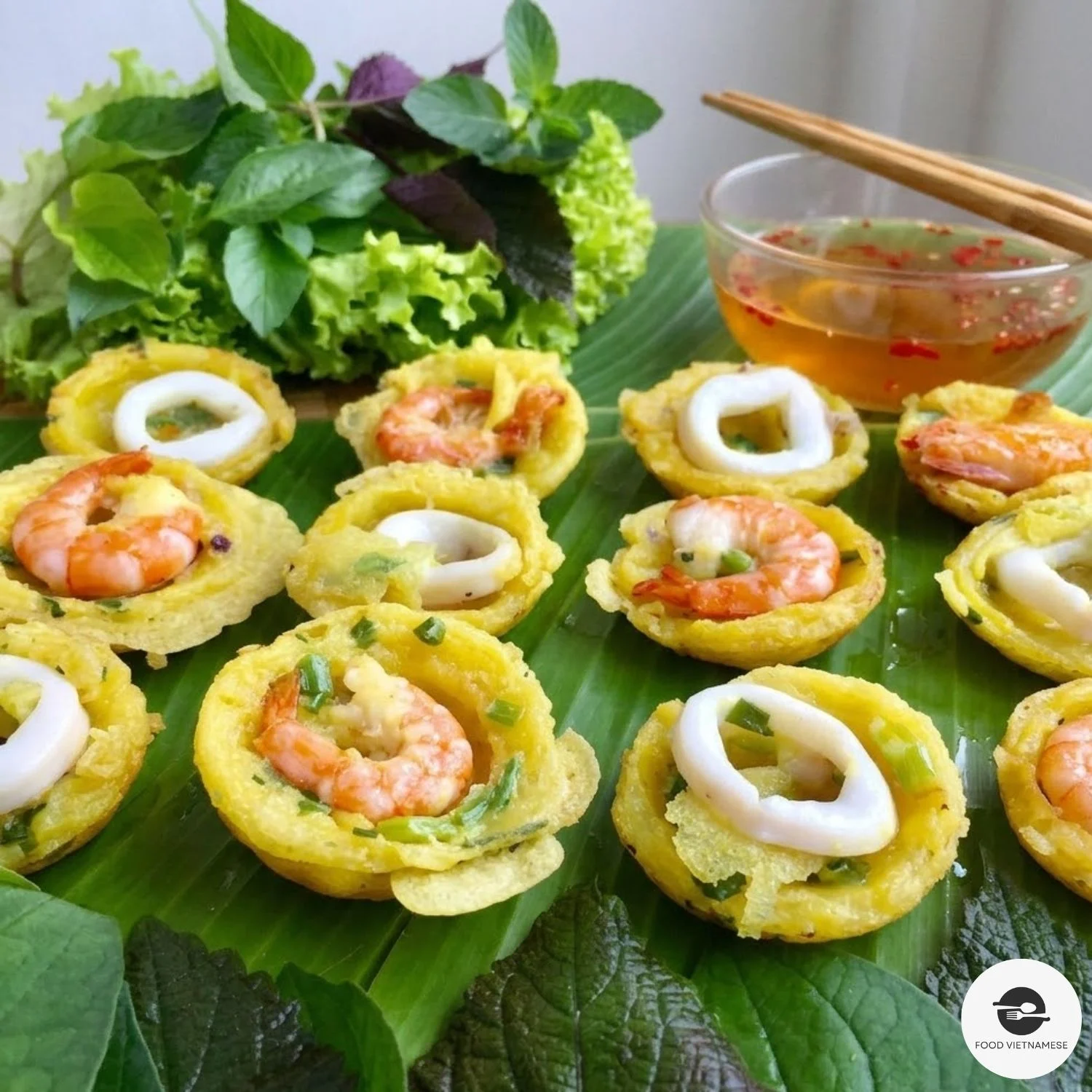
Banh Khot: Vung Tau’s Crispy-Edged Answer to Banh Xeo
Banh Khot is a Vietnamese mini savory pancake from the coastal city of Vung Tau — a rice…
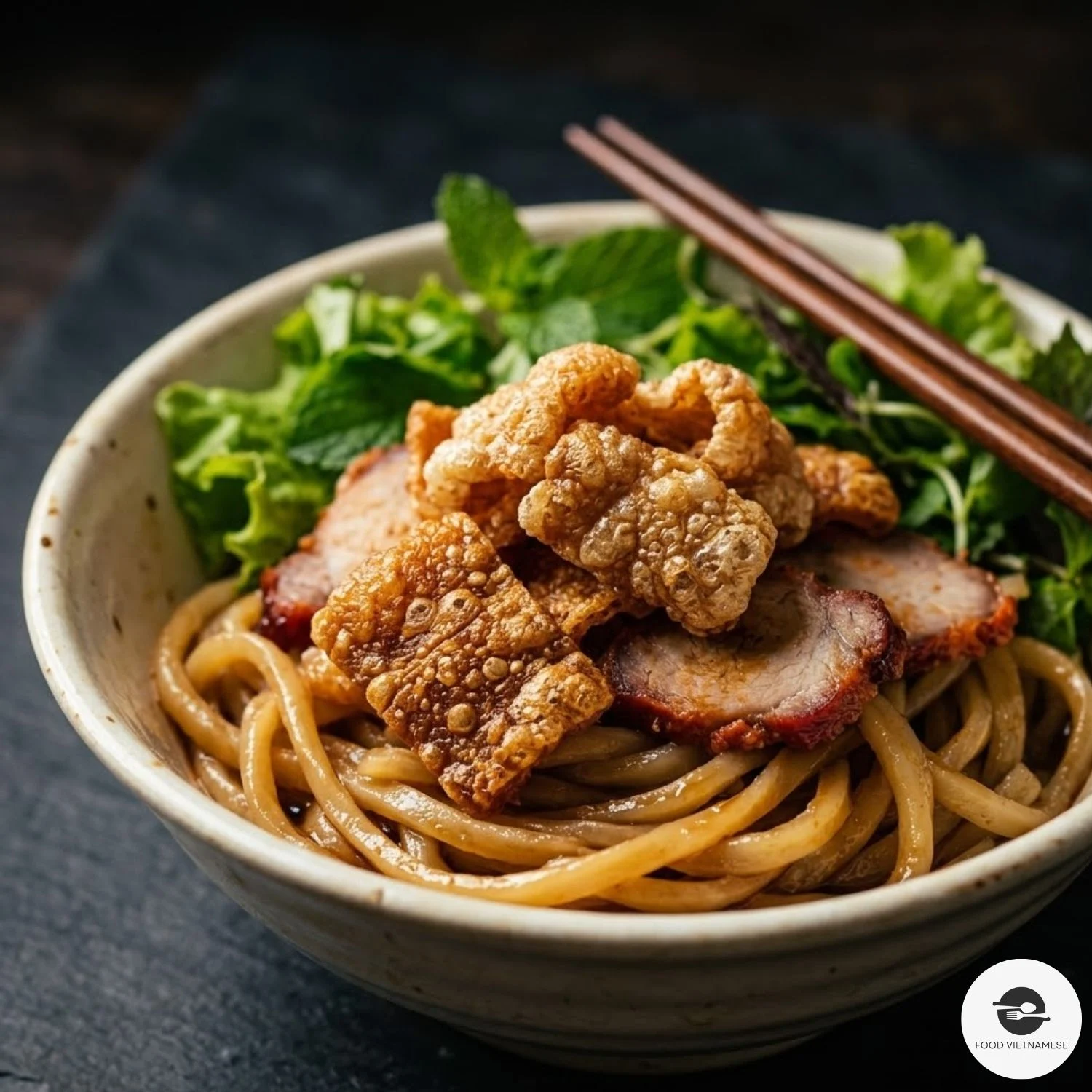
Cao Lau: The Hoi An Noodle Dish That Cannot Be Made Anywhere Else
Cao Lau is a noodle dish found exclusively in Hoi An, Central Vietnam — thick, chewy rice noodles…
Ga Nuong Song Cau – Where Ordering Chicken Means Pointing at One in the Yard
Ga nuong Song Cau is a specialty of Song Cau town, Phu Yen province: free-range chicken (ideally young,…