Table of contents
- What Is Cha Tom Thanh Hoa?
- Sam Son Sea Shrimp – The Ingredient That Defines the Region
- The Pre-Cooking Technique – What Sets This Dish Apart
- Full Ingredient List
- How It’s Made
- Flavour and Texture Profile
- How to Eat It
- Where to Find Authentic Cha Tom
- Price Reference
- Nutritional Value
- Frequently Asked Questions
- Conclusion
I – Kelly Thuy – arrived at Vuon Hoa Market late one afternoon, just as the smell of charcoal and grilling shrimp began drifting across the corner of the street. The shop owner was turning patties over the grill without missing a beat, careful not to let any single one char too far. I asked why the shrimp wasn’t pounded raw, the way most other cha dishes are made. She laughed: “The shrimp has to be steamed first, then pounded. The pork has to be fried golden first, then mixed in. Do it any other way and it stops being cha tom Thanh Hoa.” My first bite confirmed it — the outer rice-noodle wrap crisp at the edges and soft in the middle, the filling inside sweet with shrimp and rich with pork, in a combination I hadn’t tasted in any other regional cha.
— Kelly Thuy
What Is Cha Tom Thanh Hoa?
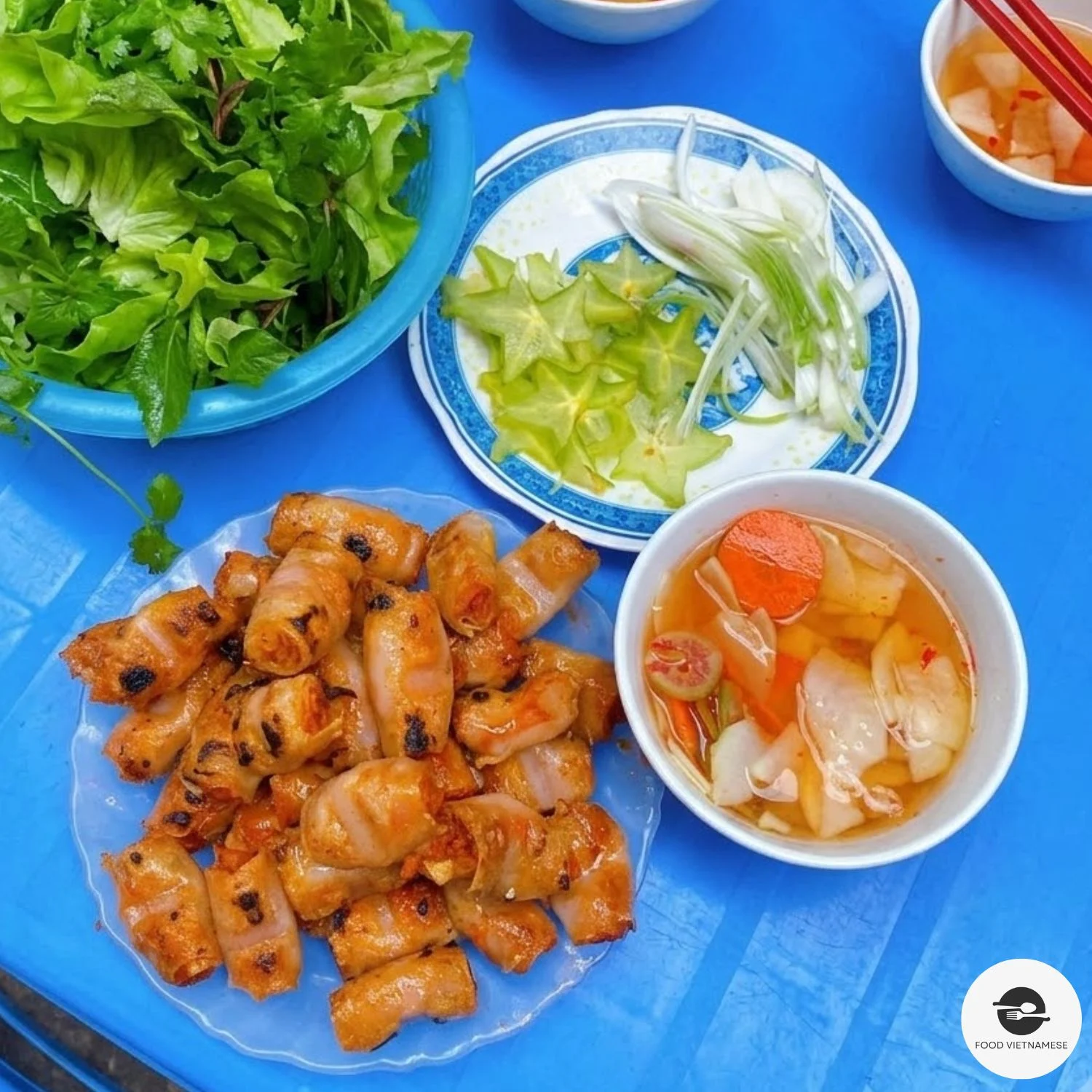
Cha tom is regarded as one of Thanh Hoa City’s most representative dishes, tied to the daily life of local residents across generations. The recipe isn’t complicated in terms of ingredient count — just three main components: rice noodle sheets, pork belly and fresh shrimp — but each step in preparation requires careful attention to create the dish’s distinctive flavour.
| Quick Facts | Details |
|---|---|
| Vietnamese name | Chả tôm Thanh Hóa |
| English name | Cha Tom Thanh Hoa – Vietnamese Grilled Shrimp and Pork Cake Wrapped in Rice Noodles |
| Region | North Central Coast (Bắc Trung Bộ) – Thanh Hoa province |
| Main ingredients | Sam Son sea shrimp (or freshwater shrimp), pork belly, rice noodle sheets |
| Signature technique | Ingredients pre-cooked before pounding – distinct from raw-pounded cha dishes |
| Cooking method | Wrapped in rice noodle sheets, clamped with bamboo strips, grilled over charcoal 7–10 minutes |
| Served with | Sweet-sour fish sauce, pickled fig, pickled papaya/carrot salad, fresh herbs |
| Where to eat | Thanh Hoa City – Nga Ba Bia, Vuon Hoa Market, Truong Thi Street, Dao Duy Tu Street |
| Dish type | Afternoon street snack |
Sam Son Sea Shrimp – The Ingredient That Defines the Region
The quality of cha tom rests on the shrimp. Experienced makers consistently favour sea shrimp caught off Sam Son — the coastal town directly adjacent to Thanh Hoa City, prized for exceptionally fresh seafood thanks to the short distance between fishing grounds and local markets. To ensure quality, the shrimp must be genuinely fresh sea shrimp, caught from the waters off Sam Son, evenly sized and not too large.
Some producers substitute freshwater shrimp (tôm đất) when sea shrimp supply runs low, but Sam Son sea shrimp remains the reference standard, delivering a natural sweetness and firm texture that farmed shrimp rarely matches.
After purchase, the shrimp is steamed or briefly boiled to make peeling easier, then the head, tail and dark vein along the back are removed before pounding. The pounding itself requires skill — done moderately, not too finely, to preserve the shrimp’s natural sweetness.
The Pre-Cooking Technique – What Sets This Dish Apart
Most traditional Vietnamese cha dishes — cha la lot, cha muc, cha ca — start from raw meat or seafood, pounded and then cooked exactly once. Cha tom Thanh Hoa reverses this sequence entirely: both the shrimp and the pork are pre-cooked before pounding, and the mixture is grilled a second time over charcoal only afterward.
Rather than preparing the ingredients fresh and raw like some traditional cha dishes, cha tom uses pork and shrimp that have already been partially cooked, which creates a distinctive flavour that’s hard to confuse with anything else. The pork belly is fried until golden along with shallots and seasoning, then minced or pounded once cooled. The pre-cooked shrimp is pounded separately, then the two are combined with minced dried shallots, ground pepper and a touch of gac fruit powder or pulp for the dish’s characteristic reddish-orange colour.
According to VietnamNet’s English-language coverage, the prepared pork is mixed with pounded shrimp, cubes of pork nape fat and chopped fresh rice noodles, along with chopped dried garlic, onion, fish sauce, pepper and a little gac fruit, before being stir-fried over high heat. The stuffing is then rolled onto small sheets of fresh rice noodles before being grilled over hot charcoal. This double-cooking process — pre-cook, mix, then grill — is the technical signature that separates cha tom Thanh Hoa from raw-pounded cha found elsewhere in Vietnam.
Ms Thu Phuong, who runs a cha tom shop in Thanh Hoa, told me: “Ingredient preparation has to be meticulous. The shrimp has to be genuine fresh sea shrimp from Sam Son, evenly sized, not too big.” She mentioned that regular customers from Hanoi still order delivery nearly 180km away just to taste the real charcoal-grilled version they can’t find anywhere else.
— Kelly Thuy, field notes, Thanh Hoa
Full Ingredient List
| Ingredient | Role |
|---|---|
| Sam Son sea shrimp | Main ingredient – steamed/boiled, peeled, deveined, pounded moderately to preserve sweetness |
| Pork belly (or five-layer pork) | Pan-fried golden with shallots before pounding – adds richness and binding |
| Thick, chewy rice noodle sheets | Outer wrap – needs to be thick enough not to tear during wrapping and grilling |
| Dried shallots, ground pepper | Base aromatics for the filling |
| Gac fruit (powder or pulp) | Provides the characteristic reddish-orange colour |
| Pork nape fat (some recipes) | Added for extra richness and moisture during grilling |
| Bamboo clamps | Hold the wrapped patties in shape while turning over charcoal |
How It’s Made
Step 1 – Prepare the shrimp
Rinse fresh sea shrimp, steam or briefly boil to ease peeling. Remove head, tail and the dark vein along the back. Pound in a mortar — moderately, not too finely — to preserve the shrimp’s natural sweetness.
Step 2 – Prepare the pork
Rinse pork belly, pan-fry until golden with dried shallots and seasoning. Once cooked, mince or pound the pork.
Step 3 – Mix the filling
Combine the pounded shrimp and pork evenly with minced shallots, ground pepper and a touch of gac powder or pulp for colour. Season to taste, balancing the sweetness of shrimp against the richness of pork.
Step 4 – Wrap and grill
Cut rice noodle sheets into pieces approximately 4cm x 7cm. Spread the filling onto each sheet and roll, then clamp with bamboo strips. Grill over charcoal for 7–10 minutes, turning regularly, until golden-brown with lightly charred edges.
Flavour and Texture Profile
| Layer | Description | Source |
|---|---|---|
| Crisp charred edges | The rice noodle sheet in direct contact with the charcoal turns lightly crisp, edges browning slightly | Direct charcoal grilling |
| Soft, chewy middle | The thick rice noodle wrap retains a chewy softness where it doesn’t touch flame directly | Carefully chosen thick rice noodle sheets |
| Deep shrimp sweetness | A rich natural sweetness without the raw-seafood edge, thanks to pre-cooking | Sam Son sea shrimp, moderately pounded |
| Savoury pork richness | A balanced fattiness that doesn’t feel greasy, from the right lean-to-fat ratio | Pork belly pan-fried golden before pounding |
| Charcoal fragrance | Distinctive smoky aroma clinging to the exterior, most pronounced right off the grill | Direct grilling over charcoal |
How to Eat It
- Eat it hot, right off the grill — cha tom is best fresh; letting it cool loses the crisp edge and charcoal aroma
- Dip in sweet-sour fish sauce — each shop has its own balance of sour, sweet and mild heat
- Add pickled fig (sung muối) — the tart crunch of pickled Ficus racemosa fruit cuts through the richness
- Include pickled papaya or carrot salad — shredded, pickled sweet-and-sour, adding crisp freshness
- Wrap with fresh herbs — lettuce, Thai basil, Vietnamese balm and coriander lighten and balance the dish
Where to Find Authentic Cha Tom
In Thanh Hoa City
- Nga Ba Bia and Vuon Hoa Market — the highest concentration of long-established cha tom shops, busiest in the late afternoon.
- Truong Thi Street and Dao Duy Tu Street — other well-known streets with reliable local shops.
- Ba That’s cha tom shop, 9 Le Thi Hoa Street, Lam Son ward, near Vuon Hoa Market — widely cited as one of the most famous addresses.
Buying to take away or order remotely
Cha tom is now widely available at specialty food shops, supermarkets and online marketplaces across Vietnam. Choose vendors with clear provenance and proper food safety certification, particularly when ordering to transport a longer distance or as a gift.
Price Reference
Current reference prices, subject to seasonal shrimp availability and location.
| Context | Approximate price | Notes |
|---|---|---|
| At shops in Thanh Hoa City | ~5,000–10,000 VND per piece | Eaten on-site, dipping sauce and herbs usually included free |
| Full serving (multiple pieces + herbs + sauce) | ~40,000–70,000 VND per serving | Varies by shop and quantity included |
| Delivery/takeaway packaging | ~150,000–250,000 VND per box of 20–30 pieces | Higher due to packaging and transport costs |
Nutritional Value
Estimated based on primary ingredients. No independently verified nutritional analysis of cha tom Thanh Hoa has been published.
| Nutrient | Estimated value / 3–4 pieces (~100g) |
|---|---|
| Energy | ~180–230 kcal |
| Protein | ~12–16g (from shrimp and pork belly) |
| Total fat | ~8–12g (from pork belly and nape fat if used) |
| Carbohydrates | ~15–20g (from rice noodle wrap) |
| From sea shrimp | High-quality protein, calcium, zinc, low fat |
Frequently Asked Questions
What is cha tom Thanh Hoa?
A signature afternoon snack from Thanh Hoa: pre-cooked sea shrimp and pork belly pounded with shallots, pepper and gac fruit, wrapped in rice noodle sheets, clamped with bamboo and grilled over charcoal. Served hot with fish sauce, pickled fig and pickled papaya.
How is it different from other Vietnamese cha dishes?
The defining difference: ingredients are pre-cooked (shrimp steamed, pork pan-fried) before pounding, unlike most cha dishes that pound raw ingredients. The rice-noodle wrap and bamboo-clamped charcoal grilling technique is also distinctive.
Why Sam Son sea shrimp specifically?
Sam Son’s proximity to Thanh Hoa City means very short transport time from catch to market, preserving natural sweetness and firm texture. Evenly sized shrimp, not too large, pound most consistently.
What’s it served with?
Sweet-sour fish sauce, pickled fig (sung muối), pickled papaya/carrot/green mango salad, and fresh herbs (lettuce, Thai basil, Vietnamese balm, coriander).
Where to find it in Thanh Hoa?
Thanh Hoa City — Nga Ba Bia, Vuon Hoa Market, Truong Thi Street. Ba That’s shop at 9 Le Thi Hoa Street, Lam Son ward, is among the most recommended.
Conclusion
Cha tom Thanh Hoa doesn’t need rare ingredients or an elaborate recipe — just shrimp, pork and rice noodle sheets. What gives it a distinct identity comes down to one deceptively simple technical choice: pre-cooking the ingredients before pounding, rather than pounding them raw as most other Vietnamese cha dishes do. That single difference produces a flavour worth a 180km delivery order from Hanoi. The same charcoal-grilled devotion to fresh seafood shows up further north along the coast too — in Ha Long’s hand-pounded squid cake or the tamarind-crab depth of Hai Phong’s banh da cua.
If you find yourself in Thanh Hoa in the late afternoon, head to Vuon Hoa Market just as the charcoal smoke starts rising from the roadside stalls. Eat the first piece while it’s still hot, dipped deep in sweet-sour fish sauce — that’s how locals have eaten this dish for generations.

Related articles
Banh Khot: Vung Tau’s Crispy-Edged Answer to Banh Xeo
Banh Khot is a Vietnamese mini savory pancake from the coastal city of Vung Tau — a rice…
Cao Lau: The Hoi An Noodle Dish That Cannot Be Made Anywhere Else
Cao Lau is a noodle dish found exclusively in Hoi An, Central Vietnam — thick, chewy rice noodles…
Ga Nuong Song Cau – Where Ordering Chicken Means Pointing at One in the Yard
Ga nuong Song Cau is a specialty of Song Cau town, Phu Yen province: free-range chicken (ideally young,…