
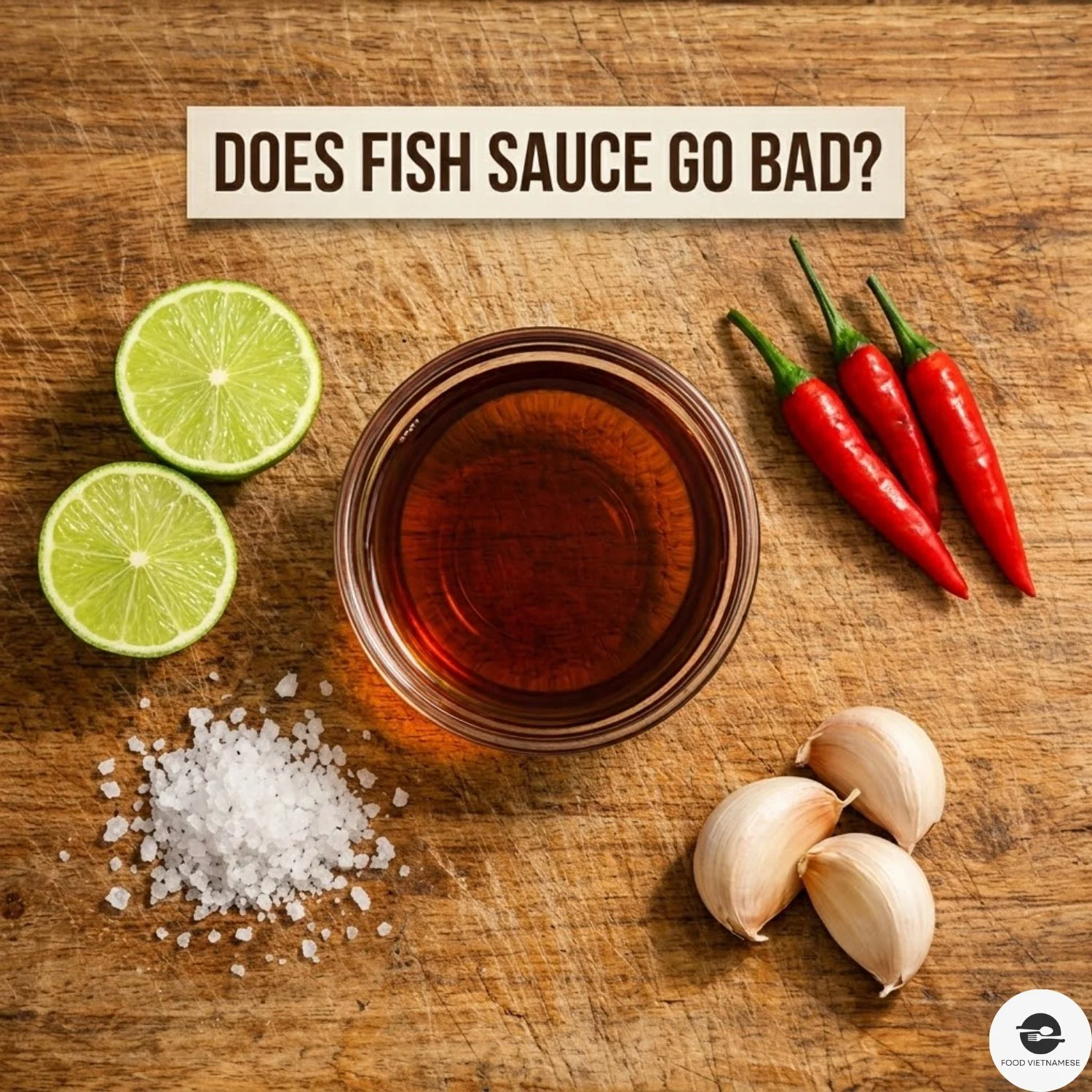
Table of contents
Unopened shelf life: 2–3+ years, well past the printed date
Opened, pantry: Best flavor within 6–12 months
Opened, refrigerated: Holds its flavor 1–2 years
Needs refrigeration? No for safety — yes for long-term quality
Exception that DOES spoil: Mixed dipping sauce (nước chấm) — fridge, 1–2 weeks
Fish sauce confuses people because it behaves unlike almost anything else in the pantry: it darkens, grows crystals, and crusts around the cap, yet stays perfectly safe through all of it. This article covers how long each form actually keeps, what the visual changes mean, the genuinely rare signs of a bad bottle, and the one fish-sauce preparation that really does spoil fast.
Why Fish Sauce Almost Never Spoils
Fish sauce (nước mắm) is anchovies fermented in salt for a year or longer — it arrives in the bottle already “spoiled” in the most controlled way possible. The finished liquid carries roughly 25–30 percent salt, several times the concentration where common spoilage bacteria and molds can survive. That’s the same preservation logic behind soy sauce and salted fish, and it’s why the cornerstone seasoning of Vietnamese cooking sat safely in tropical kitchens for centuries before anyone owned a refrigerator.
What fish sauce does over time is change, not spoil. Exposure to air and warmth pushes slow oxidation and browning reactions that darken the color and sharpen the flavor. The bottle stays safe — it just tastes progressively more intense and less nuanced.
Fish Sauce Shelf Life at a Glance
| Form | How long it keeps | Where to store |
|---|---|---|
| Unopened bottle | 2–3+ years past best-by date | Cool, dark pantry |
| Opened, everyday bottle | 6–12 months at peak flavor | Pantry, away from the stove’s heat |
| Opened, refrigerated | 1–2 years at peak flavor | Fridge door |
| Premium first-press (nước mắm nhĩ, 40N+) | 3–6 months once opened before nuance fades | Fridge, always |
| Mixed dipping sauce (nước chấm) | 1–2 weeks — this one truly spoils | Fridge, sealed jar |
The premium row deserves a note. Vietnamese fish sauce is graded by nitrogen content — độ đạm, printed on the label as 25N, 40N, and so on. High-đạm first-press bottles from Phú Quốc or Phan Thiết are prized for delicate, almost caramel top notes, and those subtle compounds are exactly what oxidation destroys first. A workhorse 20N bottle shrugs off months on the counter; a 40N bottle you paid a premium for belongs in the fridge from day one.
Does Fish Sauce Need Refrigeration?
No for safety, yes for quality if the bottle will last you a while. The salt content alone keeps an opened bottle safe at room temperature indefinitely — most households in Vietnam keep the everyday bottle within arm’s reach of the stove and finish it long before quality is a question.
Refrigerate when any of these apply: you cook with fish sauce less than weekly, so a bottle lasts beyond half a year; you bought a premium high-đạm bottle whose delicate flavor you want to keep; or your kitchen runs hot, which accelerates the darkening. Cold storage roughly doubles the window of peak flavor. The only downside is that salt crystals form faster in the fridge — and those are harmless, as covered next.
The refrigeration rule flips completely for mixed sauces. Once fish sauce is diluted into nước mắm chua ngọt with water, lime juice, and sugar, the salt concentration drops below the protective threshold, and the lime and garlic add fresh, perishable ingredients. Treat mixed nước chấm like fresh salad dressing: refrigerate in a sealed jar and use within one to two weeks. The same logic applies to marinades — a fish-sauce marinade that has touched raw meat, like the one for fish sauce chicken wings, gets discarded, never reused.
Normal Changes vs Signs It’s Actually Bad
These three changes look alarming and mean nothing:
Darkening. New fish sauce runs amber, like strong tea; an opened bottle slowly shifts toward dark coffee. That’s oxidation and browning, not spoilage. The flavor gets punchier — some cooks in Vietnam deliberately prefer a part-used bottle for braises for exactly this reason, saving the fresh bottle for dipping sauce.
Salt crystals. Clear or white crystals at the bottom of the bottle or around the neck are salt coming out of solution, common after refrigeration. Shake or ignore; either is fine.
Crust around the cap. The brown ring where sauce dried in the threads is dried fish sauce and salt. Wipe it with a damp cloth so the cap doesn’t glue itself shut.
Genuine spoilage is rare enough that many cooks never see it, but toss the bottle if you notice: a smell that has shifted from fermented-savory to genuinely rotten or sewage-like (trust the distinction — your nose knows fermentation from decay), visible fuzzy mold inside the bottle rather than dry crust at the cap, fizzing or pressure release when you open it, or cloudiness in a sauce that was previously clear. Any of these means water or contamination got in, usually from a wet spoon dipped into the bottle.
The everyday bottle in my mother’s kitchen lives on the shelf above the stove, and you can read the months in its color — pale tea in the first weeks after she opens it, dark as espresso by the time it’s nearly empty, with a salt ring at the cap she wipes off with the corner of a wet rag. Nobody in the house has ever checked a date on that bottle. The one bottle that gets the fridge is different: a 40N nước mắm nhĩ from Phú Quốc that an aunt brings when she visits, and my mother rations it strictly for dipping — she says cooking heat wastes what you paid for. Two bottles, two rules, and both of them outlast every printed date.
Kelly Thuy — family kitchen notes, Bình Thạnh, Saigon
How to Store Fish Sauce So It Lasts
Keep the bottle tightly capped and away from direct heat — beside the stove is convenient but the warmth speeds up the color and flavor drift, so a cabinet one step away is the better spot. Pour from the bottle instead of dipping spoons into it; a spoon that has touched food or water is how the rare contaminated bottle happens. Glass bottles hold flavor slightly better than plastic over long storage. And if you’ve decanted fish sauce into a smaller dispenser for daily cooking, wash and fully dry that dispenser between refills — the residue at the bottom oxidizes faster than the sauce in the sealed bottle.
Frequently Asked Questions
Not in the safety sense — the 25–30 percent salt content prevents bacterial growth, so an opened bottle stays safe at room temperature. Its flavor stays at its best for 6–12 months in the pantry, or 1–2 years refrigerated, gradually becoming darker and more intense after that.
Yes. The printed date is a best-by quality marker, not a safety cutoff. An unopened bottle is typically fine 2–3 years past it. Check that the smell is still fermented-savory rather than rotten, and that there’s no mold, fizzing, or cloudiness — those rare signs mean contamination, not age.
Darkening is normal oxidation from air and warmth, not spoilage. Fish sauce starts amber and slowly turns coffee-dark after opening, with a sharper, more concentrated flavor. Refrigeration slows the change but doesn’t stop it, and the sauce remains safe to use throughout.
One to two weeks in a sealed jar. Unlike straight fish sauce, mixed nước chấm is diluted with water and contains fresh lime and garlic, so its salt level is too low to prevent spoilage. Discard it if it smells off, fizzes, or the garlic turns blue-green.

Related articles
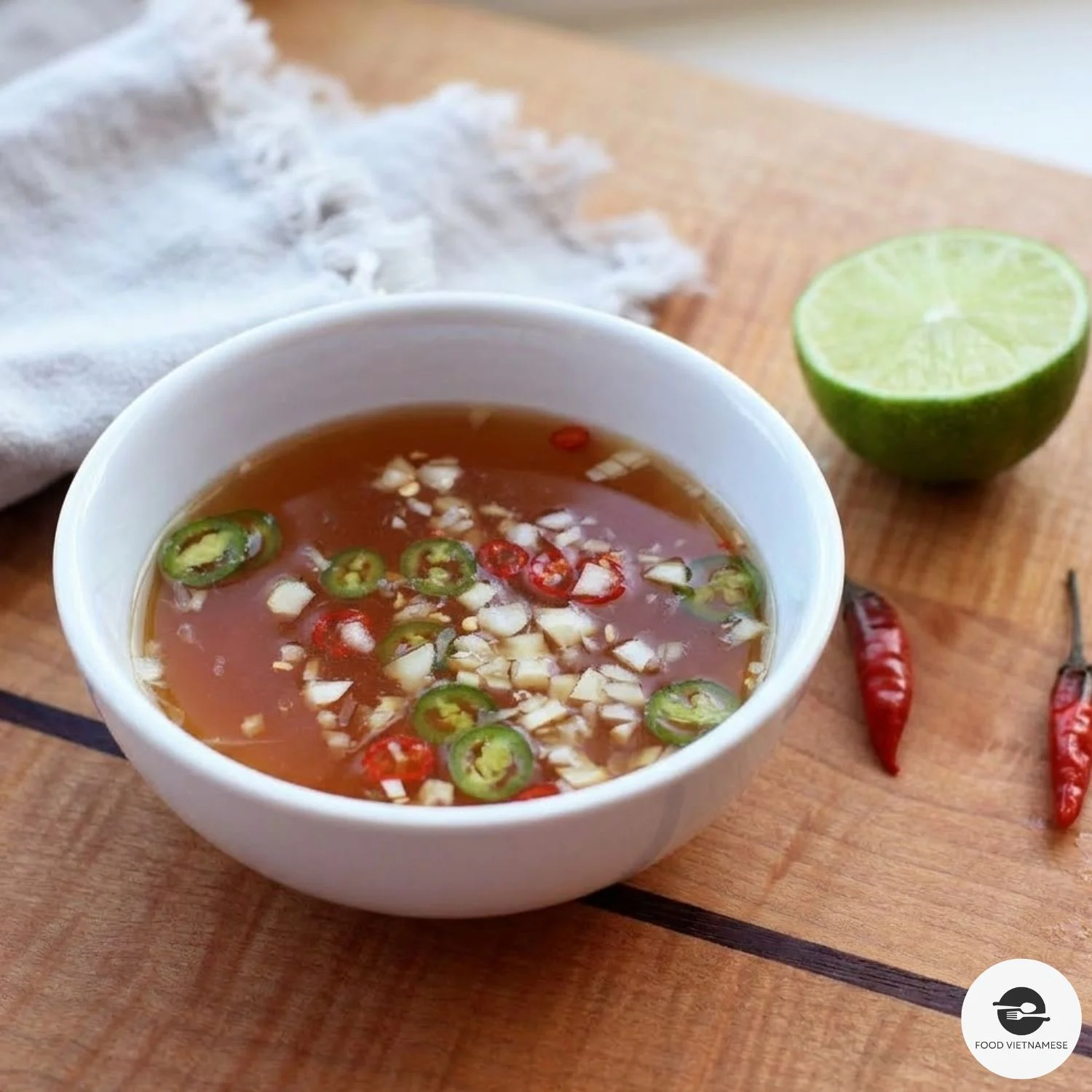
What Is Nuoc Cham? The Sauce Behind Nearly Every Vietnamese Dish
Nuoc cham (nước chấm) literally means “dipping sauce” in Vietnamese — a general term, not the name of…
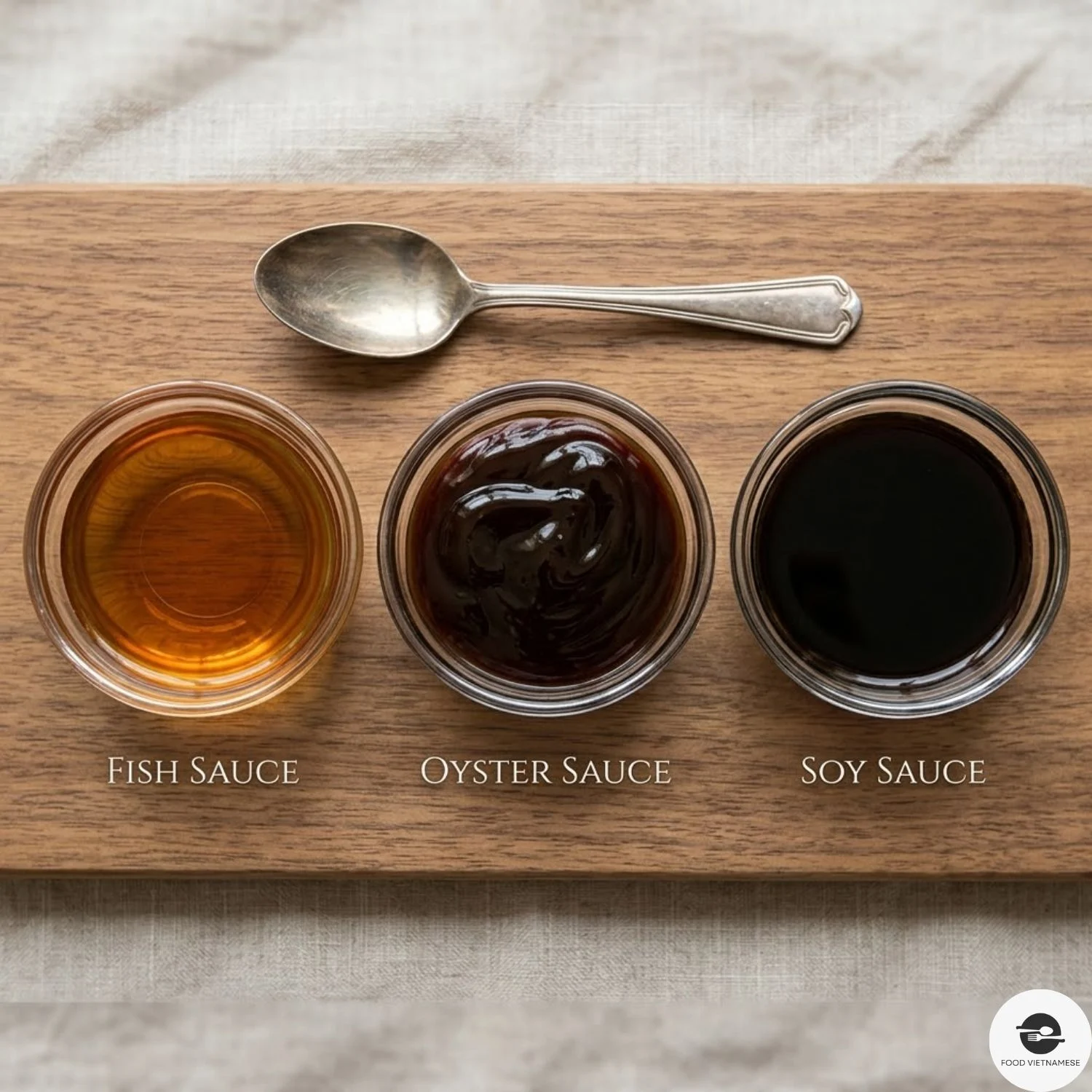
Fish Sauce vs Oyster Sauce vs Soy Sauce: How to Tell Them Apart (and When to Use Each)
All three are umami-rich, salty condiments, but they come from completely different sources and behave differently in a…
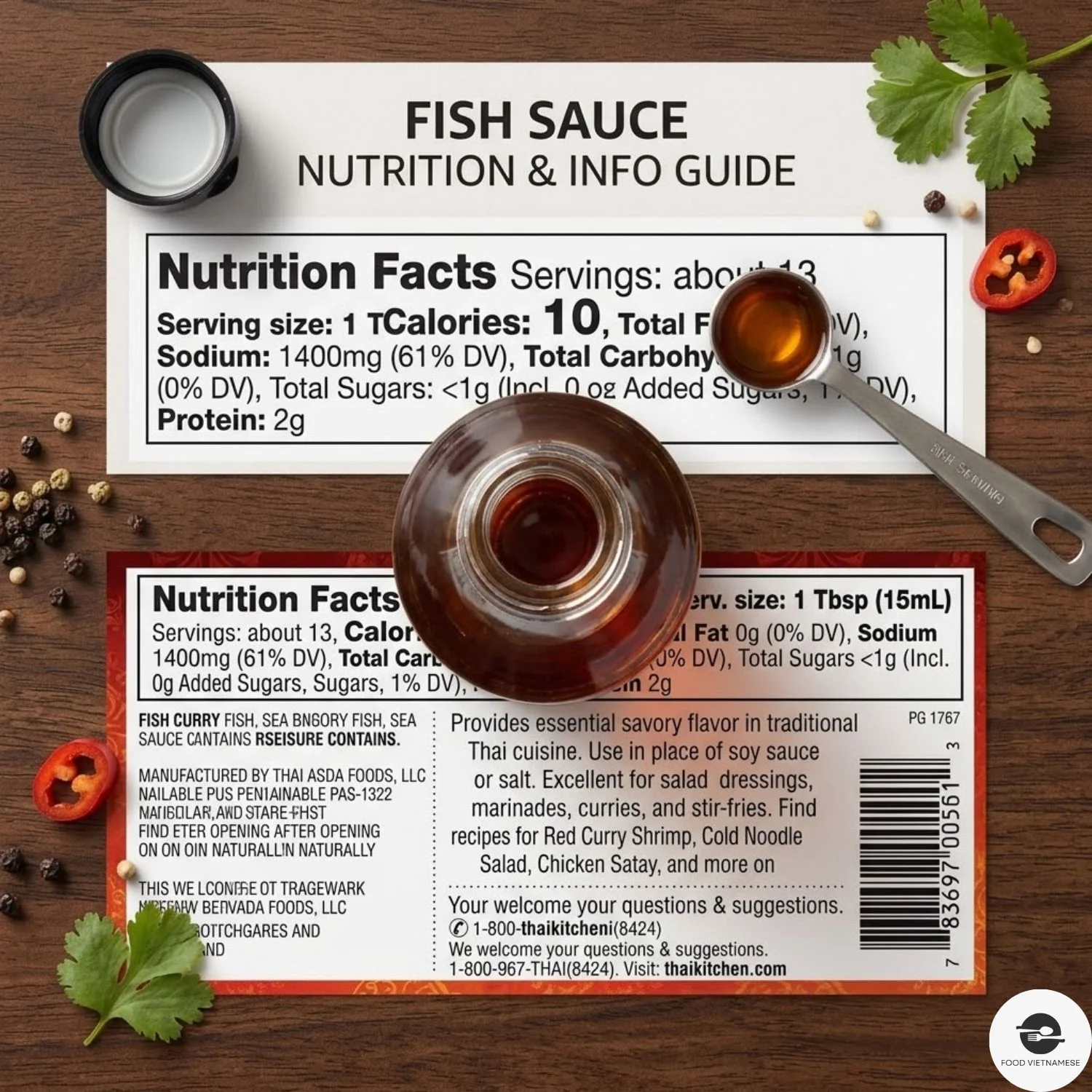
Is Fish Sauce Healthy? The Sodium, Calories & Nutrition Facts Explained
Fish sauce is nutritionally simple: about 5–10 calories, 1 gram of protein, and 400–550 milligrams of sodium per…