
Table of contents
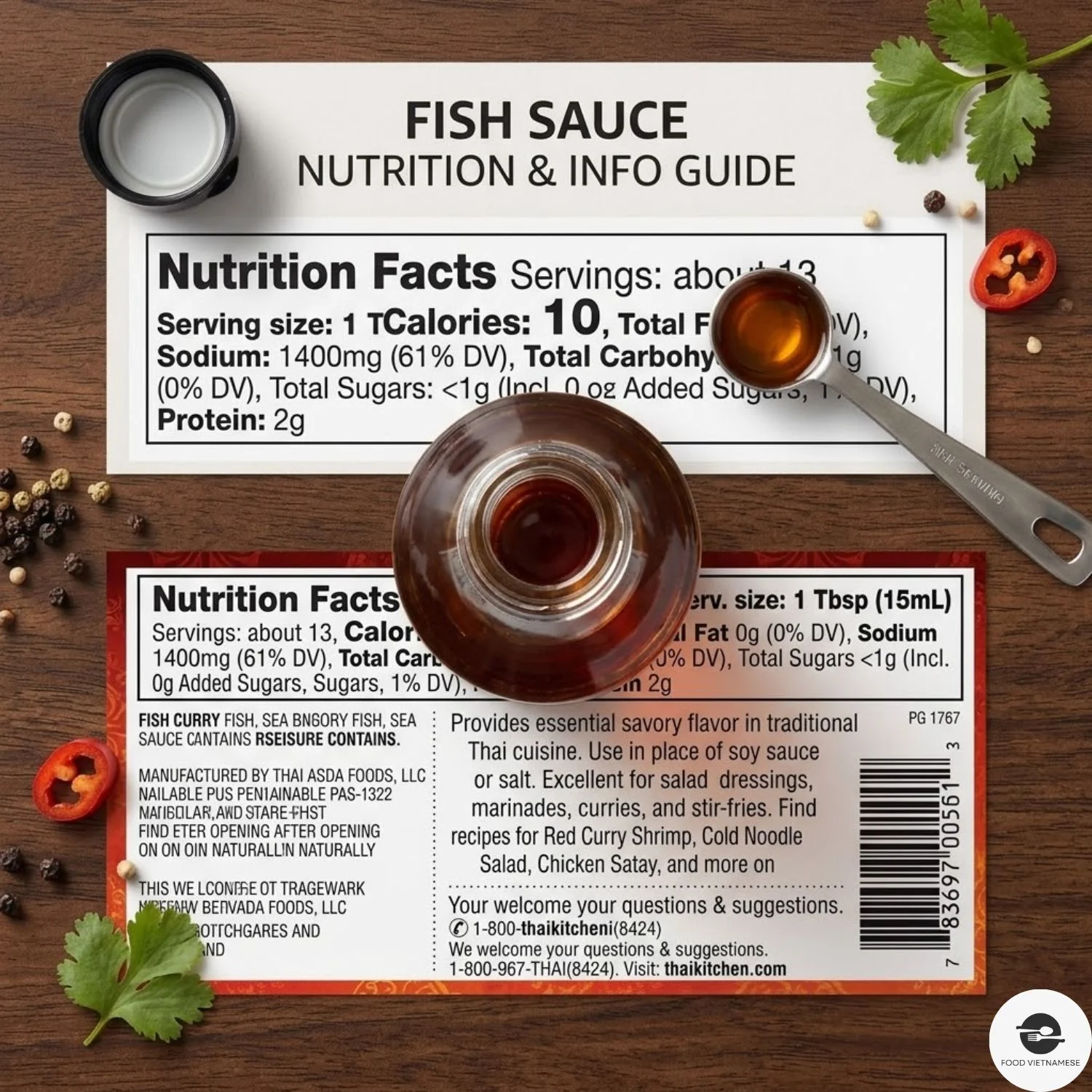
Calories: 5–10 kcal
Sodium: 400–550 mg (roughly 17–23% of a 2,300mg daily limit)
Protein: ~1g (trace amino acids, not a meaningful protein source)
Carbs, sugar, fat: Essentially 0g across all three
Good for: Gluten-free and low-carb diets (check label); NOT low-sodium diets
Fish sauce (nước mắm) shows up on nutrition-conscious ingredient lists constantly, and for good reason — it’s one of the few flavor bombs that adds almost zero calories. But it also carries one of the highest sodium concentrations of any common condiment, which is the number most people actually mean when they ask if it’s “healthy.” This breaks down exactly what’s in a bottle, how its sodium stacks up against soy sauce and table salt, and how to use it without blowing your daily sodium budget.
What’s Actually in a Bottle of Fish Sauce
Fish sauce is made by fermenting anchovies (or occasionally other small fish) in salt for months to over a year, then pressing off the liquid. That long fermentation is why the nutrition profile looks the way it does: almost all of the fish’s original fat and carbohydrate content stays behind in the solids, while the liquid carries concentrated salt, free amino acids, and the compounds responsible for its umami depth. It’s one of the defining ingredients of Vietnamese cuisine, used across nearly every category of Vietnamese cooking, from braises to the dipping sauce on every table.
| Nutrient | Per 1 tbsp (15ml) | % Daily Value* |
|---|---|---|
| Calories | 5–10 kcal | <1% |
| Sodium | 400–550 mg | 17–23% |
| Protein | ~1 g | 2% |
| Total fat | 0 g | 0% |
| Total carbohydrate | 0–1 g | <1% |
| Sugar | 0 g | 0% |
*Based on a 2,000-calorie diet and a 2,300mg daily sodium limit. Figures vary by brand and nitrogen grade (độ đạm); premium first-press bottles run slightly higher in both sodium and amino acid content.
Fish Sauce Sodium: How Much Is Really In There
Sodium is the number that defines fish sauce nutritionally, and it’s genuinely high — a single tablespoon can carry close to a quarter of the commonly cited daily sodium limit. That said, fish sauce is rarely used a tablespoon at a time straight from the bottle; it’s typically a teaspoon or two stirred into a dish that serves several people, or diluted heavily with water, lime, and sugar into nước chấm dipping sauce, where the sodium per actual serving drops significantly.
| Condiment | Sodium per tbsp | Notes |
|---|---|---|
| Fish sauce | 400–550 mg | Used in small amounts, often diluted |
| Soy sauce (regular) | 900–1,000 mg | Nearly double fish sauce per tbsp |
| Table salt | ~1,700 mg (per tsp, for comparison) | Most concentrated sodium source of the three |
| Tamari | 800–900 mg | Similar to soy sauce |
| Coconut aminos | ~270 mg | Lowest-sodium umami substitute |
Notice fish sauce actually carries less sodium per tablespoon than regular soy sauce — the reputation for being “too salty” comes more from how concentrated its flavor is, which tempts people to pour more, than from the sodium number itself. Ounce for ounce, soy sauce is the saltier bottle.
Is Fish Sauce Healthy? The Honest Answer
Fish sauce is neither a health food nor something to avoid — it’s a seasoning, and judged as one, it’s a smart choice in several ways:
What works in its favor: it’s essentially calorie-free, fat-free, and sugar-free, so it adds intense flavor without adding to a calorie or macro count. The amino acids from fermentation contribute a savory depth that can reduce how much added salt, sugar, or fat a dish needs overall — a spoonful of fish sauce in a marinade often does the flavor work of several other ingredients combined. It’s naturally gluten-free in its pure form (always check the label, since some brands add wheat), and fits keto, paleo, and low-carb eating patterns without issue.
What to watch: the sodium is the real consideration, particularly for anyone managing blood pressure or on a doctor-recommended low-sodium diet. Fish sauce is also high in histamine from its long fermentation, which can trigger symptoms in people with histamine intolerance, and it contains purines that matter for anyone managing gout. None of these make fish sauce unhealthy in normal cooking amounts — they’re the same considerations that apply to any fermented, concentrated seasoning, from aged cheese to soy sauce itself.
Who Should Watch Their Fish Sauce Intake
People managing high blood pressure or on a low-sodium diet: measure rather than pour freely, and lean on the dilution method — a tablespoon stretched into a full bowl of nước chấm for four people carries far less sodium per serving than the same tablespoon used undiluted in a marinade.
People with histamine intolerance: fermented sauces like fish sauce are a common trigger category; if you notice symptoms after fish-sauce-heavy meals, this is worth discussing with a doctor rather than self-diagnosing from a nutrition label.
Anyone managing gout: fish sauce’s purine content is moderate, not extreme, but it adds up alongside other high-purine foods in a dish like fish sauce chicken wings, which also brings purines from the meat itself.
How to Use Fish Sauce Without Overdoing Sodium
Dilute instead of pouring straight: for dipping sauces, stretch fish sauce with water, lime juice, and a little sugar rather than using it concentrated — this is the traditional method, not a health workaround, and it’s why nước chấm tastes balanced rather than simply salty.
Add it early, taste before adding more: fish sauce’s flavor blooms as a dish cooks, so a smaller amount added early often reads as “enough” by the time the dish finishes, whereas the same amount added raw at the end tastes sharper and pushes people to add extra.
Pair it with acid and fresh herbs: lime, chili, and fresh herbs make a dish taste more vibrant without more salt, which is why Vietnamese cooking leans on that combination constantly rather than relying on fish sauce alone for flavor.
Check that your bottle hasn’t gone stale, not sodium-heavy for no reason: an old, oxidized bottle can taste flatter and tempt you to pour more to compensate — see does fish sauce go bad for how to tell fresh from tired.
My mother measured fish sauce the way some people measure medicine — not out of any health worry, just habit from watching her own mother cook for a family of eight on one bottle that had to last the month. A teaspoon here, half a teaspoon there, tasted and adjusted rather than poured freely. When I started testing recipes for this site and began actually weighing tablespoons for nutrition figures, I realized her instinct had always kept our meals lower in sodium than most people assume Vietnamese food to be — the salt comes from precision, not excess.
Kelly Thuy — family kitchen notes, Bình Thạnh, Saigon
Frequently Asked Questions
In normal cooking amounts, yes — it’s calorie-free, fat-free, and sugar-free, and its umami depth can reduce the need for other added salt or sugar in a dish. The main consideration is sodium, which matters most for people on a doctor-recommended low-sodium diet.
A tablespoon of fish sauce contains roughly 400–550 milligrams of sodium, which is actually less than the same amount of regular soy sauce. Because fish sauce is used in small, often-diluted quantities, the sodium per actual serving is usually lower than the per-tablespoon number suggests.
Yes, but very few — about 5 to 10 calories per tablespoon, with essentially no fat, carbohydrates, or sugar. It’s one of the lowest-calorie ways to add significant flavor to a dish.
Yes, per tablespoon fish sauce typically has less sodium than regular soy sauce, which runs closer to 900–1,000 milligrams. Fish sauce’s reputation for saltiness comes from its concentrated flavor tempting people to use more, not from a higher sodium content.

Related articles
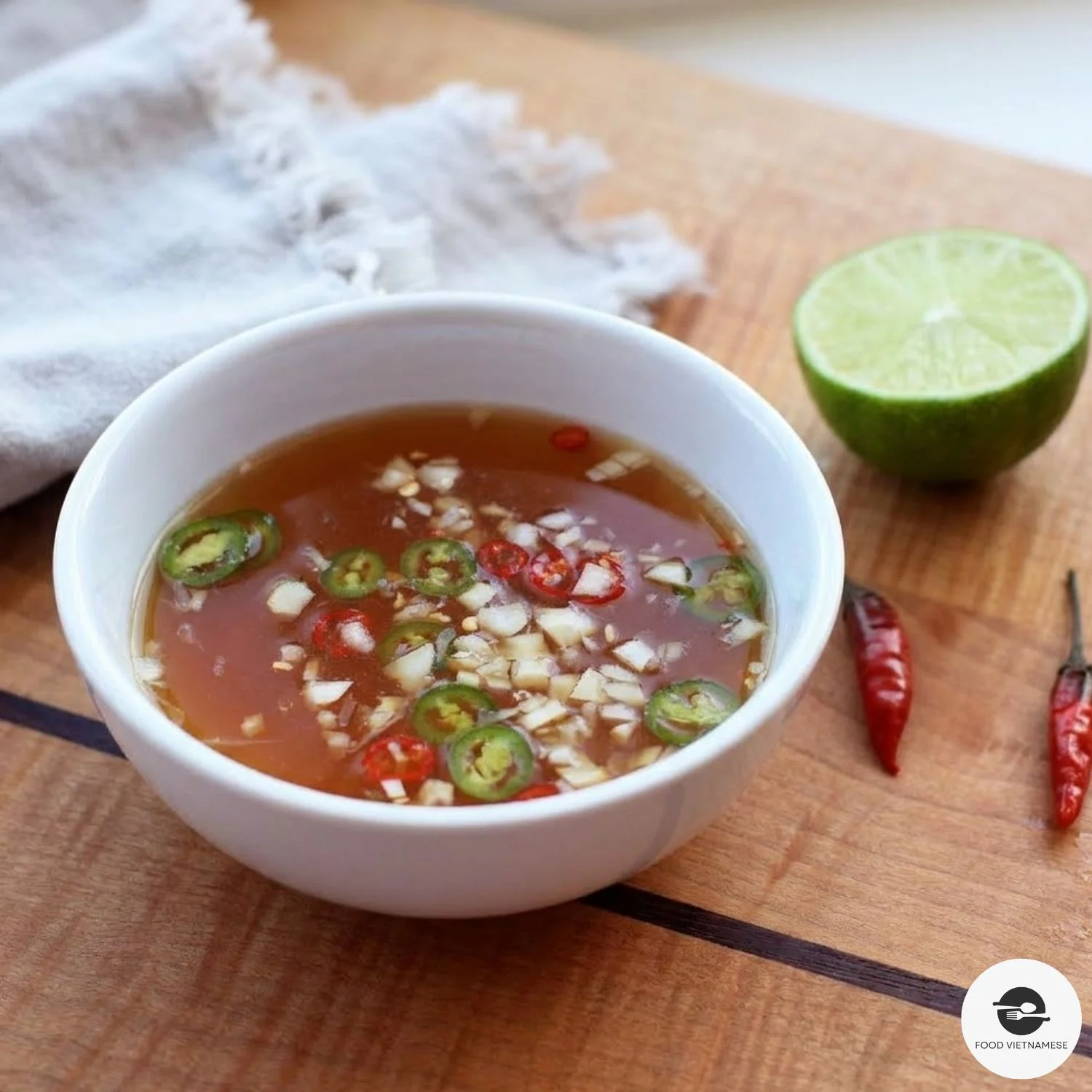
What Is Nuoc Cham? The Sauce Behind Nearly Every Vietnamese Dish
Nuoc cham (nước chấm) literally means “dipping sauce” in Vietnamese — a general term, not the name of…
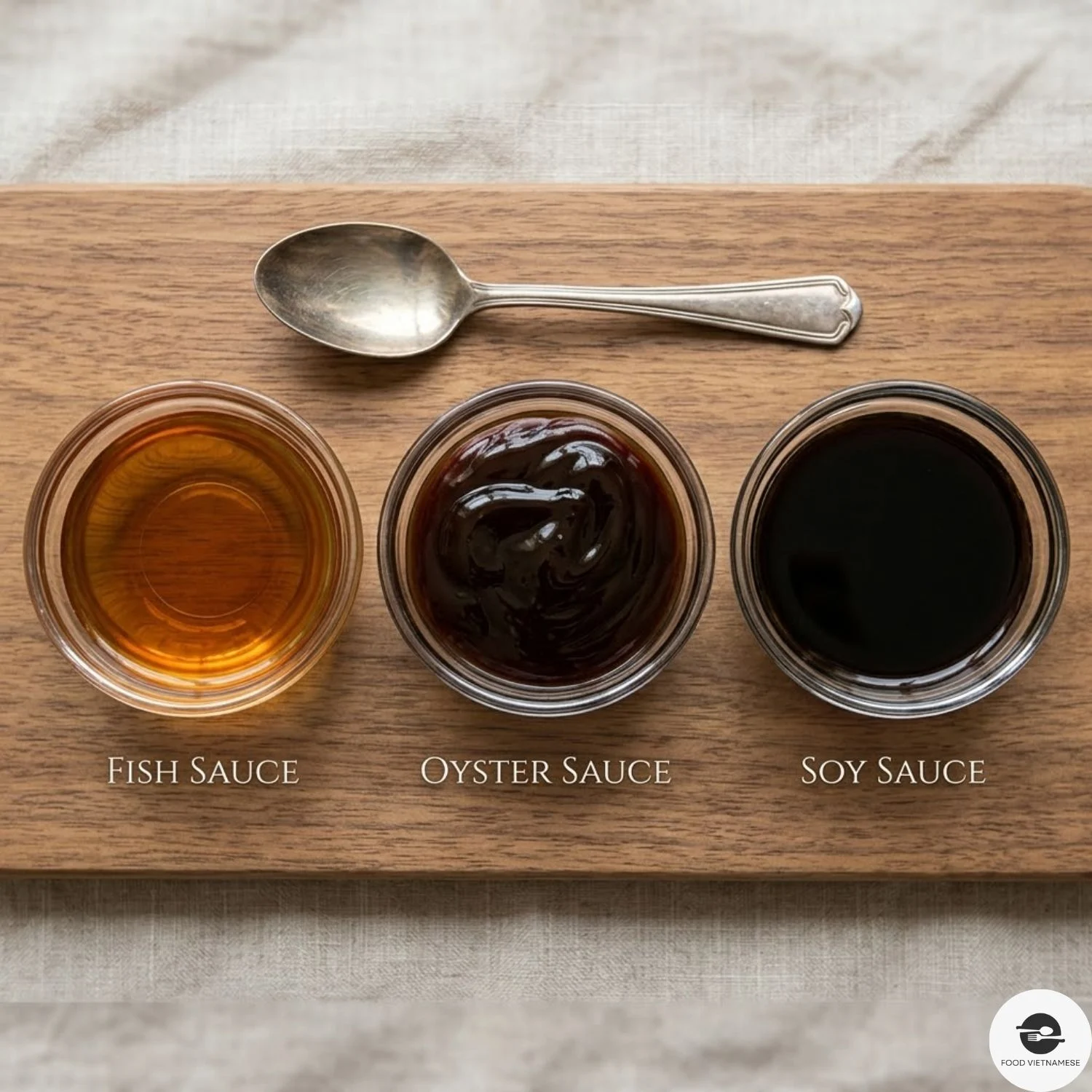
Fish Sauce vs Oyster Sauce vs Soy Sauce: How to Tell Them Apart (and When to Use Each)
All three are umami-rich, salty condiments, but they come from completely different sources and behave differently in a…
Does Fish Sauce Go Bad? Shelf Life, Storage & When to Toss It
Fish sauce almost never goes bad in the food-safety sense — its salt content, around 25–30 percent, is…