Table of contents
- Quick Facts
- Find Pho Near You
- Hanoi-Style vs. Saigon-Style: What You’ll Actually Find Nearby
- Pho Bo vs. Pho Ga: Which One’s Near You
- What to Look for When You Get There
- Where People Actually Find It
- Does Pho Travel Well for Delivery or Takeout?
- What It Costs
- Calories and Nutrition
- If You’re Ordering at a Vietnamese-Run Restaurant
- Frequently Asked Questions
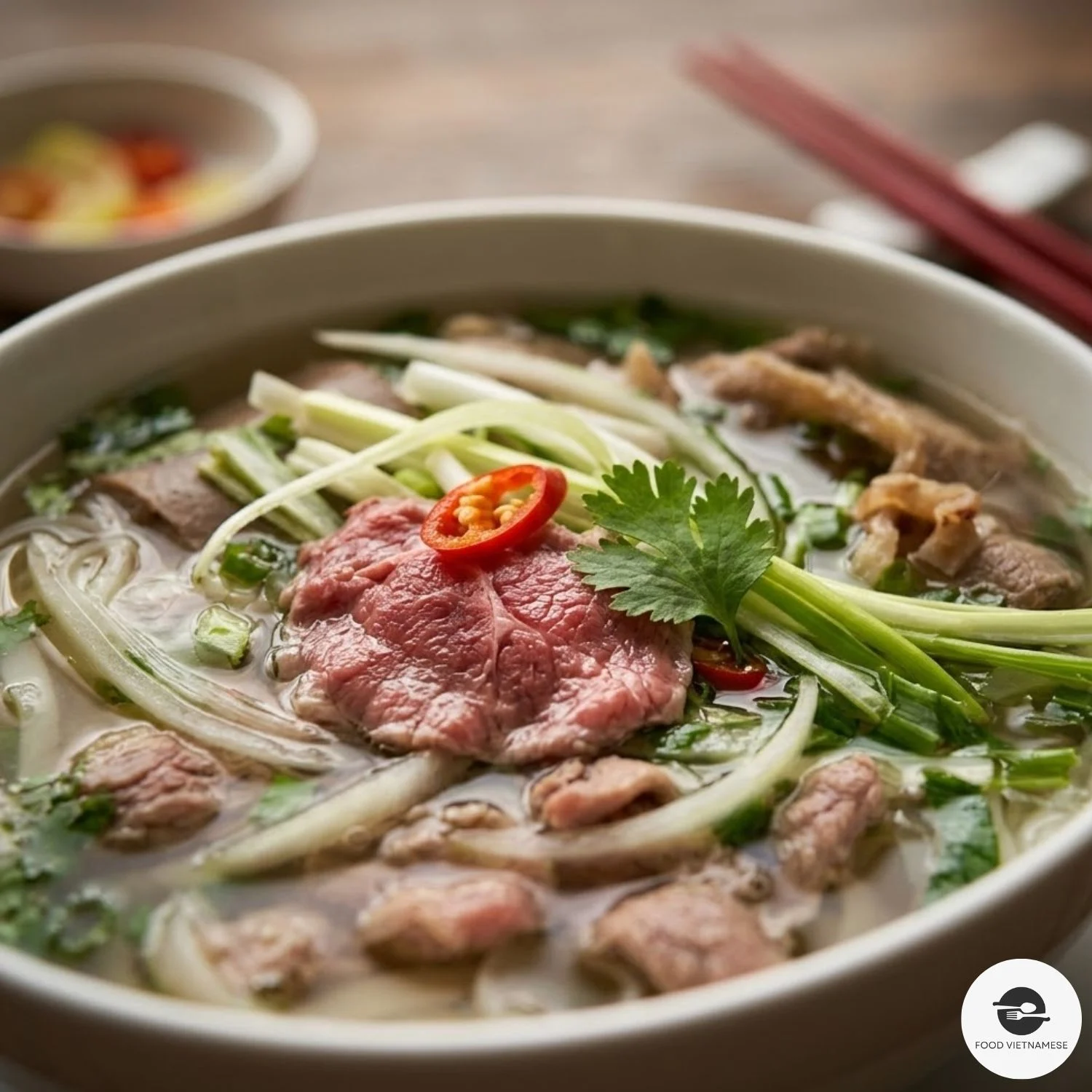
Pho is Vietnam’s beef or chicken noodle soup, built on a broth simmered for hours with charred ginger, onion, and warm spices like star anise and cinnamon, poured over flat rice noodles with thin-sliced beef or shredded chicken. Searching “pho near me” usually means one of two things — pho bo (beef) or pho ga (chicken) — and which one, and which regional style, changes what you should actually expect. The tool below searches Google Maps for Vietnamese restaurants near you.
Quick Facts
- Origin: early 20th century, generally traced to Nam Định in northern Vietnam
- Broth: beef or chicken bones simmered for hours with charred ginger and onion, star anise, cinnamon, and cardamom
- Noodles: flat rice noodles (bánh phở)
- Main types: phở bò (beef) and phở gà (chicken)
- Regional styles: Hanoi-style (clearer, more subtle) vs. Saigon-style (sweeter, more herbs and bean sprouts)
- Recognition: both phở Nam Định and phở Hà Nội were named Vietnamese National Intangible Cultural Heritage in August 2024
Find Pho Near You
Enter your city or zip code to see Vietnamese restaurants serving pho on the map below.
Hanoi-Style vs. Saigon-Style: What You’ll Actually Find Nearby
A stall owner near Hoàn Kiếm Lake once looked almost offended when I reached for the hoisin sauce on a neighboring table — “Ở đây không cần” (you don’t need that here), she said, sliding it back. Hanoi pho is built to be clean and restrained: a clear, lightly seasoned broth, a handful of scallion and cilantro, maybe a squeeze of lime, and nothing sweet stirred in. Head south to Saigon and the same dish shows up dressed differently — a sweeter broth, a full plate of Thai basil, culantro, and bean sprouts on the side, and hoisin and sriracha expected on the table, not frowned at.
Most restaurants outside Vietnam pick a lane rather than trying to serve both, so it’s worth knowing which style a place near you leans toward before you go in expecting the other. A herb plate and bean sprouts on the table is usually your fastest visual clue that you’re looking at a Saigon-style bowl.
Pho Bo vs. Pho Ga: Which One’s Near You
Pho bo (beef) is the version most people picture — a rich, dark broth built on beef bones, usually served with a mix of well-done and rare beef slices that finish cooking in the hot broth at the table. Pho ga (chicken) uses a lighter, clearer broth and shredded or sliced chicken, and tends to be the choice for anyone wanting something gentler on the stomach. Not every restaurant carries both — smaller or more specialized spots sometimes commit to just one — so it’s worth checking the menu before you go if you have a strong preference.
What to Look for When You Get There
A few signs separate a bowl worth returning for from one that isn’t:
- Broth clarity. A properly simmered broth should look relatively clear, not muddy or grey. We cover exactly what causes cloudy broth (and whether it’s actually a problem) in our pho broth guide.
- Noodle texture. Fresh rice noodles should be soft but not falling apart or gummy by the time the bowl reaches you.
- A real herb plate. Fresh Thai basil, lime, bean sprouts, and jalapeño served on the side (Saigon-style) signal a kitchen that’s not cutting corners.
- Restraint with add-ins. A broth that already tastes complete without hoisin or sriracha is usually the stronger one.
Once it arrives, how you actually eat it matters too — we break down the etiquette and order of operations in how to eat pho properly.
Where People Actually Find It
Pho is the most widely available Vietnamese dish outside Vietnam by a wide margin, which means the locator above will usually turn up multiple options almost anywhere with an Asian food scene. A few starting points:
- Dedicated pho restaurants — the most reliable choice, often specializing in little else
- General Vietnamese restaurants — pho is close to a default menu item at most of them
- Food courts inside Asian grocery stores — a solid backup in areas with fewer sit-down options
If you’re near Seattle or Washington DC, we’ve already mapped out specific standouts in our Seattle and DC pho guide. For broader Vietnamese food recommendations, our guides to San Jose, Orange County, and San Francisco cover some of the largest Vietnamese food scenes in the U.S.
Does Pho Travel Well for Delivery or Takeout?
Reasonably well, with one catch: most places pack the broth separately from the noodles and toppings specifically so the noodles don’t turn to mush sitting in hot liquid during the drive. If a restaurant hands you everything already combined in one container, expect softer noodles than you’d get eating in. Leftovers reheat better than you’d think as long as you keep the components apart in storage too — our guide to reheating pho covers how to bring a container back to something close to fresh.
What It Costs
Pricing is fairly consistent across most Vietnamese restaurants — pho sits in the same range as a mid-size bowl of ramen or a deli sandwich combo, with larger sizes and premium cuts (brisket, tendon, tripe) pushing the price up from there. Food trucks and no-frills counters typically run cheaper than sit-down restaurants with a fuller menu.
Calories and Nutrition
Calorie counts swing a lot depending on bowl size, broth richness, and how much meat is included — a small chicken pho and a large loaded beef pho aren’t close to comparable. We’ve broken the numbers down by type and size in our dedicated pho calories and nutrition guide, which is the better reference if you’re tracking intake.
If You’re Ordering at a Vietnamese-Run Restaurant
A couple of Vietnamese words go a long way at smaller, family-run spots. “Cho tôi một tô phở bò tái” gets you a bowl of beef pho with rare beef; swap “tái” for “chín” if you want it fully cooked instead, or “phở gà” for chicken. If you want it especially hot, add “nước dùng nóng” — staff will usually appreciate the specificity.
Frequently Asked Questions
What’s the difference between pho and ramen?
The broth and noodles are built differently. Pho uses flat rice noodles in a beef or chicken broth seasoned with star anise, cinnamon, and charred ginger; ramen uses wheat noodles in broths built on pork, miso, or soy, with a very different spice profile. They’re both noodle soups, but they don’t taste alike.
Is pho gluten-free?
The noodles themselves are rice-based and naturally gluten-free. The broth is usually gluten-free too, though some restaurants add soy sauce, so it’s worth confirming directly if you’re strict about it.
Pho bo or pho ga — which should I order?
Pho bo if you want a richer, heartier bowl; pho ga if you want something lighter or you’re not in the mood for beef. Neither is more “authentic” than the other — they’re both standard versions of the dish.
Does pho reheat well?
Yes, as long as the broth, noodles, and toppings are stored separately rather than combined. Reheating them together tends to leave the noodles overcooked by the time the broth is hot again.
Pho is common enough now that finding a bowl is rarely the hard part — knowing which style and which cut you actually want is. Between the map above and a rough sense of what a properly made bowl should look and taste like, you’re in a better position to order well than most people searching blind.

Related articles
Bun Thit Nuong: Vietnam’s Grilled Pork Noodle Salad, Not a Soup
Bun Thit Nuong is a Vietnamese grilled pork noodle salad — cold rice vermicelli piled with lemongrass-marinated grilled…
Best Vietnam Food: 15 Must-Try Dishes
Best Vietnam food is defined by one core principle: maximum flavor from the freshest possible ingredients. Vietnamese cuisine balances…
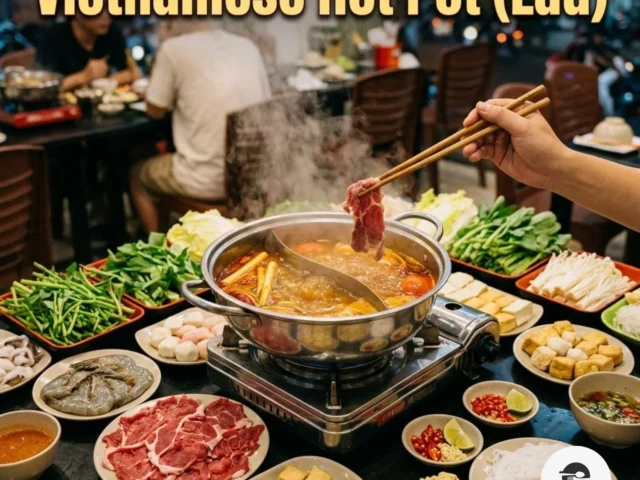
Vietnamese Hot Pot (Lẩu): Types, How to Eat, Dipping Sauces
Vietnamese hot pot (lẩu) is a pot of seasoned broth kept simmering at the table, where diners cook…