Table of contents
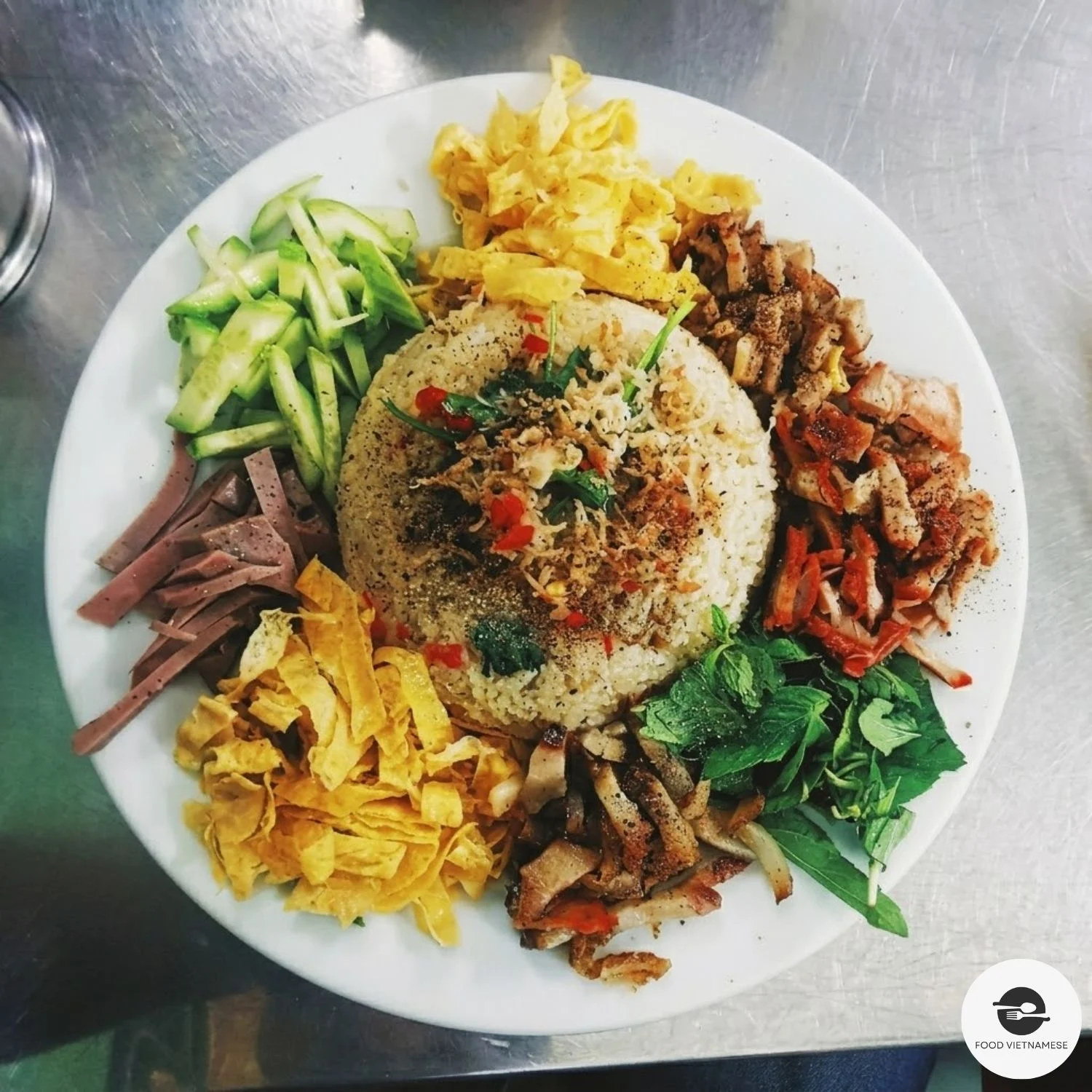
I – Kelly Thuy – first heard the name of this dish from a friend in Hue, and had to ask her to repeat it. “Com am phu” — hell rice — sounded more like a warning than an invitation to eat. Sitting down at the shop on Nguyen Thai Hoc Street, directly opposite the stadium, I understood immediately why the name has survived a century: a mound of white rice at the centre, surrounded by a small circle of separate components — golden dried shrimp floss, pale slices of pork roll, thin strands of egg omelette, crisp pickled cucumber — arranged like a miniature banquet. A drizzle of garlic-chili fish sauce, a good mix, and the first bite was mild heat, clean sweetness, balanced saltiness. Nothing remotely hellish about the flavour — only a richness that made me want to order a second plate.
— Kelly Thuy
What Is Com Am Phu Hue?
Com am phu holds one of the most curiosity-inducing names in Vietnamese cuisine. The origins of Hell Rice are shrouded in mystery, with various legends weaving tales of its creation. There’s no genuine spiritual or supernatural element to the dish itself — it’s essentially a richly composed mixed rice plate, visually striking for the way its small components fan out around the central mound of rice.
| Quick Facts | Details |
|---|---|
| Vietnamese name | Cơm âm phủ |
| English name | Com Am Phu Hue – Vietnam’s “Hell Rice” That Tastes Like Heaven |
| Literal translation | “Hell rice” or “Purgatory rice” |
| Region | North Central Coast (Bắc Trung Bộ) – Thua Thien Hue province, Hue city |
| Main components | White rice, grilled pork, dried shrimp floss, pork roll, fermented pork, egg omelette |
| Name origin | Multiple legends — most commonly tied to a dim, oil-lamp-lit late-night eatery in the early 20th century |
| Oldest address | 51 Nguyen Thai Hoc Street — established 1916, opposite Hue Stadium |
| Price reference | ~20,000–35,000 VND for a standard plate |
The Story Behind Hue’s Most Curious Dish Name
No single account of the “com am phu” name is confirmed as definitively official. Multiple competing stories continue to circulate, and that lack of consensus is itself part of what makes the dish’s history interesting.
The most commonly cited version: in the early 20th century, a restaurant in Hue served rice more than 80 years ago from an eatery situated in a large field, opening only at night. The simple place had just oil lamps to dispel the pitch dark, the wind blew from all sides, causing an eerie, somber atmosphere. The shop primarily served Hue’s late-night crowd — theatre and opera-goers, labourers finishing late shifts, and other nocturnal characters. The dim, unearthly setting combined with the shop’s unusual hours led patrons to jokingly dub the rice served there “hell rice.”
A richer, more specific version of this story comes from culinary journalism site Saigoneer: with its opening hours extended until the most unearthly of hours, Quan Com Am Phu became a highly sought-after location for Hue’s nocturnal characters to congregate — a diverse range of patrons from all walks of life, including attendees from local theatres looking for a late supper. This reportedly gave rise to the restaurant’s name and its titular dish, as patrons jokingly referred to themselves as âm binh, or “hell ghouls,” for being around during ungodly hours. Quan Am Phu’s humble rice dish took on the namesake as well. Notably, a crucial milestone in the history of the restaurant came in the early 1930s, when the French constructed the Stade Olympique de Hué — Hue’s first major sports stadium — nearby, which turned the once-obscure eatery into a hotspot for sports fans and bookies. This detail explains why the current shop, more than a century later, still sits directly opposite what is now Hue Stadium.
Beyond these two accounts, other versions describe a disguised Nguyen Dynasty king dining with a poor elderly woman by oil lamp, or court officials naming the dish poetically to celebrate the richness and variety of its components. None of these stories can be confirmed as definitively “correct,” but all of them circle the same core elements: darkness, humble surroundings, and the striking contrast between an ominous name and a genuinely delicious result.
The owner of a long-running com am phu shop on Nguyen Thai Hoc Street told me: “People here joke that eating hell rice won’t scare off any ghosts — the only thing you’ll be afraid of is wanting a second plate.” That line captures the dish’s real character better than any of the origin legends do: a name people remember, and a flavour that brings them back.
— Kelly Thuy, field notes, Hue city
Full Composition of a Plate of Com Am Phu
What gives com am phu its distinctive visual signature is the arrangement: white rice sits at the centre of the plate, with each topping — julienned or thinly sliced — arranged neatly around it in a colourful ring, before the diner mixes everything together to eat.
| Component | Role |
|---|---|
| White rice (fragrant Tam rice) | The central base — soaked in cold water for two hours before cooking to make it soft and prevent it from drying out |
| Grilled pork or roast pork | Julienned or thinly sliced, marinated with spices and grilled over charcoal |
| Dried shrimp floss (tom chay) | Pounded shrimp dry-fried until fluffy, providing marine sweetness and a distinctive light, airy texture |
| Vietnamese pork roll (gio lua) | Thinly sliced, mild and slightly rich, balancing the other components |
| Fermented or grilled pork sausage (nem) | Adds a tangy or smoky accent depending on the version served |
| Egg omelette | Julienned into thin strips, adding colour and mild richness |
| Pickled cucumber | Sour and crisp, cutting through the richness of the savoury components |
| Fresh herbs | Adds brightness and lightens the overall composition |
| Garlic-chili fish sauce | Sweet-spicy dressing drizzled over everything to bind the flavours together |
Some shops also add shredded chicken salad, or substitute fried rice for plain white rice. The exact selection and quantity of toppings varies slightly from shop to shop, but the core presentation principle — rice at the centre, small components arranged around it — remains constant everywhere.
How It’s Made – Precision in Every Small Component
Cooking the rice correctly
Fragrant Tam rice is soaked in cold water before cooking — typically for two hours — to keep the grains soft and prevent them from drying out once plated. This step matters because the rice is the dish’s centrepiece, shaping the entire eating experience.
Preparing the grilled pork
Pork is cut into pieces, marinated with a rich spice blend, and grilled over charcoal until fragrant, then thinly sliced or julienned for plating.
Making dried shrimp floss
Fresh shrimp is pounded, then dry-fried over low heat until it becomes light and fluffy — a technique requiring patience to avoid burning or clumping while preserving the shrimp’s natural sweetness.
Preparing the remaining components
Pork roll and egg omelette are julienned into even strips; cucumber is pickled briefly in salt and vinegar or sugar for a balanced sourness; fresh herbs are rinsed and drained.
Mixing the fish sauce
Good fish sauce is combined with minced garlic, minced chili, sugar and lime juice in a balanced ratio of salty-sweet-sour-spicy — the element that ties every component into one cohesive flavour.
Flavour Profile
| Layer | Description | Source |
|---|---|---|
| Soft, fragrant rice | A gentle base, neither dry nor mushy, absorbing the fish sauce evenly once mixed | Tam rice soaked before cooking |
| Fluffy, marine-sweet shrimp floss | A rich, unmistakable sweetness with a distinctive airy texture | Pounded fresh shrimp, dry-fried |
| Smoky grilled pork | Charcoal fragrance layered with well-seasoned marinade | Charcoal-grilled pork, julienned |
| Mild richness from pork roll and egg | A neutral, balancing layer that doesn’t overpower the other flavours | Julienned gio lua and egg omelette |
| Crisp, sour freshness | Lightens the whole plate, preventing the richness from becoming overwhelming | Pickled cucumber and fresh herbs |
| Balanced sweet-spicy fish sauce | The unifying element that pulls every component into one coherent flavour | Correctly balanced garlic-chili fish sauce |
How to Eat It the Hue Way
- Mix everything together before eating — drizzle the fish sauce over the whole plate and mix thoroughly so every component blends with the rice
- Eat it warm — the rice and grilled pork taste best while still slightly warm, and the shrimp floss stays at its fluffiest
- Try each component separately first — to appreciate each topping’s distinct flavour before mixing everything together
- Ask for extra fish sauce if you prefer it richer — most shops are happy to add more on request
- Eat it any time of day — despite its late-night origin story, com am phu today is served from morning through night
Where to Eat Com Am Phu in Hue
The two most famous addresses
- 51 Nguyen Thai Hoc Street — established in 1916, over a century old, located directly opposite Hue Stadium. This is widely regarded as the address most closely tied to the dish’s original name and story.
- 35 Nguyen Thai Hoc Street — also long-established, popular with both tourists and locals, offering a spacious, clean dining space.
Both shops sit on the same street in central Hue and open from early morning until late at night — a far cry from the dim, midnight-only eatery of the original story.
Price Reference
Current reference prices, subject to shop and topping quantity.
| Plate type | Approximate price | Notes |
|---|---|---|
| Standard plate | ~20,000–35,000 VND | All core components included |
| Premium/full plate | ~50,000–100,000 VND | More toppings, more elaborate presentation |
| Group/special order | Up to ~200,000 VND | Depends on scale and specific requests |
Nutritional Value
Estimated based on primary ingredients. No independently verified nutritional analysis of com am phu Hue has been published — values vary considerably depending on shop and topping selection.
| Nutrient | Estimated value / standard plate |
|---|---|
| Energy | ~450–550 kcal |
| Protein | ~25–32g (from pork, shrimp, pork roll, egg) |
| Carbohydrates | ~55–65g (from white rice) |
| Total fat | ~12–18g (from grilled pork, pork roll, egg omelette) |
| From fresh herbs/cucumber | Additional fibre and vitamins, aiding digestion |
Frequently Asked Questions
What is com am phu Hue?
A Hue specialty: white rice at the centre of a plate, surrounded by grilled pork, dried shrimp floss, pork roll, fermented pork, egg omelette and pickled cucumber, finished with garlic-chili fish sauce. The name traces to a dim, late-night eatery from the early 20th century. The shop at 51 Nguyen Thai Hoc Street, open since 1916, is the oldest known address.
Why is it called “hell rice”?
No genuine spiritual connection exists. Multiple legends coexist: a dark, oil-lamp-lit late-night eatery, patrons nicknaming themselves “hell ghouls” for their late hours, or a legend involving a disguised king. No single version is confirmed as definitively official.
What does the dish contain?
White rice at the centre, surrounded by grilled pork/roast pork, dried shrimp floss, pork roll, fermented or grilled pork, egg omelette, pickled cucumber, fresh herbs, and garlic-chili fish sauce.
Where to eat it in Hue?
51 Nguyen Thai Hoc Street (since 1916, opposite Hue Stadium) and 35 Nguyen Thai Hoc Street — both are the most established and recommended addresses.
How much does it cost?
A standard plate runs approximately 20,000–35,000 VND; premium plates with more toppings can reach 100,000–200,000 VND depending on the shop.
Conclusion
Com am phu is proof that the most ominous-sounding name can conceal one of the most pleasant experiences. No one remembers with certainty which of the four competing legends is true, and perhaps that no longer matters — the name has survived more than a century, tied to a shop still serving the same family recipe on the same old street.
If you find yourself in Hue, head to Nguyen Thai Hoc Street, order a full plate, mix it thoroughly, and eat it while still warm. That’s the only way to confirm for yourself: there’s genuinely nothing frightening about this dish — only a flavour worth remembering. The same devotion to keeping a family recipe alive across generations shows up in Quang Tri’s shallot-chive braised chicken, or the equally curious name behind Quang Binh’s chao canh — two other specialties from this same stretch of the North Central Coast.

Related articles
Banh Khot: Vung Tau’s Crispy-Edged Answer to Banh Xeo
Banh Khot is a Vietnamese mini savory pancake from the coastal city of Vung Tau — a rice…
Cao Lau: The Hoi An Noodle Dish That Cannot Be Made Anywhere Else
Cao Lau is a noodle dish found exclusively in Hoi An, Central Vietnam — thick, chewy rice noodles…
Ga Nuong Song Cau – Where Ordering Chicken Means Pointing at One in the Yard
Ga nuong Song Cau is a specialty of Song Cau town, Phu Yen province: free-range chicken (ideally young,…