
Table of contents
If you’ve ever stood in front of a noodle stall at a Vietnamese market or in the Asian aisle of a supermarket, you’ve probably wondered: “Are these thin strands bún or phở?” Short answer: they are completely different, even though both are made from rice.
1. What Is Rice Vermicelli? (Vietnamese Bún)
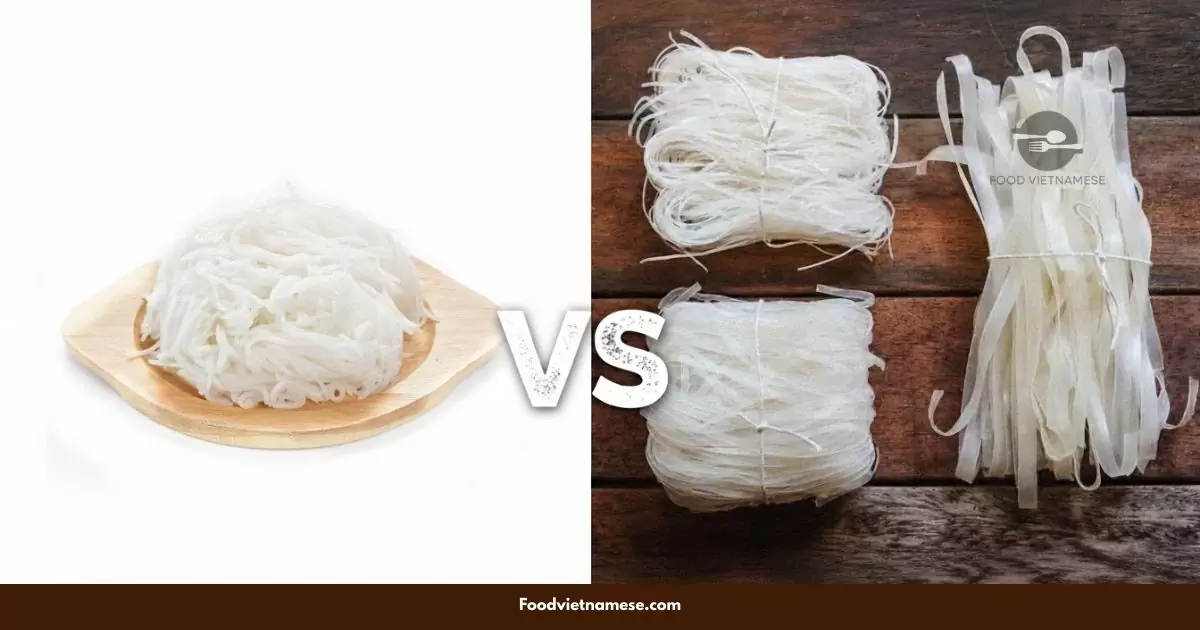
Rice vermicelli – called “bún” in Vietnamese – is a very thin, round rice noodle with a diameter of only 1–2 mm. It looks like super-thin spaghetti but is softer and chewier. Fresh bún is opaque white, slightly translucent, and feels heavy in the hand because it contains a lot of moisture.
Taste & aroma: fresh bún is almost neutral, with just a faint scent of new rice. That neutrality makes it the perfect canvas for bold broths, herbs, and proteins.

2. What Are Rice Noodles? (Phở, Hủ Tiếu, Fresh Flat Rice Noodles)
“Rice noodles” is the broad English term, but in Vietnam it usually refers to flat, wider noodles – the most famous being bánh phở (phở noodles). Fresh phở noodles are 3–10 mm wide, about 1–2 mm thick, with a rectangular cross-section. They are smooth, glossy, and have a noticeable springy bite when you pick them up.
Taste & aroma: phở noodles have a clearer rice fragrance and a subtle “nutty” richness when chewed.

3. Side-by-Side Comparison Table
| Criteria | Rice Vermicelli (Bún) | Rice Noodles (Phở / Fresh flat noodles) |
|---|---|---|
| Width / Thickness | 1–2 mm, round | 3–10 mm, flat |
| Texture after cooking | Softens quickly, can become mushy | Chewy, holds shape well |
| Cooking time | 5–10 seconds | 1–3 minutes (fresh) |
| Classic dishes | Bún bò Huế, bún riêu, bún chả, spring rolls | Phở bò, phở gà, hủ tiếu, steamed rolls |
| Average price (2025) | 25–40k VND/kg (fresh) | 35–60k VND/kg (fresh) |
| How it absorbs broth | Absorbs very fast, bold flavour | Stays chewy, milder flavour absorption |
4. Personal Experience – Author’s Point of View
I’m Kelly Thuy, the main writer behind FoodVietnamese.com, and I’ve been alternating between phở for breakfast and bún bò for lunch for the last 10 years.
- Rice vermicelli: perfect when I crave something punchy and spicy (like a fiery bowl of bún bò Huế). The thin strands soak up every drop of broth in seconds, delivering an explosion of flavour. Downside? If the bowl sits too long, the noodles turn soggy and the dish feels heavy.
- Rice noodles (phở): feel more “refined”. The wide, chewy strands have a pleasant bounce, great for cold mornings when I want to slowly savour rare beef, star anise, and cinnamon. Phở is my quiet, meditative meal.
Personally, I pick bún when eating with a big group (fast and fun), and phở when I need a peaceful solo breakfast.
5. Where to Try the Best in Vietnam
Best Rice Vermicelli (Bún):
- Bún bò Huế O Ly – 81 Bà Triệu, Huế (50–70k VND/bowl) – intensely spicy broth, perfectly thin noodles.
- Bún chả Obama – 24 Lê Văn Hưu, Hanoi (60k VND) – the famous spot that hosted President Obama.
- Bún riêu cua Đồng Tháp – 19 Nguyễn Thị Minh Khai, HCMC (45k VND) – delicate crab-based broth, super soft vermicelli.
Best Rice Noodles (Phở):
- Phở Thìn Lò Đúc – 13 Lò Đúc, Hanoi (70–90k VND) – legendary stir-fried-then-simmered beef phở.
- Phở Phú Gia – 93 Nguyễn Thái Học, Huế (60k VND) – incredibly chewy, thin-yet-strong noodles.
- Phở Quỳnh – 323 Phạm Ngũ Lão, District 1, HCMC (70k VND) – open 24/7, consistently excellent fresh noodles.
6. Who Should Choose Which?
- Love bold flavours, lots herbs, and eating quickly → rice vermicelli
- Prefer slow, elegant meals with prominent anise-cinnamon aroma and chewy texture → rice noodles (phở)
- On a diet → both are fine, but vermicelli has slightly fewer calories (≈120 kcal vs 140 kcal per 100 g cooked).
Conclusion
There’s no winner between rice vermicelli and rice noodles – they’re just different vibes. If you’re travelling in Vietnam, do yourself a favour: have a steaming bowl of spicy bún bò Huế at noon under the blazing sun, then wake up the next morning to a fragrant phở bò in the cool air. You’ll instantly understand why Vietnamese people argue every day: “Today bún or phở?”
FAQ
1. Are rice vermicelli and “bun” the same thing? Yes! Rice vermicelli is the English name for Vietnamese bún.
2. Can I substitute one for the other in recipes? Not recommended. Using phở noodles in bún chả makes the dish too chewy; using bún in phở makes it mushy and loses the soul of phở.

Related articles
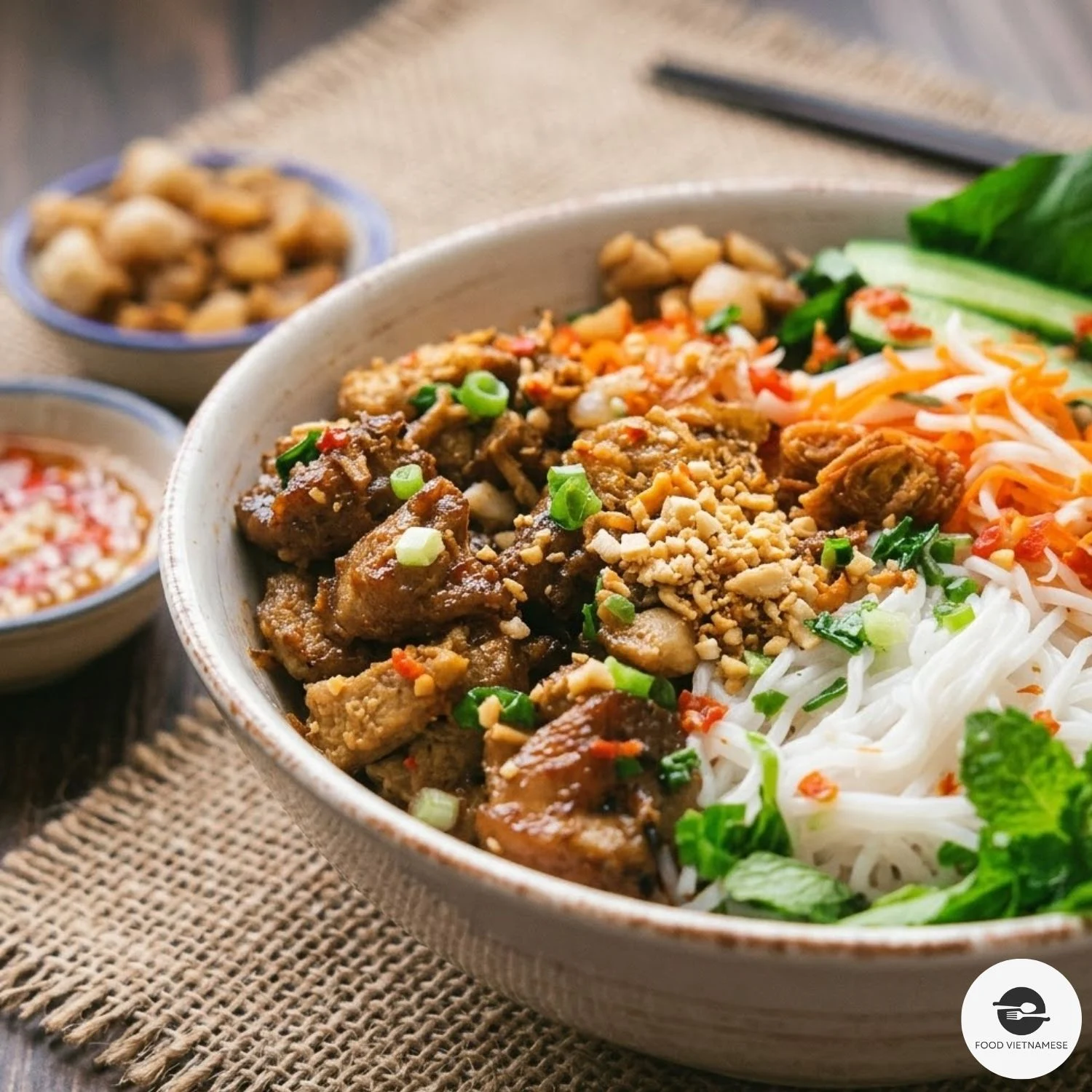
Bun Thit Nuong: Vietnam’s Grilled Pork Noodle Salad, Not a Soup
Bun Thit Nuong is a Vietnamese grilled pork noodle salad — cold rice vermicelli piled with lemongrass-marinated grilled…
Best Vietnam Food: 15 Must-Try Dishes
Best Vietnam food is defined by one core principle: maximum flavor from the freshest possible ingredients. Vietnamese cuisine balances…
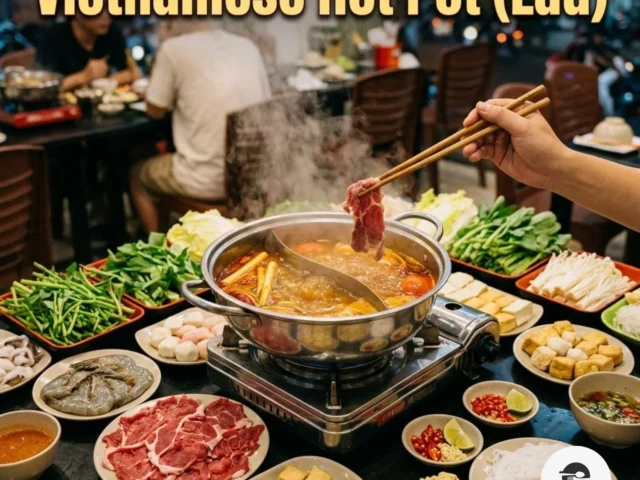
Vietnamese Hot Pot (Lẩu): Types, How to Eat, Dipping Sauces
Vietnamese hot pot (lẩu) is a pot of seasoned broth kept simmering at the table, where diners cook…