Table of contents
Main cause: Bacteria cause at least 75% to 90% of travelers’ diarrhea, most often enterotoxigenic E. coli (CDC)
First step: Oral rehydration; pharmacies sell it as Oresol or Hydrite
Loperamide: Not for bloody diarrhea or diarrhea with fever (CDC)
See a doctor: Fever of 38°C or higher, blood in the stool, severe abdominal pain, or no improvement after three days (NaTHNaC)
Avoid in Vietnam: Tiết canh and other dishes with uncooked pig blood or meat (CDC Yellow Book)
Water: Tap water, and ice made from it, is unsafe to drink (CDC Yellow Book)
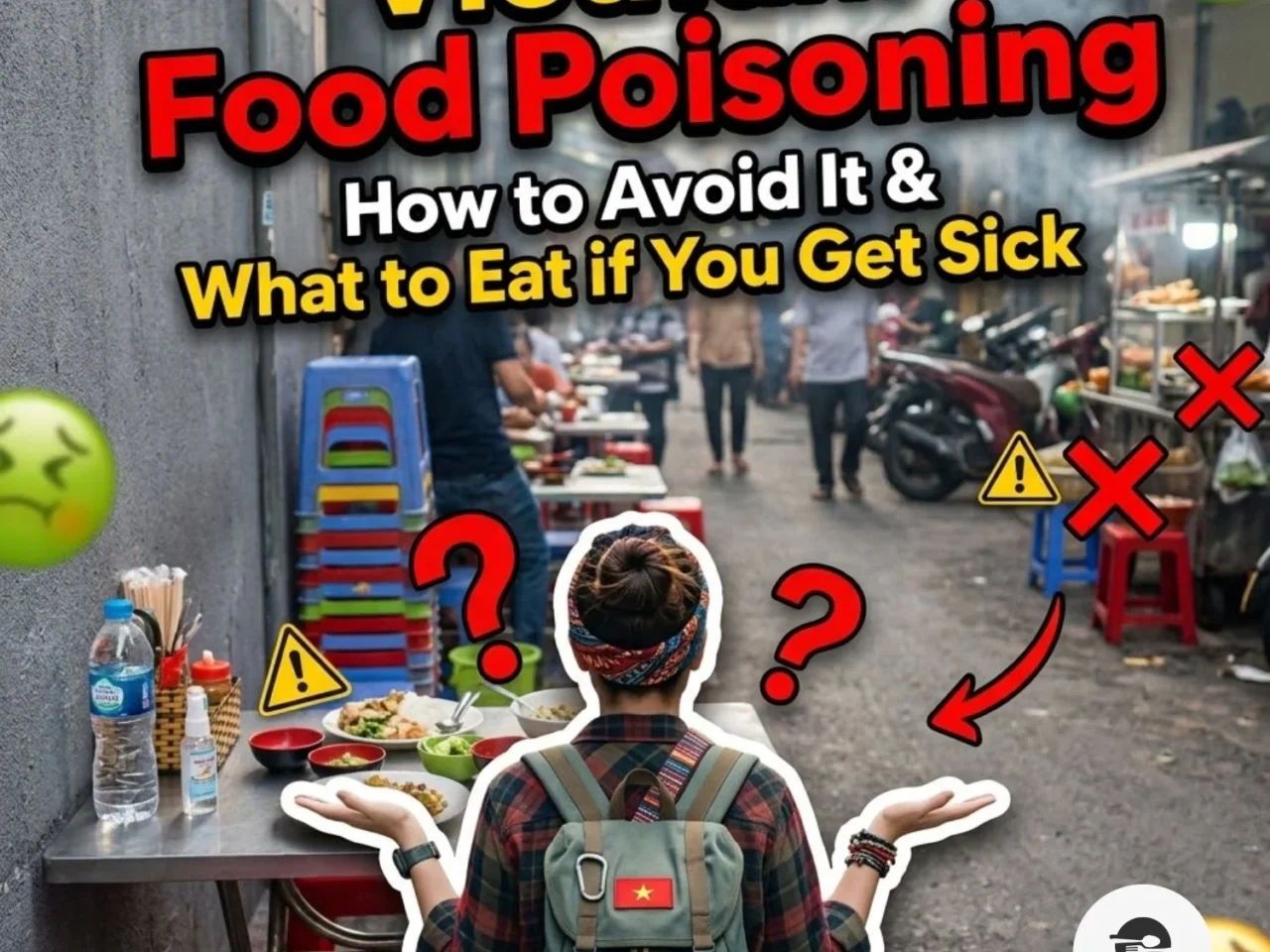
NaTHNaC says travelers’ diarrhoea comes from contaminated food or water, and the NHS says it usually stops within 5 to 7 days. This guide covers how to lower the risk, what to drink and eat first, what pharmacies sell, and when to stop treating it yourself. It is general information, not medical advice.
How Common Is Food Poisoning in Vietnam?
The CDC’s Yellow Book calls travelers’ diarrhea the most predictable travel-related illness, with attack rates from 30% to 70% of travelers over two weeks. Even people who follow the usual food rules can still get ill.
Vietnam’s own numbers cover residents, not tourists. The Star reports 58 outbreaks in the first half of 2026, with 1,573 people sickened and 10 deaths, and 12 of the outbreaks in school canteens. Those are group-catering settings, a different situation from a stall cooking one bowl at a time.
Travelers’ Diarrhea or Serious Food Poisoning?
Symptoms include an upset stomach, vomiting, loose stools, cramps, and fever, according to Mayo Clinic. Onset depends on the cause, from 30 minutes to 8 hours for Staphylococcus aureus to 2 to 5 days for Campylobacter.
| Sign | What it suggests |
|---|---|
| Loose stools, mild cramps, no fever | Usually manageable with fluids and rest |
| Fever of 38°C or higher | See a doctor (NaTHNaC) |
| Blood in the stool | See a doctor; do not take loperamide (CDC) |
| Severe abdominal pain | See a doctor (NaTHNaC) |
| Great thirst, dry mouth, little or no urination, dizziness | Dehydration; see a doctor (Mayo Clinic) |
| No improvement after three days | See a doctor (NaTHNaC) |
How to Avoid Food Poisoning in Vietnam
The WHO’s five keys to safer food are keep clean, separate raw and cooked, cook thoroughly, keep food at safe temperatures, and use safe water and raw materials. In practice, that means choosing food that is cooked hot in front of you. The CDC adds hand sanitizer with at least 60% alcohol when you cannot wash.
Water is the first rule. The Yellow Book’s Vietnam page says tap water is unsafe to drink, and so is ice made from it. Our guide to common street food mistakes covers how to judge ice and the raw herb plate.
The Vietnam-specific warning is tiết canh, a dish of raw blood and meat. The CDC Yellow Book tells travelers not to eat uncooked blood or meat of pigs or other animals because of the risk of trichinellosis and Streptococcus suis. In July 2025, according to Dan Tri International, seventeen people ate it at three eateries in Hưng Yên; six were hospitalized and two died.
What to Drink First
Rehydration matters more than food. The NHS advises drinking plenty of fluids, in small sips if you feel sick, and avoiding fruit juice and fizzy drinks, which can make diarrhoea worse.
Vietnamese pharmacies sell oral rehydration salts. Vietnamtourism.com says they are labeled Oresol or Hydrite, at roughly 3,000 to 8,000 VND a sachet, and that chain pharmacies such as Pharmacity and Long Châu are the safer choice. Vinmec says to mix one packet with 200 ml of cooled boiled water, with no extra water, sugar, milk, or juice, and to throw away leftovers after 24 hours. Check the packet, since sizes differ.
I keep a few Oresol sachets at home for friends who visit Sài Gòn. The box is small, the sachets are cheap, and the mixing instructions on the back are short enough to follow with a translation app.
Kelly Thuy — field notes, Sài Gòn
What to Eat if You Get Sick in Vietnam
The NHS says to eat when you feel able, and to avoid fatty or spicy foods at first. Plain food fits that advice. The usual Vietnamese choice is cháo trắng, plain rice porridge, covered in our guide to Vietnamese comfort food when you’re sick.
Plain rice (cơm trắng) also works. For the first days, skip chili-heavy bowls; how spicy Vietnamese food is explains where heat comes from, since most of it is added at the table. When you’re better, our best food in Vietnam guide is a good way back in.
Medicines and When to Get Help
Loperamide can relieve mild to moderate diarrhea, but NaTHNaC says to use it for two days at most, and the CDC says not to use it with bloody diarrhea or fever. Vietnamtourism.com also lists Smecta and probiotics as common pharmacy products.
Antibiotics are a decision for a doctor. NaTHNaC warns that taking them can lead to drug-resistant bacteria. Dehydration is a particular concern for infants, young children, older travelers, and pregnant women, so get help early. The NHS says diarrhoea usually stops within 5 to 7 days and vomiting within 1 to 2 days.
Frequently Asked Questions
Eat when you feel able, and start with plain food such as cháo trắng (plain rice porridge) or plain rice. The NHS advises avoiding fatty or spicy foods at first.
No. The CDC Yellow Book says tap water in Vietnam is unsafe to drink, as is ice made from tap water.
Oral rehydration salts, sold as Oresol or Hydrite, are the first choice. Pharmacies also sell loperamide, Smecta, and probiotics, but loperamide should not be used with bloody diarrhea or fever.
The NHS says diarrhoea usually stops within 5 to 7 days and vomiting within 1 to 2 days. Seek care if symptoms do not improve within three days, per NaTHNaC.
Yes. The CDC Yellow Book tells travelers not to eat dishes with uncooked pig blood or meat because of the risk of trichinellosis and Streptococcus suis, which can cause meningitis or septicemia.

Related articles
Best Vietnamese Comfort Food When You’re Sick: It’s Cháo, Not Phở
The best Vietnamese comfort food when you’re sick is cháo, a plain rice porridge usually made as cháo…
Vegetarian Vietnamese Food: What “Chay” Really Means
Vegetarian Vietnamese food has a name most guides translate too loosely: “chay.” It isn’t just the Vietnamese word…
Gluten-Free Vietnamese Food: The Noodle Name Trap
Gluten-free Vietnamese food is easier to find than in most cuisines, since rice — not wheat — is…