Table of contents
- “Chay” Is a Buddhist Practice, Not Just a Diet
- The Twice-a-Month Ritual: Mùng Một and Rằm
- The Ingredient Most Guides Miss: Ngũ Vị Tân
- What Replaces Fish Sauce in Chay Cooking
- Vietnam’s Sophisticated Mock-Meat Tradition
- “No Meat” Isn’t the Same as “Chay” — Ordering the Right Thing
- Naturally Vegetarian Dishes to Order Anywhere
- Frequently Asked Questions
“Chay” isn’t just “no meat”: It’s a Buddhist practice, usually vegan by default (no eggs or dairy) and sometimes stricter still
Observed twice a month: Mùng một and rằm — the 1st and 15th days of the lunar calendar — when chay restaurants see their busiest traffic
The ingredient most guides miss: Ngũ vị tân, five pungent roots (garlic, onion, shallot, leek, asafoetida) excluded from strict chay even though they’re technically vegetarian
Fish sauce alternative: Fermented soy-based sauce stands in for nước mắm in chay kitchens — not a modern Western substitution, a long-standing part of the tradition
Mock meat: Wheat gluten (mì căn), tofu, and mushroom are shaped and seasoned into “chay giả mặn” — meat-mimicking dishes with real technique behind them
Important distinction: A “meatless” dish at a regular restaurant may still use standard fish sauce — only chay-labeled food or a dedicated quán chay guarantees Buddhist-standard preparation
Most guides to vegetarian Vietnamese food hand over a list of meat-free dishes and stop there. That’s useful, but it skips the part that actually explains why this cuisine has such a developed vegetarian tradition in the first place.
“Chay” Is a Buddhist Practice, Not Just a Diet
In everyday use, “chay” gets translated as “vegetarian,” but the word carries the weight of Mahayana Buddhist dietary discipline behind it. Chay food is typically vegan by default — no eggs, no dairy, no animal byproducts — and at its strictest, in temple kitchens, it excludes a handful of pungent plants that are technically vegetarian but considered disruptive to meditation. This isn’t a modern wellness trend grafted onto Vietnamese food; it’s a centuries-old practice tied directly to Buddhist precepts around compassion and non-violence, sitting alongside the rest of Vietnamese cuisine as its own fully developed branch rather than an afterthought.
The Twice-a-Month Ritual: Mùng Một and Rằm
Millions of Vietnamese people who don’t eat vegetarian the rest of the month observe chay specifically on mùng một (the 1st day of the lunar month, the new moon) and rằm (the 15th, the full moon). More devout practitioners extend this further, adding the 8th, 14th, 23rd, 29th, and 30th lunar days in a practice called kỳ chay. Restaurants built around chay food see a genuine surge in business on these two days, and even people who don’t consider themselves religious often participate to honor ancestors or bring good fortune to the household. This calendar rhythm is worth knowing when planning where to eat — a quán chay is often busiest, and freshest, exactly on those two days.
The Ingredient Most Guides Miss: Ngũ Vị Tân
This is the detail that separates a real explanation of chay from a surface-level one. Ngũ vị tân — the five pungent roots — refers to garlic, onion, shallot, a leek-like allium, and asafoetida, all excluded from strict, temple-style chay cooking despite being entirely plant-based. The reasoning isn’t about health or ethics the way most vegetarian exclusions are; it’s that these ingredients are believed to stir up irritability and restlessness, working against the calm mental state Buddhist practice aims for. A home cook observing chay loosely on mùng một and rằm might still use garlic without much thought, but food prepared at a temple or a strict chay kitchen genuinely won’t include it — which is why two dishes both labeled “chay” can taste noticeably different depending on how closely the kitchen follows the stricter version of the tradition.
What Replaces Fish Sauce in Chay Cooking
Fish sauce is so central to Vietnamese cooking that its absence in chay food raises an obvious question: what’s doing that job instead? The answer is a fermented soy-based sauce — often just called nước tương or a dedicated “nước mắm chay” — built to carry the same salty, umami depth without anything derived from an animal. This isn’t an improvised swap; it’s a long-standing part of the tradition, meaning a well-made bowl of bún chay or canh chua chay isn’t a diminished version of the original, it’s a parallel recipe built around a different savory base from the start.
Vietnam’s Sophisticated Mock-Meat Tradition
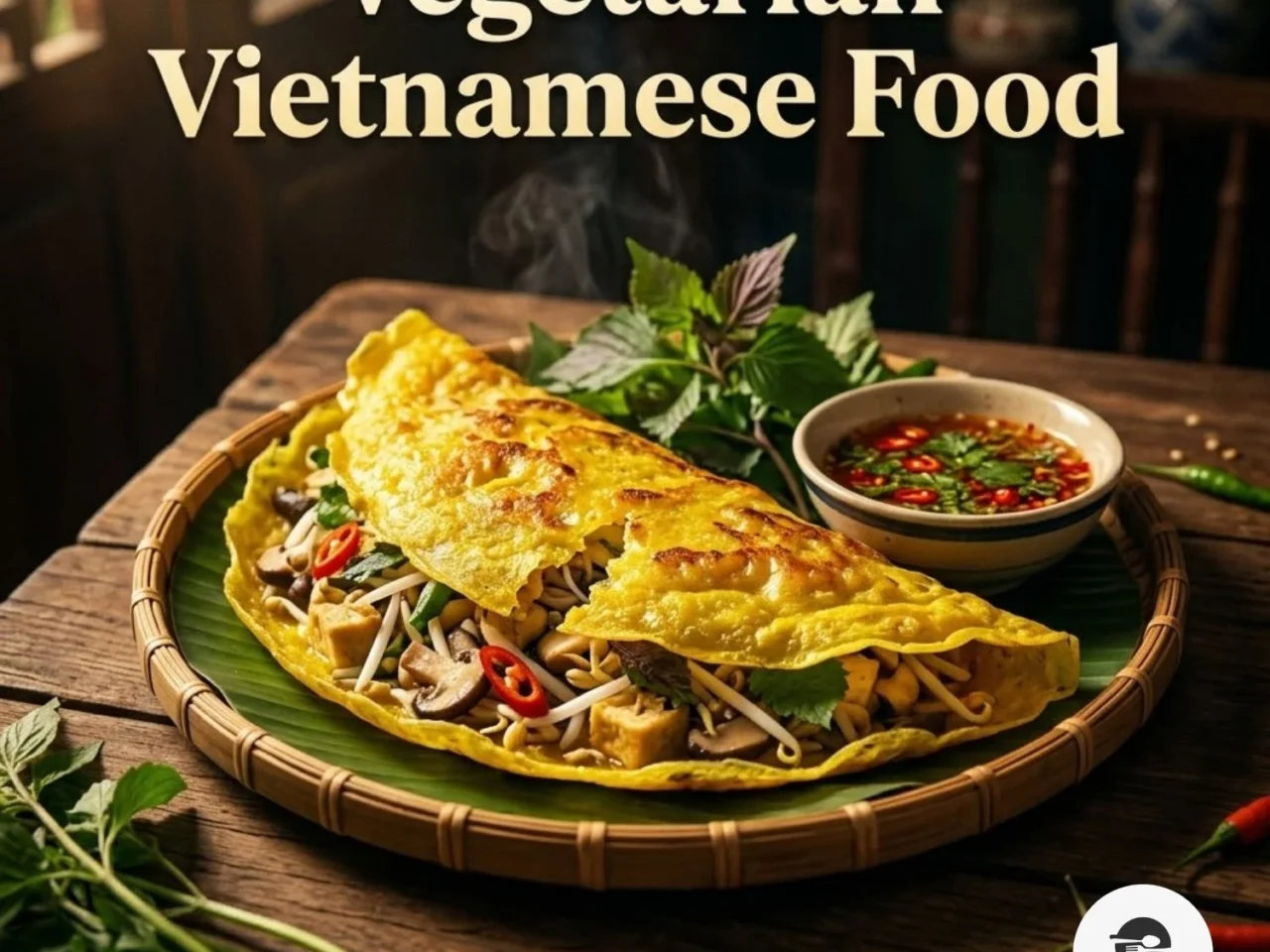
Chay cooking’s approach to meat is more developed than a simple substitution — it’s its own craft, known as “đồ chay giả mặn” (vegetarian food that imitates meat). Wheat gluten, called mì căn in Vietnamese (the same base as seitan), gets shaped, seasoned, and textured to imitate cuts of pork or chicken, while tofu and mushrooms fill a similar role in other dishes. A chay version of a braised pork dish or a grilled skewer isn’t trying to trick anyone — it’s a genuine culinary tradition built around recreating the texture and presentation of familiar dishes using entirely plant-based ingredients, developed over generations rather than assembled from modern meat-substitute products.
“No Meat” Isn’t the Same as “Chay” — Ordering the Right Thing
This distinction matters in practice, not just in theory. A dish at a regular Vietnamese restaurant described as vegetarian or “không thịt” (no meat) may still be cooked with standard fish sauce, since that kitchen isn’t necessarily following chay rules — it’s just leaving the meat out. For food genuinely prepared to Buddhist chay standards, ordering specifically “món chay” or eating at a dedicated quán chay is the reliable way to get it, since those kitchens don’t keep animal-derived sauces on hand at all. This is worth knowing alongside general Vietnamese dining customs, since asking specifically for chay food is a completely normal, well-understood request at any Vietnamese restaurant.
Naturally Vegetarian Dishes to Order Anywhere
Even outside a dedicated chay kitchen, some dishes are easy to find in a genuinely vegetarian version. Gỏi cuốn made with tofu and vegetables instead of shrimp and pork is common on most menus. Canh chua chay, the sour soup built on tamarind and vegetables, swaps easily to a plant-based broth. Phở chay, built on a mushroom-and-vegetable broth rather than beef bones, is widely available, though it’s worth confirming the broth itself since some versions still use fish sauce for seasoning even without meat toppings.
| Term | What it means |
|---|---|
| Chay | Buddhist vegetarian/vegan practice, not just “no meat” |
| Ngũ vị tân | Five pungent roots excluded from strict chay: garlic, onion, shallot, leek, asafoetida |
| Mùng một, rằm | 1st and 15th lunar days — the most widely observed chay dates |
| Mì căn | Wheat gluten (seitan) used in Vietnamese mock-meat dishes |
| Không thịt | “No meat” — not the same guarantee as chay-prepared food |
I once asked a nun at a small temple kitchen near Huế why her canh had no garlic in it when every other pot of soup I’d had that week did, half-expecting she’d forgotten it. She just smiled and said the soup wasn’t for a quiet mind if it had garlic in it — like that explained everything, which, once she said it, actually did.
Kelly Thuy — field notes, Huế
Frequently Asked Questions
Chay refers to Buddhist vegetarian cooking, usually vegan by default, and at its strictest excludes garlic, onion, and other pungent roots believed to disturb meditation. It’s a religious dietary practice, not simply the Vietnamese word for “vegetarian.”
Often, yes. Chay food is typically prepared without eggs, dairy, or any animal byproducts by default, though this can vary by kitchen. Confirming with the specific restaurant is worth doing if strict veganism matters.
A fermented soy-based sauce, sometimes labeled nước mắm chay, stands in for regular fish sauce in chay kitchens. It’s a long-standing part of the tradition rather than a recent substitution.
Many Vietnamese people, including those who aren’t strictly vegetarian, eat chay on mùng một and rằm — the 1st and 15th days of the lunar calendar. More devout practitioners observe additional days each month.

Related articles

Best Vietnamese Comfort Food When You’re Sick: It’s Cháo, Not Phở
The best Vietnamese comfort food when you’re sick is cháo, a plain rice porridge usually made as cháo…

Vietnam Food Poisoning: How to Avoid It and What to Eat if You Get Sick
Vietnam food poisoning in travelers is usually travelers’ diarrhea, and fluids come first: oral rehydration salts (sold in…
Gluten-Free Vietnamese Food: The Noodle Name Trap
Gluten-free Vietnamese food is easier to find than in most cuisines, since rice — not wheat — is…