Table of contents
- Cháo (Rice Porridge) Is Vietnam’s Actual Sick-Day Dish
- Phở Is Not the Same Category as Cháo
- Cháo Gà and the Science Behind Chicken Soup for Colds
- Lá Tía Tô (Perilla Leaf) for Sweating Out a Cold
- Chanh Đào Ngâm Mật Ong (Honey-Steeped Wild Lime) for Sore Throat
- Gà Tần Thuốc Bắc (Herbal Stewed Chicken) for Deeper Recovery
- Nước Gừng (Ginger Tea) for Chills and Nausea
- What Vietnamese Households Avoid When Someone Is Sick
- Frequently Asked Questions
Go-to sick-day dish: Cháo (rice porridge), not phở
Two main versions: Cháo trắng (plain) for an upset stomach, cháo gà (chicken) for general recovery
Cold remedy herb: Lá tía tô (perilla leaf), steeped in hot water or stirred into cháo
Sore throat and cough: Chanh đào ngâm mật ong (honey-steeped wild lime)
Deeper recovery food: Gà tần thuốc bắc (herbal stewed chicken)
What gets avoided: Ice-cold drinks and fried food, by long-standing household habit
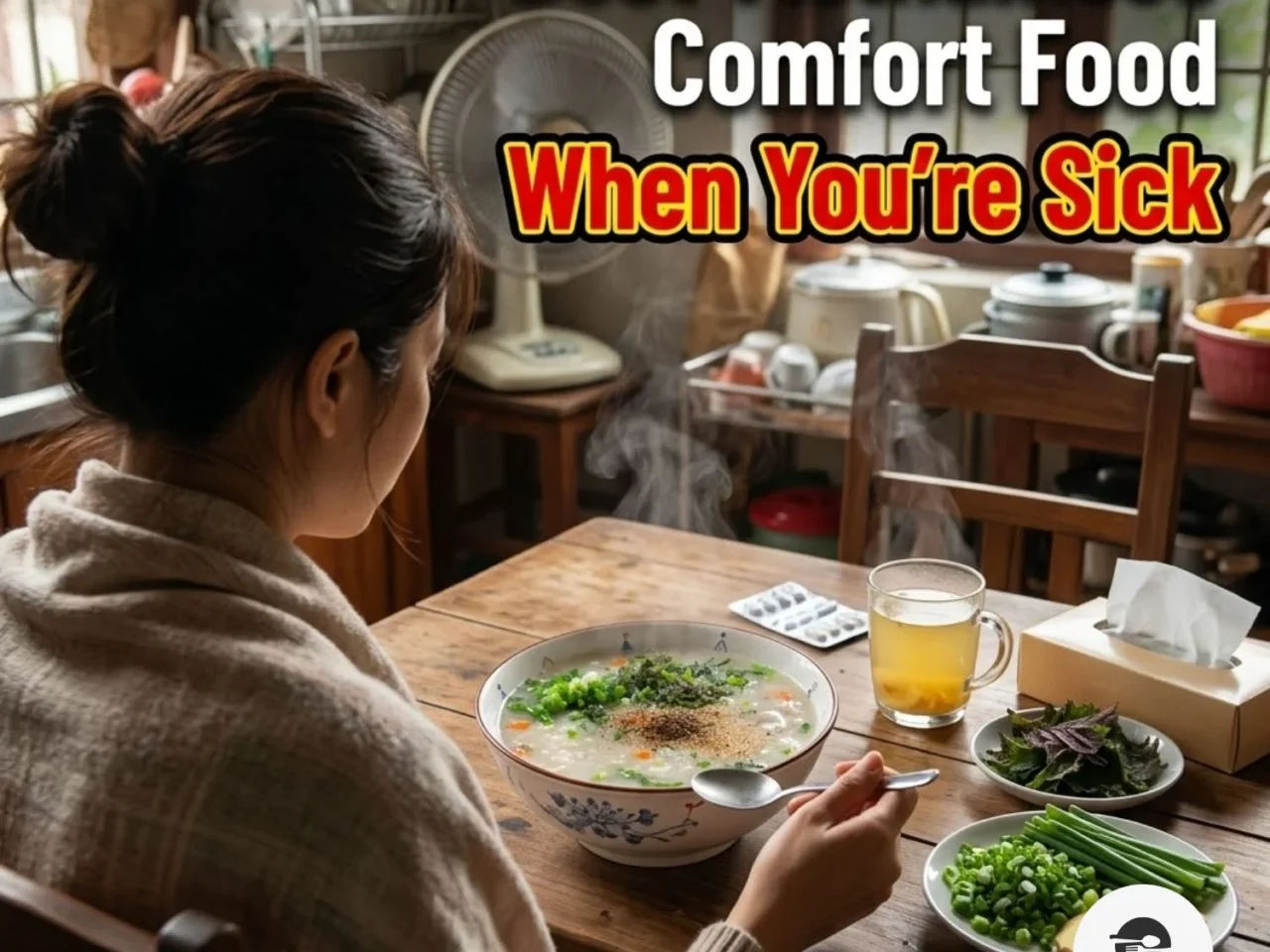
Most English-language lists answer “what to eat when sick in Vietnam” with phở, since it’s the dish foreigners already know from any introduction to Vietnamese cuisine. That’s a reasonable guess, but it’s not what a Vietnamese household actually cooks when someone has a fever or an upset stomach.
Cháo (Rice Porridge) Is Vietnam’s Actual Sick-Day Dish
Cháo is rice cooked down with extra water until it breaks into a soft, thick porridge. Cháo trắng, the plain white version, is what gets served first for an upset stomach or a fever with no appetite.
Cháo gà, the same porridge simmered with shredded chicken and the cooking broth, is the step up once someone can handle more food. Both versions need little chewing and sit easily in a stomach that isn’t working normally.
Phở Is Not the Same Category as Cháo
Phở gets called “Vietnamese chicken soup” in a lot of English guides, and the comparison isn’t wrong exactly — it just misses which dish actually functions as medicine in a Vietnamese home. Phở’s broth is built on charred onion, ginger, and warming spices like star anise and cinnamon, which makes it flavorful but heavier than what a queasy stomach wants.
Phở is also an everyday dish, eaten for breakfast on a normal morning the same way most people order and eat it any other day. Cháo carries the specific cultural signal of “someone here is unwell,” in a way phở doesn’t.
Cháo Gà and the Science Behind Chicken Soup for Colds
The idea that chicken soup helps a cold has real research behind it, not just tradition. A study led by Dr. Barbara Rennard at the University of Nebraska Medical Center, published in the journal CHEST in 2000, found that chicken soup inhibited neutrophil movement in a lab setting — a mechanism that could explain its mild anti-inflammatory effect on cold symptoms.
Cháo gà is built on the same core combination the study tested: chicken simmered slowly with its own broth. The rice replaces the noodles, but the chicken-and-broth base doing the work is the same one Rennard’s study looked at.
Lá Tía Tô (Perilla Leaf) for Sweating Out a Cold
Lá tía tô, perilla leaf, is a purple-tinged herb already common on a Vietnamese herb plate. For a cold, it gets steeped in hot water as a simple tea, or dropped into a hot bowl of cháo right before eating.
The goal, by the same folk logic behind “giải cảm” (breaking a cold), is to eat it while it’s hot enough to bring on a light sweat. Families reach for tía tô specifically at the first signs of a cold, before it fully sets in.
Chanh Đào Ngâm Mật Ong (Honey-Steeped Wild Lime) for Sore Throat
Chanh đào, a red-fleshed lime with a thicker peel than a regular lime, gets sliced and layered in a jar with honey and rock sugar, then left to steep for weeks. Many households prepare a jar every autumn specifically to have it ready before cold season starts.
A spoonful, sometimes stirred into warm water, is the standard response to a sore throat or a lingering cough. Quất (kumquat) is the common substitute where chanh đào isn’t available.
Gà Tần Thuốc Bắc (Herbal Stewed Chicken) for Deeper Recovery
For weakness that goes beyond a simple cold — after a longer illness, surgery, or childbirth — the dish that comes out is gà tần thuốc bắc, chicken slow-stewed with Chinese herbal medicine ingredients like goji berries, red dates, and ginseng-adjacent roots. It’s heavier and more deliberate than cháo, built for rebuilding strength rather than settling a stomach.
Nước Gừng (Ginger Tea) for Chills and Nausea
Sliced fresh ginger steeped in hot water, sometimes with a little sugar, is the standard response to cold hands, chills, or a queasy stomach. It’s the simplest remedy on this list and the one most likely to already be in a Vietnamese kitchen with no preparation needed.
| Dish or remedy | What it’s for | How it’s used |
|---|---|---|
| Cháo trắng | Upset stomach, no appetite | Plain rice porridge, eaten alone |
| Cháo gà | General recovery | Rice porridge with shredded chicken |
| Lá tía tô | Early cold symptoms | Steeped as tea, or stirred into hot cháo |
| Chanh đào ngâm mật ong | Sore throat, cough | A spoonful, often in warm water |
| Gà tần thuốc bắc | Deeper recovery, weakness | Chicken slow-stewed with herbal roots |
| Nước gừng | Chills, nausea | Fresh ginger steeped in hot water |
What Vietnamese Households Avoid When Someone Is Sick
Ice-cold drinks are the first thing to go. The common belief is that anything cold works against a body trying to recover, so even room-temperature water often gets swapped for warm water or tea for the duration of an illness.
Fried food follows the same logic, seen as heavy and hard to digest at exactly the moment the stomach needs the opposite. This isn’t framed as strict medical advice inside a Vietnamese household — it’s closer to a habit nobody questions.
A grandmother in a market stall in Cần Thơ once corrected me for buying her granddaughter a cold soda while the girl was clearly fighting a fever, and swapped it for a thermos of ginger water without asking anyone’s permission first. The girl drank it without complaint, like this had happened before.
Kelly Thuy — field notes, Cần Thơ
Frequently Asked Questions
Cháo, a plain rice porridge, is the default, usually as cháo trắng for an upset stomach or cháo gà (chicken porridge) for general recovery. Lá tía tô tea and ginger water are common additions for cold symptoms.
Phở can be comforting, but it isn’t the dish Vietnamese households specifically prepare for illness. Its broth is heavier and more spiced than cháo, which is the porridge actually reserved for an upset stomach or fever.
Cháo is rice cooked with extra water until it breaks down into a soft, thick porridge. Cháo trắng is the plain version; cháo gà adds shredded chicken and its broth once someone can handle more food.
Chanh đào ngâm mật ong, red-fleshed lime steeped in honey and rock sugar for weeks, is the standard remedy, taken by the spoonful. Many households prepare a jar every autumn ahead of cold season.

Related articles

Vietnam Food Poisoning: How to Avoid It and What to Eat if You Get Sick
Vietnam food poisoning in travelers is usually travelers’ diarrhea, and fluids come first: oral rehydration salts (sold in…
Vegetarian Vietnamese Food: What “Chay” Really Means
Vegetarian Vietnamese food has a name most guides translate too loosely: “chay.” It isn’t just the Vietnamese word…
Gluten-Free Vietnamese Food: The Noodle Name Trap
Gluten-free Vietnamese food is easier to find than in most cuisines, since rice — not wheat — is…