Table of contents
Bean: Vietnamese coffee — robusta (about 97% of Vietnam’s coffee production); Regular coffee — usually arabica
Caffeine: Robusta runs around 2.7% caffeine by weight; arabica around 1.5% — roughly double
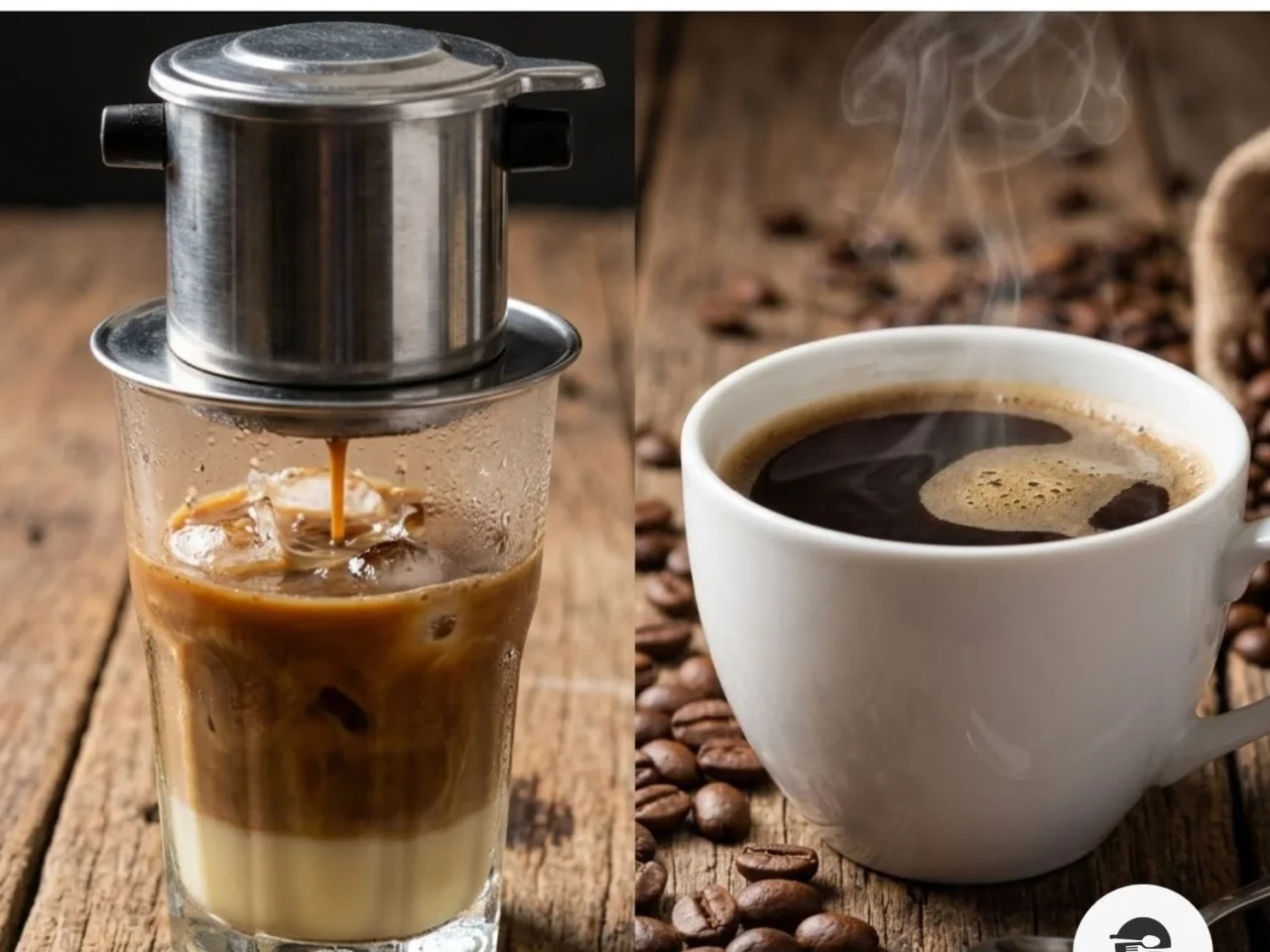
Brewing: Vietnamese coffee — slow drip through a metal phin filter, small and concentrated; Regular coffee — drip machine, pour-over, or espresso, generally higher volume
How it’s served: Vietnamese coffee — mixed with sweetened condensed milk (cà phê sữa), hot or iced; Regular coffee — usually black, or with milk and sugar added separately
Flavor: Vietnamese coffee — bold, slightly bitter, nutty and chocolatey; Regular arabica — smoother, more acidic, often fruity or floral depending on origin
Anyone who’s had both back to back usually notices the difference immediately, even without knowing why. Vietnamese coffee tends to hit faster and taste heavier; regular drip coffee tends to feel lighter and more drawn out. Both of those reactions trace back to real, specific differences — not just perception.
The Bean Is the Biggest Difference
Regular coffee — what most Western cafés and drip machines use — is almost always arabica. Vietnamese coffee is almost always robusta: it makes up roughly 97% of everything Vietnam produces, which also makes Vietnam the world’s second-largest coffee producer overall and its largest robusta exporter by a wide margin. Robusta grows at lower elevations, tolerates heat and pests better than arabica, and produces a bean that’s naturally more bitter and less sweet on its own — all of which shapes everything that follows.
Why Vietnamese Coffee Feels So Much Stronger
Robusta beans contain roughly 2.7% caffeine by weight, compared to about 1.5% for arabica — nearly double. Combine that with robusta’s naturally lower sugar and fat content, and you get a cup that’s both more caffeinated and more intensely flavored, not just stronger-tasting from the brewing method alone. If you’ve ever had one small cup of Vietnamese coffee and felt it more than a full mug of regular drip coffee, that’s the actual chemistry, not a coincidence.
The Phin Filter Changes Everything About the Brew
Vietnamese coffee is traditionally brewed through a phin — a small metal filter that sits directly on top of the cup, with hot water dripping slowly through coarsely ground coffee over several minutes. The result is a small, dense, concentrated shot, closer in intensity to espresso than to a mug of drip coffee, even though the brewing method itself is nothing like espresso. Regular coffee, by contrast, is usually made in higher volume — a drip machine, a pour-over cone, or an espresso machine — producing more liquid per cup at lower overall concentration (except espresso itself, which is its own separate comparison).
Condensed Milk Isn’t Just a Flavor Choice
The other major difference is what goes into the cup after brewing. Vietnamese coffee is very often served as cà phê sữa — mixed with sweetened condensed milk, either hot or, more commonly given Vietnam’s climate, poured over ice as cà phê sữa đá. Condensed milk became the default dairy pairing because fresh milk was historically hard to keep and transport reliably in Vietnam’s climate; condensed milk doesn’t need refrigeration the same way. It’s also what led directly to egg coffee, a Hanoi specialty invented in 1946 when fresh milk ran short entirely and whisked egg yolk stood in for it instead. Regular coffee, especially in the U.S. and Europe, is more often taken black or with regular milk and sugar added separately rather than pre-sweetened.
Where the Two Traditions Actually Come From
Coffee reached Vietnam through French colonists in 1857, and cultivation expanded significantly in the 1920s in the Central Highlands, particularly around Đắk Lắk Province — still the heart of Vietnamese coffee growing today. “Regular” coffee, as most people encounter it, traces more directly to European and American café traditions built around arabica beans, which historically grow better at the higher elevations found in places like Central and South America and parts of East Africa. Two colonial-era coffee economies, in other words, that ended up centered on two different beans for mostly geographic reasons.
Hot, Iced, or Something in Between
Regular coffee culture leans hot by default, with iced coffee treated as a separate, often summer-specific drink. Vietnamese coffee doesn’t really work that way — cà phê sữa đá (iced coffee with condensed milk) is arguably more common day-to-day than the hot version, especially in the south, simply because Vietnam’s climate makes a hot, thick, sweet drink a much harder sell most afternoons. The brewing still happens hot, through the phin, with the concentrated coffee then poured straight over ice rather than chilled afterward. That’s also part of why Vietnamese coffee is brewed so strong in the first place — a weaker concentrate would taste thin once it hits the ice.
I used to think Vietnamese coffee was just “strong coffee with condensed milk” until I watched someone make it properly with a phin, timing the drip almost like they were monitoring something delicate. It isn’t fast, and it isn’t meant to be — the slow drip is doing real work, pulling out something denser than a drip machine ever does in the same few minutes. I’ve had regular arabica pour-overs I genuinely preferred for the flavor notes alone, but nothing hits quite like a small glass of cà phê sữa đá on a hot afternoon.
Kelly Thuy — field notes, Ho Chi Minh City
Frequently Asked Questions
Generally yes. Vietnamese coffee is almost always robusta, which contains roughly 2.7% caffeine by weight compared to arabica’s roughly 1.5% — close to double. The phin brewing method also produces a concentrated cup, which adds to the effect.
Robusta, in the vast majority of cases — it makes up about 97% of Vietnam’s total coffee production. Arabica is grown in Vietnam too, mostly in smaller highland regions, but it’s a minority of what’s produced and consumed there.
Fresh milk was historically difficult to keep and transport reliably in Vietnam’s climate, while sweetened condensed milk doesn’t require refrigeration in the same way. It became the standard pairing for robusta’s naturally bitter, strong flavor and stuck as the default.
You can, but it won’t taste quite the same. The phin filter is built for a coarser grind and slower drip than most regular drip coffee uses, and regular arabica beans won’t produce the same bold, low-acid, nutty-chocolate profile that Vietnamese robusta does.

Related articles
Com Tam Calories: The Rice Isn’t the Problem, the Toppings Are
Com tam calories range from about 500 to 800 per plate, and almost none of that swing comes…

Goi Cuon Calories: The Roll Is Light — the Peanut Sauce Isn’t
Goi cuon calories run surprisingly low for the roll itself — a standard shrimp-and-pork gỏi cuốn comes in…

Banh Xeo Calories: One Pancake, Two Very Different Numbers
Banh xeo calories run about 140–155 per 100 grams across most nutrition databases, but the number that actually…