Table of contents
Closest match: Light or dark brown sugar, 1:1, no adjustment needed
Also close: Coconut sugar, 1:1 — technically its own type of palm sugar
Similar profile: Jaggery or muscovado sugar, 1:1
Adds moisture: Honey or maple syrup, 1:1, but reduce other liquids slightly
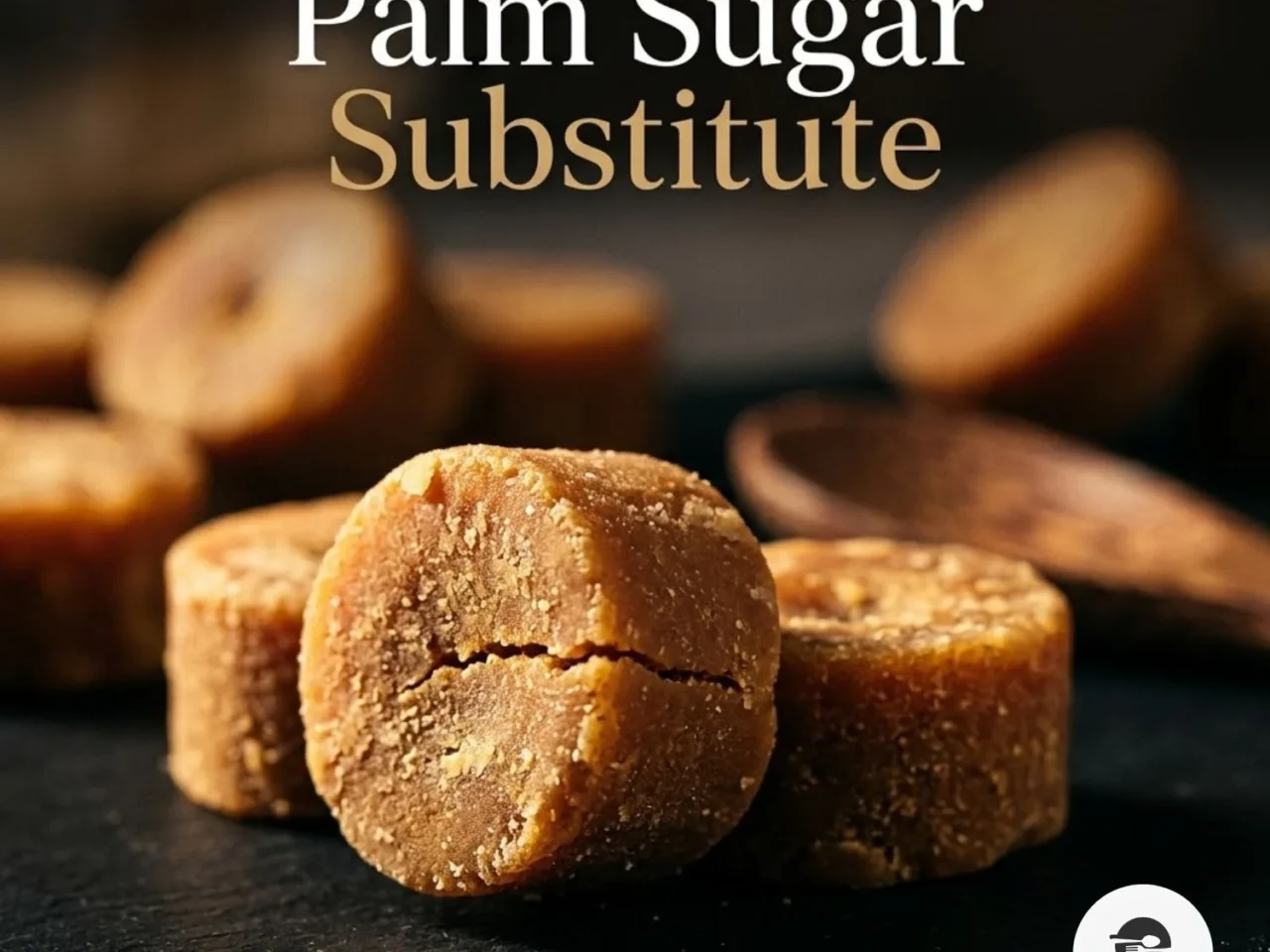
What Vietnamese palm sugar actually is: Đường thốt nốt, made from sugar palm (thốt nốt) sap, associated with An Giang and the Khmer community there
Where it matters most: Kho braises, chè, and dipping sauces, where the fragrance is part of the dish, not just the sweetness
Most substitute guides treat “palm sugar” as one generic ingredient, which is fine for a lot of cooking but misses what’s actually going on in a Vietnamese kitchen. Here’s what genuinely works as a swap, and where it still falls short of the real thing.
Light or Dark Brown Sugar Is the Easiest Swap
Brown sugar is the substitute most people already have, and it works well: use it at a straight 1:1 ratio, no adjustment needed. It measures the same by the tablespoon, which makes it genuinely convenient rather than just close enough. The flavor is slightly less complex — palm sugar has a floral, almost butterscotch quality that brown sugar’s molasses note doesn’t quite reach — but in a dish with a lot of other strong flavors going on, that difference mostly disappears. Dark brown sugar gets marginally closer than light, thanks to its heavier molasses content.
Coconut Sugar Is Technically Palm Sugar Too
This one confuses people, reasonably: coconut sugar is made from the sap of coconut palm flowers, which makes it a type of palm sugar rather than a separate category standing in for it. Vietnamese đường thốt nốt comes from a different tree — the sugar palm, not the coconut palm — but the sap-to-sugar process is nearly identical, and the resulting flavor is close enough that most people can’t tell the difference in a finished dish. Use it 1:1. If a recipe specifically calls for palm sugar and coconut sugar is what’s in your pantry, this is about as close as a substitute gets without tracking down the exact tree it came from.
Jaggery and Muscovado Get You Close Too
Jaggery, common in South Asian cooking, is made the same basic way — boiled-down palm or cane sap, unrefined and full of the mineral notes white sugar loses — and works as a 1:1 substitute with a similarly deep flavor. Muscovado sugar, an unrefined cane sugar with a heavy molasses content, lands in a similar place. Neither is a perfect match for đường thốt nốt’s specific floral quality, but both share the same “not just sweet” character that makes palm sugar worth reaching for over plain white sugar in the first place.
Honey or Maple Syrup, With One Adjustment
Both work at roughly 1:1, and both bring real depth of their own — honey especially, since it shares some of the same floral quality palm sugar has. The catch is moisture: these are liquid sweeteners standing in for a solid one, so in a marinade, sauce, or anything with a specific consistency, cut back slightly on other liquids in the recipe to compensate. In a kho braise, where the sauce is meant to reduce down and thicken, this matters more than it does in something like a quick dipping sauce.
| Substitute | Ratio | Note |
|---|---|---|
| Brown sugar (light or dark) | 1:1 | Closest convenient match; dark is slightly closer |
| Coconut sugar | 1:1 | Technically its own type of palm sugar |
| Jaggery | 1:1 | Same production method, similar mineral depth |
| Muscovado sugar | 1:1 | Heavy molasses note, close in character |
| Honey or maple syrup | 1:1 | Reduce other liquids slightly |
What “Palm Sugar” Actually Means in Vietnamese Cooking
In Vietnam, the palm sugar most cooks mean is đường thốt nốt, made from the sap of the sugar palm — locally called thốt nốt, a word borrowed from the Khmer th’not. It’s most closely associated with An Giang province near the Cambodian border, where sugar palm trees have long been part of daily life for the region’s Khmer community; sap is collected from the flower stalks using bamboo tubes, then boiled down and often wrapped in leaves for sale at local markets. It shows up across Vietnamese cooking in ways that go beyond simple sweetening: melted into nước chấm for a rounder sweetness than white sugar gives, stirred into the caramel base for kho braises like caramelized fish or pork, and featured directly in desserts like chè and thốt nốt cake, where the fruit itself is used alongside the sugar. Southern Vietnamese cooking in particular leans on this kind of sweetness more than northern cooking does, which is part of why dishes like canh chua balance their sourness with a noticeably sweeter edge than a northern soup would.
Where the Substitute Falls Short
In a kho braise or a bowl of chè, palm sugar isn’t just doing sweetness duty — its specific fragrance is part of what the dish is recognized by, the way a specific vinegar or fish sauce brand can be to someone who grew up on it. Brown sugar and the other substitutes above will still make a good dish; they just won’t carry that exact aroma. If fish sauce is also missing from the pantry, that’s worth checking before starting a kho recipe, since the two usually work together in the same braise.
I bought a block of đường thốt nốt at a roadside stall in Châu Đốc once, wrapped in dried leaves the way the vendor said her grandmother always did it, and used it in a kho that night back at the place I was staying. It wasn’t dramatically sweeter than what I’d normally use, just rounder somehow, with this faint fragrance I couldn’t place until she mentioned the leaves it travels in probably had something to do with it. I’ve used brown sugar in the same recipe plenty of times since and it’s genuinely fine — but that one batch is still the version I think about.
Kelly Thuy — field notes, An Giang
Frequently Asked Questions
Light or dark brown sugar is the most convenient, used at a straight 1:1 ratio. Coconut sugar, jaggery, and muscovado sugar all work similarly well and share palm sugar’s deeper, less refined character.
Coconut sugar is a type of palm sugar, made from coconut palm sap, while Vietnamese đường thốt nốt comes from a different tree, the sugar palm. The production method is nearly identical and the flavors are close enough to substitute 1:1.
Yes, at roughly a 1:1 ratio, though honey adds moisture that palm sugar doesn’t. In sauces or braises meant to reduce and thicken, cut back slightly on other liquids in the recipe to compensate.
It’s made from the sap of the sugar palm tree, known as thốt nốt, a word borrowed from Khmer. It’s most associated with An Giang province, where the sap is collected and boiled down by the region’s Khmer community.

Related articles
Perilla Leaf Substitute: Why Vietnamese Tía Tô Isn’t the Korean Kind
Most perilla leaf substitute guides are really answering a Korean cooking question — kkaennip, used whole as a…
Shrimp Paste Substitute: What Works, and Which Paste a Recipe Actually Means
A shrimp paste substitute is easy enough for most recipes — fish sauce, anchovy paste, or miso all…
Thai Basil Substitute: What Works Raw vs. What Works Cooked
Thai basil substitute options actually split into two different answers depending on how you’re using the herb. As…