Table of contents
- Thai Basil and Mint Together Get You Closest
- Thai Basil Alone Works, at Half the Amount
- Sweet Basil Plus Cilantro, a Rougher Approximation
- For Wraps Specifically, Size Matters More Than Flavor
- Perilla Leaf Isn’t One Herb — Tía Tô vs Korean Perilla
- Where the Substitutes Fall Short
- Frequently Asked Questions
Closest match for tía tô: Thai basil and mint, roughly equal parts
Thai basil alone: About half the amount a recipe calls for, adjust to taste
For whole-leaf wraps (Korean-style use): Grape leaves or butter lettuce — matches size, not flavor
Botanical note: Tía tô is Perilla frutescens var. crispa, the same variety as Japanese shiso — milder than Korean perilla (var. frutescens, deulkkae)
Where it matters most: Herb plates with bún bò Huế, bún chả, and bánh xèo, plus stirred into cháo and fish soups to cut the fishy smell
Not a full match: Sweet basil alone — missing the mint and anise notes that make tía tô distinct
The right substitute here depends on which “perilla leaf” a recipe actually means, since English-language sources use that name loosely across three different regional herbs. Here’s what covers the common Korean use case, what actually works for Vietnamese tía tô, and why they’re not quite the same swap.
Thai Basil and Mint Together Get You Closest
Tía tô’s flavor sits in an unusual middle ground — part basil, part mint, with a faint anise edge and a slightly musky finish that neither herb has on its own. Combining Thai basil and fresh mint in roughly equal parts covers more of that range than either herb alone. Use it the same way you’d use tía tô: torn by hand and added at the table or right at the end of cooking, not simmered in, since both substitute herbs lose their brightness fast under heat. This combination works well on a herb plate, where tía tô is usually eaten raw alongside other fresh herbs rather than cooked into the dish itself.
Thai Basil Alone Works, at Half the Amount
If mint isn’t available either, Thai basil by itself is a reasonable single-herb stand-in — it already carries a mild anise note that gets partway to tía tô’s flavor. Start with about half the amount a recipe calls for in tía tô, then add more to taste, since Thai basil’s flavor is more concentrated in a single direction and can overwhelm a dish if used at a full 1:1 swap. This is the more convenient option when Thai basil is already on hand for a dish that calls for it separately, which is common in Vietnamese cooking.
Sweet Basil Plus Cilantro, a Rougher Approximation
Sweet (Italian) basil alone misses tía tô’s mint and anise character almost entirely, reading as flatter and more one-dimensional. Mixing in a small amount of fresh cilantro helps round out the gap, even though cilantro’s flavor is genuinely different from tía tô’s. This combination is more of a last resort than a real match — it fills the herb plate visually, but anyone familiar with tía tô’s actual flavor will notice the difference.
For Wraps Specifically, Size Matters More Than Flavor
When a recipe calls for whole perilla leaves as a wrapper — the way Korean cooking uses kkaennip for ssam, wrapping grilled meat or rice directly in the leaf — flavor-matching takes a back seat to finding something the right size and sturdiness. Grape leaves (briny, and usually brined) or butter lettuce leaves are the common stand-ins here, chosen for their ability to hold a filling rather than for tasting anything like perilla. This use case doesn’t really come up in Vietnamese cooking, where tía tô is almost always torn into smaller pieces on a herb plate rather than used as an intact wrapper.
| Substitute | Best for | Ratio |
|---|---|---|
| Thai basil + mint | Vietnamese herb plates (tía tô) | Roughly equal parts |
| Thai basil alone | Vietnamese herb plates (tía tô) | Half the amount, adjust to taste |
| Sweet basil + cilantro | Rough approximation only | Mostly basil, small amount of cilantro |
| Grape leaves or butter lettuce | Whole-leaf wraps (Korean-style use) | Match by size, not flavor |
Perilla Leaf Isn’t One Herb — Tía Tô vs Korean Perilla
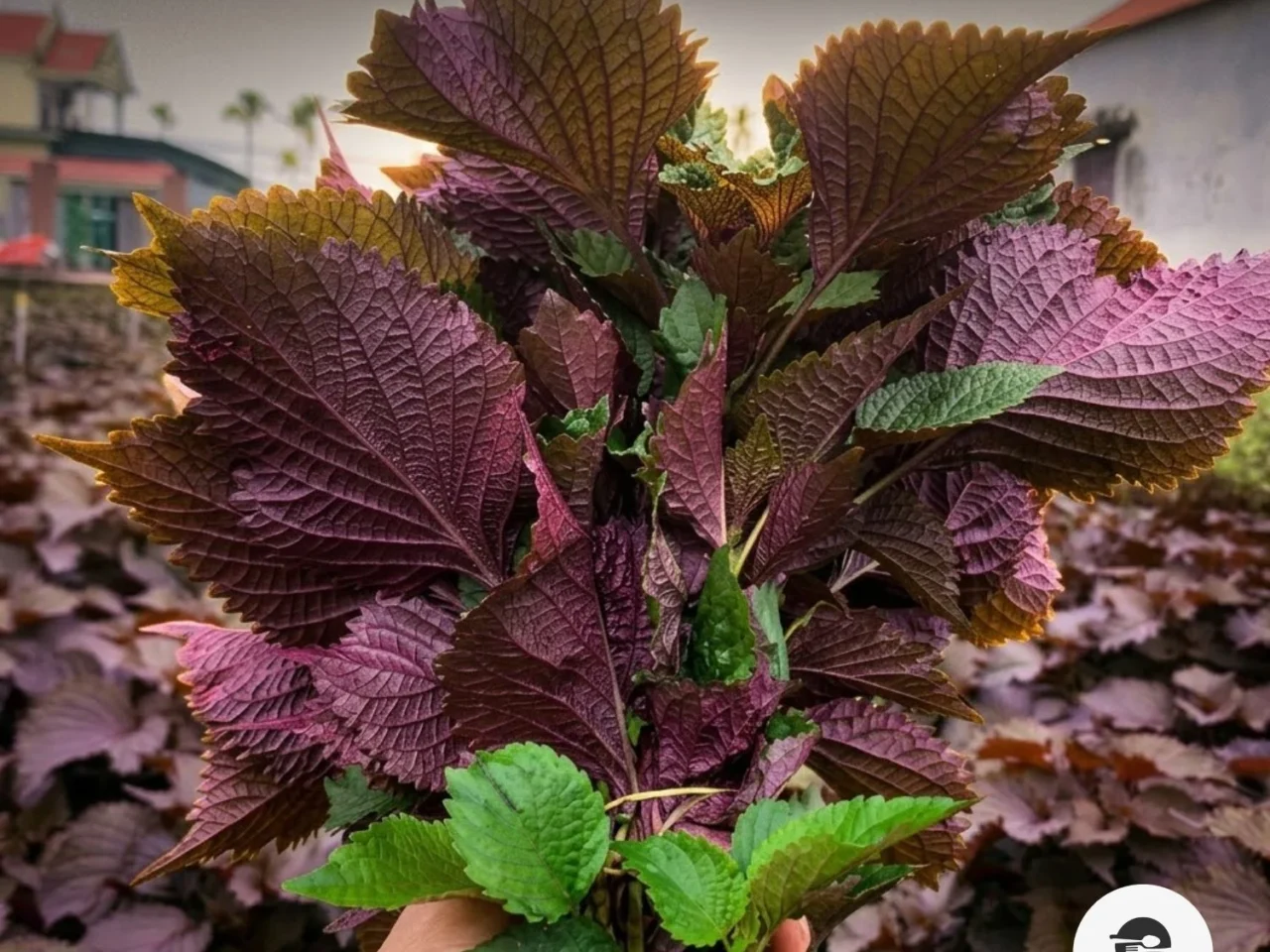
This is where most substitute guides written for a Western audience miss the point for anyone cooking Vietnamese food. Botanically, tía tô and Japanese shiso are the same variety, Perilla frutescens var. crispa — the milder of the plant’s known varieties, with leaves that shift from green to deep purple depending on the plant and often show both colors on a single leaf, green on top and purple underneath, with visibly jagged edges. Korean perilla, called kkaennip or deulkkae, is a separate, more strongly scented variety, Perilla frutescens var. frutescens, grown as much for its seeds — pressed into perilla oil or ground into powder — as for the leaf itself.
That difference in intensity is also a difference in how each one is used. Kkaennip is typically served as a whole, sturdy wrap leaf, standing up to being layered around meat and rice. Tía tô, milder and more delicate, is torn by hand onto a communal herb plate, mixed in with mint, Thai basil, and other fresh herbs rather than eaten as its own wrapper. It’s part of the herb plate served alongside bún bò Huế, bún chả, and bánh xèo, and it also gets stirred directly into dishes like cháo and fish-based soups, where Vietnamese cooks have long used it to help cut the fishy smell in snail and fish dishes — a use that has less to do with formal cuisine and more with what generations of home cooks have simply found works.
Where the Substitutes Fall Short
None of the swaps above fully replicate tía tô’s specific combination of mint, basil, and anise in one leaf. On a Vietnamese herb plate crowded with other fresh herbs, lime, and chili, a close substitute like Thai basil and mint mostly holds its own. In a dish where tía tô is the main flavor rather than one herb among several — like a cháo where it’s stirred in at the very end — the gap is more noticeable, and it’s worth knowing that going in. If Thai basil itself is also missing from the herb drawer, that shortage tends to overlap with this one more often than not.
A friend visiting from the US once asked why I kept calling the wrap leaves at a Korean barbecue place “perilla” when I’d never used that word for the tía tô on my own dinner table back home. I hadn’t actually connected the two before that — they’re such different textures and different jobs on a plate that it never occurred to me they were close relatives. She tried tía tô for the first time a week later at a bún bò Huế stall near Đông Ba market and said it tasted nothing like what she’d had wrapped around bulgogi, which is more or less exactly right.
Kelly Thuy — field notes, Hue
Frequently Asked Questions
For Vietnamese tía tô, Thai basil mixed with fresh mint in roughly equal parts is the closest match. For whole-leaf wraps in Korean-style dishes, grape leaves or butter lettuce work for size, though neither matches the flavor.
No. Both come from the same plant species, but tía tô is the milder variety, Perilla frutescens var. crispa — the same one used for Japanese shiso — while Korean perilla (kkaennip) is a separate, stronger-scented variety typically used as a whole wrap leaf.
Yes, for Vietnamese tía tô specifically. Use about half the amount the recipe calls for and add more to taste, since Thai basil’s flavor is more concentrated in one direction than tía tô’s mint-basil-anise blend.
Grape leaves or butter lettuce are the usual stand-ins when a recipe needs a sturdy whole leaf for wrapping, as in Korean-style ssam. They’re chosen for size and durability, not for tasting anything like perilla.

Related articles
Shrimp Paste Substitute: What Works, and Which Paste a Recipe Actually Means
A shrimp paste substitute is easy enough for most recipes — fish sauce, anchovy paste, or miso all…
Palm Sugar Substitute: What Works, and Why Vietnamese Kitchens Reach for the Real Thing
Palm sugar substitute options are easy to find — light brown sugar, coconut sugar, and jaggery all work…
Thai Basil Substitute: What Works Raw vs. What Works Cooked
Thai basil substitute options actually split into two different answers depending on how you’re using the herb. As…