Table of contents
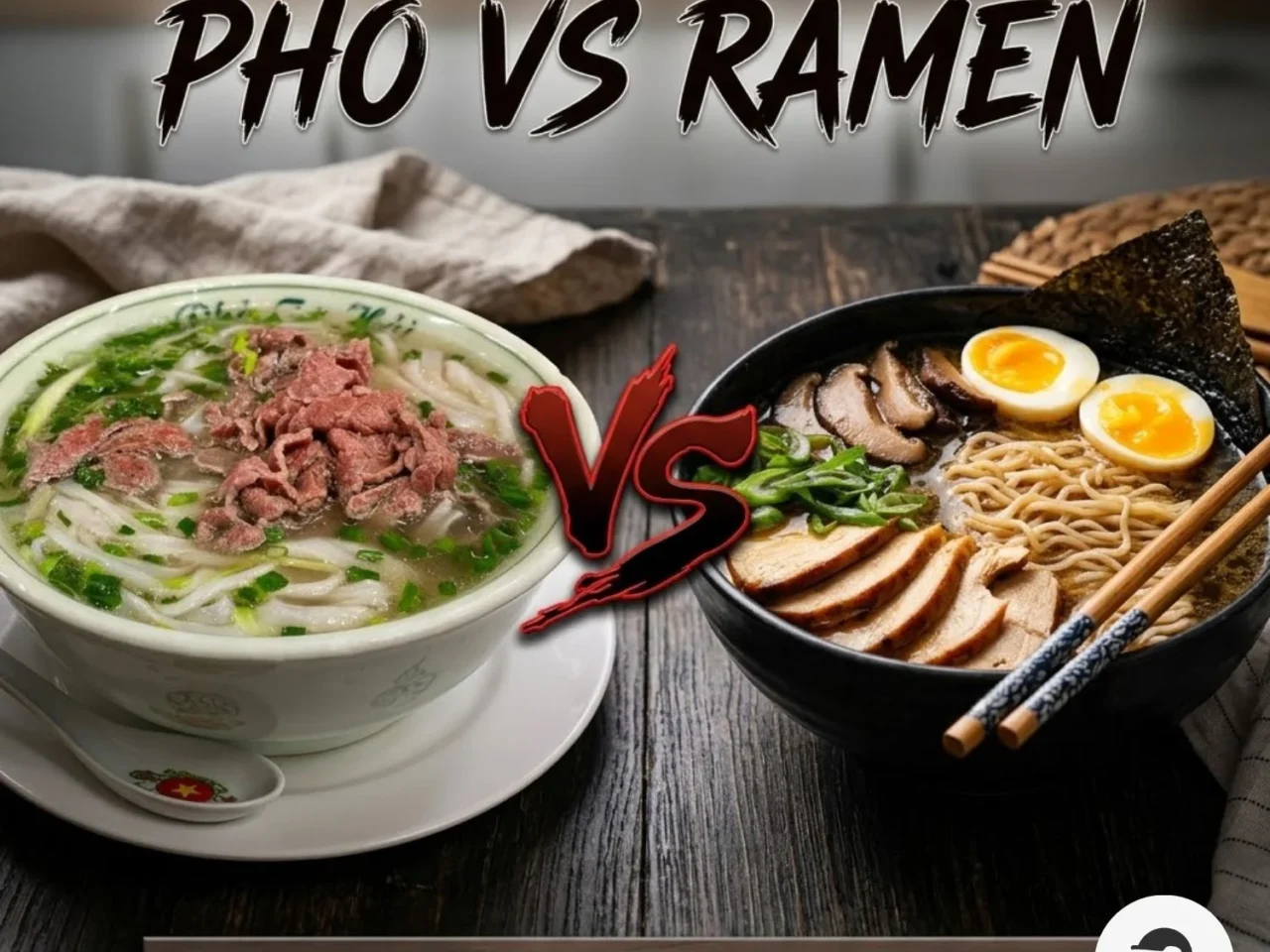
Country of origin: Pho — Vietnam (Nam Định, early 1900s); Ramen — Japan (adapted from Chinese noodle soup, late 1800s–1910)
Noodles: Pho — flat rice noodles (bánh phở); Ramen — wheat noodles made with kansui
Gluten: Pho noodles are naturally gluten-free; ramen noodles are not
Broth style: Pho — clear, beef or chicken, spice-forward; Ramen — varies from clear (shio) to rich and opaque (tonkotsu)
Typical calories/bowl: Pho generally runs lower than richer ramen styles like tonkotsu, though both vary a lot by portion and broth
Both dishes get called “the pho of Japan” or “the ramen of Vietnam” often enough that it’s worth being specific about why that comparison doesn’t really hold up. They’re both noodle soups, they’re both built around a long-simmered broth, and that’s about where the overlap ends.
Where Each One Actually Came From
Pho traces back to northern Vietnam in the early 1900s, with the villages around Nam Định Province — a name that shows up constantly in pho history — credited as its traditional home. French colonial cooking pushed beef into Vietnamese kitchens in a way it hadn’t been before, and the technique of simmering bones for broth echoes French consommé. Chinese trading communities contributed the rice noodles and some of the spicing. Pho Nam Định specifically is still considered the closest thing to an original, unbranched version of the dish.
Ramen has a different, more recent path. Chinese immigrants, mostly from Guangdong, were selling wheat noodle soups in Yokohama’s Chinatown by the 1880s, known then as “Nankin soba.” The first dedicated ramen shop, Rairaiken, opened in Tokyo in 1910, staffed by Cantonese chefs. The name went through several changes — Nankin soba, shina soba, chūka soba — before settling on “ramen” sometime in the 1950s and 60s. So while pho was already a recognized Vietnamese street food by the 1910s, what we’d call ramen today was still finding its name.
The Noodles Are Not Interchangeable
Pho uses bánh phở, flat rice noodles that are naturally white, soft, and — this matters for a lot of readers — gluten-free. Ramen noodles are wheat-based and made with kansui, an alkaline mineral water that gives them their yellow tint, springy bite, and slight curl. Kansui is also why ramen noodles hold their texture in hot broth far longer than rice noodles do; rice noodles start going soft the moment they sit. If you’ve ever tried to substitute one for the other at home, that’s usually why it didn’t work the way you expected.
Broth: Clear vs. Everything Else
Pho broth is meant to be clear. It’s simmered for hours with beef bones (or chicken, for phở gà), charred onion and ginger, and a specific spice mix — cinnamon, star anise, black cardamom, coriander seed, fennel seed, clove — skimmed repeatedly to keep it from clouding. A cloudy pho broth is generally considered a mistake, not a style choice.
Ramen doesn’t work that way at all. Shio broth is light and clear, closer to pho in appearance. Shoyu adds soy sauce for more color and saltiness. Miso, developed in Sapporo around 1965, is thick and nutty. Tonkotsu — pork bones boiled hard for hours until the fat and collagen emulsify — is deliberately cloudy and creamy, almost the opposite goal of a good pho broth. None of these are “wrong” versions of one broth; they’re genuinely different categories within ramen itself.
How You Actually Eat Each One
Pho comes with a side plate — Thai basil, bean sprouts, lime, sliced chili, sometimes culantro — that you add yourself, and how much you adjust the bowl is part of the experience. Hoisin and sriracha go in carefully, if at all; drowning the broth in either is a common mistake among first-timers. Ramen is usually served closer to how the chef intended, with less table customization expected — the tare (seasoning base), broth, noodles, and toppings are already balanced by the kitchen. Some ramen shops offer chili oil or extra garlic on request, but it’s not the same build-your-own-bowl culture pho has.
Is One Healthier Than the Other?
It depends more on the specific bowl than on the dish category. Pho tends to run lighter, partly because the broth is thinner and the noodles are rice-based rather than fat-carrying wheat noodles, and a full calorie and sodium breakdown is worth reading if that’s what you’re actually trying to figure out. Tonkotsu ramen, with its fat-emulsified broth, tends to run heavier than most pho bowls. Shio and shoyu ramen sit closer to pho in overall richness. Sodium is a real concern in both — restaurant broth, whichever country it’s from, is usually salted assuming you won’t drink the whole bowl.
I had ramen in Tokyo the same month I’d been eating pho every morning in Hanoi, and the thing that actually surprised me wasn’t the broth or the noodles — it was how different the pace of eating felt. Pho gets built and adjusted as you go, basil torn in, lime squeezed, chili added a little at a time. Ramen showed up finished, and the etiquette seemed to be eating it fast, before the noodles softened past the point the chef intended. Neither is more correct. They’re just not solving the same problem.
Kelly Thuy — field notes, Hanoi and Tokyo
Frequently Asked Questions
It depends on the specific bowl. Pho broth is generally thinner and its rice noodles carry less fat than wheat ramen noodles, so a standard pho bowl often runs lighter than rich styles like tonkotsu ramen. Shio or shoyu ramen sits closer to pho in overall richness.
Pho noodles (bánh phở) are made from rice and are naturally gluten-free. Ramen noodles are wheat-based and made with kansui, so they contain gluten.
Not really, if you want an authentic result. Ramen’s wheat-and-kansui noodles hold up differently in broth than pho’s rice noodles, and the two broths are seasoned for completely different noodle textures and flavor profiles.
Mostly because they’re the two most internationally recognized Asian noodle soups, both built on a long-simmered broth. Beyond that broad category, their origins, noodles, broths, and eating customs are quite different.

Related articles
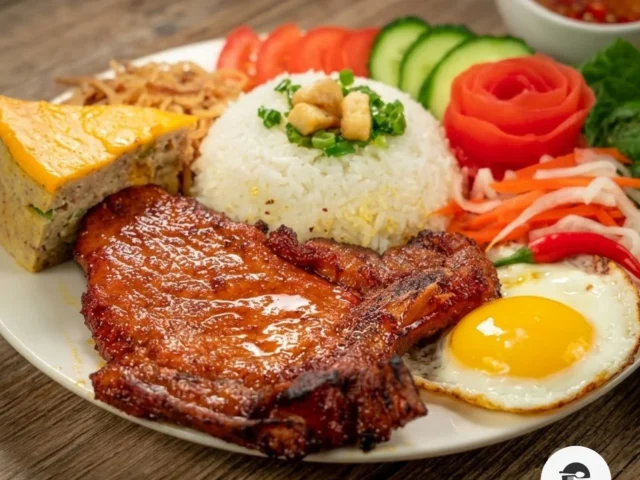
Com Tam Calories: The Rice Isn’t the Problem, the Toppings Are
Com tam calories range from about 500 to 800 per plate, and almost none of that swing comes…
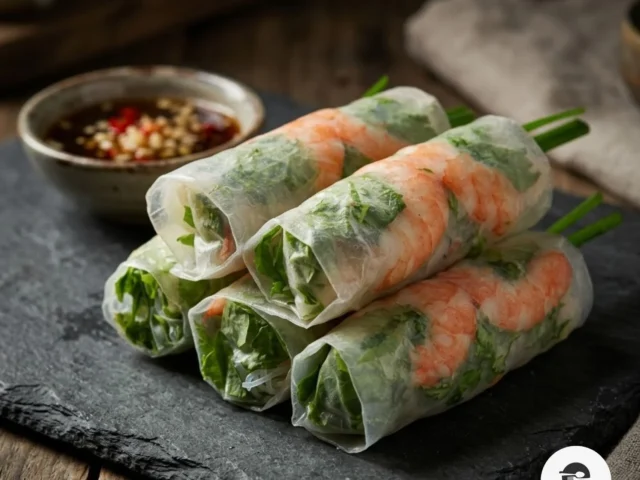
Goi Cuon Calories: The Roll Is Light — the Peanut Sauce Isn’t
Goi cuon calories run surprisingly low for the roll itself — a standard shrimp-and-pork gỏi cuốn comes in…
Banh Xeo Calories: One Pancake, Two Very Different Numbers
Banh xeo calories run about 140–155 per 100 grams across most nutrition databases, but the number that actually…