Table of contents
- The Real Split: Where the Heat Gets Added
- Coconut Milk: The Backbone of One Cuisine, a Regional Detour in the Other
- Curry Paste vs Nước Chấm: Two Different Ways of Building Flavor
- “Thai Basil” Isn’t Actually a Thai-Exclusive Herb
- Shared Roots: Why the Two Cuisines Overlap at All
- Similar Dishes, Different Execution
- Frequently Asked Questions
Where the heat is added: Thai — cooked into the dish (curry paste, chilies stir-fried in); Vietnamese — added by the diner at the table
Coconut milk: Central to Thai curries across most regions; in Vietnamese food it’s regional, mainly Southern/Mekong Delta dishes, not the cuisine’s backbone
Flavor base: Thai — pounded curry paste (chili, garlic, shrimp paste, lemongrass, galangal); Vietnamese — fish sauce-based nước chấm assembled fresh, not pounded
“Thai basil” mix-up: The herb English calls Thai basil (anise-flavored, purple stems) is the same herb Vietnamese cooking uses constantly as húng quế — it’s not exclusively Thai
Shared root: Both cuisines got chilies from the same 16th–17th century Portuguese trade route; how each one used them afterward is where they split
Vegetables: Thai cooking mostly stir-fries vegetables into the dish; Vietnamese cooking serves a large volume of them raw, on the side
Most comparisons stop at spice level and stir-fry versus soup, which isn’t wrong so much as incomplete. Here’s what actually separates the two cuisines, dish by dish and technique by technique.
The Real Split: Where the Heat Gets Added
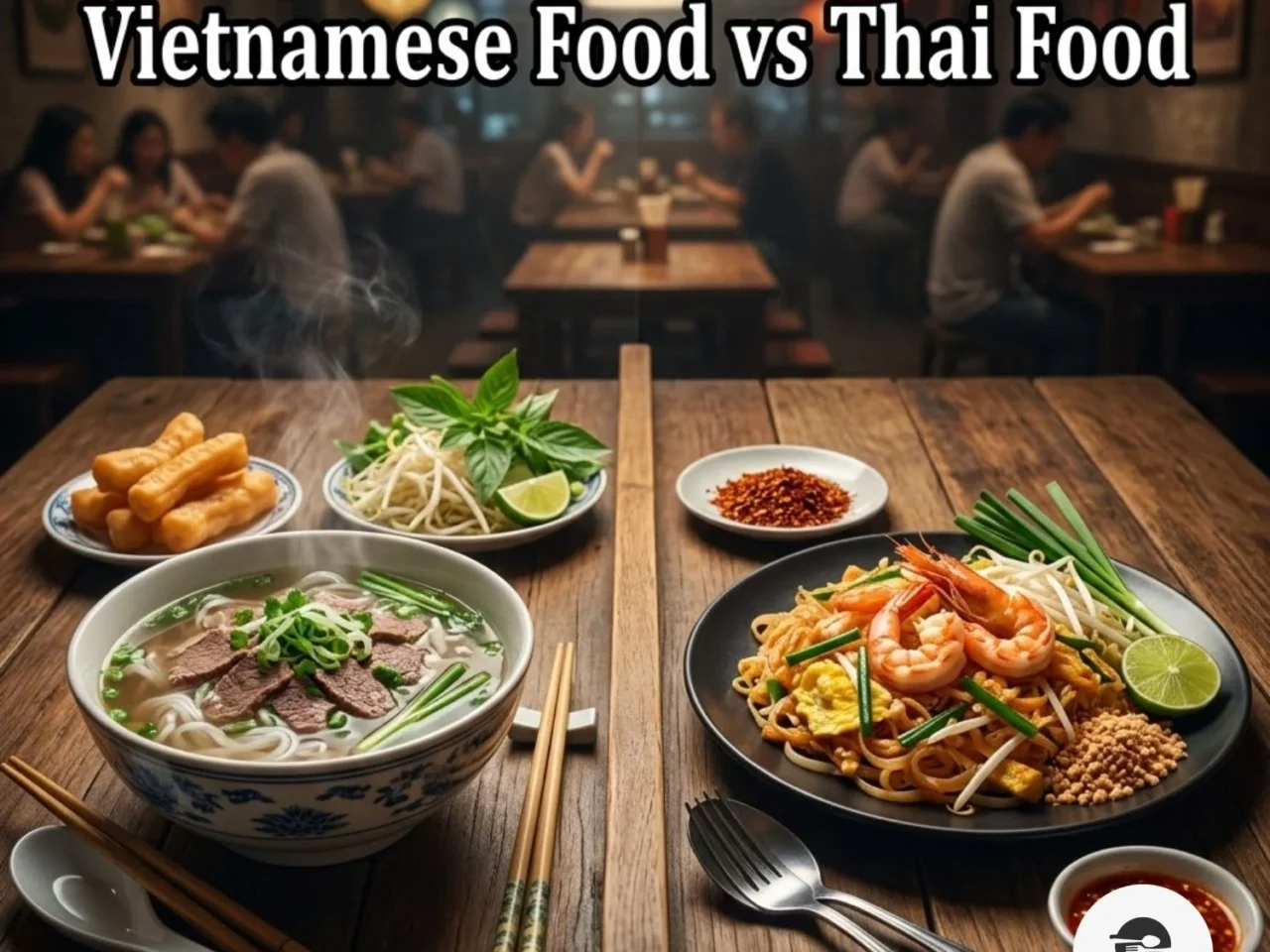
This is the difference that explains almost everything else. Thai cooking works chili into the dish itself, usually by way of a pounded curry paste — red, green, or massaman — cooked into the base before the protein goes in. The heat is structural, calibrated by the cook. Vietnamese cooking runs the opposite way: a bowl of phở or bún arrives mild by default, with fresh chili slices, a bottle of chili sauce, or a small dish of nước chấm for the diner to add at their own pace. Thai food’s heat gets locked in during cooking; Vietnamese food’s gets negotiated at the table, one spoonful at a time.
Coconut Milk: The Backbone of One Cuisine, a Regional Detour in the Other
Coconut milk runs through Thai cooking at almost every level — curries built entirely on it, soups like tom kha finished with it, desserts sweetened with it. It’s closer to a default base than an occasional ingredient. Vietnamese cooking uses coconut milk too, but mostly in the South and the Mekong Delta — a coconut-milk-based cà ri gà (chicken curry), the batter for bánh xèo, a handful of kho braises finished with it. Travel north into Hanoi or central Vietnam and it barely shows up. That regional split is the clearest marker of how differently the two cuisines treat the same ingredient: default versus detour.
Curry Paste vs Nước Chấm: Two Different Ways of Building Flavor
Thai flavor typically starts with a paste — chilies, garlic, shallots, lemongrass, galangal, and often shrimp paste, pounded together until it fuses into one base cooked into everything from a curry to a stir-fry. Vietnamese flavor more often starts with a liquid built fresh at the moment of eating: fish sauce, lime, sugar, garlic, and chili stirred into nước chấm, made new for each meal rather than stored as a paste. One is a cooked foundation; the other is closer to a vinaigrette assembled to order. Both cuisines lean on galangal and lemongrass, but Thai cooking pounds them into the base while Vietnamese cooking simmers lemongrass whole in a broth and pulls it back out.
“Thai Basil” Isn’t Actually a Thai-Exclusive Herb
This is the part most comparisons get backwards. The herb sold in Western stores as “Thai basil” — narrow leaves, purple stems, a licorice-anise flavor — is horapa in Thai, and it’s the exact herb Vietnamese cooking calls húng quế, torn onto the herb plate next to nearly every bowl of phở and bún bò Huế. It isn’t Thai-exclusive; both cuisines use it constantly. What actually gives the iconic Thai dish pad kra pao its peppery bite is a different plant — holy basil (bai gaprao), fuzzy-leafed with a clove-and-black-pepper flavor, and it rarely appears in Vietnamese cooking. So the herb people associate with “Thai flavor” is shared with Vietnamese food, while the one actually responsible for that iconic dish stays on the Thai side. A recipe calling for Thai basil specifically wants the shared herb, not the exclusive one.
Shared Roots: Why the Two Cuisines Overlap at All
The overlap isn’t random. Both cuisines picked up chilies from the same source — Portuguese traders brought them from the Americas into Southeast Asia in the 16th and 17th centuries, and neither had chili heat before that. Both also absorbed Chinese techniques — stir-frying, wok work, noodles — through centuries of trade and, in Vietnam’s case, direct rule. What diverged afterward is structure: Thailand leaned into Indian and Malay spice trading, building toward pounded curry pastes and coconut-based sauces; Vietnam’s added layer came from French colonial rule instead, explaining bánh mì, Vietnamese coffee, and a broth-forward style that never adopted curry paste as a foundation.
Similar Dishes, Different Execution
A few dishes make the split concrete. Thailand’s tom yum and Vietnam’s canh chua are both sour-savory soups, but tom yum gets its punch from a paste of lemongrass, galangal, and chili paste (nam prik pao) simmered into the broth, while canh chua leans on tamarind and pineapple with the heat left out unless someone adds it. Pad Thai and a Vietnamese stir-fried noodle dish both use rice noodles and a sweet-savory sauce, but pad Thai’s tamarind-fish sauce-palm sugar glaze is cooked into the noodles in the wok, while a Vietnamese version keeps the sauce and toppings separate. Even spring rolls split this way — Thai fresh rolls use similar rice-paper and shrimp logic as gỏi cuốn, but the dip is more likely sweet chili sauce rather than fish-sauce-based nước chấm.
| Feature | Vietnamese food | Thai food |
|---|---|---|
| Where heat is added | At the table, by the diner | Cooked into the dish |
| Coconut milk | Regional (South/Mekong Delta) | Central to most curries |
| Flavor base | Fresh-assembled nước chấm | Pounded curry paste |
| Vegetables | Often raw, served on the side | Usually stir-fried into the dish |
| Colonial influence | French (bread, coffee) | Indian and Malay spice trade |
A Thai friend visiting Saigon once asked why my bowl of phở arrived “with nothing in it,” meaning no visible spice at all, compared to what she’d expect from a Thai curry stall. I handed her the little dish of sliced chilies on the side and told her to add as much as she wanted. She used almost the whole dish. That’s the entire difference in one bowl — the heat was always available, just never assumed.
Kelly Thuy — field notes, Ho Chi Minh City
Frequently Asked Questions
On average, yes, but the more useful distinction is where the heat is added. Thai cooking builds chili into the dish during cooking, while Vietnamese cooking leaves chili on the side for the diner to add — a Vietnamese meal can end up just as spicy, it’s simply optional rather than built in.
Thai cooking is built on pounded curry pastes and coconut milk cooked directly into dishes, while Vietnamese cooking centers on fish sauce and fresh, raw herbs added at the table. Vietnamese food uses coconut milk far less, mainly in Southern and Mekong Delta dishes, compared to its central role in Thai curries.
Yes — the herb sold as “Thai basil” (anise-flavored, purple stems) is the same one Vietnamese cooking calls húng quế, used on herb plates with phở and bún bò Huế. The herb behind Thai food’s pad kra pao flavor is a different plant, holy basil, which rarely appears in Vietnamese cooking.
Both cuisines picked up chili peppers from the same source — Portuguese traders in the 16th and 17th centuries — and both absorbed Chinese stir-frying techniques over centuries of trade. What diverged afterward was Thailand’s Indian and Malay spice influence versus Vietnam’s French colonial influence.

Related articles
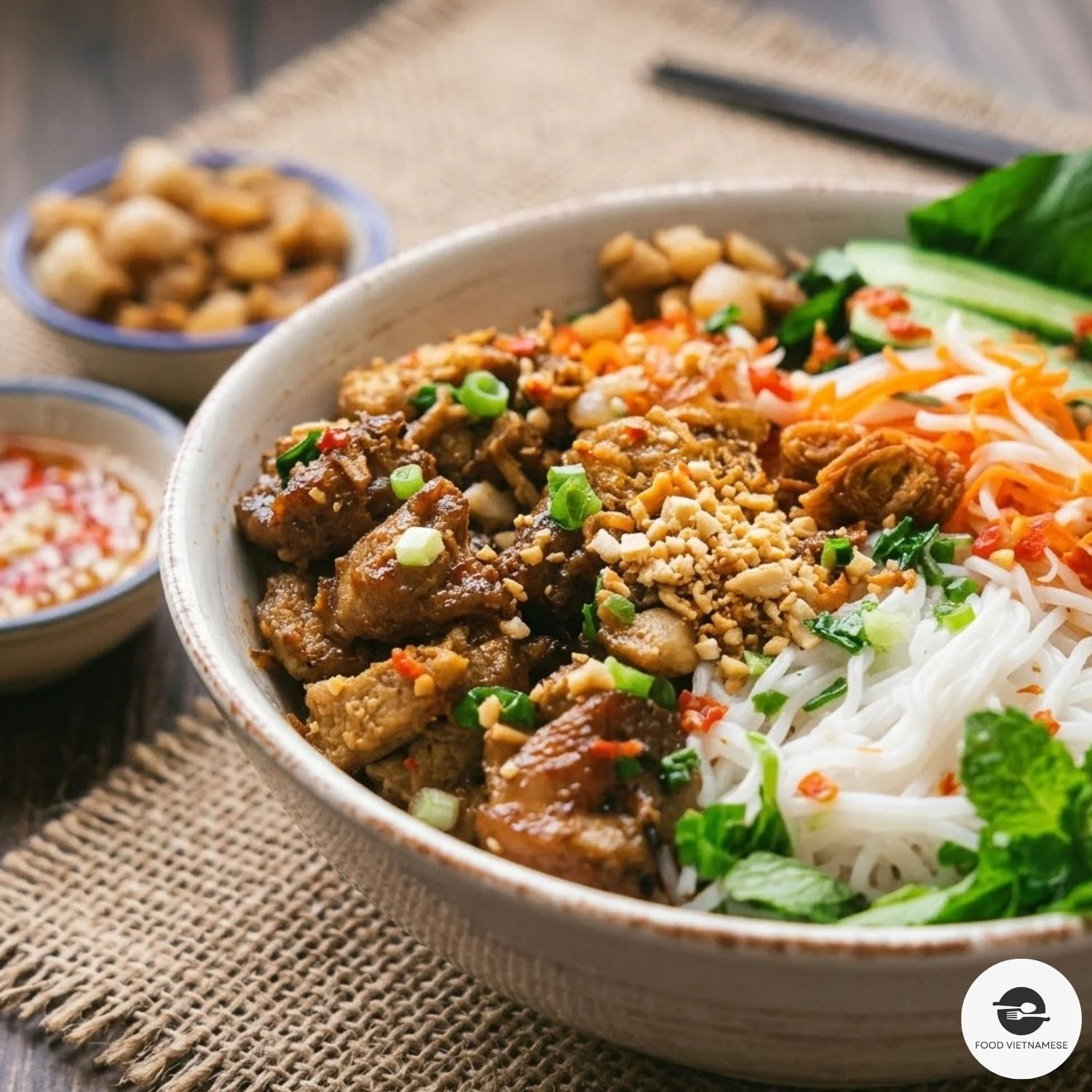
Bun Thit Nuong: Vietnam’s Grilled Pork Noodle Salad, Not a Soup
Bun Thit Nuong is a Vietnamese grilled pork noodle salad — cold rice vermicelli piled with lemongrass-marinated grilled…
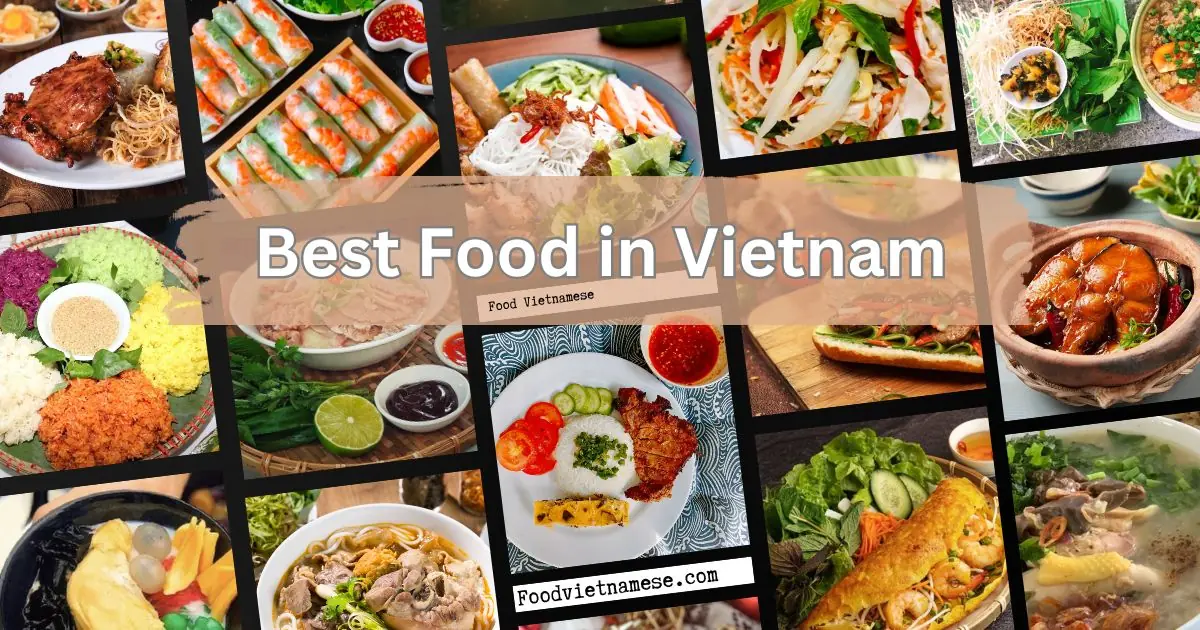
Best Vietnam Food: 15 Must-Try Dishes
Best Vietnam food is defined by one core principle: maximum flavor from the freshest possible ingredients. Vietnamese cuisine balances…
Vietnamese Hot Pot (Lẩu): Types, How to Eat, Dipping Sauces
Vietnamese hot pot (lẩu) is a pot of seasoned broth kept simmering at the table, where diners cook…