Table of contents
Saigon food is sweeter than the North’s, heavier on fresh herbs and raw vegetables, and largely indifferent to what time it is. A Mekong Delta that produces something edible in every season, plus generations of Chinese and Khmer influence, gives the city’s cooking more sweetness and more layers than Northern Vietnamese food tends to carry. The bigger difference from Hanoi isn’t which cuisine is better — it’s that most of what’s below is sold from early morning until close to midnight, not saved for one particular meal.
Com Tam
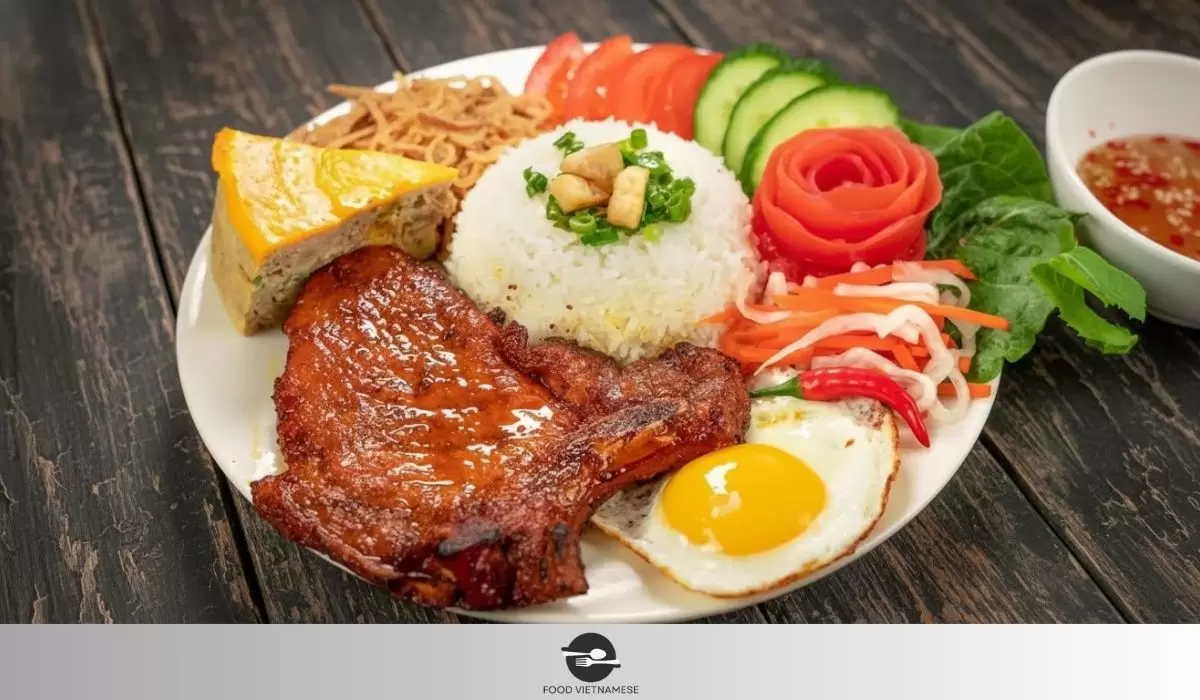
Ask a Saigon local what they had for breakfast and there’s a decent chance the answer is com tam. Broken rice — the fractured grains left over from milling, once considered too low-value to sell at full price — became a meal for poor farmers and laborers in the early 20th century and slowly worked its way up every income bracket in the city. A full plate usually comes with a grilled pork chop, shredded pork skin tossed in roasted rice powder (bì), a steamed egg-and-pork loaf, pickled vegetables, and a fried egg, all doused in sweet-savory fish sauce. It’s eaten morning or midnight with equal ease; some of the busiest “com tam đêm” (night broken rice) stalls in the city don’t open until 9 or 10 p.m.
Hu Tieu in Cholon
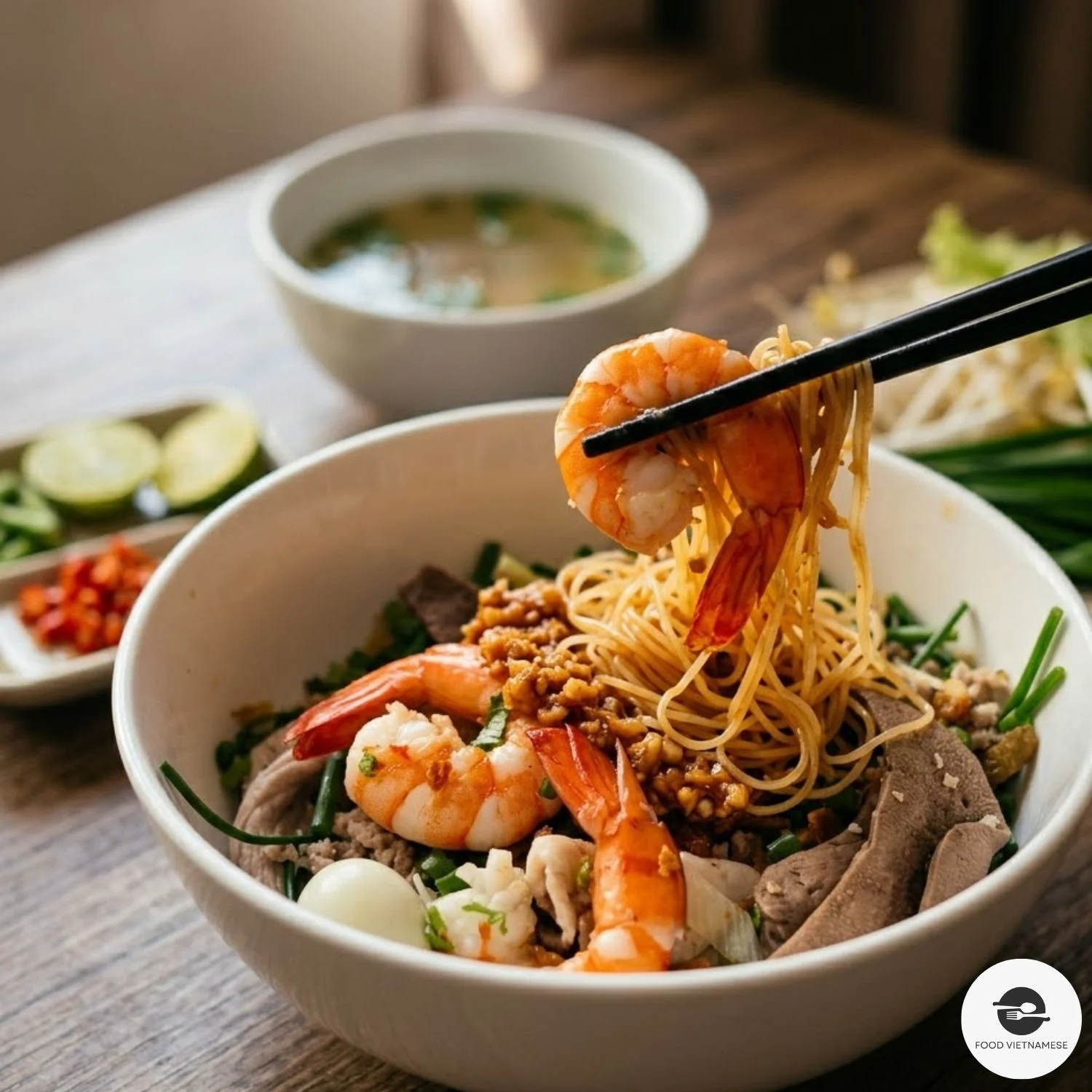
Teochew Chinese immigrants carried Hu Tieu through Cambodia and down into the Mekong Delta, and it took hold hardest in Cholon, Saigon’s Chinese quarter, where family-run shops have been serving it for decades. No fish sauce goes into the broth here — just pork bones, dried squid, and soy sauce, which is most of what separates it from Pho. It’s a morning dish by default, though a handful of old District 5 stalls stay packed well past the breakfast rush.
Banh Mi

Banh Mi exists everywhere in Vietnam, but in Saigon it barely seems to take a break. The baguette, adapted from French colonial bread and stuffed with pork, pate, pickled carrot and daikon, cilantro, and chili, comes from carts parked outside office buildings at 7 a.m. and from stalls still lit up at midnight. There’s no wrong hour for it — people buy one whenever they’re hungry.
Bun Thit Nuong
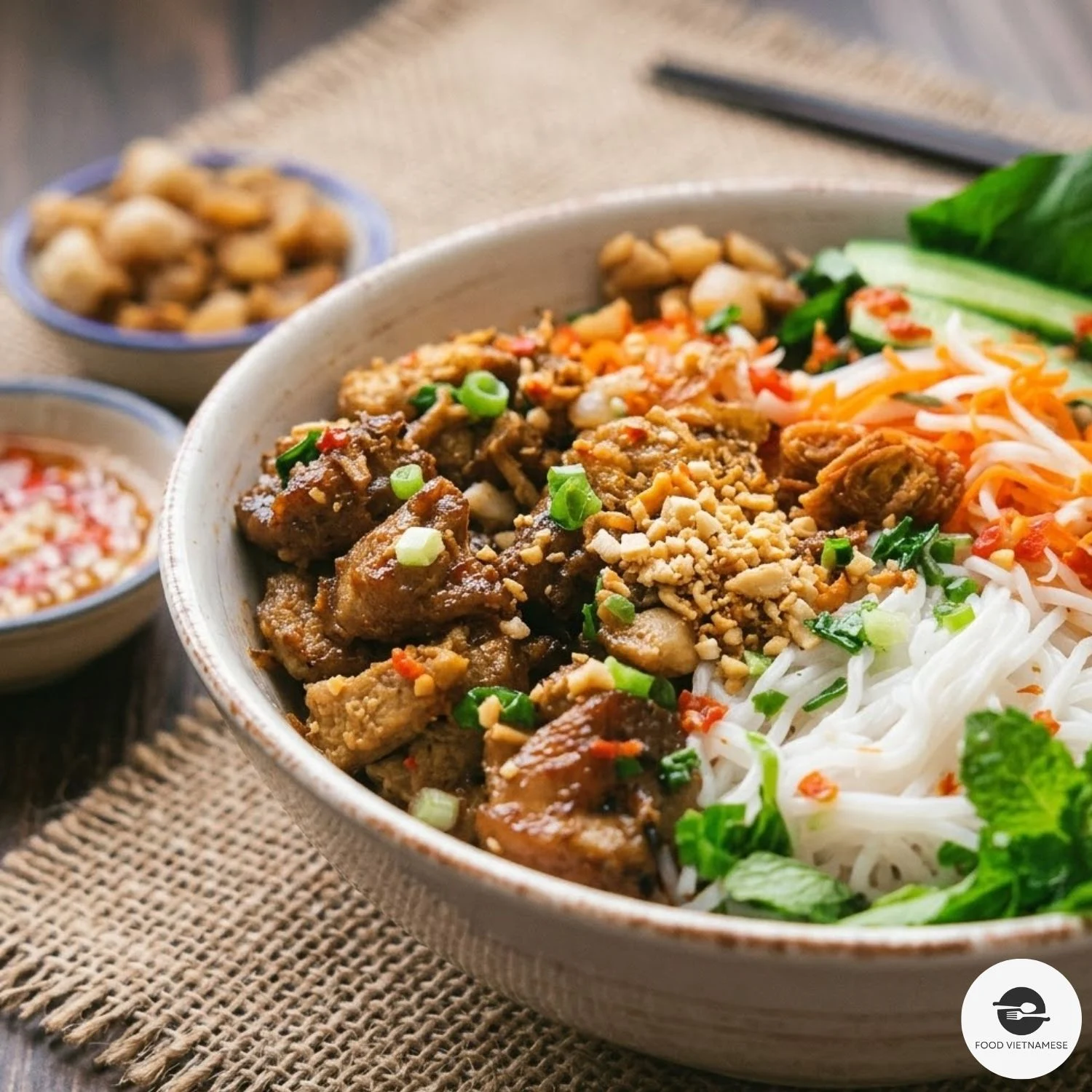
Bun Thit Nuong skips the warm dipping broth Hanoi’s Bun Cha is built around entirely — lemongrass-marinated grilled pork goes straight onto cold vermicelli, herbs, and pickled vegetables, with nuoc cham poured over the top. It’s a salad, not a soup, which suits a climate where a hot bowl at midday isn’t always the appeal.
Goi Cuon
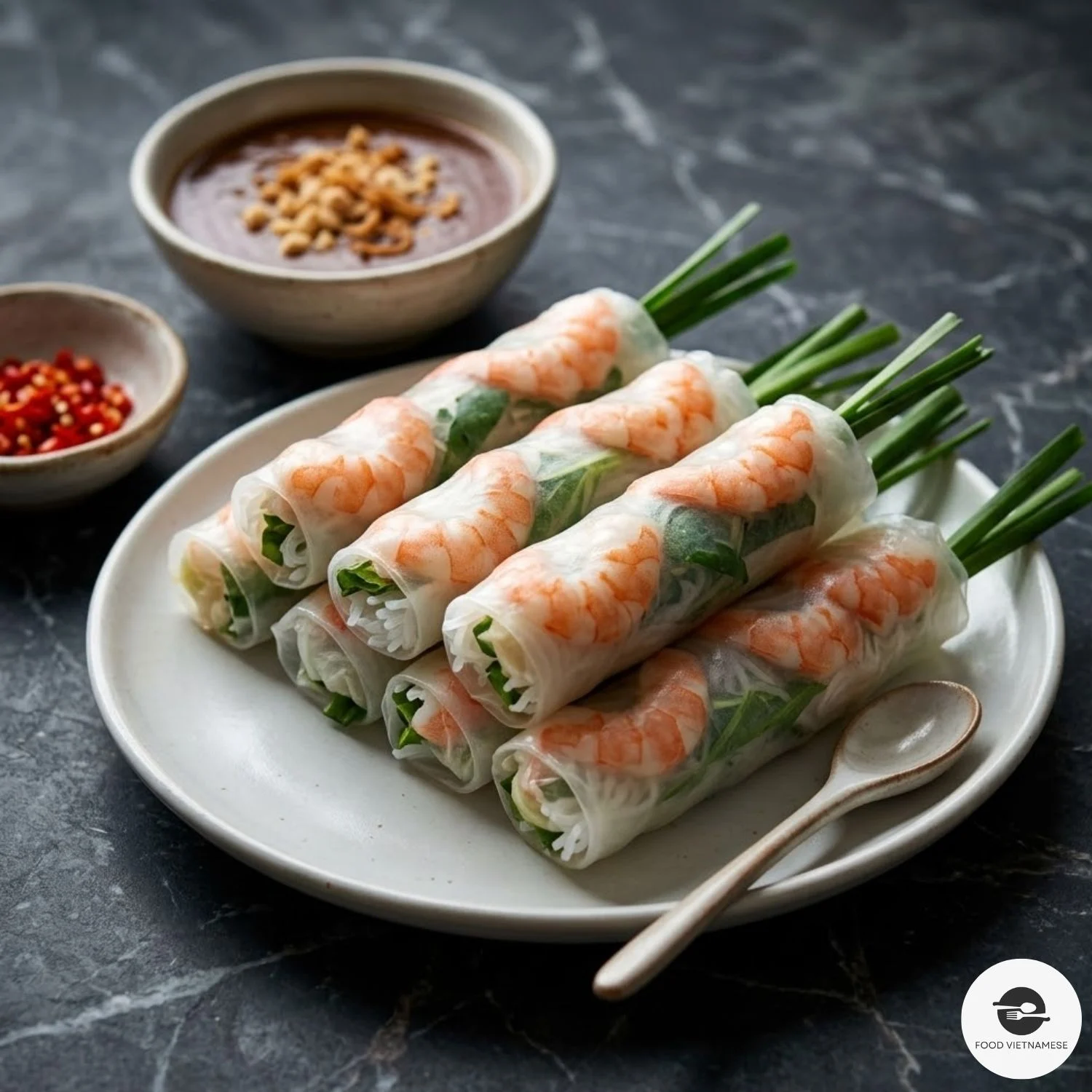
Goi Cuon — shrimp, pork, vermicelli, and herbs rolled in translucent rice paper, unfried — shows up as a starter, a light meal, or just something to eat on the walk somewhere, sold everywhere from street carts to the priciest restaurants in District 1. No occasion required; plenty of Saigon residents grab two or three on the way to work.
Bun Rieu Near the Markets
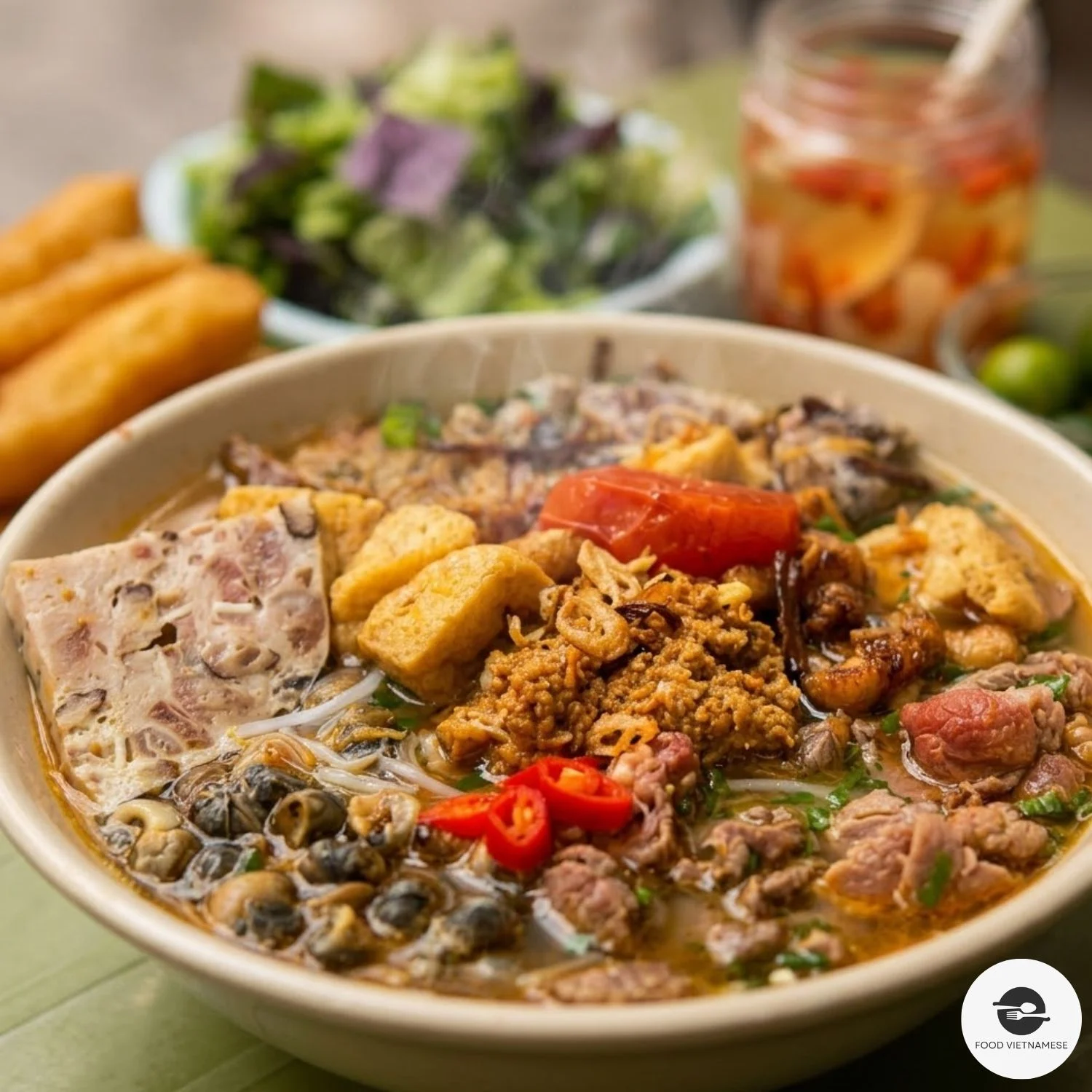
Bun Rieu actually belongs to the Red River Delta in the North, not to Saigon originally. It’s earned a real place here anyway over the decades, particularly around older markets like Ben Thanh, where a handful of longtime stalls sell it to shoppers between morning and lunch.
Canh Chua
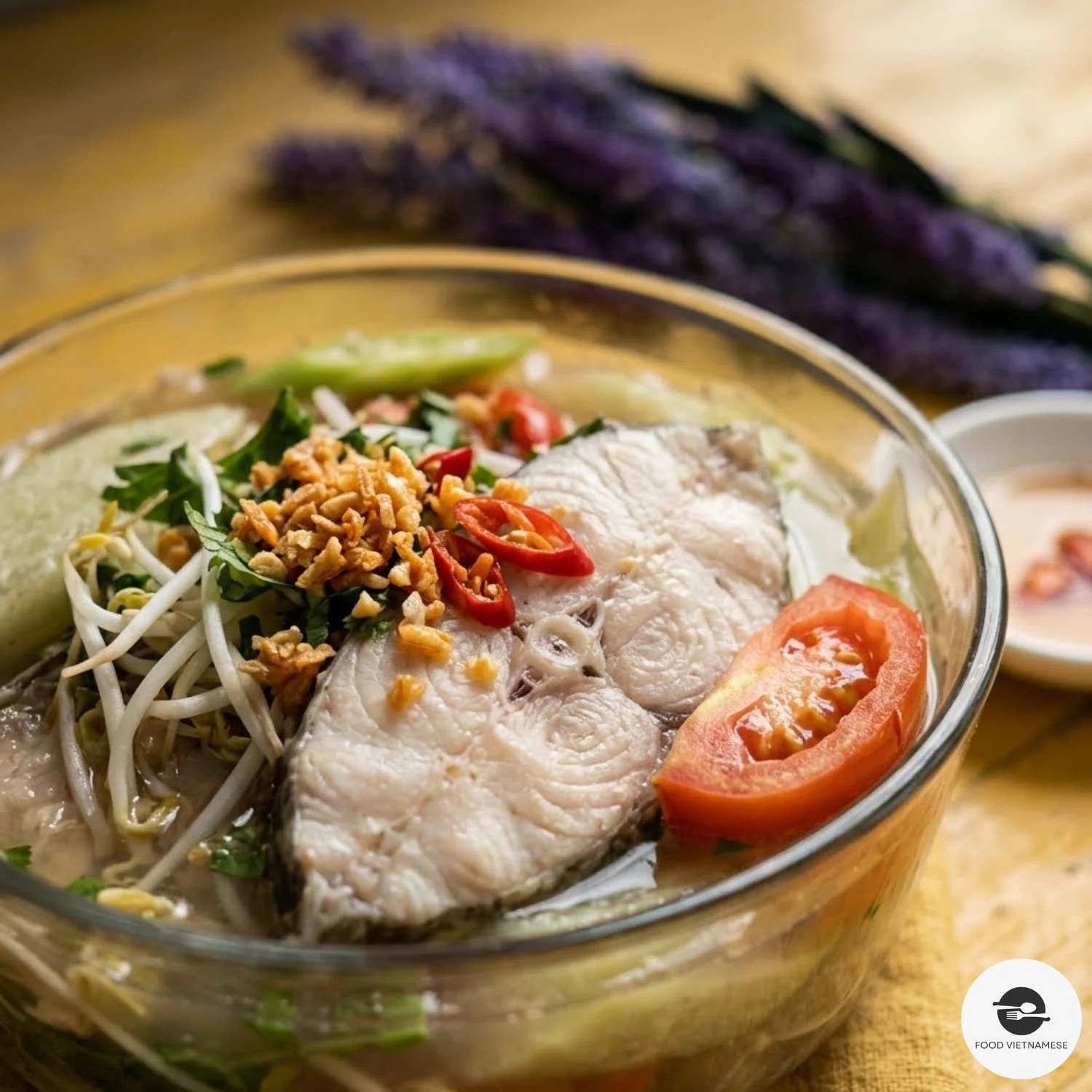
Canh Chua is built on tamarind, fish, pineapple, and tomato — sour, sweet, salty, and a little spicy in one bowl. It’s more of a home-cooking dish than a street-stall one, but nearly every restaurant serving Southern family-style food keeps it on the menu. Order it for the clearest taste of Mekong Delta cooking, rather than hunting for it at a street cart.
Ca Phe Sua Da
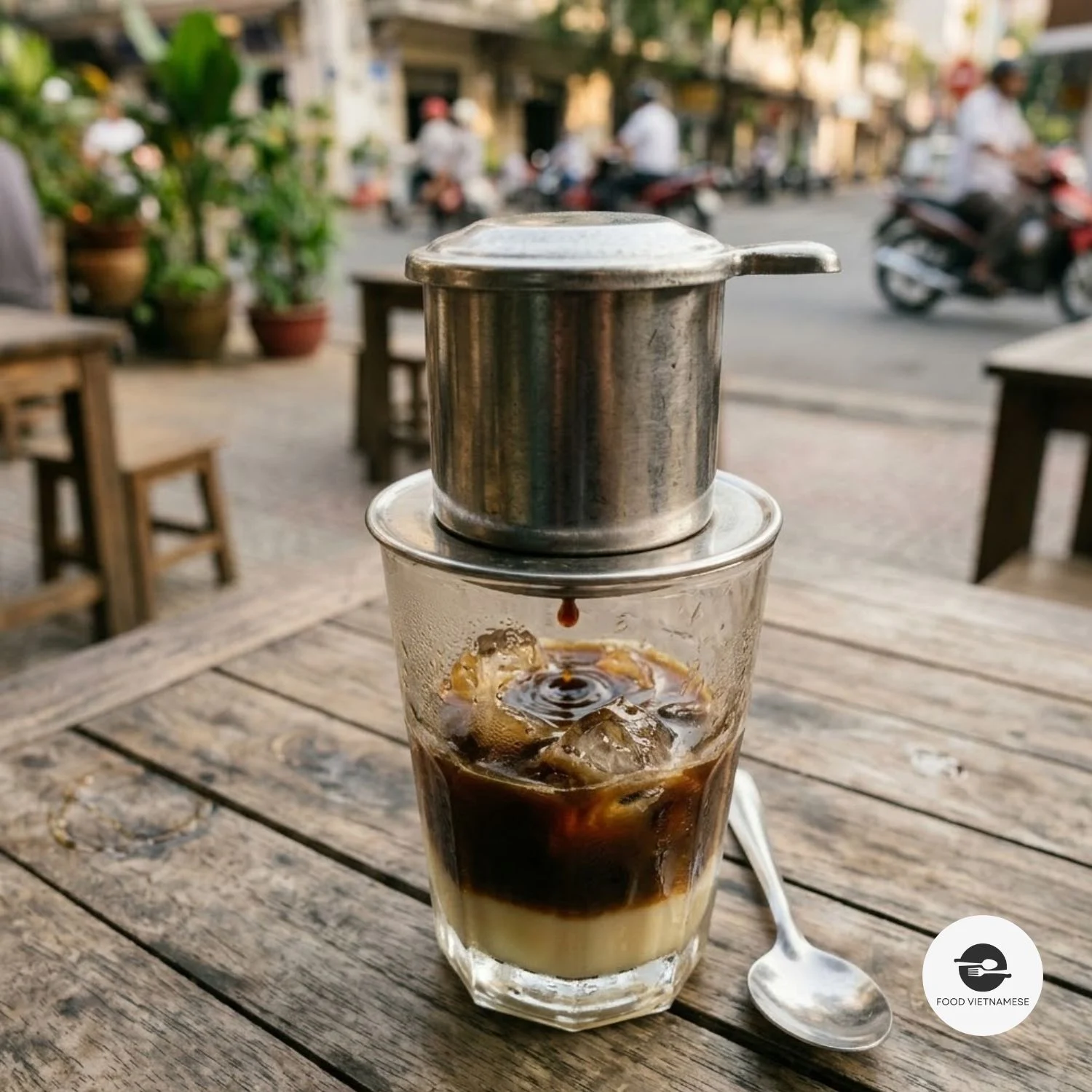
Strong drip coffee over ice with condensed milk — that’s the whole recipe, sold on nearly every corner in the city. There’s no single birthplace café to track down the way there is with Hanoi’s egg coffee; it’s just the drink people have in hand at plastic tables from early morning meetings through midnight conversations.
Nine P.M. at a Com Tam Stall
The com tam stall near a market in District 10 I go back to wasn’t slow at 9 p.m. the way I’d assumed it would be. The grill was still going, and the line was longer than it had been at lunch. The owner was too busy flipping pork chops to say much beyond a shrug and one line: people eat when they’re hungry, this place has never kept a clock.
Frequently Asked Questions
How is Saigon food different from Hanoi food?
Saigon cooking runs sweeter, uses more fresh herbs and raw vegetables, and isn’t tied to strict eating windows the way many Hanoi dishes are. Northern food leans saltier and more restrained by comparison.
What is the single most iconic Saigon dish?
Com Tam (broken rice) is generally considered Saigon’s defining dish — grilled pork over broken rice, once a low-cost staple for laborers, now eaten across every social class at any hour.
Which Saigon neighborhood has the most food to explore?
District 1 around Ben Thanh Market and District 5 (Cholon, the historic Chinese quarter) between them cover most of what’s worth trying — Cholon specifically for Hu Tieu.
Can you eat well in Saigon without following a set schedule?
Yes, more so than in Hanoi. Most signature dishes here — Com Tam, Hu Tieu, Bun Thit Nuong, Banh Mi — are sold from early morning until late night rather than during one narrow window.

Related articles
Bun Thit Nuong: Vietnam’s Grilled Pork Noodle Salad, Not a Soup
Bun Thit Nuong is a Vietnamese grilled pork noodle salad — cold rice vermicelli piled with lemongrass-marinated grilled…
Best Vietnam Food: 15 Must-Try Dishes
Best Vietnam food is defined by one core principle: maximum flavor from the freshest possible ingredients. Vietnamese cuisine balances…
Vietnamese Hot Pot (Lẩu): Types, How to Eat, Dipping Sauces
Vietnamese hot pot (lẩu) is a pot of seasoned broth kept simmering at the table, where diners cook…