Table of contents
- Bò Né — Vietnam’s Own Steak-and-Eggs
- The Easiest Protein Boost: Just Ask for More
- Phở: Which Cut to Order for More Protein
- Trứng Vịt Lộn — Vietnam’s Underrated Protein Bomb
- Plant-Based Protein: Tofu and Legumes
- Gỏi Cuốn With Shrimp — Protein Without the Fry
- Ordering for Protein at a Vietnamese Restaurant
- Frequently Asked Questions
Highest-protein dish: Bò né (steak, egg, pâté) — Vietnam’s own steak-and-eggs breakfast
Easiest protein boost: Ask for extra thịt/tôm/đậu hũ (meat/shrimp/tofu) in any noodle bowl — most kitchens handle this without issue
Overlooked protein bomb: Trứng vịt lộn (balut) — roughly 14–18g protein per egg, more than two regular eggs
Best phở order for protein: Phở tái or chín (beef) over phở chay — a beef bowl runs 25–31g protein versus 10–15g for the vegetarian version
Plant protein option: Đậu hũ (tofu) — roughly 8g protein per 100g, stir-fried or in canh chua
Protein-dense without the fry: Gỏi cuốn with shrimp — protein-forward without the oil a fried spring roll adds
Most “high protein” food guides default to chicken breast and Greek yogurt, which skips right past a cuisine that’s been building protein-forward meals for generations, just under different names. Here’s what actually delivers, starting with the dish that makes the clearest case.
Bò Né — Vietnam’s Own Steak-and-Eggs
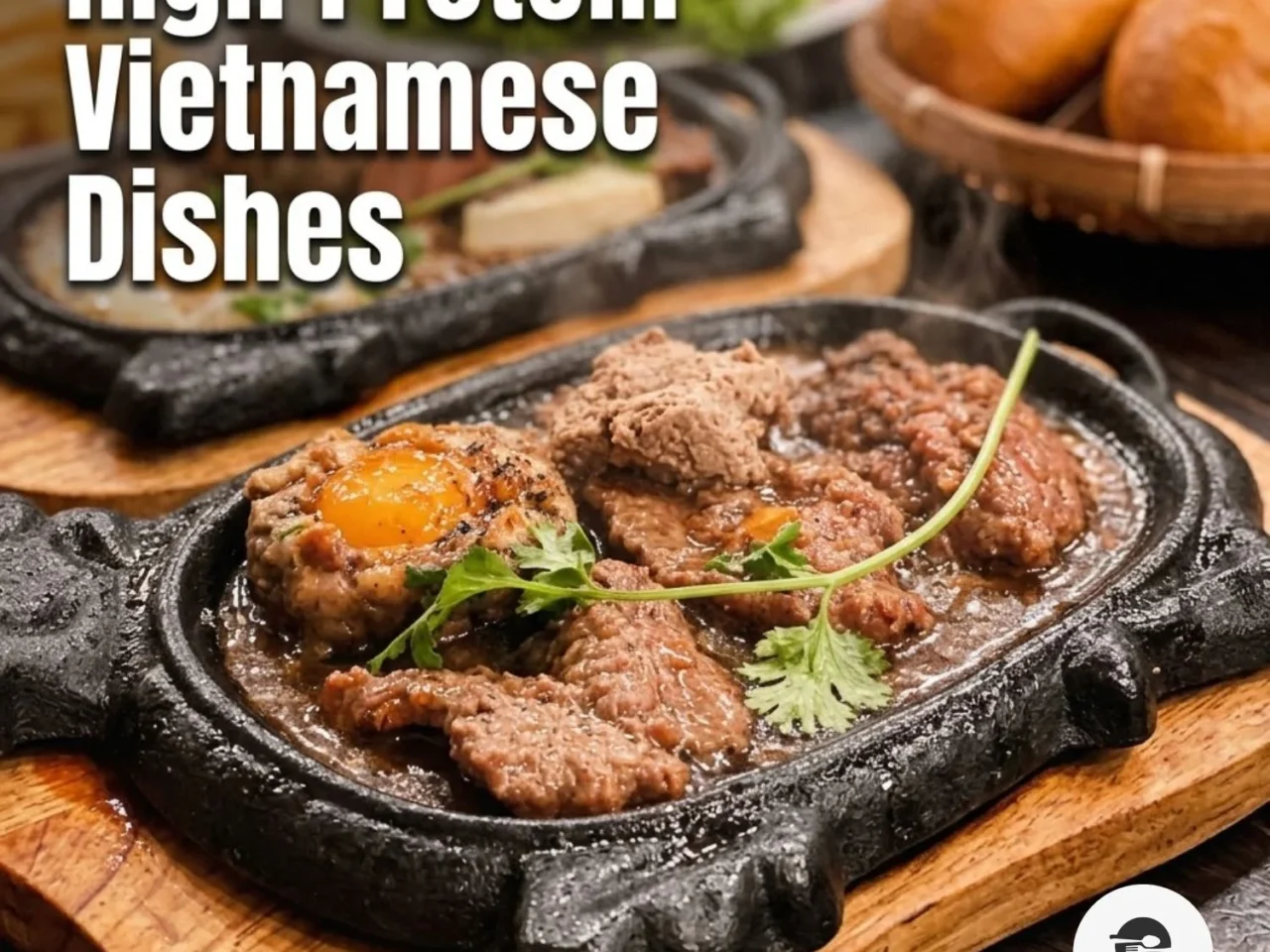
Bò né is a sizzling-plate breakfast built around cubed or sliced beefsteak, a fried egg (sometimes two), and often a slice of pâté or Vietnamese sausage, all arriving on a hot iron plate with a side of baguette. Structurally, it’s the same combination any high-protein breakfast guide recommends — steak plus egg — it just happens to have existed in Vietnam long before “protein breakfast” became a fitness-content category. The beef alone typically runs a substantial single-digit-to-low-double-digit ounce portion, and combined with one or two eggs, a plate easily clears 35 to 45g of protein before the bread is counted. It’s worth ordering on its own merits, not as a novelty translation of a Western meal.
The Easiest Protein Boost: Just Ask for More
Across almost any Vietnamese noodle bowl, the fastest way to raise the protein count isn’t switching dishes — it’s asking for more of what’s already in the bowl. “Thêm thịt” (more meat), “thêm tôm” (more shrimp), or “thêm đậu hũ” (more tofu) is a normal request at most Vietnamese kitchens, functionally just a slightly bigger order rather than something off-menu. This works especially well with bún chả, where the grilled pork is already the star and doubling it doesn’t unbalance the dish the way doubling a sauce or garnish would.
Phở: Which Cut to Order for More Protein
Not every bowl of phở delivers the same protein. Phở bò (beef) generally runs 25 to 30g of protein per bowl, and phở tái specifically — made with rare, thinly sliced beef — tends to land at the higher end, around 26 to 31g, since the cut is often more generous. Phở gà (chicken) sits a little lower, typically 22 to 28g. Phở chay, the vegetarian version, is the one to skip if protein is the priority — it usually comes in at just 10 to 15g, since it’s built around mushrooms and tofu in a lighter broth rather than a full protein portion. None of these are wrong orders, but they’re not interchangeable if grams of protein is what you’re counting.
Trứng Vịt Lộn — Vietnam’s Underrated Protein Bomb
Trứng vịt lộn (balut — a fertilized duck egg, boiled and eaten from the shell with herbs and a pinch of salt and pepper) is one of the more protein-dense foods in Vietnamese street food, typically estimated at roughly 14 to 18g of protein per egg — more than two regular chicken eggs, in a single serving that costs almost nothing. It’s a genuinely divisive dish for newcomers because of the visible embryo, and that reputation tends to keep it out of “healthy Vietnamese food” roundups entirely, which is a shame from a pure protein-density standpoint. For anyone willing to try it, it’s sold on nearly every street corner in the evening, usually alongside rau răm and a small dish of salt, pepper, and lime.
Plant-Based Protein: Tofu and Legumes
Vietnamese cooking doesn’t treat tofu as a meat substitute so much as its own ingredient, which means it shows up seasoned and cooked properly rather than as an afterthought. Firm đậu hũ carries roughly 8g of protein per 100g, whether stir-fried with lemongrass and chili, simmered into canh chua, or fried and dipped in soy-ginger sauce. Mung beans, used in both savory dishes like bánh xèo filling and sweet ones like chè, add a smaller but real protein contribution alongside their fiber. For anyone avoiding meat, building a plate around tofu, mung beans, and a herb-heavy salad gets closer to a complete protein profile than either ingredient does alone.
Gỏi Cuốn With Shrimp — Protein Without the Fry
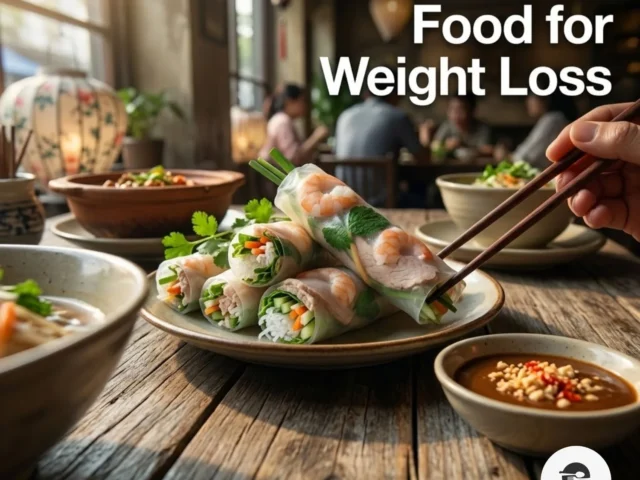
Gỏi cuốn built around shrimp is one of the better protein-to-calorie trades on a Vietnamese menu, since the roll is unfried and the shrimp itself is lean. The catch is the same one that applies on a keto-focused order too — the peanut-hoisin dipping sauce adds real calories that have nothing to do with protein, so keeping it light or on the side preserves the trade rather than undoing it. Ordering extra shrimp in place of some of the vermicelli inside pushes the protein-to-carb ratio further in a useful direction without changing the dish’s character.
| Dish | Protein source | Approx. protein |
|---|---|---|
| Bò né | Steak + egg + pâté | ~35–45g per plate |
| Phở tái (rare beef) | Thinly sliced beef | ~26–31g per bowl |
| Phở gà (chicken) | Shredded chicken | ~22–28g per bowl |
| Trứng vịt lộn | Fertilized duck egg | ~14–18g per egg |
| Gỏi cuốn with shrimp | Shrimp, unfried wrapper | Protein-dense per calorie |
| Đậu hũ (tofu) | Soy | ~8g per 100g |
Ordering for Protein at a Vietnamese Restaurant
The pattern across most of these dishes is the same one cơm tấm follows too — the protein is usually a grilled or fried piece sitting on top of a carb base, which means it can be scaled up independently. Asking for an extra piece of sườn (grilled pork chop), doubling the shrimp in a stir-fry, or adding a fried egg to almost anything are all normal requests that most kitchens are used to, not special accommodations. The base of rice or noodles stays roughly the same size unless asked otherwise, so the protein-to-carb ratio shifts in your favor without needing to order something completely different.
A friend visiting from the US once asked, half-joking, if there was a “Vietnamese bodybuilding breakfast” — and I realized bò né basically already is one, minus the protein shake. I ordered it for her the next morning with an extra egg on top, no explanation needed, no strange looks from the cook. She finished the whole plate and asked why nobody back home had ever described it to her that way.
Kelly Thuy — field notes, Ho Chi Minh City
Frequently Asked Questions
Bò né (steak, egg, and pâté) is among the highest at roughly 35 to 45g per plate. Phở tái with rare beef, trứng vịt lộn (balut), and gỏi cuốn loaded with shrimp are also strong options.
Phở tái, made with thinly sliced rare beef, tends to run highest at roughly 26 to 31g of protein per bowl. Phở chay (vegetarian) is the lowest, typically 10 to 15g, since it’s built around mushrooms and tofu rather than meat.
Yes — a single egg is typically estimated at roughly 14 to 18g of protein, more than two regular chicken eggs combined. It’s an underrated protein source that rarely appears in general healthy-eating guides because of its appearance.
Ask for extra meat, shrimp, or tofu directly (“thêm thịt,” “thêm tôm,” “thêm đậu hũ”) — most kitchens treat this as a normal, larger order rather than a special request. This works especially well with grilled dishes like bún chả, where the protein is already the centerpiece.

Related articles
Vegetarian Vietnamese Food: What “Chay” Really Means
Vegetarian Vietnamese food has a name most guides translate too loosely: “chay.” It isn’t just the Vietnamese word…
Gluten-Free Vietnamese Food: The Noodle Name Trap
Gluten-free Vietnamese food is easier to find than in most cuisines, since rice — not wheat — is…
Vietnamese Food for Weight Loss: Fix the Drink First
Vietnamese food for weight loss works better than most diet guides give it credit for, since so much…