Table of contents
- The Real Difference: Fish Sauce vs Soy Sauce
- Raw Herbs at the Table Is a Vietnamese Habit
- Less Oil, More Broth
- Shared History: Why the Two Cuisines Overlap at All
- Where Vietnamese Food Broke Away: French Colonial Influence
- “Chinese Food” Isn’t One Cuisine
- Similar Dishes, Different Execution
- Frequently Asked Questions
Main savory base: Vietnamese food → fish sauce (nước mắm); Chinese food → soy sauce, though this varies by region
Herbs: Vietnamese meals add a full plate of raw herbs at the table; Chinese cooking generally cooks herbs and vegetables into the dish
Oil: Vietnamese cooking uses noticeably less oil than most Chinese regional styles, particularly Cantonese and Sichuan
Shared history: Vietnam was under direct Chinese rule for roughly 1,000 years (111 BC–939 AD), which is why stir-frying, five-spice, and soy sauce crossed over into Vietnamese cooking
Where they split: Decades of French colonial rule added bánh mì, Vietnamese coffee, and pâté to Vietnamese food — none of which trace back to Chinese cuisine
Important caveat: “Chinese food” isn’t one cuisine — Cantonese, Sichuan, Hunan, and Shanghainese cooking differ from each other about as much as Vietnamese food differs from any of them
Most comparisons stop at “one uses fish sauce, the other uses soy sauce,” which is true but skips the more useful part: why that split happened, and where the two cuisines still visibly overlap because of it.
The Real Difference: Fish Sauce vs Soy Sauce
Fish sauce is the backbone of Vietnamese savory cooking — fermented, funky, and used in everything from a simple dipping sauce to the base of a braise. Chinese cooking, across most of its regional traditions, builds the same foundational role around soy sauce instead, fermented from soybeans rather than fish. Both are salty, umami-forward liquids doing similar structural work in a dish, which is part of why the two cuisines can taste more alike than either one expects at first bite. The flavor they produce isn’t the same, though — fish sauce carries a marine funk soy sauce never has, and that difference alone is often what someone is tasting when they sense a dish is “Vietnamese” without being able to say exactly why.
Raw Herbs at the Table Is a Vietnamese Habit
A Vietnamese meal, especially a noodle soup, typically arrives with a side plate of fresh herbs — mint, Thai basil, cilantro, perilla — meant to be torn in by hand at the table, not cooked into the dish. Chinese cooking uses herbs and aromatics too, but far more often cooked into the dish itself: scallions and cilantro wilted into a stir-fry, ginger simmered into a broth. This habit of eating a large volume of raw herbs alongside a cooked dish is distinctive enough that it’s one of the first things newcomers notice about Vietnamese cuisine.
Less Oil, More Broth
This is a generalization with real exceptions on both sides, but it holds up often enough to matter: Vietnamese cooking tends to use less oil than most Chinese regional cuisines, particularly Cantonese and Sichuan styles, where stir-frying in a well-oiled wok is central to the technique. Vietnamese cooking leans harder on broths, steaming, and grilling, with oil playing a smaller supporting role — a spoonful of scallion oil here, a light sauté there, rather than a wok’s worth. Neither approach is healthier across the board, since a fried spring roll and a sugar-heavy braise exist in Vietnamese cooking too, but the average dish in each cuisine skews this way.
Shared History: Why the Two Cuisines Overlap at All
The overlap isn’t coincidence. Vietnam was under direct Chinese rule for roughly 1,000 years, from 111 BC to 939 AD, with a shorter Ming-dynasty occupation centuries later. That long a period of political and administrative control left a real culinary footprint — stir-frying as a technique, five-spice blends, soy sauce, and the use of chopsticks all trace back to this era, and they’re still part of Vietnamese cooking today, sitting alongside ingredients and techniques that are entirely Vietnam’s own. This is the actual reason the two cuisines resemble each other in places, rather than a vague “Asian food is similar” assumption — it’s a specific, dateable historical relationship.
Where Vietnamese Food Broke Away: French Colonial Influence
What Chinese cuisine never picked up, Vietnamese food did: French colonial rule over Vietnam, lasting from the late 1800s until 1954, left behind a baguette that became bánh mì, a coffee culture that became Vietnamese-style drip coffee with condensed milk, and ingredients like pâté that now sit inside a Vietnamese sandwich as naturally as anything else on the menu. None of this exists in Chinese cuisine, which developed under an entirely different set of colonial and trade influences depending on the region. It’s a clean marker of where the two food cultures genuinely split rather than just varied.
“Chinese Food” Isn’t One Cuisine
This is the part most comparisons skip past, and it matters: comparing “Vietnamese food” to “Chinese food” as if the second one is a single, unified thing isn’t fair to either side. Cantonese, Sichuan, Hunan, and Shanghainese cooking differ from each other in spice level, sauce style, and technique about as much as Vietnamese food differs from any one of them. What most people outside Asia picture as “Chinese food” is often specifically Cantonese-influenced or Chinese-American cooking — not representative of Chinese cuisine as a whole any more than one regional Vietnamese dish represents the entire country’s food.
| Feature | Vietnamese food | Chinese food |
|---|---|---|
| Main savory base | Fish sauce | Soy sauce (varies by region) |
| Herbs | Raw, added at the table | Usually cooked into the dish |
| Oil use | Lighter, on average | Heavier, especially Cantonese/Sichuan |
| Colonial influence | French (bread, coffee, pâté) | Varies by region and trade history |
| Regional variation | North, Central, South Vietnam | Dozens of distinct regional cuisines |
Similar Dishes, Different Execution
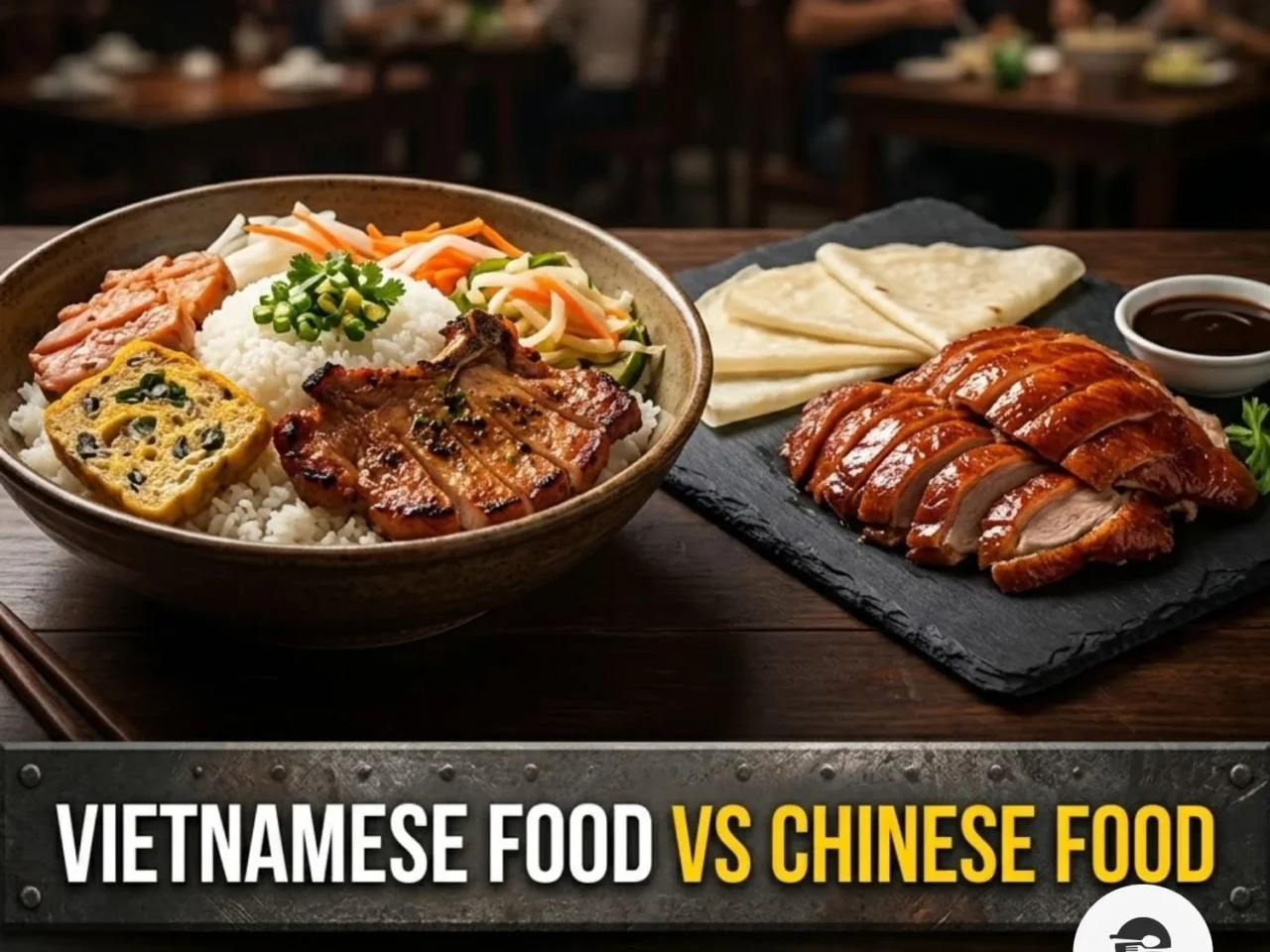
A few dishes make the comparison concrete. Phở and a Chinese noodle soup both start from a long-simmered broth, but phở’s clarity and its reliance on charred ginger, star anise, and fish sauce for depth reads differently from a soy-based Chinese broth. Gỏi cuốn and a Chinese egg roll look like relatives at a glance — both wrapped, both filled — but one is unfried, built around rice paper and fresh herbs, while the other is fried, wheat-wrapped, and cooked hot. Looking at specific dishes side by side does more to explain the real difference than any general rule about sauces or oil ever could.
A regular customer at a phở stall I used to visit near Bến Thành once told the owner, half as a compliment, that her broth “tasted almost like a Chinese soup, but not really.” The owner just laughed and said her grandmother learned to make broth from a Chinese neighbor decades ago, then spent the rest of her life making it taste like Huế instead. That’s more or less the whole relationship between the two cuisines in one kitchen.
Kelly Thuy — field notes, Ho Chi Minh City
Frequently Asked Questions
In some ways, yes — techniques like stir-frying, five-spice, and soy sauce entered Vietnamese cooking during roughly 1,000 years of Chinese rule. But the core flavor base (fish sauce vs. soy sauce), the heavy use of raw herbs, and French colonial additions like bánh mì set the two cuisines apart.
Vietnamese cooking is built around fish sauce and a plate of fresh raw herbs added at the table, while Chinese cooking generally uses soy sauce and cooks its herbs and aromatics directly into the dish. Vietnamese food also tends to use less oil on average.
Vietnam was under direct Chinese political rule for roughly 1,000 years, from 111 BC to 939 AD. That period left behind techniques and ingredients — stir-frying, five-spice, soy sauce, chopsticks — that are still part of Vietnamese cooking today.
On average, Vietnamese cooking uses less oil and relies more on broths, herbs, and grilling, which can make it lighter than some Chinese regional styles. This isn’t universal, though — fried and sugar-heavy dishes exist in both cuisines, and Chinese cuisine itself varies widely by region.

Related articles
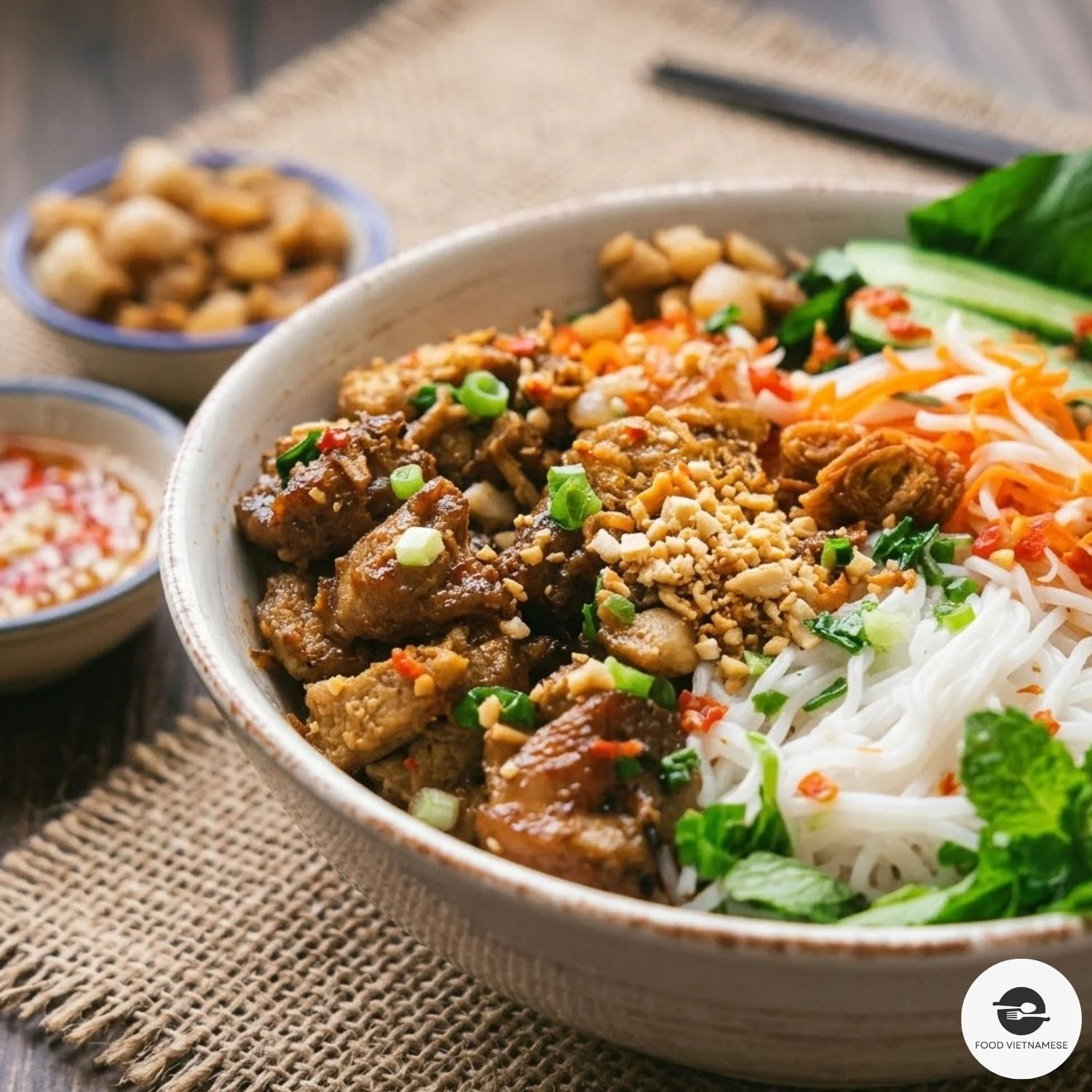
Bun Thit Nuong: Vietnam’s Grilled Pork Noodle Salad, Not a Soup
Bun Thit Nuong is a Vietnamese grilled pork noodle salad — cold rice vermicelli piled with lemongrass-marinated grilled…
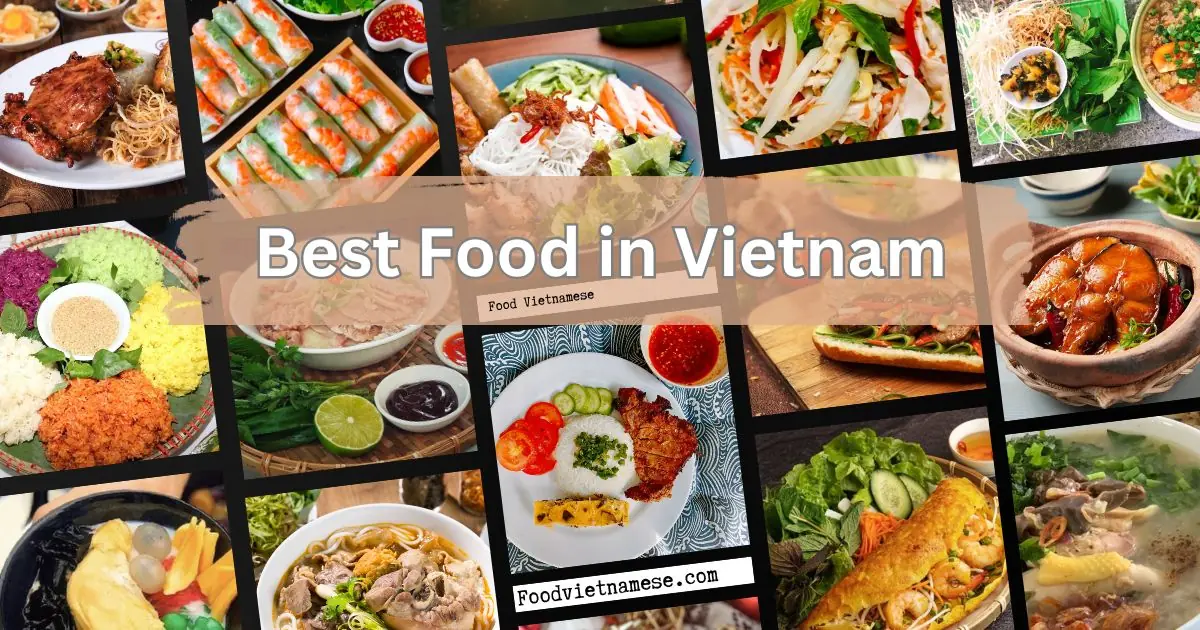
Best Vietnam Food: 15 Must-Try Dishes
Best Vietnam food is defined by one core principle: maximum flavor from the freshest possible ingredients. Vietnamese cuisine balances…
Vietnamese Hot Pot (Lẩu): Types, How to Eat, Dipping Sauces
Vietnamese hot pot (lẩu) is a pot of seasoned broth kept simmering at the table, where diners cook…